
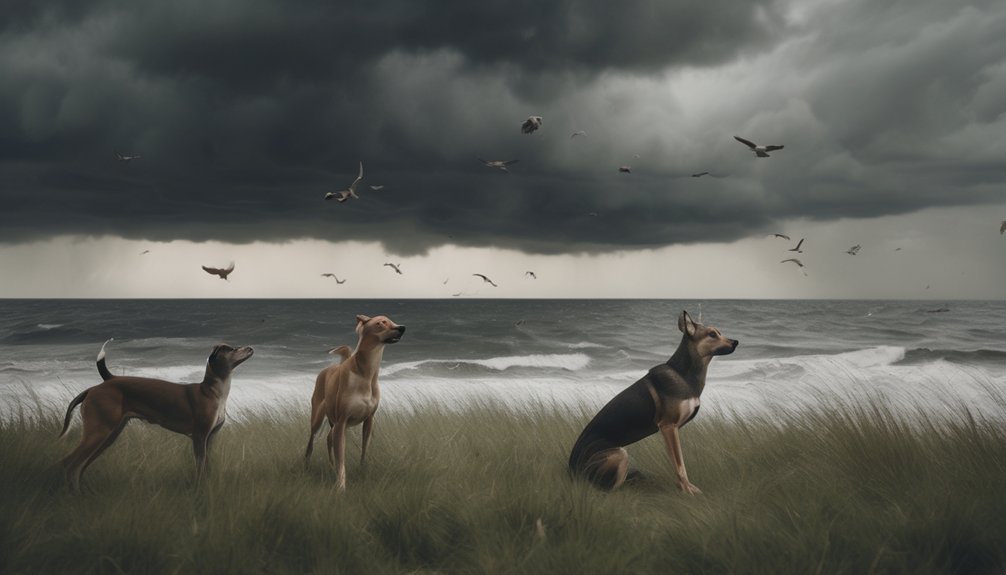
If you watch animals before earthquakes, storms, or volcanic eruptions, you may notice unusual behavior, but you shouldn’t assume they can predict disasters. You’re seeing responses to subtle changes in vibration, pressure, sound, or chemistry that humans often miss. The key question is whether those reactions form a reliable warning system or just an interesting side effect of environmental change. The answer isn’t as simple as it first seems.
Key Takeaways
- Animals can show unusual behavior before disasters, but it is not a reliable way to predict them.
- Their reactions often come from sensing vibrations, pressure changes, sounds, or other cues humans miss.
- Common signs include agitation, hiding, clustering, or sudden movement in dogs, cats, livestock, birds, and fish.
- These behaviors may act as early warning signals, but they should not replace scientific monitoring.
- Best results come from combining animal observations with seismic, weather, and environmental data.
Can Animals Predict Natural Disasters?
Although animals often appear to act strangely before earthquakes, storms, or volcanic eruptions, this behavior doesn’t mean they can reliably predict natural disasters. You should view such episodes as animal instincts shaped by sensory adaptations, not proof of foresight.
Their behavioral changes may reflect evolutionary advantages that help them respond to unstable conditions, but the patterns stay inconsistent across species and events.
When you study animal communication, you see that survival strategies often depend on rapid reactions to environmental cues, not on supernatural warning systems.
For your disaster preparedness, treat reports of unusual animal behavior as interesting data, not a dependable alert. You can respect these signals while still relying on seismology, meteorology, and emergency planning to guide decisions and protect yourself when danger rises.

What Do Animals Detect Before Disasters?
Before a disaster, animals may detect subtle environmental changes that people miss: shifts in ground vibration, low-frequency sound, barometric pressure, humidity, electrical fields, or chemical cues such as gas release.
You can view these signals as environmental cues that engage animal instincts and their specialized sensory abilities. In many species, evolutionary adaptations sharpen detection of faint inputs, turning ordinary sensation into survival strategies.
These inputs can trigger behavioral changes that look abrupt to you but reflect precise processing. Animals also use communication methods, such as vocalizations, postures, or coordinated movement, to spread instinctual warnings within a group.
Their responses don’t prove prediction in a human sense; they show that sensitive organisms sample the environment continuously and react to patterns you may not notice until danger is already near.
How Do Animals React Before Earthquakes?
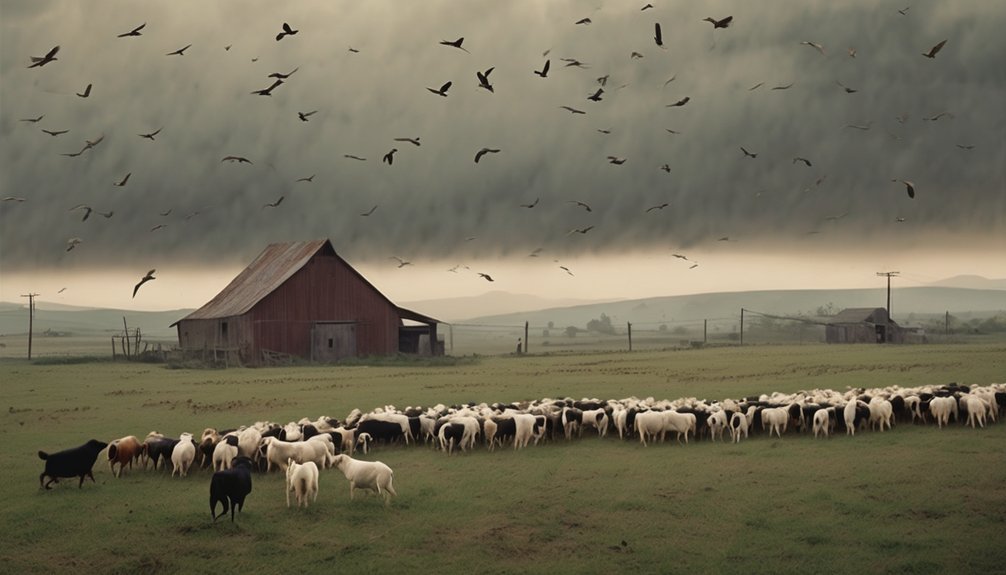
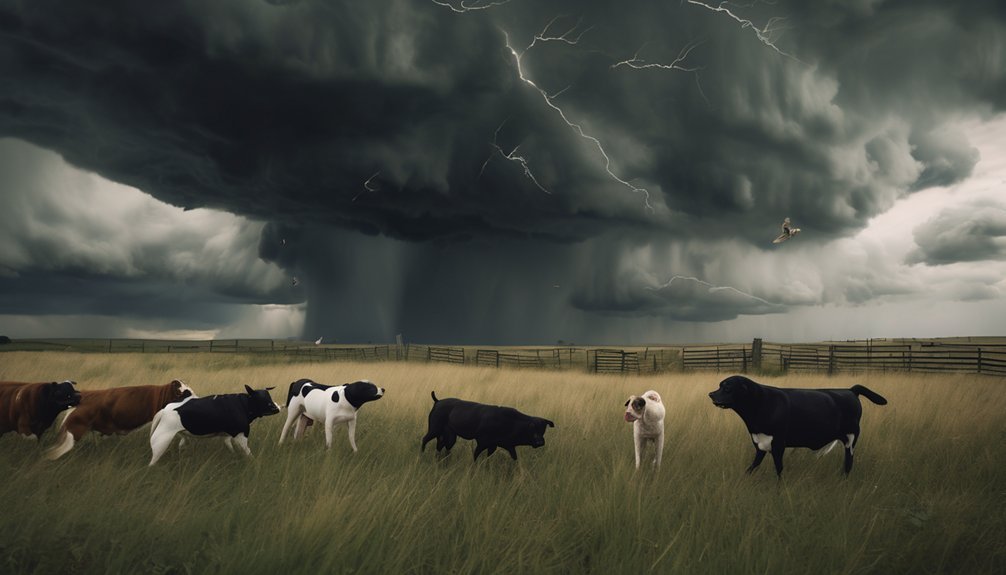
When earthquakes approach, animals often shift from routine behavior to heightened alertness, agitation, or escape-oriented movement. You may notice dogs pacing, barking, or refusing food, while cats hide, freeze, or dart to higher ground.
Livestock can cluster tightly, stamp, or break from normal grazing patterns. These changes reflect earthquake behavior that likely stems from animal instincts tuned to vibrations, subtle ground motion, or changes in sound and pressure.
You shouldn’t treat every odd movement as a warning, because stress, weather, and handling can trigger similar responses. Still, when multiple species react at once, you’re seeing a possible prequake pattern worth noting.
Scientists study these reactions carefully, but you should view them as suggestive signals, not reliable prediction tools.
Can Animals Sense Tsunamis and Storms?
Animals may detect tsunamis and storms through cues humans often miss, including low-frequency vibrations, pressure changes, shifting air currents, and unusual sounds. You can see how animal instincts support rapid responses when the environment becomes unstable.
Fish, birds, and mammals often move, vocalize, or seek shelter before weather intensifies, suggesting heightened disaster awareness rather than mystic prediction. You should interpret these behaviors cautiously, because animals react to immediate sensory input, not future knowledge.
In coastal areas, a sudden retreat, agitation, or mass movement may reflect detection of offshore disturbances linked to tsunamis. During storms, shifts in barometric pressure and wind patterns can trigger protective behavior.
These responses give you useful clues, but they don’t replace scientific monitoring or official warnings.
Why Do Volcanoes Make Animals Restless?
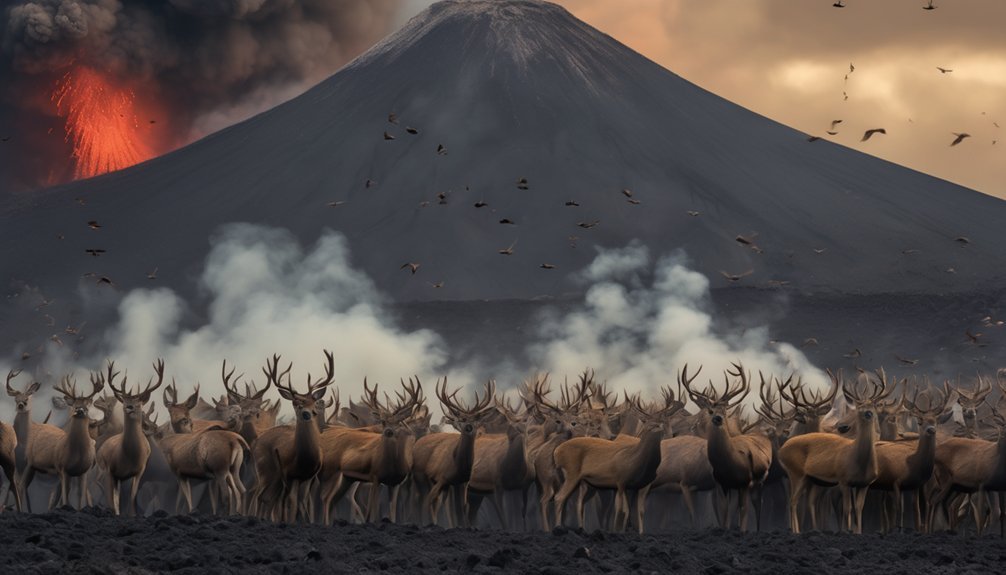
Volcanic unrest can make animals restless because they can detect environmental changes that often precede an eruption, such as ground vibration, gas emissions, heat, altered humidity, and subtle shifts in sound or pressure.
You may notice that these cues create volcanic stress long before you see lava or ash. Your senses may miss them, but animal instincts can register them through hearing, smell, touch, and balance.
When stress rises, animals often change feeding, resting, and movement patterns as a direct response to an unstable habitat. That reaction isn’t magic; it’s adaptive behavior shaped by evolution and repeated exposure to risk.
In this way, restlessness reflects a biologically grounded alarm system, not a conscious prediction. You can read it as a signal that the local environment has become unusually volatile.

Which Animals React Most to Disasters?
Species that rely on acute hearing, scent, vibration detection, or pressure sensing often react most strongly to disasters. You’ll see animal intuition most clearly in species with high environmental sensitivity, because their sensory perception catches abrupt change before yours does. Dogs, cats, elephants, birds, and fish show distinct behavioral patterns, yet species differences matter more than simple labels. Their instinctive behavior can include freezing, fleeing, vocalizing, clustering, or refusing food.
| Animal | Typical reaction |
|---|---|
| Dogs | Barking, pacing |
| Cats | Hiding, agitation |
| Elephants | Grouping, movement |
| Birds | Sudden flock shifts |
| Fish | Rapid schooling |
You can read these responses as stress-linked, not mystical. They reflect how each body samples air, ground, and water.
What Does the Science Say About Animal Warnings?
When researchers test animal behavior against seismic, atmospheric, and hydrologic data, they usually find mixed results rather than a universal warning system. You can see why scientists focus on animal instincts, sensory perception, and measurable environmental cues.
In controlled studies, behavioral patterns often vary by species differences, habitat, and exposure. Some historical accounts describe unusual activity before earthquakes or storms, and anecdotal evidence keeps the topic compelling.
Yet the strongest findings point to physiological changes that may alter movement, vocalization, or feeding. You should interpret these signals cautiously, because research can identify correlations, not consistent forecasts.
Science suggests that animals may detect subtle shifts humans miss, but it doesn’t yet show a dependable, generalized predictive mechanism.
Why Animal Behavior Is Not a Reliable Warning
Animal behavior isn’t a reliable warning because the signals are inconsistent, context-dependent, and difficult to separate from ordinary routine. You may notice animal instincts, but they often produce unreliable signals rather than clear forecasts.
Behavioral variability differs across species, individuals, and situations, so one animal’s response differences don’t generalize well. Environmental factors like weather, noise, feeding times, and human activity can explain the same actions you might interpret as warning signs.
That’s why anecdotal evidence feels convincing yet fails under scientific scrutiny. Scientific skepticism matters here because prediction challenges are severe: you can’t easily link a behavior to a specific disaster, timing, or location.
When you want precision, you need patterns that repeat, and animal behavior usually doesn’t provide that consistency.
How Do People Use Animals in Disaster Monitoring?
Although animal behavior rarely offers reliable disaster warnings on its own, researchers still use animals in monitoring systems by tracking measurable changes in movement, body condition, and habitat use.
You can see this in wildlife monitoring, where collars, tags, and sensors record shifts that may reflect stress from earthquakes, floods, or volcanic activity. When you compare these data with environmental readings, you improve disaster preparedness without overstating predictive signals.
You’ll notice that the strongest value lies in pattern detection, not prophecy. By analyzing animal behavior alongside seismic, meteorological, and ecological datasets, you get a clearer baseline for unusual activity.
This approach helps you separate normal seasonal movement from event-linked anomalies, making your monitoring more disciplined, evidence-based, and useful for early response planning.
Frequently Asked Questions
How Quickly Can Animals React Before a Disaster?
You can see animals react minutes to hours before a disaster, sometimes longer, through behavioral changes and instinctual responses. Their timing’s variable, shaped by species, senses, and the hazard’s physical cues.
Do Pets Behave Differently From Wild Animals Before Disasters?
Yes—your pets often show pet behavior like clinginess or hiding, while wild animals rely on wild instincts to flee or freeze. You’ll notice both react to stress, but their environments shape the response.
Can Trained Animals Help Detect Disasters Sooner?
Yes, you can train animals to signal certain hazards, but their trained responses complement, not replace, sensors. Their animal instincts may notice subtle changes, yet reliability varies, so you’d need careful validation and oversight.
Are Some Animal Senses Stronger Near Fault Lines?
Yes, you can’t assume they are. For example, a dog near a fault line might react to vibration differently; sensitivity variations and fault line behaviors can amplify cues, but species and individuals still vary.
Do Animal Warnings Work Better for Any Specific Disaster?
They seem most useful for earthquakes, tsunamis, and volcanic eruptions, where animal intuition may detect subtle environmental changes. You shouldn’t rely on them alone; your disaster awareness should combine observations with instruments and expert warnings.
Conclusion
You can’t treat animal behavior as a crystal ball for disasters. What you’re seeing is a sensitive biological alarm system, not a proven forecast model. Animals may detect vibrations, pressure changes, or chemical shifts before you do, but those signals are inconsistent and easy to misread. Like sparks before a fire, they can hint at danger without naming it. For real preparedness, you’ll need scientific monitoring, not instincts alone.