Did you know that nearly 60% of indoor cats are classified as overweight or obese? This alarming statistic highlights the importance of selecting the right cat food tailored to their unique needs. With lower activity levels, indoor cats require specific nutritional formulations to maintain a healthy weight. Understanding what to look for in their diet is crucial for their long-term well-being. So, what key factors should you consider when choosing the best food for your feline friend?
Key Takeaways
- Choose food specifically formulated for indoor cats to meet their lower caloric needs and prevent obesity.
- Look for high-quality protein sources like chicken, fish, and turkey to support muscle health.
- Ensure a balanced diet with 30-50% carbohydrates and 15-30% healthy fats for optimal nutrition.
- Avoid harmful additives like artificial preservatives, meat by-products, and fillers for better digestive health.
- Gradually transition to new food over 7 to 10 days to minimize digestive distress.
Understanding Your Indoor Cat’s Nutritional Needs
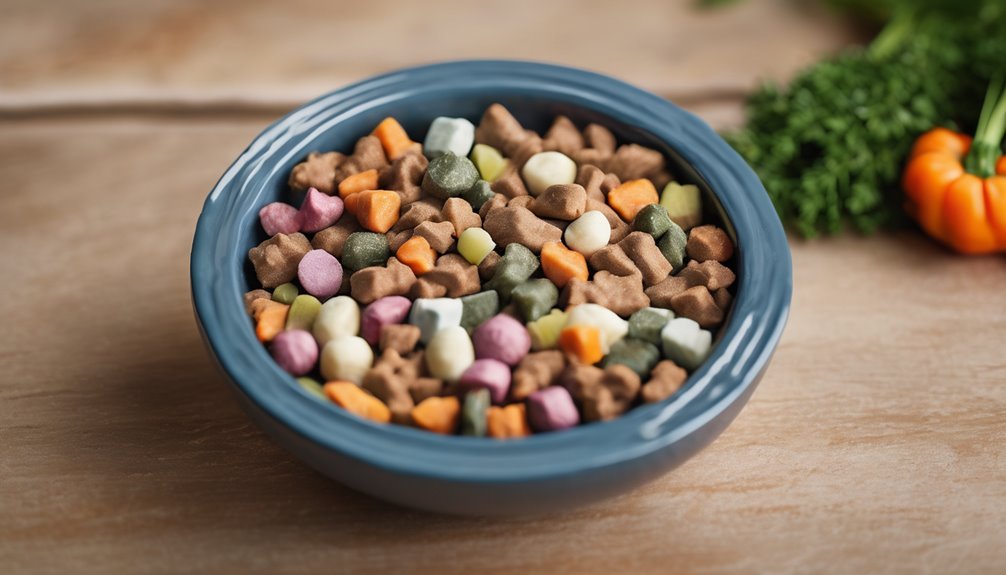
When you consider your indoor cat’s health, understanding their nutritional needs is crucial for their well-being. Indoor cats often require fewer calories due to their lower activity levels, so monitoring their caloric intake helps prevent obesity.
Look for food specifically formulated for indoor cats, as these formulas usually balance energy with essential nutrients.
Hydration needs are equally important; many cats don’t drink enough water. Encouraging hydration with wet food or a water fountain can support their overall health.

The Importance of Protein in Indoor Cat Food
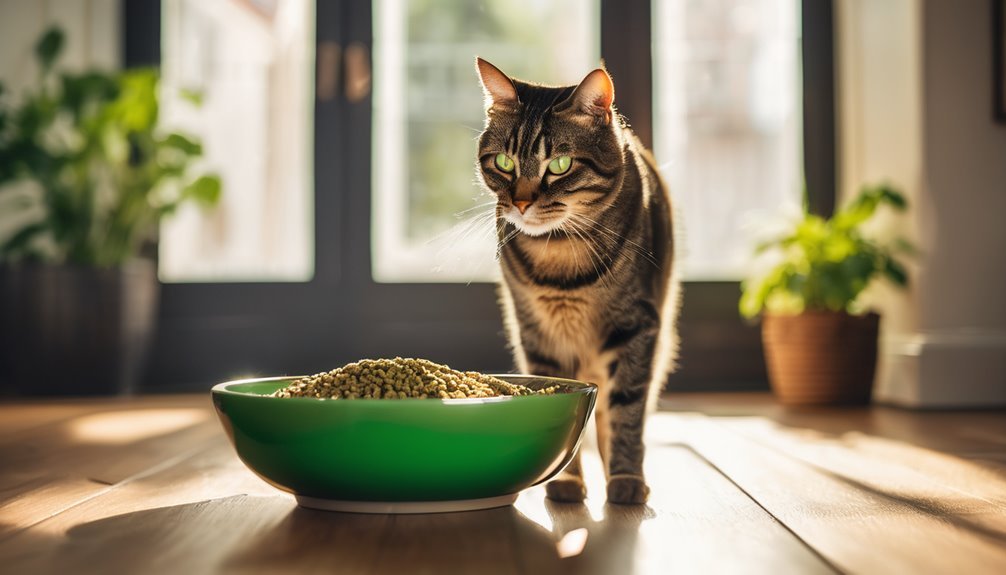
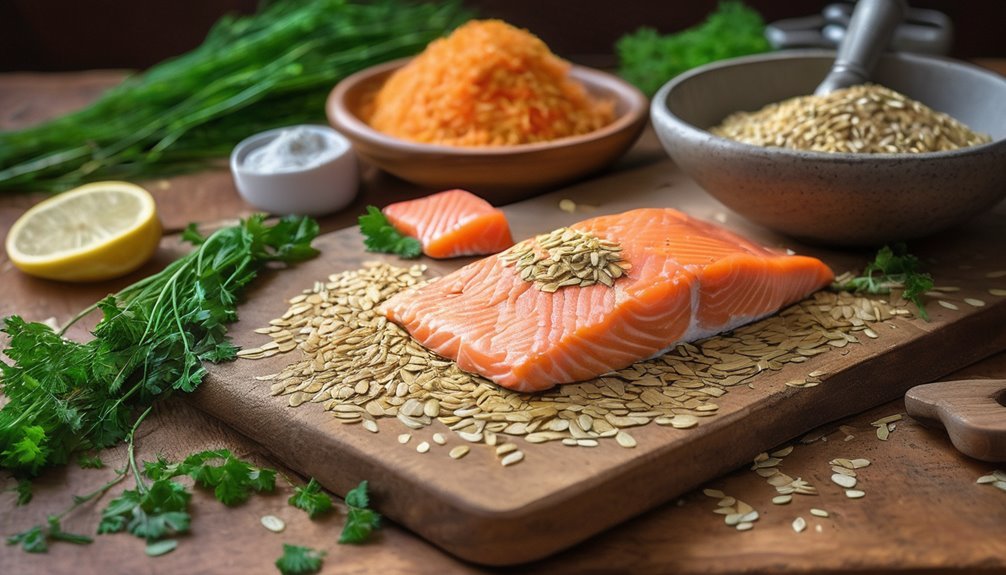
A well-rounded diet for indoor cats hinges on the right balance of nutrients, and protein plays a vital role in that equation. Protein sources like chicken, fish, and turkey are essential for your cat’s overall health. They provide energy, support muscle development, and contribute to a healthy coat. Understanding the protein benefits can help you make informed choices when selecting food for your furry friend.
| Protein Sources | Benefits |
|---|---|
| Chicken | Lean muscle growth |
| Fish | Omega-3 fatty acids |
| Turkey | Low-fat protein |
| Beef | Rich in iron |
| Eggs | Complete amino acids |
Balancing Carbs and Fats for Indoor Cats
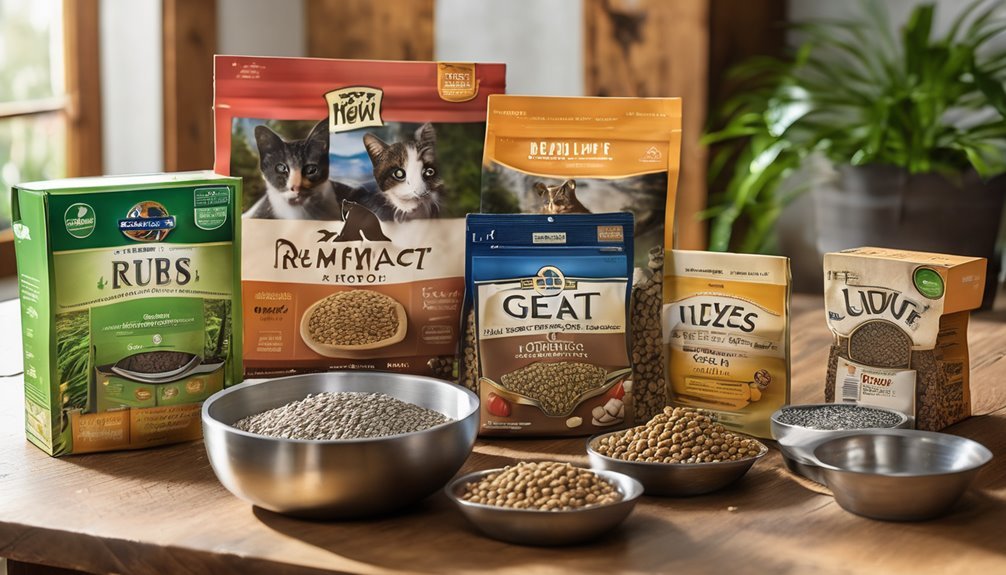
While protein is crucial for your indoor cat’s diet, balancing carbohydrates and fats is equally important for maintaining their overall health.
You’ll want to consider quality carb sources, like sweet potatoes or brown rice, which provide energy without overwhelming their system.
Keep an eye on fat ratios as well; healthy fats, like omega-3s from fish oil, support coat health and brain function.
Ideally, a balanced diet should include around 30-50% carbohydrates and 15-30% fats, depending on your cat’s age and activity level.
Too many carbs can lead to obesity, while insufficient fats may leave them lacking in essential nutrients.
Finding the right balance ensures your feline friend thrives and stays active indoors.
Essential Nutrients and Ingredients for Indoor Cat Food
Finding the right balance of carbohydrates and fats sets the stage for understanding what your indoor cat truly needs in their diet. Essential nutrients like high-quality proteins are crucial for muscle health, while healthy fats provide energy and support skin and coat health.
Look for fiber sources such as beet pulp or pumpkin, which aid digestion and help prevent hairballs. Additionally, moisture content is vital; wet food can enhance hydration, especially for indoor cats who may not drink enough water.
Recognizing and Avoiding Harmful Additives in Cat Food
Identifying harmful additives in cat food is crucial for ensuring your indoor cat’s health. You should practice additive awareness by scrutinizing ingredient labels closely.
Watch for artificial preservatives like BHA and BHT, which can pose long-term health risks. Additionally, steer clear of meat by-products that often indicate lower-quality ingredients.
Fillers such as corn and soy may not provide the essential nutrients your cat needs, and they can lead to digestive issues. It’s also wise to avoid artificial colors and flavors; these serve no nutritional purpose.

Choosing the Right Food for Your Cat’s Age and Health
Choosing the right food for your cat’s age and health is essential to ensure they thrive throughout their life stages. As your cat ages, their nutritional needs change, so look for age-specific formulas that support their development.
Kittens require more protein and fat for growth, while senior cats benefit from lower calories and joint-supporting nutrients.
Kittens need higher protein and fat for growth, while senior cats thrive on lower calories and joint-supporting nutrients.
Additionally, consider any health condition considerations your cat may have. If they’re prone to obesity, choose a weight management formula; for urinary issues, a diet that promotes hydration is key.
Always consult your vet when making dietary changes, as they can guide you on the best options tailored to your furry friend’s unique needs. Your cat’s well-being starts with the right food.
Tips for Transitioning Your Cat to a New Food?
When you’ve found the right food for your cat based on their age and health, the next step is to introduce it carefully.
Start with a transition timeline of about 7 to 10 days. Begin by mixing a small amount of the new food with their current food—this gradual mixing helps their digestive system adjust.
For the first few days, use a ratio of 75% old food to 25% new food. Gradually shift this to 50/50, then 25/75, until they’re fully on the new diet.
Monitor your cat for any signs of distress like vomiting or diarrhea. If issues arise, slow down the transition.
Patience is key; this ensures your cat happily adapts to their new food.
Frequently Asked Questions
How Often Should I Feed My Indoor Cat?
You should feed your indoor cat twice a day, using a consistent feeding schedule. Practice portion control to maintain a healthy weight and prevent overeating, ensuring your furry friend stays happy and active.
Can Indoor Cats Eat Human Food?
Did you know 70% of cat owners share food with their pets? While some human foods are safe, stick to cat-friendly snacks like cooked chicken or pumpkin. Always consult your vet before introducing new treats.
What Are the Signs of Food Allergies in Cats?
If your cat shows signs like itching, digestive issues, or sudden changes in behavior, you might be facing food intolerance symptoms or allergic reactions. Observing these changes can help you identify and address potential food allergies.
Should I Choose Wet or Dry Food for My Cat?
Imagine your cat, Bella, thriving on a mix of wet food benefits for hydration and dry food advantages for dental health. Balance both options to meet her unique needs and keep her happy and healthy.
How Can I Tell if My Cat Is Overweight?
To tell if your cat’s overweight, check their body condition. You should feel their ribs easily and see a slight waist. Regular weigh-ins can aid weight management, ensuring your furry friend stays healthy and happy.
Conclusion
In the quest for the best cat food, it’s ironic how we often overlook what truly nourishes our feline companions. You might think all brands are created equal, but choosing the right food can be the difference between a vibrant, playful cat and a lethargic companion. Prioritizing quality ingredients not only fuels their well-being but also deepens the bond you share. After all, a happy, healthy cat is worth every effort you make to provide the best.