
You may think of birds, mammals, and marine animals as very different, yet some form lifelong pair bonds, raise young together, and return to the same mate across seasons. You’ll see that these relationships can improve nesting success, parental care, and survival, while also raising questions about what truly drives loyalty in nature. The pattern is more varied than it first appears, and one detail often changes the whole picture.
Key Takeaways
- Mating for life means a long-term pair bond with the same mate across breeding seasons or a lifetime.
- Animals mate for life to improve survival, share parenting, and coordinate territory defense and nest care.
- Common examples of lifelong pairs include albatrosses, swans, penguins, prairie voles, beavers, and wolves.
- These species often show courtship rituals, shared nesting, feeding, hunting, or pup-rearing responsibilities.
- Environmental pressures and cooperative caregiving often make lifelong pair bonds more successful than brief mating.
What Does Mating for Life Mean
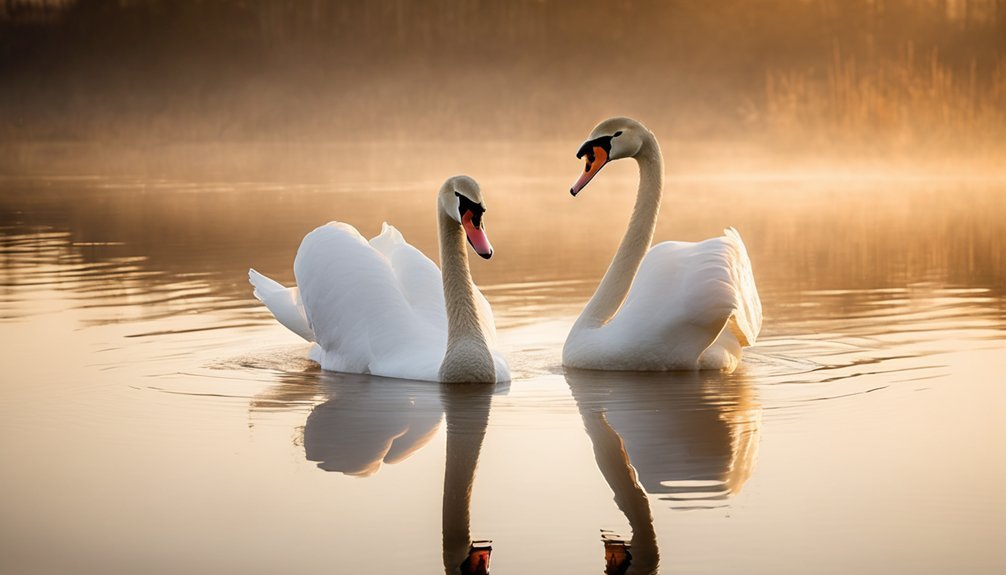
Mating for life means that an animal forms a long-term pair bond with the same mate, often over multiple breeding seasons or for its entire adult life. You can think of it as a stable reproductive partnership, not a casual encounter.
A long-term pair bond with the same mate, often lasting across multiple breeding seasons or a lifetime.
In this pattern, both partners usually stay together, share territory, and coordinate care in ways that support pair bonding. Scientists use the term to describe repeated affiliation, mutual recognition, and consistent behavior between two individuals.
You shouldn’t confuse it with human romantic attachment, though the bond can appear intimate. In biological terms, the relationship is defined by duration and fidelity, not emotion alone.
This arrangement gives you a clear framework for understanding species that maintain exclusive mate relationships across seasons and years.

Why Some Animals Mate for Life
Animals mate for life when doing so increases reproductive success, survival, or both. You can see this in species where stable pair bonding lets two adults coordinate territory defense, courtship, nesting, and offspring care more efficiently than solitary breeding does.
When you invest in one partner, you may reduce time spent searching for mates and lower the risk of losing a fertile season. Long-term bonds can also improve genetic success if a partner reliably helps protect young or share resources during stress. These evolutionary advantages make lifelong mating advantageous when offspring benefit from consistent parental support.
In intimate terms, the bond works because repeated contact builds trust, synchrony, and predictable cooperation, which can raise fitness while lowering energetic costs and social conflict.
Birds That Mate for Life
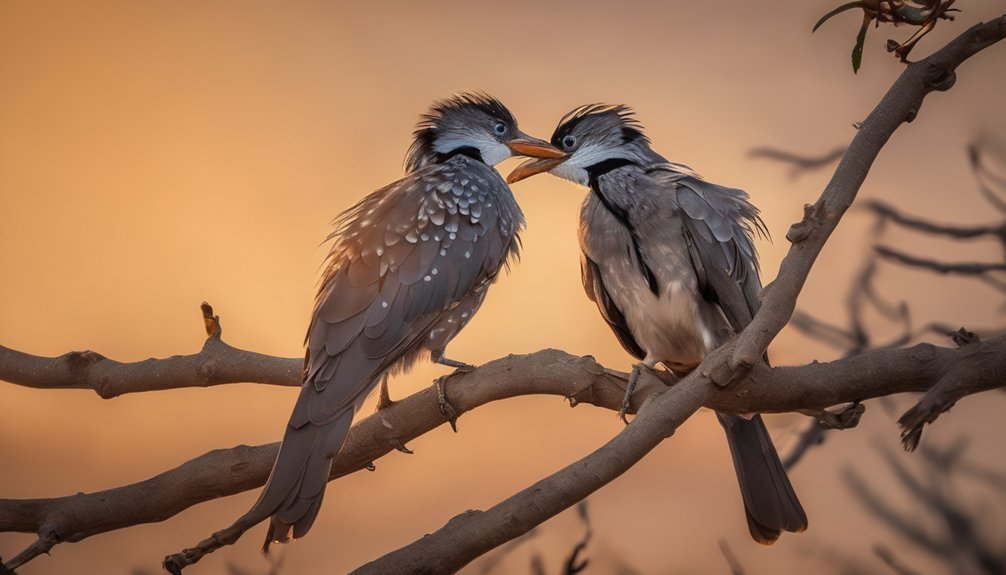
Birds provide some of the clearest examples of lifelong pair bonding in the animal kingdom. You can observe this in species examples such as albatrosses, swans, penguins, and many parrots, where pairs often stay together across breeding seasons.
During courtship rituals, you may see synchronized calls, dancing, preening, or gift exchanges that help each partner assess compatibility and reinforce attachment. Once a bond forms, both birds usually share duties such as nest building, egg incubation, and chick feeding, which improves reproductive success.
Although not every pair remains together forever, long-term fidelity is common in birds that rely on cooperation. When you watch these behaviors, you’re seeing a precise, adaptive strategy shaped by selection, not sentiment alone.
Mammals That Mate for Life
Among mammals, lifelong pair bonds are less common than in birds, but they do occur in several well-studied species, including prairie voles, beavers, wolves, and some primates.
You can see these bonds emerge through courtship behaviors that help partners recognize, choose, and maintain each other over time. In prairie voles, hormones support emotional bonds and shared caregiving; in beavers, partners cooperate in territory defense and raising young.
Wolves often pair for breeding and coordinate hunting and pup care. In some primates, long-term affiliation reduces stress and improves offspring survival.
You’ll notice that monogamy in mammals isn’t simply romance; it’s an adaptive strategy shaped by ecology, social structure, and parental investment, with intimacy serving clear biological functions.
Ocean Animals That Mate for Life
In the ocean, lifelong pair bonds are less common than in birds, but they do occur in several species, including seahorses, French angelfish, clownfish, and some dolphins.
You can observe ocean partnerships that rely on precise mating rituals rather than constant proximity. Seahorse pairs perform synchronized courtship and transfer eggs between partners.
Ocean partnerships often hinge on precise rituals, like seahorse pairs’ synchronized courtship and egg transfer.
French angelfish often swim together as a stable pair while defending a shared territory. Clownfish usually form lasting bonds within a social group, with one dominant pair reproducing.
Some dolphins maintain long-term associations that support mating and reproduction.
These species show that marine life can include durable bonds shaped by biology, behavior, and habitat. In each case, you’re seeing reproductive strategies that favor consistency, coordination, and selectivity in a vast environment.
How Animals Keep Their Bonds Strong
Animal pairs that stay together for long periods usually maintain their bonds through repeated behaviors that reinforce recognition, coordination, and trust. You can see this in grooming, synchronized movement, nest sharing, and repeated vocal exchanges.
These bonding behaviors lower stress and help each partner respond quickly to the other’s cues. In many species, you also observe close physical contact, which supports emotional connections by reinforcing familiarity and reducing aggression.
Over time, consistent courtship rituals and mutual vigilance help each animal recognize its mate with high accuracy. This stability matters because a predictable partner can improve survival in changing environments.

When you study long-term pairs, you’re seeing a system built on repetition, signaling, and careful attention, not sentiment alone.
How Lifelong Mates Share Parenting
When lifelong mates raise offspring together, each parent often takes on distinct but coordinated duties that improve chick, cub, or pup survival. You can see one adult guarding, foraging, or defending territory while the other incubates, nurses, or keeps the young warm.
These co-parenting strategies reduce individual workload and increase the chance that offspring receive steady food, protection, and attention. You also notice flexible role shifts when conditions change, such as during poor weather or predator pressure.
In many species, both parents add nurturing behaviors like grooming, feeding, and teaching foraging skills. This shared care can improve growth, learning, and stress regulation.
Notable Animals That Mate for Life
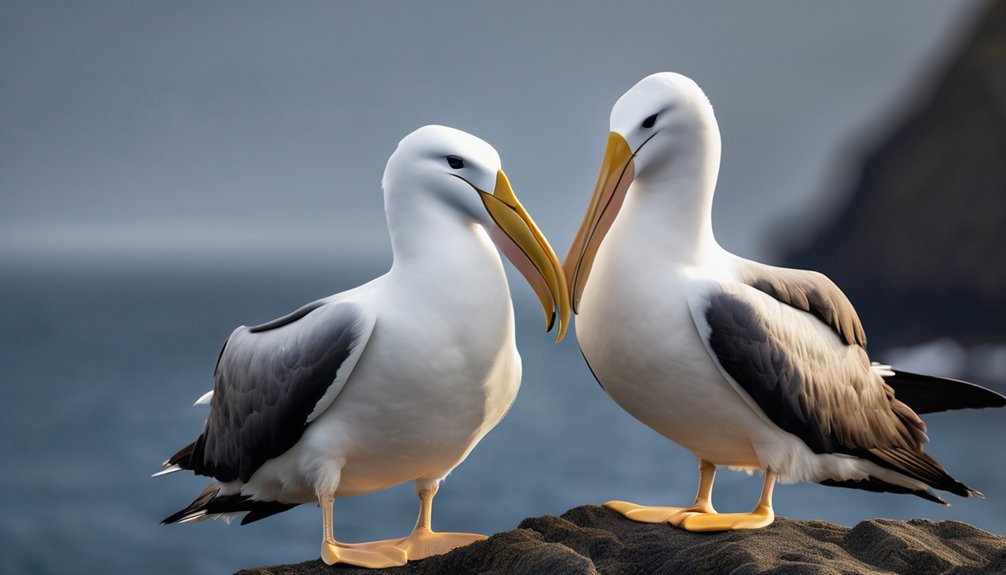
Among the best-known lifelong pair bonds, you’ll find species such as swans, albatrosses, wolves, beavers, bald eagles, and some penguins, each showing mate fidelity through repeated breeding seasons.
You can observe their bonding behaviors in synchronized movement, mutual grooming, and coordinated calls. Their mating rituals often include courtship displays that reinforce pair recognition and reduce conflict.
In many cases, you’ll see:
- Swans and geese forming elegant, season-to-season partnerships.
- Albatrosses returning to the same partner after long foraging trips.
- Wolves and beavers maintaining stable reproductive pairs within a territory.
These animals offer you clear examples of monogamous strategy, where selection favors consistent partner choice, shared investment, and reliable reproductive timing.
Animals That Stay Together for Life
Although lifelong pairing is often discussed as “mating for life,” some species also remain together as social partners for their entire lives, maintaining a stable bond beyond the breeding season.
You can observe this in wolves, beavers, swans, albatrosses, and some gibbons, where pairs coordinate feeding, territory defense, and parenting with notable consistency.
Their mating rituals often reinforce pair identity through repeated calls, synchronized movements, or courtship displays.
These behaviors don’t just support reproduction; they also help sustain emotional bonds that guide daily cooperation.
These behaviors support reproduction and sustain the bonds that guide daily cooperation.
When you watch such animals, you see that long-term partnership can shape survival, not just breeding success.
Their mutual attention, calm proximity, and shared routines reveal how intimacy can function as a biological strategy in the wild.
What Scientists Learn From Lifelong Mates
Scientists study lifelong mates to understand how pair bonds affect survival, reproduction, and offspring success. You can see in behavioral studies how emotional bonds shape social structures and long-term commitment. These data reveal evolutionary advantages when partner selection improves coordination, reduces conflict, and supports reproductive success.
- Mating strategies: monogamy can stabilize care and increase chick or pup survival.
- Environmental influences: harsh habitats often favor cooperation, shared defense, and efficient resource use.
- Genetic diversity: some pairs still seek extra-pair mates, balancing fidelity with adaptive variation.
You learn that these patterns aren’t sentimental alone; they’re measurable responses to selection. Across species, lifelong mates show how intimacy can become a biological strategy, linking affection, resilience, and fitness in ways scientists can quantify.
Frequently Asked Questions
Do Lifelong-Mating Animals Ever Choose New Partners After Loss?
Yes, you can see some lifelong-mating animals choose new partners after loss; mate selection often shifts when emotional bonds weaken. Species, age, and breeding opportunities influence whether you form a new pair bond.
Can Animals Recognize Their Mates After Long Separation?
Yes, you can see mate recognition after long separation in many species; long distance bonds often persist through vocal, chemical, and visual cues. You’d find reunion behavior, but memory strength and duration vary.
How Common Is Monogamy Among Reptiles and Amphibians?
You’ll find monogamy is a rare ember among reptiles and amphibians, not a widespread norm. Reptile monogamy appears uncommon, and amphibian pair bonding occurs in only a few species, usually where parental care boosts survival.
Do Lifelong Mates Defend Territory Together?
Yes, you’ll often see lifelong mates defend territory together, especially in species with strong pair bonds. Their territorial behaviors can include joint patrols, warning calls, and mate defense, which helps protect resources and breeding sites.
What Environmental Pressures Favor Pair Bonding?
You’d find pair bonding favored where environmental stability and resource availability reduce uncertainty, like a steady flame guiding two birds. You’ll see it when patchy food, harsh seasons, or predator pressure make cooperation more efficient.
Conclusion
You can see that mating for life gives animals clear reproductive advantages, from better parental care to lower mate-searching costs. In many species, such as swans and albatrosses, these pair bonds can last for decades, and some birds remain together across multiple breeding seasons. That longevity is striking because only a minority of animal species form such enduring partnerships. When you study lifelong mates, you’re seeing a powerful example of cooperation shaping survival and evolution.