
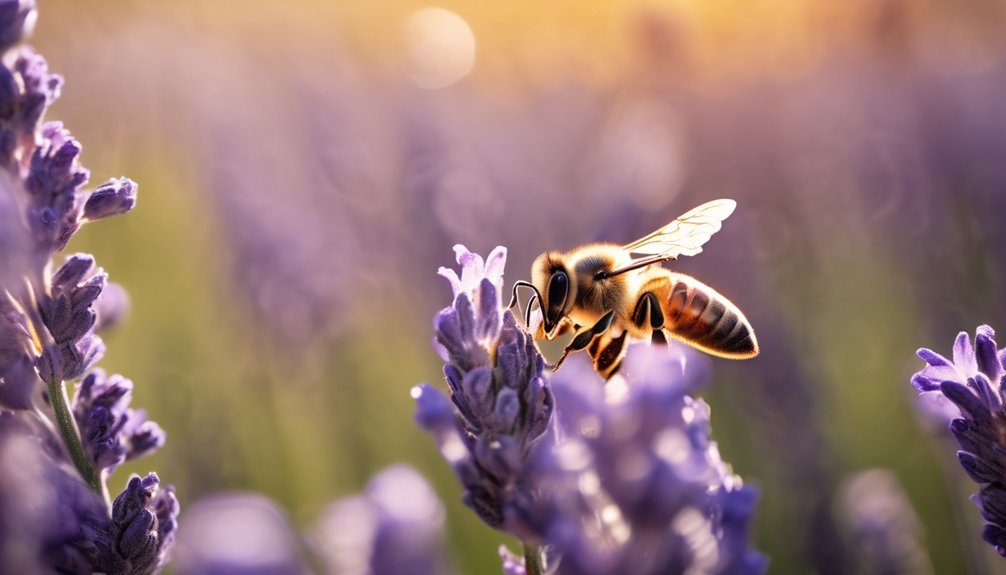
You might think bees only matter for honey, but you’d be missing their larger role in agriculture. When you understand how they transfer pollen between flowers, you see why many crops set more fruit, produce more seeds, and grow more uniformly. Apples, almonds, and berries rely heavily on bee visits. That dependence raises another issue: what happens to food supply when bee numbers fall?
Key Takeaways
- Bees pollinate flowering plants by moving pollen between blossoms, enabling fertilization and fruit and seed formation.
- Their visits improve crop yields by increasing fruit set, size, uniformity, and overall quality.
- Many foods, including apples, berries, and almonds, depend heavily on bee pollination.
- Bee-pollinated crops often have better nutrition, with more seeds, steadier sugar content, and stronger flavor.
- Protecting bees through habitat conservation and reduced pesticides helps maintain biodiversity and stable food supplies.
What Role Do Bees Play in Pollination?
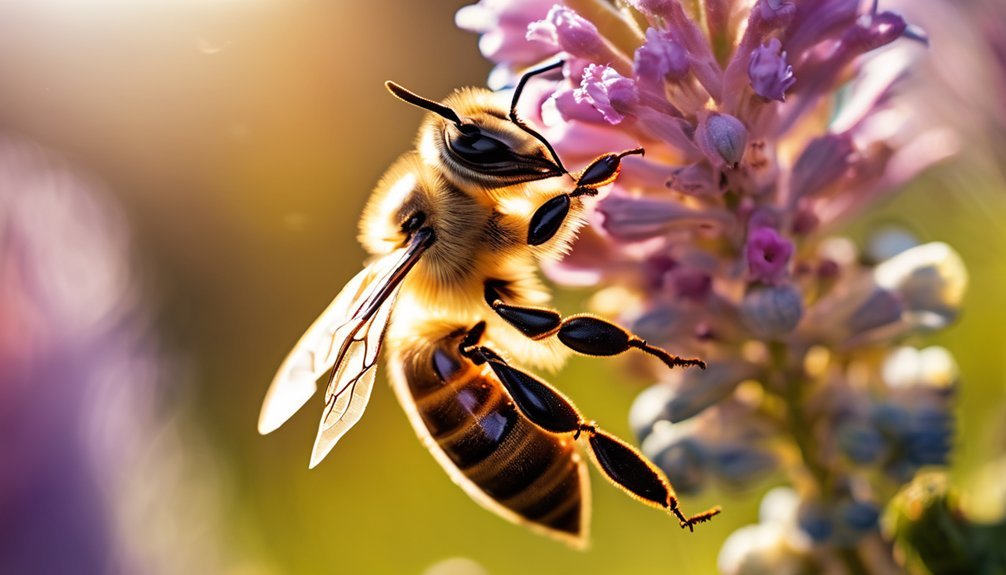
Bees play a central role in pollination because they transfer pollen from the male parts of a flower to the female parts, enabling fertilization and seed formation.
Bees are essential pollinators, transferring pollen between flowers to enable fertilization and seed formation.
You can see this in the pollination process when a bee lands on a flower, and pollen grains stick to its body through hairy bees’ anatomy and electrostatic charge. As the bee moves from bloom to bloom, it deposits pollen on stigmas, supporting reproduction in flowering plants.
You’ll notice that different bee species vary in size, tongue length, and foraging behavior, which affects which flowers they visit. This interaction is mutualistic: the bee gains nectar and pollen, while the plant gains efficient pollen transfer.
In this way, bees connect plant populations with remarkable precision.

How Does Bee Pollination Help Crops Grow?
When pollinators move pollen between flowers, they directly improve crop reproduction by increasing fertilization, seed set, and fruit development.
You can see this most clearly in flowering plants that need animal-assisted pollen transfer to complete reproduction efficiently. As bees visit blossoms, they brush against anthers and stigmas, carrying compatible pollen to new flowers and raising the chance that ovaries develop into healthy fruits and seeds.
This process can improve uniformity, size, and quality, which lifts crop yields under field conditions. You depend on that service because bee activity often shortens the gap between flowering and successful fruit set.
When pollination is effective, plants allocate resources into more marketable produce, and you gain more reliable harvests from the same acreage.
Which Foods Depend Most on Bees?
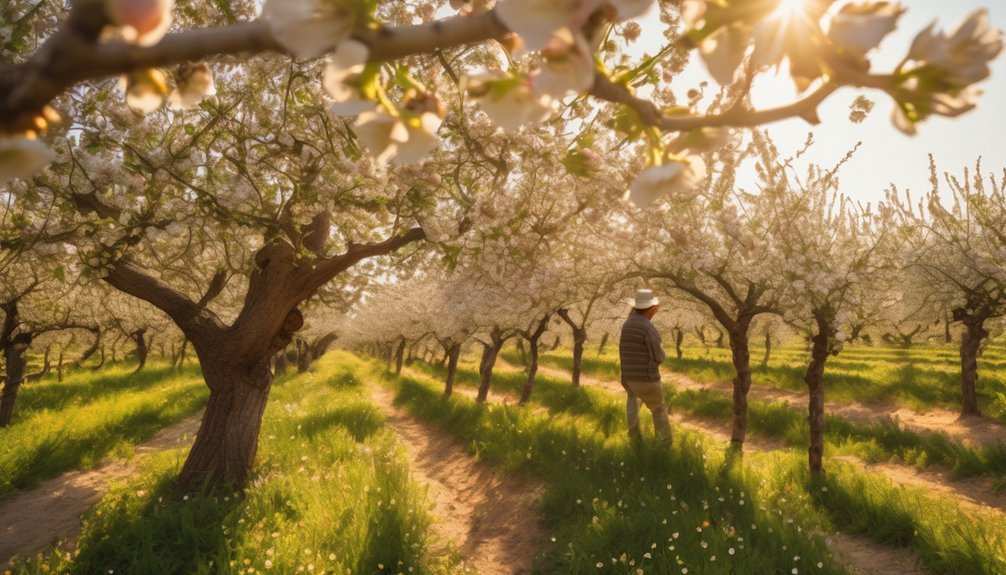
Crops that depend most on bees are those with flowers that need frequent, effective pollen transfer to form well-shaped fruit and viable seeds.
You rely on bees most for apples, pears, cherries, blueberries, strawberries, melons, cucumbers, almonds, and many seed crops. In these fruit varieties, bee visits improve pollination uniformity, which supports marketable size and shape.
You’ll also see strong dependence in plants with separate male and female flowers or with pollen that moves poorly by wind.
Your agricultural practices matter too: placing hives near bloom, avoiding insecticide sprays during foraging, and timing irrigation to protect blossoms all affect results.
Without enough bee activity, you can expect fewer fruits, more misshapen produce, and lower seed set in the field.
Why Bee-Pollinated Crops Improve Nutrition
Bee pollination often improves the nutritional quality of fruits, vegetables, and seeds by increasing the number of seeds and the evenness of fruit development, which can raise levels of sugars, vitamins, and antioxidant compounds. You benefit because pollinated crops often show higher nutrient density and more uniform ripening.
| Feature | Effect on you |
|---|---|
| More seeds | Better fruit set |
| Even development | Steadier sugar content |
| Higher vitamins | Stronger dietary value |
| Crop diversity | Wider nutrient intake |
When bees visit blossoms, they can also increase pollen transfer across flowers, supporting the formation of fuller fruits and richer seeds. That biological change can improve texture, flavor, and measurable chemical quality. In your diet, bee-pollinated produce often contributes more useful nutrients per bite than poorly pollinated crops do, especially when you choose varied, colorful foods.
How Do Bees Support Farmers and Food Security?
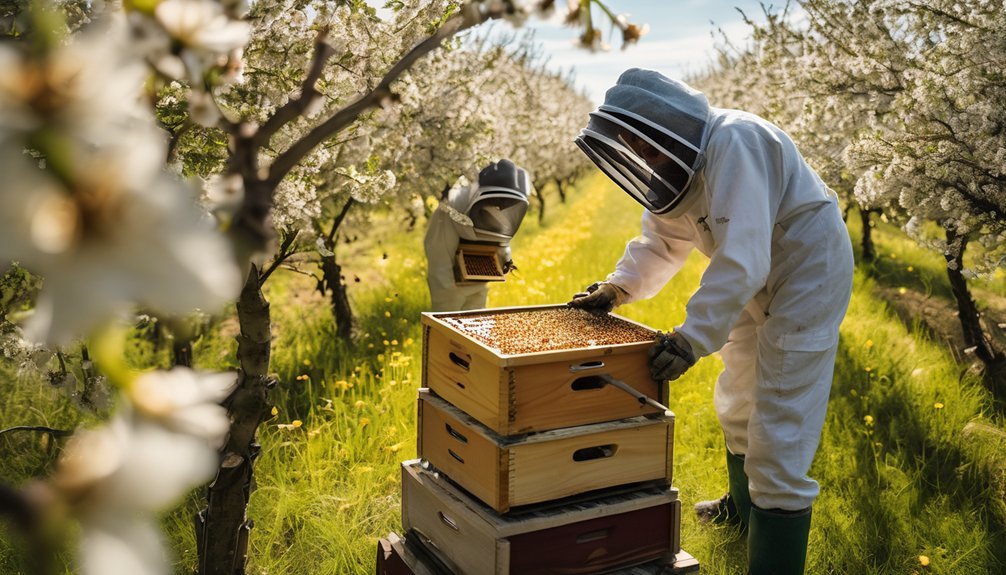
Although bees are small, they support farmers by increasing pollination success, which helps crops set more fruit, form more seeds, and produce more uniform yields.
You benefit when orchards, berries, cucurbits, and oilseeds receive reliable visits from foragers, because field productivity becomes steadier and easier to plan.
In bee farming, careful hive placement can match bloom timing and crop needs, while protecting pollinator habitats nearby gives bees food and shelter across the season.
Strong bee health also matters, since healthy colonies work more efficiently and deliver consistent service.
By supporting sustainable agriculture, you help maintain this biological partnership, reduce input waste, and improve food security for your community.
Every managed hive can strengthen harvest reliability when growers, beekeepers, and land stewards coordinate closely.

What Happens When Bee Populations Decline?
When pollinator numbers drop, many flowering plants receive fewer visits, and fruit set, seed production, and crop uniformity can decline.
Fewer pollinators mean fewer visits, reducing fruit set, seed production, and crop uniformity.
You may see a shrinking bee population trigger ecosystem imbalance, because plants that rely on animal pollination reproduce less efficiently. That agricultural impact can reduce yields in orchards, vegetable fields, and oilseed crops, raising the risk of food scarcity.
You also face biodiversity loss as fewer wild plants set seed, which weakens habitat for insects, birds, and small mammals. Lower plant diversity can alter food webs and favor pest proliferation in disturbed systems.
Over time, economic consequences emerge through higher production costs, unstable harvests, and market price increases.
Climate change can intensify these pressures by shifting bloom timing and stressing both bees and the plants they visit.
How Can We Protect Bees and Pollinators?
You can protect bees and other pollinators by reducing the stresses that weaken them and by restoring the habitats they need to survive.
You support habitat preservation when you keep native flowering areas, hedgerows, and nesting sites intact. Pesticide reduction matters too; you should avoid spraying during bloom and choose targeted, less toxic controls when possible.
Urban gardening can help when you plant diverse, pesticide-free flowers that bloom across seasons. Bee education gives you the knowledge to recognize pollinators, protect nests, and time yard work carefully.
Community involvement strengthens these efforts through shared pollinator gardens and local monitoring. Sustainable farming practices, including crop rotation and reduced chemical use, improve biodiversity support and give bees more reliable forage.
Why Healthy Bees Support Healthier Ecosystems
Healthy bees support healthier ecosystems because they pollinate many wild plants as well as crops, helping maintain plant reproduction, genetic diversity, and food availability for other organisms.
When you protect bee behavior, you also preserve ecosystem balance, because strong colonies move pollen efficiently across habitats.
You can strengthen pollinator diversity by supporting habitat preservation and planting varied floral resources that bloom across seasons.
Smart agricultural practices, including reduced pesticide impact and careful timing of field work, lower stress on bees and improve survival.
Climate effects can shift flowering periods and forage quality, so you need resilient landscapes that buffer change.
Healthy bees also sustain birds, insects, and mammals that depend on seeds, fruit, and stable plant communities, making your local environment more productive and biologically rich.
Frequently Asked Questions
How Far Can Bees Travel While Foraging?
Bees can forage up to about 5 miles, though you’ll usually see shorter trips. Their foraging distance depends on food availability, colony needs, and flight patterns, and you can measure it scientifically.
Do All Bee Species Pollinate Crops Equally?
No, you don’t. A bumblebee brushes tomato flowers just as you watch a honeybee on clover; native bee importance and pollination efficiency vary by species, crop shape, behavior, and body size.
Can Urban Gardens Help Bee Populations?
Yes—you can help bee populations in urban gardens by boosting urban biodiversity, adding native plants, and designing pollinator pathways. Your community involvement, habitat restoration, sustainable practices, and educational programs can create reliable habitat and food.
How Does Weather Affect Bee Activity?
Weather’s the OG influencer: you’ll see bee behavior shift with temperature effects, humidity impact, seasonal changes, and weather patterns. You can expect less flight in cold, wet, or windy conditions, and more foraging in warm, calm weather.
What Time of Day Are Bees Most Active?
You’ll usually find bees most active during late morning and early afternoon, when temperatures rise and flowers open. Their bees’ circadian rhythms drive peak foraging hours, so you’ll see them flying steadily then.
Conclusion
You can see that bees do far more than make honey: they drive pollination for many crops, boost fruit and seed set, improve food quality, and support farm productivity. Without them, yields would fall and food systems would face a massive strain. By protecting habitats, reducing pesticide exposure, and supporting diverse pollinators, you help maintain healthy bee populations. In turn, you support stronger ecosystems, better nutrition, and a more secure food supply for everyone.