You might think human perception sets the standard, but many animals operate with sensory systems far beyond yours. Bats map space with sound, pit vipers detect infrared, and sharks track faint chemical traces in water. These abilities aren’t curiosities; they’re specialized tools for hunting, navigation, and survival. Once you compare how different species process light, sound, smell, and vibration, the limits of your own senses start to look surprisingly narrow.
Key Takeaways
- Bats use echolocation, and pit vipers detect infrared heat to navigate and hunt.
- Sharks, birds, and mantis shrimps have heightened taste or color perception beyond human abilities.
- Sea turtles and migratory birds use magnetoreception to sense Earth’s magnetic field for navigation.
- Many animals have superior night vision, ultrasonic hearing, and olfactory skills for survival.
- Super senses help animals detect danger, find mates, coordinate socially, and improve hunting efficiency.
Which Animals Have Superhuman Senses?
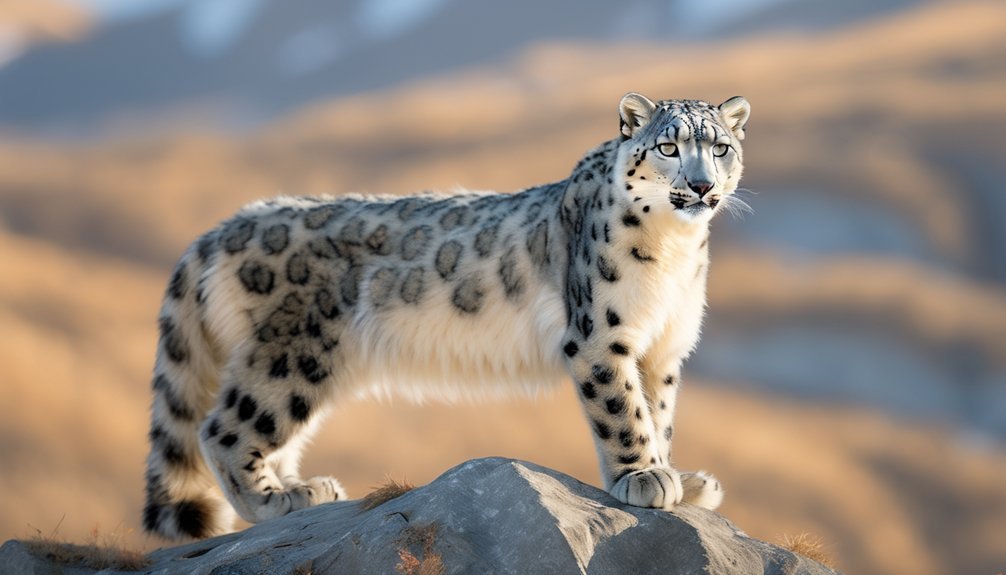
Some animals possess sensory capabilities that exceed human limits by a wide margin. You can see these sensory adaptations in bats using echolocation techniques, in pit vipers with infrared vision, and in sharks with enhanced taste for chemical traces.
You’ll notice magnetoreception abilities in sea turtles and migratory birds, which navigate with remarkable precision. You can also study color perception in birds and mantis shrimps, whose visual systems detect signals you can’t.
Dogs and elephants rely on olfactory memory to track individuals, territories, and threats. Dolphins and songbirds depend on acoustic communication to coordinate group behavior and maintain contact.
Across these species, evolution has optimized sensory input for specific ecological demands, giving them abilities that aren’t magical, but are highly specialized and measurable in your own analytical terms.

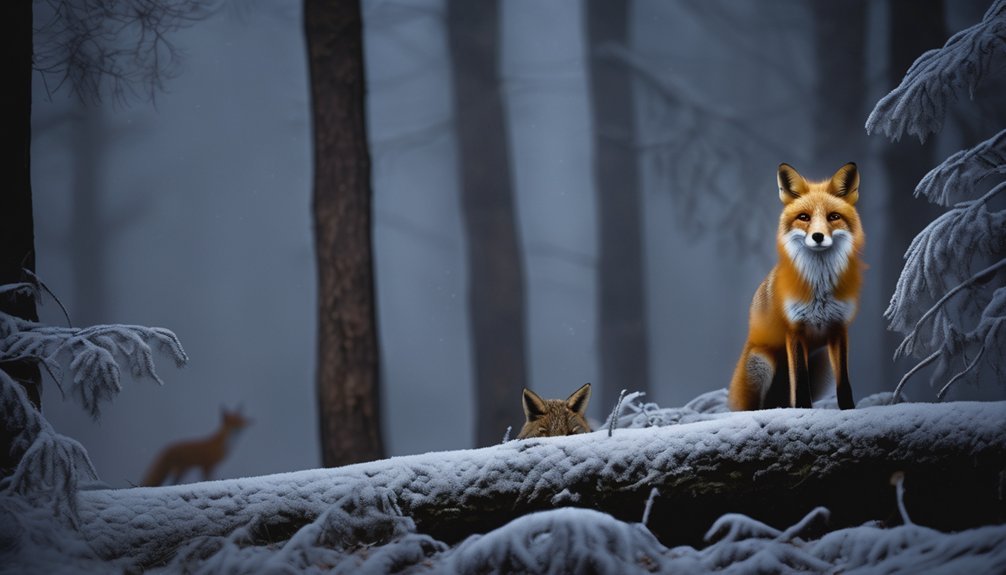
How Animals See in Total Darkness
In total darkness, animals don’t “see” in the human sense; they extract useful information from extremely low light or generate their own signals to detect nearby objects.
You can think of night vision as a spectrum of adaptations, from enlarged pupils and dense rod cells to reflective tapeta that recycle photons.
During dark adaptation, photoreceptors become more sensitive, letting you detect faint contrasts after a brief delay.
Some species push sensitivity further by integrating motion cues and sharpening edge detection, so you can track shapes where color disappears.
Others emit light or sonic pulses, but even then the visual system still matters for navigation and targeting.
In each case, the eye trades resolution for sensitivity, optimizing performance when darkness would otherwise erase detail entirely.
How Animals Hear What Humans Can’t?
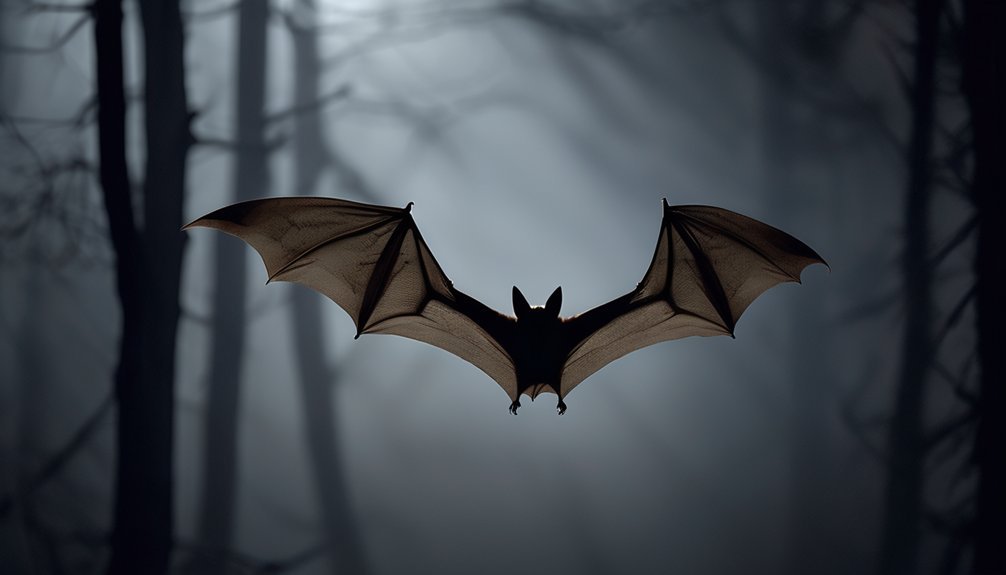
If darkness limits vision, sound gives animals another channel to map their surroundings, and many species detect frequencies you can’t hear. You’ll find that ultrasonic hearing lets bats and some rodents analyze echoes above your audible range, turning air into a precise spatial dataset.
Their frequency perception is tuned by specialized cochlear structures that separate fine pitch differences, so they can judge distance, motion, and texture with remarkable accuracy. You can think of this as acoustic sampling at a higher resolution than yours.
Dogs, elephants, and whales also exploit extended bandwidths, though in different ranges, to exchange information over distance. When you listen, you’re using a narrower slice of the spectrum; they’re reading a broader one, and that changes how they navigate, hunt, and stay coordinated.
The Incredible Sense of Smell in Animals
Smell gives animals a high-dimensional chemical map of their environment, and many species process odor at a sensitivity and scale far beyond human capability.
You can see this in olfactory adaptations that enlarge receptor arrays, expand brain regions for odor analysis, and tune airflow through specialized nasal structures. A single scent trace can carry identity, reproductive status, territory, and danger, so scent communication becomes a precise information system rather than a vague cue.
You’re watching chemistry become behavior: predators track minute residue, mates assess compatibility, and social groups coordinate without direct contact.
Because each molecule arrives in a patterned blend, animals discriminate complex mixtures with remarkable accuracy. Their noses don’t merely detect smell; they decode it, rapidly and with exquisite specificity for survival.
Animals That Sense Vibration and Motion
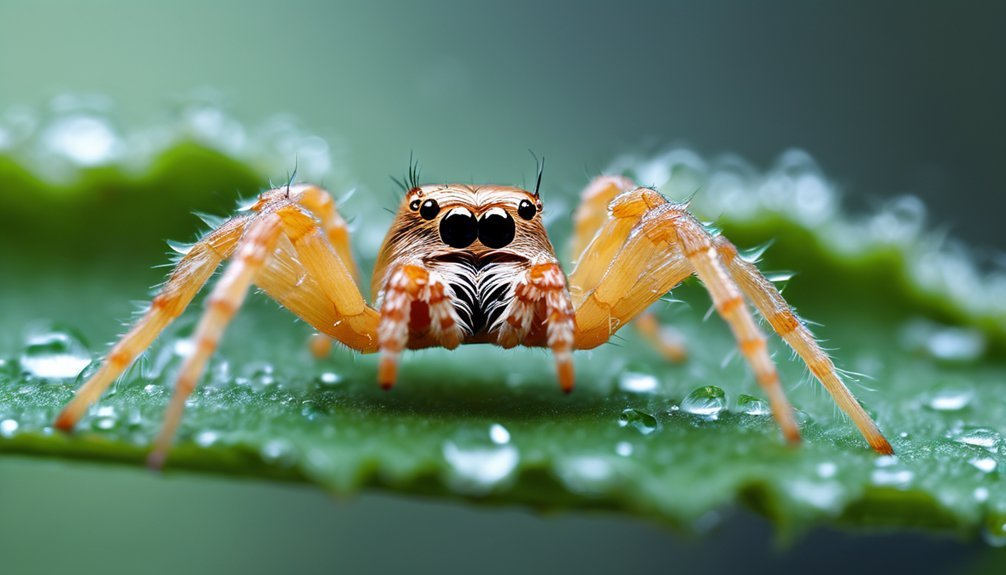
While sight and hearing miss subtle disturbances, many animals detect vibration and motion through dedicated sensory systems that convert mechanical energy into actionable information. You can see this in spiders, fish, snakes, and elephants, which use Vibration detection and Motion sensing to map nearby activity with high precision.
Their receptors often sit in skin, limbs, or lateral tissues, where tiny pressure shifts become neural signals.
- Spiders read web tremors.
- Fish use lateral lines.
- Snakes track ground-borne motion.
- Elephants feel low-frequency footsteps.
You benefit from noticing how these animals don’t guess; they sample movement continuously, then localize sources fast. This sensory design reduces uncertainty and sharpens survival decisions in close-range environments.

How Animals Sense Weather Changes
Animals often sense weather before you do by detecting changes in air pressure, humidity, temperature, and electrical charge. You can read this as biological weather prediction: sensory tissues register atmospheric changes, then trigger behavior. Birds, frogs, and insects often shift feeding, sheltering, or migration timing when pressure drops. Their responses aren’t mystical; they’re calibrated to environmental gradients.
| Cue | Animal response | Effect |
|---|---|---|
| Low pressure | Seek cover | Storm avoidance |
| Rising humidity | Increase activity | Foraging adjustment |
| Temperature shift | Relocate | Energy conservation |
When you watch these patterns, you see an intimate, data-driven map of impending weather. The animal body acts like a living barometer, translating subtle atmospheric changes into immediate decisions that keep it safe and efficient.
How Animals Sense Electricity
Beyond pressure and humidity, some animals also read the electric landscape around them. You can think of electric field detection as a passive sensor network: water or moist tissue carries tiny voltage gradients, and specialized receptors sample them with high precision.
Your best-known examples are sharks, rays, and some fish, whose electroreception abilities let them register faint changes that your own skin can’t detect.
- Electroreceptors sit in pits or canals.
- They convert microvolt shifts into neural signals.
- They work best in conductive water.
- They help you map nearby electrical patterns.
This system’s sensitivity depends on receptor density, field strength, and environmental noise, so even subtle currents become meaningful data.
How Animals Use Super Senses to Hunt
When prey leaves a thermal, chemical, electrical, or vibration trace, predators can exploit that signal to localize it faster than sight alone allows. You can think of hunting strategies as optimized filters: each sensory adaptation reduces uncertainty about distance, direction, and motion.
| Signal | Use in hunting |
|---|---|
| Heat | Track warm-blooded prey |
| Odor | Follow fresh trails |
| Electricity | Detect hidden body fields |
| Vibration | Pinpoint moving targets |
| Pressure | Time the strike |
You’ll see how a shark’s electroreception, a snake’s heat sensing, or an owl’s tuned hearing lets it close in with minimal error. These systems don’t replace vision; they complement it, letting you identify prey in clutter, darkness, or sediment. In effect, the predator’s body becomes a calibrated instrument.
How Super Senses Help Animals Survive and Communicate
Super senses don’t just help predators close in on prey; they also let animals avoid danger, find mates, recognize relatives, and coordinate group behavior. You can see how each sensory channel supports survival strategies and communication techniques in tight ecological niches.
Super senses help animals avoid danger, find mates, recognize kin, and coordinate behavior in complex ecological niches.
- Hearing detects alarm calls before you spot a threat.
- Smell identifies kin, territory, and reproductive status.
- Vision tracks motion, dominance displays, and group spacing.
- Touch and vibration sensing synchronize movement in crowds.
When you study these systems, you notice precision: signals travel fast, get filtered by context, and trigger specific responses. That efficiency reduces injury, preserves energy, and strengthens social cohesion.
In many species, super senses turn the environment into a constant information network, letting you read danger and intent before contact happens.
What Humans Can Learn From Animal Senses
Animal senses show you how to design better detection systems by pairing sensitivity with context-aware filtering. You can study how bats suppress echoes, how dogs isolate trace odors, and how owls localize faint sound to improve your own tools.
In practice, that means building sensors that adapt thresholds, reject noise, and prioritize biologically relevant signals. You’ll get better performance if you combine scent training with calibrated sampling, because repetition teaches pattern discrimination.
Likewise, auditory enhancements work best when they narrow bandwidth, reduce masking, and preserve timing cues.
Animal perception also reminds you that no sense operates alone; fusion increases reliability. If you model that integration, you can detect threats earlier, respond faster, and make systems that feel almost intuitive to use.
Frequently Asked Questions
What Animals Have the Strongest Sense of Smell?
Bloodhounds, elephants, bears, and sharks lead in smell detection. You’ll notice dogs excel at scent communication, too. Their olfactory systems outstrip yours by millions of receptors, making them remarkably precise trackers in practice.
How Do Animals Use Super Senses to Migrate?
You’d see animals migrate by integrating magnetic navigation with environmental cues, like sunlight, odors, stars, and currents. These signals let you orient, correct drift, and maintain route fidelity across vast distances with remarkable precision.
Can Animals Sense Danger Before Humans Do?
Yes, you can see animals often detect danger before you do, like Cassandra forewarning Troy. Their danger detection relies on instinctual behavior, acute sensory processing, and rapid threat assessment that outpaces your conscious awareness.
Which Animals Have Ultraviolet Vision?
You’ll find ultraviolet vision in bees, butterflies, birds, reptiles, and some fish and rodents. Their ultraviolet perception reflects specialized animal adaptations that extend spectral sensitivity, letting you detect signals, patterns, and prey beyond human sight.
How Do Super Senses Help Nocturnal Animals Avoid Predators?
You’d use night vision and sensory adaptations to detect faint movement, shifts, and odors, letting you evade predators in darkness. A medieval trick, you’d rely on enhanced hearing, smell, and touch to stay hidden.
Conclusion
As you’ve seen, animals don’t just survive—they operate with sensory systems tuned far beyond your own. From echolocation and infrared detection to vibration sensing and magnetoreception, each adaptation gives them a clear edge in finding food, avoiding danger, and communicating. You can’t help but see that nature’s designs are the real deal. By studying these super senses, you gain powerful insight into biology, technology, and how perception shapes life itself.