
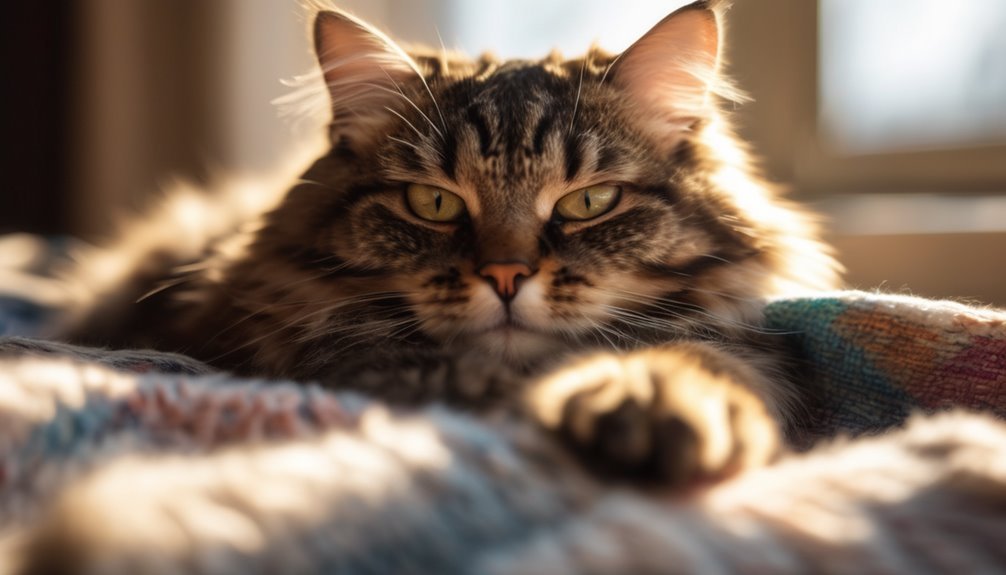
You might not realize that kneading is an instinctual behavior rooted in your cat’s early life. This rhythmic motion stems from their kittenhood, where it was essential for nursing. As you observe your cat kneading blankets, it reflects not just comfort but also emotional states and territorial instincts. Understanding these nuances can deepen your connection with your feline companion, revealing layers to their behavior that may surprise you. What else could kneading reveal about your cat?
Key Takeaways
- Cats knead blankets to recreate comforting sensations from kittenhood, reminiscent of nursing and warmth from their mother.
- The behavior expresses contentment, marking territory, and indicates a trusting bond with their human companions.
- Kneading on soft surfaces provides a cozy spot, enhancing relaxation and emotional comfort.
- It can serve as a stress-relief mechanism, signaling happiness or a playful mood in your cat.
- Excessive kneading may indicate anxiety or discomfort, so it’s essential to monitor your cat’s emotional health.
What Is Cat Kneading and Why Do They Do It?
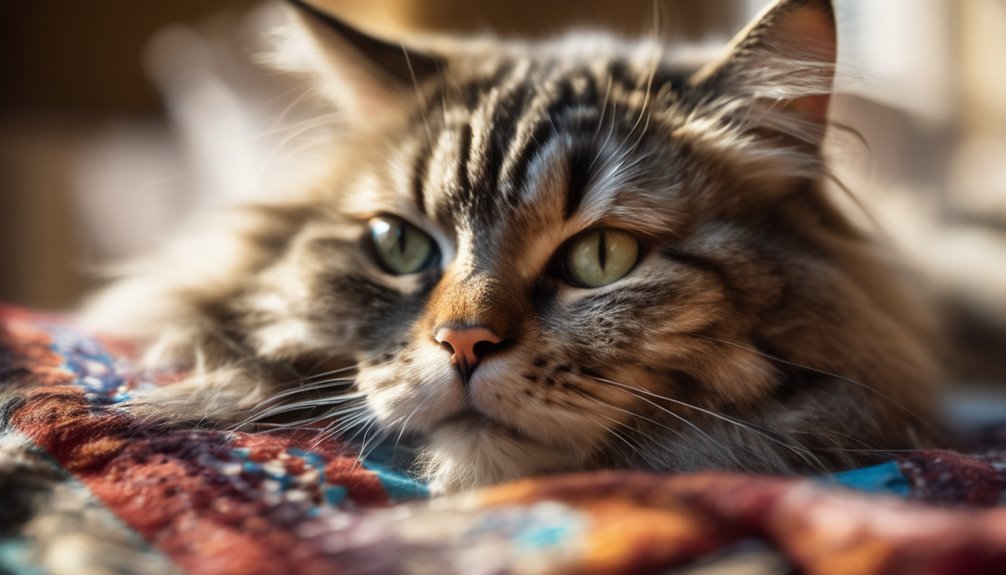
Cat kneading, often seen as a rhythmic pushing of their paws against soft surfaces, is a behavior that many cat owners recognize but may not fully understand.
This kneading behavior often accompanies soothing purring patterns, creating a comforting atmosphere for both you and your feline friend.
While the exact reason for kneading isn’t universally agreed upon, it’s believed to stem from kittenhood, when they kneaded their mother’s belly to stimulate milk flow.
Even as adults, cats knead to express contentment, mark territory, or create a cozy resting spot.

Understanding this behavior allows you to appreciate their unique way of communicating affection, deepening the bond you share with your beloved pet.
The Emotional and Instinctual Roots of Kneading
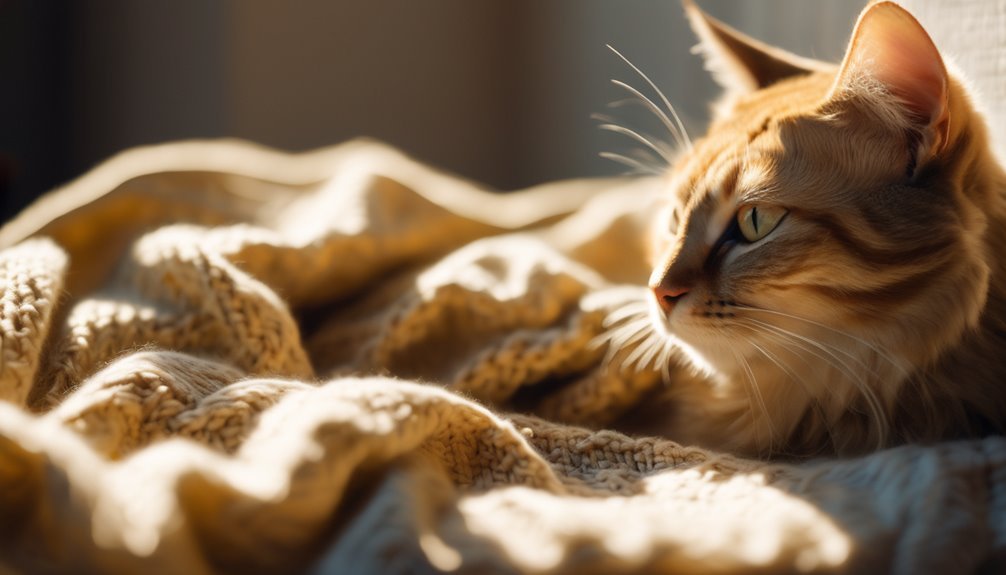
Kneading serves as a fascinating blend of emotional expression and instinctual behavior in felines. When your cat kneads, it’s more than just a quirky habit; it’s a deep-rooted instinct that connects to their past.
Here are three emotional and instinctual roots behind this behavior:
- Comfort: Your cat often kneads to recreate the soothing sensations of nursing, providing comfort and security.
- Purring Behavior: This rhythmic motion often accompanies purring, signaling contentment and relaxation.
- Scent Marking: Cats have scent glands in their paws, so kneading is a way for them to mark their territory, making you feel like home.
How Kneading Relates to Kittenhood
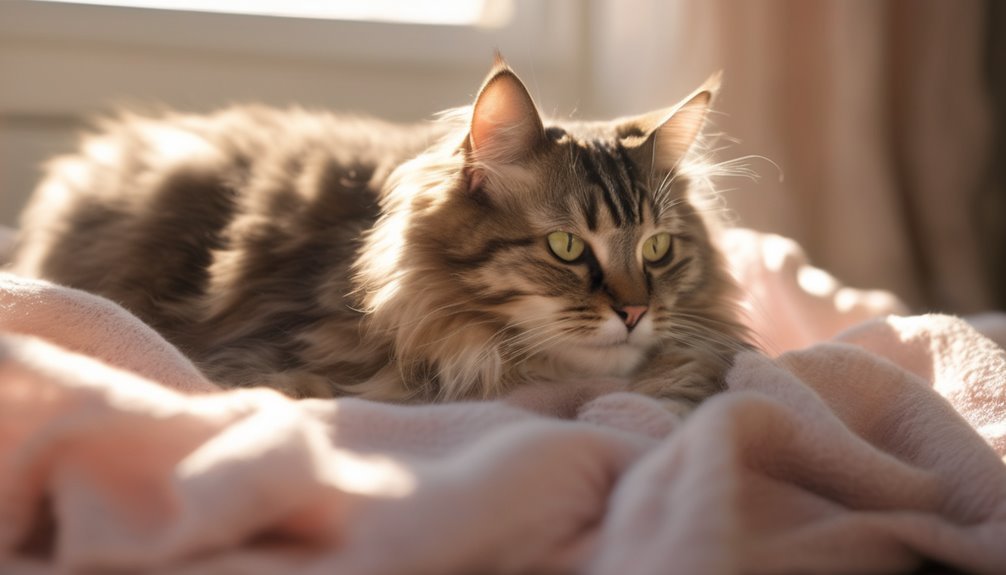
While you may observe your cat kneading blankets as a serene ritual, this behavior harks back to their kittenhood. During those early days, kneading was vital for kitten comfort, helping them stimulate their mother’s milk flow while nursing.
This instinctual action provided not just sustenance but a sense of security and warmth, reinforcing their bond with their mother. As adult cats, they often replicate this behavior to evoke the same feelings of safety.
When your cat kneads, it’s a reminder of those formative moments, a way to seek comfort and express contentment. Understanding this connection deepens your appreciation for their need to knead, highlighting the enduring impact of their early experiences on their current behaviors.
What Cat Kneading Says About Your Cat’s Emotions
When your cat kneads, it often signals a complex emotional state that encompasses comfort, happiness, and even anxiety. This rhythmic motion serves as a vital form of emotional expression, revealing what your feline friend feels in those moments.
Consider the following:
- Comfort Signals: Your cat may knead when they’re feeling relaxed and safe, often seeking a cozy spot to settle down.
- Joyful Moments: Kneading can accompany play or affection, indicating pure happiness and contentment in your presence.
- Anxiety Release: If your cat kneads during stressful times, it might be a self-soothing behavior to cope with unease.
The Connection Between Kneading and Comfort
Understanding your cat’s kneading behavior offers valuable insights into their need for comfort. When your cat kneads, they’re often seeking to create a sense of security in their comfort zones.
This rhythmic motion mimics the nurturing actions they experienced as kittens, providing them with sensory stimulation that relaxes and reassures them. You might notice your cat kneading on soft blankets or your lap, a sign that they feel safe and content in your presence.
This behavior not only comforts your cat but also strengthens the bond between you. By recognizing kneading as a form of self-soothing, you can better appreciate their emotional needs and create an environment that fosters their well-being.
Ultimately, kneading is a beautiful expression of trust and comfort.
Can Kneading Indicate Stress or Anxiety in Cats?
Kneading isn’t always a sign of contentment; it can also indicate stress or anxiety in cats. If your cat’s kneading seems excessive or out of character, it might be expressing discomfort.
Watch for these stress indicators:
- Vocalizations: Increased meowing or hissing can signal unease.
- Body Language: A tense posture or a flicking tail may suggest anxiety.
- Withdrawal: If your cat isolates itself or avoids interaction, it could be a sign of distress.
Understanding these anxiety signs can help you respond to your cat’s needs.

Recognizing your cat’s anxiety signals is crucial for meeting their emotional needs effectively.
If you notice these behaviors alongside kneading, it’s essential to create a calming environment for your feline friend. Your awareness and empathy can make a significant difference in their emotional well-being.
Tips for Encouraging Healthy Kneading
Many cat owners want to encourage their pets’ kneading behavior, as it can foster a sense of security and well-being.
To promote this comforting action, provide a variety of soft surfaces for your cat to knead, like blankets or plush beds. You can also introduce cat toys that mimic the texture of their favorite kneading spots. Engaging in playtime encourages relaxation and can enhance their kneading techniques.
Observe your cat’s preferences; they might have specific spots they favor. Create a calm environment, free of stressors, so your cat feels secure enough to knead.
How to Respond to Aggressive Kneading?
When your cat’s kneading turns aggressive, it can be alarming and uncomfortable. Understanding how to manage this aggressive behavior is essential for both your comfort and your cat’s well-being.
Here are three effective strategies:
- Redirect Attention: Gently distract your cat with a toy or a treat, steering their focus away from aggressive kneading.
- Provide a Safe Space: Create a cozy area with soft blankets where they can knead without the risk of scratching you, helping them feel secure.
- Observe Triggers: Pay attention to what leads to aggressive kneading—stress, excitement, or overstimulation—and adjust your environment accordingly.
Can Kneading Help Strengthen Your Bond?
While it might seem like a mere instinctual behavior, kneading can actually play a significant role in strengthening the bond between you and your cat.
When your feline friend kneads, it often indicates comfort and trust, creating a unique emotional connection. This behavior can serve as a bonding activity, allowing you to engage with your cat on a deeper level.
Kneading reflects your cat’s comfort and trust, deepening the emotional bond you share. Embrace these special moments together.
By providing a safe space and responding positively, you reinforce this trust, enhancing your relationship. The rhythmic motion of kneading symbolizes contentment, and your cat’s choice to share it with you speaks volumes.
Embrace these moments; they’re not just cute—they’re essential for fostering intimacy between you and your beloved pet.
Preferred Surfaces for Kneading
Some cats have specific preferences when it comes to the surfaces they knead. Understanding these choices can deepen your connection with your feline friend.
Cats often seek out preferred materials that provide ideal textures for kneading. Here are a few favorites:
- Soft blankets: The gentle fibers feel comforting against their paws, mimicking their kittenhood.
- Pillows: The plushness offers a perfect balance of resistance and give, making it delightful for kneading.
- Clothing: Your worn shirts or sweaters carry your scent, adding an emotional layer to their kneading experience.
Recognizing these surfaces not only enhances your cat’s comfort but also strengthens your bond, as you provide them with the ideal environment to express their natural instincts.
Frequently Asked Questions
Can All Cats Knead, or Is It Breed-Specific?
All cats can knead; it’s not breed-specific. This behavior stems from their kneading history as kittens, providing comfort and bonding. Understanding this instinctual action deepens your connection with your feline friend, enhancing your shared experiences.
Is Kneading a Sign of Affection or Dominance?
When it comes to kneading, you’re seeing an affection display rooted in instinctual behavior. Your cat’s kneading isn’t a power play; it’s their way of showing love and comfort, creating a bond with you.
How Long Do Cats Typically Knead For?
Cats typically knead for a few minutes to an hour, depending on their mood and comfort level. This cat behavior often reflects their need for relaxation and affection, providing you both a deeper bond.
Can Kneading Be Harmful to Furniture or Blankets?
Kneading’s like a cat’s gentle massage for comfort, but it can harm your furniture or damage blankets. Protect your belongings by providing a designated kneading spot, ensuring your cat feels secure while preserving your home.
Do Cats Knead More During Certain Seasons or Times of Day?
Yes, cats often exhibit seasonal behavior, kneading more during colder months for warmth and comfort. Daily patterns can also influence this, as they may knead more during quiet times, seeking your presence and connection.
Conclusion
In conclusion, understanding your cat’s kneading behavior offers insights into their emotional well-being. Research shows that over 70% of cats engage in kneading, highlighting its significance in their lives. This comforting act not only ties back to their kittenhood but also strengthens your bond. By recognizing the underlying reasons and responding appropriately, you can foster a nurturing environment that enhances your cat’s sense of security and happiness.