
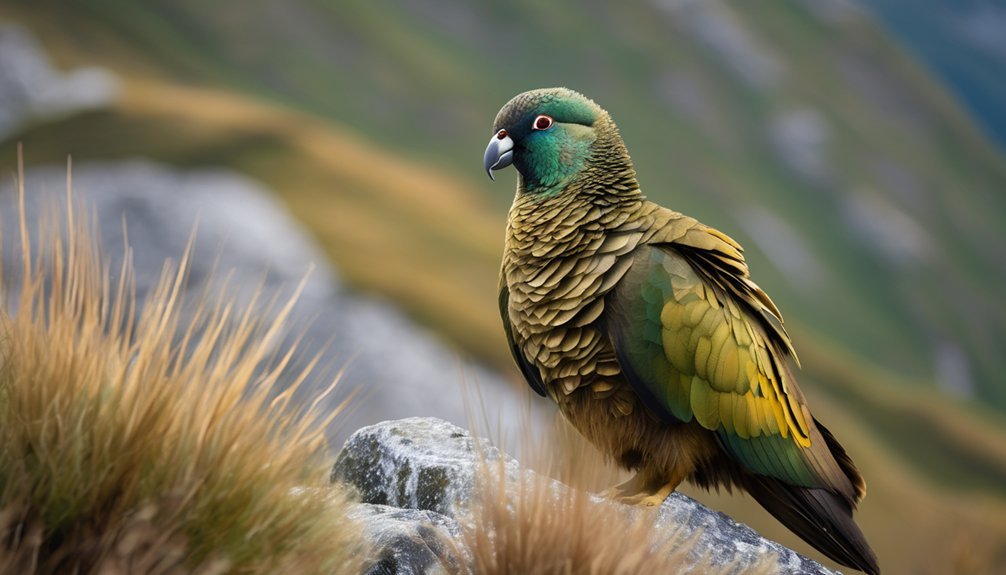
You might expect the biggest birds to be the smartest, yet size often matters less than neural complexity and behavior. When you compare crows, parrots, ravens, and magpies, you see tool use, social learning, memory, and flexible problem-solving that can rival some mammals. Scientists still debate how to rank these species, and the answer depends on which cognitive tests you trust most.
Key Takeaways
- Crows are among the smartest birds, excelling at tool use, memory, and adapting to new challenges.
- Parrots show strong problem-solving, flexible learning, and advanced communication through mimicry and calls.
- Ravens and magpies demonstrate high intelligence through social coordination, tool making, and strong facial memory.
- Bird intelligence is often measured by problem-solving, learning speed, memory, adaptability, and social behavior.
- Different species excel in different habitats, so the “most intelligent” bird depends on the task and environment.
What Makes a Bird Intelligent?
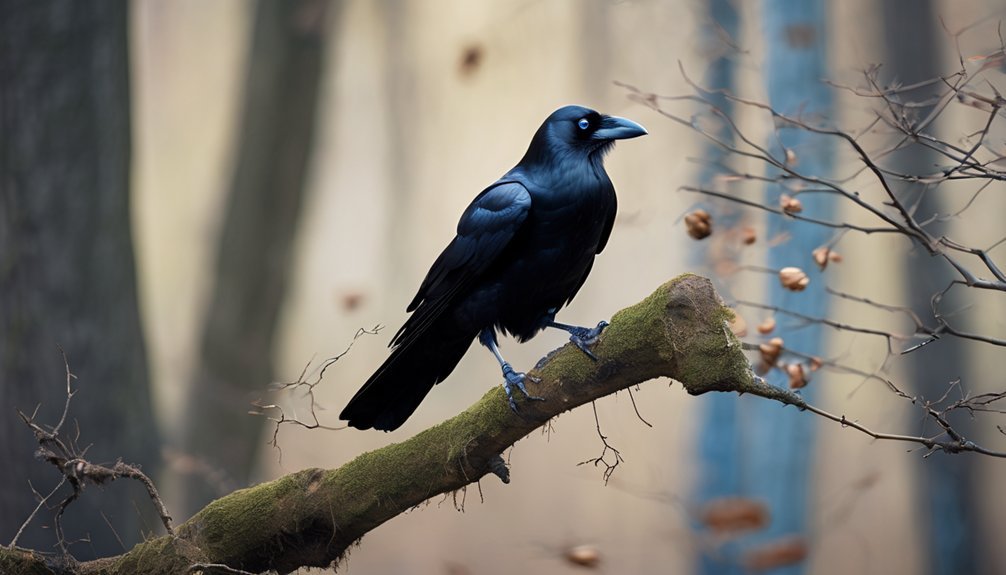
A bird’s intelligence is typically judged by how well it can solve problems, learn from experience, remember information, and adapt its behavior to changing conditions.
You can assess its cognitive abilities by observing how it navigates novel tasks and updates choices. Social behavior also matters, because birds that track group dynamics often show flexible responses.
Tool usage, communication skills, and memory capacity reveal how efficiently it handles complex situations. Its learning methods may include imitation, trial and error, or repeated practice.

You should also consider adaptability factors, such as how it copes with environmental challenges like food scarcity, predators, or shifting habitats.
Together, these traits give you a precise view of intelligence.
Are Crows the Smartest Birds?
Crows often come up first when people ask which birds rank highest in intelligence, and for good reason. You can observe strong cognitive abilities in their tool use, memory, and flexible adaptation. Their social behavior also matters: they recognize individuals, remember threats, and adjust tactics within groups.
| Trait | Evidence |
|---|---|
| Memory | They recall food caches and human faces |
| Learning | They adapt quickly to new challenges |
| Cooperation | They respond to allies and rivals |
These traits place crows among the smartest birds, but “smartest” depends on the task you measure. You may find that different species excel in different domains, so crow intelligence is remarkable rather than absolute.
Parrots and Their Problem-Solving Skills
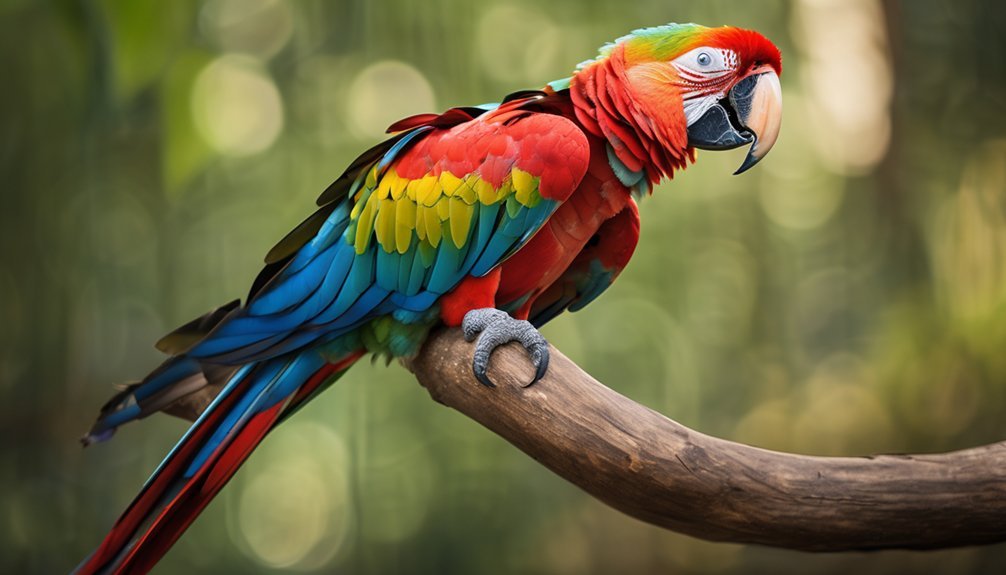
Parrots stand out for problem-solving that combines learning, memory, and vocal flexibility. You can see this when they open latches, solve multi-step tasks, and adapt after errors.
Their cognitive flexibility lets them shift strategies when a method fails, which supports efficient foraging and social interaction. In parrot communication, calls and mimicry often help them coordinate with flock mates and respond to new situations.
- You may notice a parrot testing objects before acting.
- You can observe rapid adjustment when rewards change.
- You’ll hear individualized sounds that support recognition.
- You may see persistence until a goal is reached.
These behaviors show that parrots don’t rely on instinct alone; they use learning to handle novel problems with measurable accuracy.
Ravens, Magpies, and Other Smart Corvids
If parrots impress with flexible problem-solving, corvids such as ravens and magpies are equally notable for their advanced cognition.
You can observe their social behavior in coordinated foraging, alliance formation, and deception, which shows they track other birds’ intentions. Their tool use includes shaping sticks and hooks to extract food, a skill that reflects strong learning capacity.
You’ll also notice impressive memory abilities: they remember food caches, individual faces, and past threats for long periods. Their communication methods are complex, relying on calls, posture, and context-specific signals.
Ravens also show mimicry skills, reproducing sounds from their surroundings with accuracy. Together, these traits make corvids a model group for studying intelligence, because they combine flexible behavior, memory, and social awareness in ways that rival many primates.
Smartest Birds by Habitat
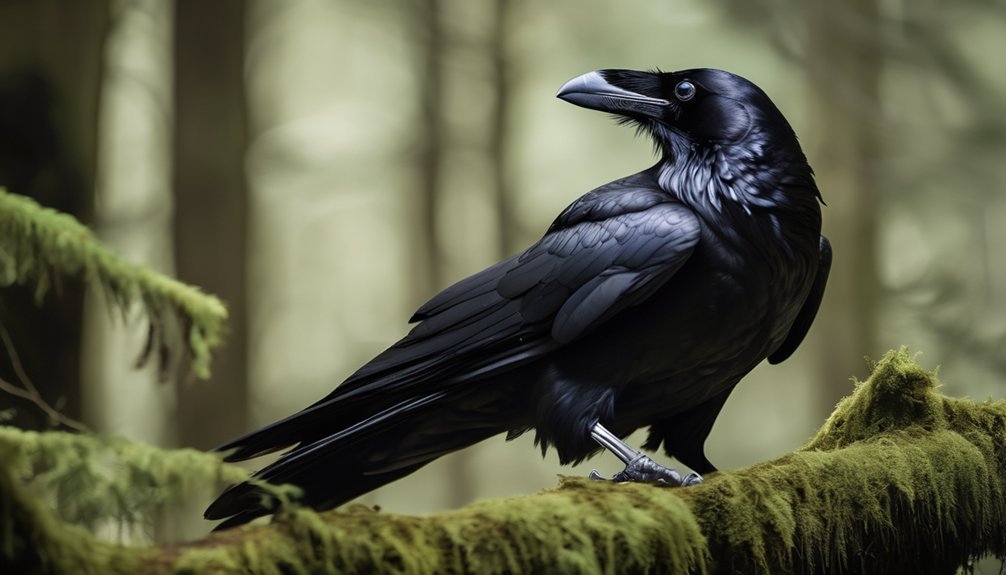
Smart bird species are distributed across habitats in ways that reflect different ecological pressures, and their cognitive strengths often match the demands of their environments.

In cities, you’ll notice pigeons, crows, and gulls showing urban adaptability through flexible foraging and memory of human routines.
In forests, jays and woodpeckers rely on spatial recall to hide and recover food.
In wetlands, herons and kingfishers use precise timing and attention to track prey.
Across open oceans and continents, seabirds and songbirds depend on migratory navigation, using celestial, magnetic, and landmark cues.
- Urban streets reward quick problem solving.
- Forests favor cache memory.
- Wetlands demand patient visual tracking.
- Migration selects for orientation and endurance.
How Scientists Measure Bird Intelligence
Scientists measure bird intelligence by testing specific cognitive abilities rather than assigning a single general score. You’ll see researchers use cognitive testing to assess memory, problem solving, tool use, vocal learning, and self-control.
They present controlled tasks, record success rates, and compare performance across species while keeping conditions consistent. You can also expect them to examine brain structure, especially the size and organization of regions linked to learning and sensory processing.
These measurements don’t prove a bird is “smart” in one universal way; instead, they show how different species excel at different mental tasks. By combining behavior data with anatomy, scientists build a more precise picture of avian cognition, and you get a clearer, evidence-based understanding of what intelligence means in birds.
Why Bird Intelligence Matters in Nature
Bird intelligence matters in nature because it helps birds survive, reproduce, and adapt to changing environments. When you observe a clever species, you’re seeing neural flexibility translated into practical outcomes.
Bird intelligence helps birds survive, reproduce, and adapt, turning neural flexibility into practical success in changing environments.
Birds use memory, problem-solving, and learning to locate food, avoid predators, and navigate complex habitats. Strong social dynamics also shape intelligence, since individuals must read signals, form alliances, and compete efficiently.
These abilities improve survival strategies in harsh seasons and unstable ecosystems.
- Find hidden food more efficiently
- Recognize threats and escape faster
- Coordinate mating and parental care
- Adjust behavior when conditions shift
Frequently Asked Questions
Which Bird Species Can Use Tools Most Effectively?
New Caledonian crows likely use tools most effectively. You’d see exceptional tool use and cognitive abilities in them, including shaping hooks and extracting insects, with documented innovation that outpaces most other bird species.
Do Intelligent Birds Recognize Individual Human Faces?
Yes, you’ll find that many intelligent birds do recognize individual human faces through facial recognition, especially after repeated human interaction. They remember threats or rewards, and you can observe distinct, learned responses to specific people.
Can Birds Learn Vocabulary From Repeated Training?
Yes, you can train some birds to learn vocabulary through repeated training, and their cognitive abilities support limited vocabulary acquisition. You’ll see consistent associations between words, objects, and actions when you reinforce them carefully.
Which Bird Has the Best Memory for Food Hiding?
Clark’s nutcracker likely has the best memory for food hiding—you’d think it had a tiny GPS in its head. In rigorous memory tests, it outperforms most birds at food caching, recalling thousands of hidden seeds.
Are Smart Birds More Likely to Live in Cities?
Yes, smart birds often live in cities because urban adaptability and social behavior help you exploit new foods, avoid hazards, and learn human patterns quickly. You’ll often see crows, pigeons, and gulls thriving there.
Conclusion
In the end, you can see that bird intelligence isn’t a single trait but a set of abilities shaped by ecology, social life, and problem-solving demands. Crows, parrots, ravens, and magpies each show remarkable cognitive skills, from tool use to complex communication. Like different instruments in an orchestra, they excel in distinct ways. If you study these species closely, you’ll better understand how intelligence evolves and why it matters for survival in the wild.