
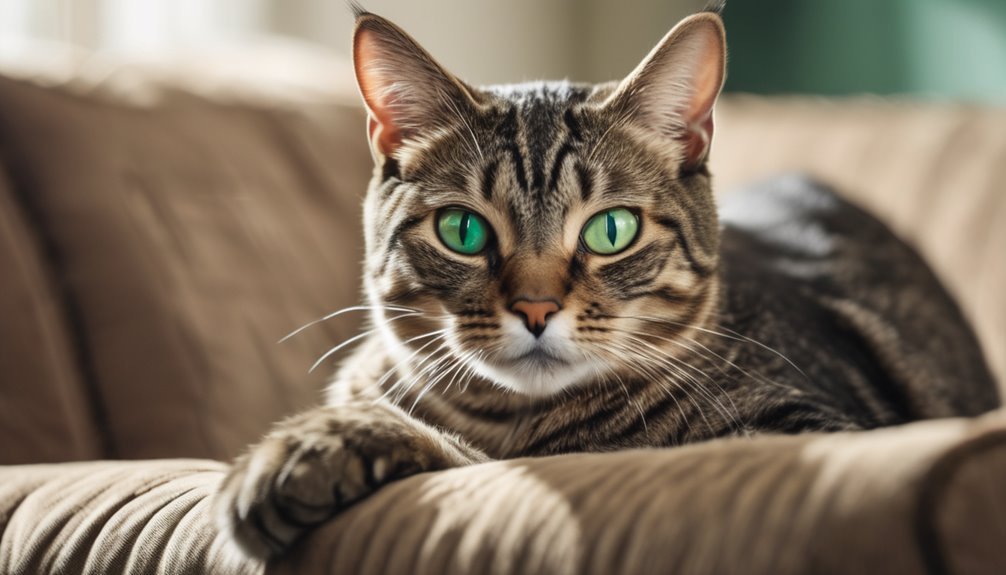
Cats are secretive creatures, their emotions cloaked in layers of fur and subtle movements. Yet, beneath that enigmatic exterior lies a wealth of information waiting for you to uncover. By closely observing their tail flicks, ear angles, and the nuances of their eyes, you can unlock a deeper understanding of their feelings and needs. What are they really trying to communicate, and how can you respond to strengthen your bond?
Key Takeaways
- Observe tail movements: a swishing tail indicates happiness, while flicking suggests irritation or anxiety.
- Pay attention to ear positions: perked ears show curiosity, whereas flattened ears signal fear or aggression.
- Note facial expressions: slow blinks indicate trust, while wide eyes may suggest fear or excitement.
- Recognize stress signals: tense body language and pulled-back whiskers indicate discomfort and should prompt calming responses.
- Respond appropriately: use soft voices and slow blinks to build trust, and provide cozy spaces for anxious cats.
Why Understanding Cat Body Language Matters
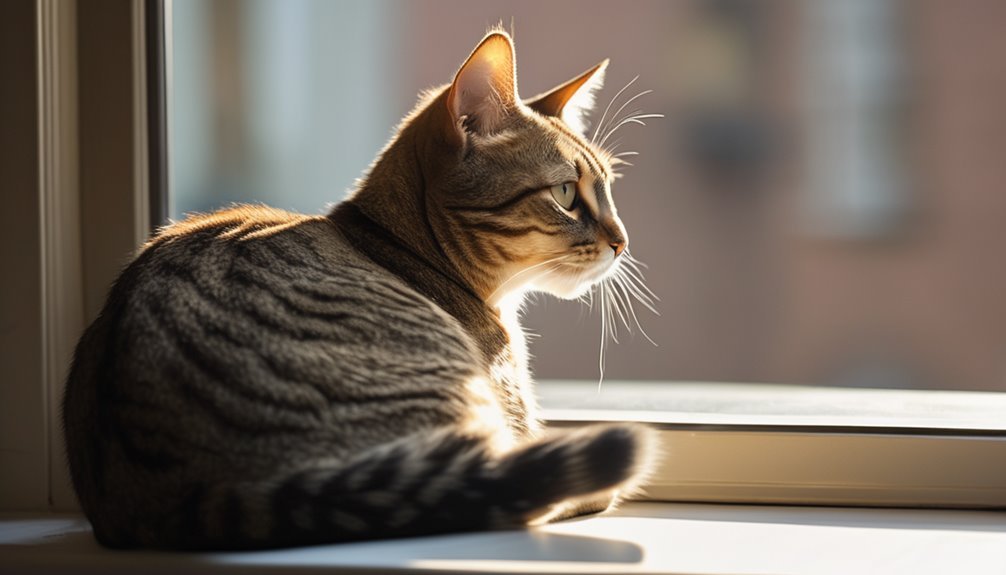
Understanding cat body language matters because it allows you to tune into your feline friend’s emotions and needs. By observing their behavior, you can grasp essential communication cues that reveal how they feel.
A flick of the ear or a slow blink holds significance, showcasing their emotional intelligence. Cats express their feelings through subtle shifts in posture and movement, reflecting their instincts and social interactions.

Recognizing stress signals, like hiding or aggressive tail flicks, helps you provide comfort and support. This deep connection nurtures your bond, allowing you to respond to their needs with empathy.
Understanding Your Cat’s Tail Movements: Key Signals of Emotion
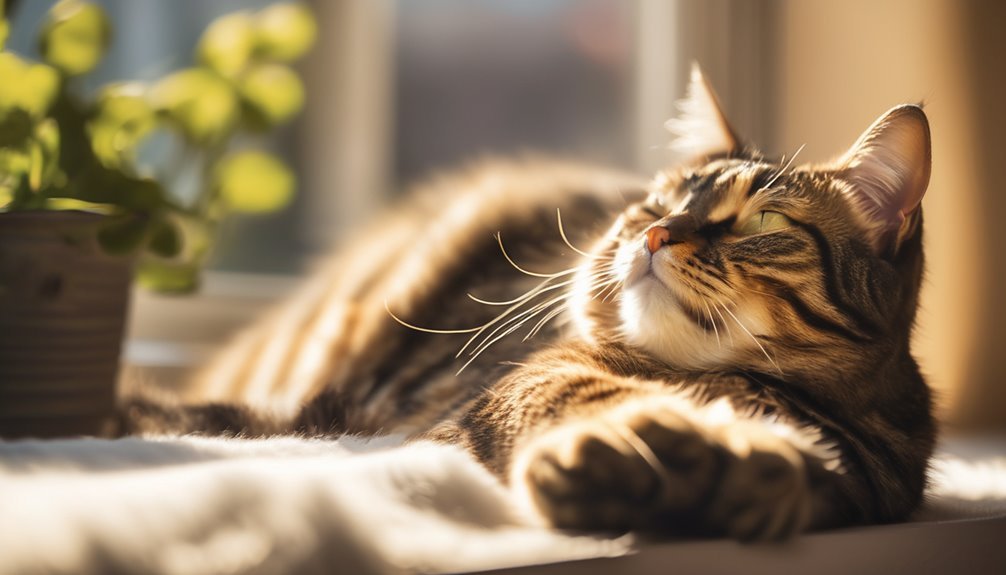
Cats communicate a wealth of emotions through their tails, making it vital to pay attention to these subtle movements. By observing your cat’s tail position, you can gain insight into their feelings:
- Happy swishing indicates joy and excitement.
- Anxious flicking shows unease or irritation.
- Defensive puffing means your cat feels threatened and wants to appear larger.
- Playful curling suggests they’re feeling friendly and ready for fun.
- Aggressive standing signals a warning to back off.
A relaxed drooping tail means your cat is calm, while a questioning twitching tail might indicate curiosity.
What Your Cat’s Ears Are Trying to Tell You?
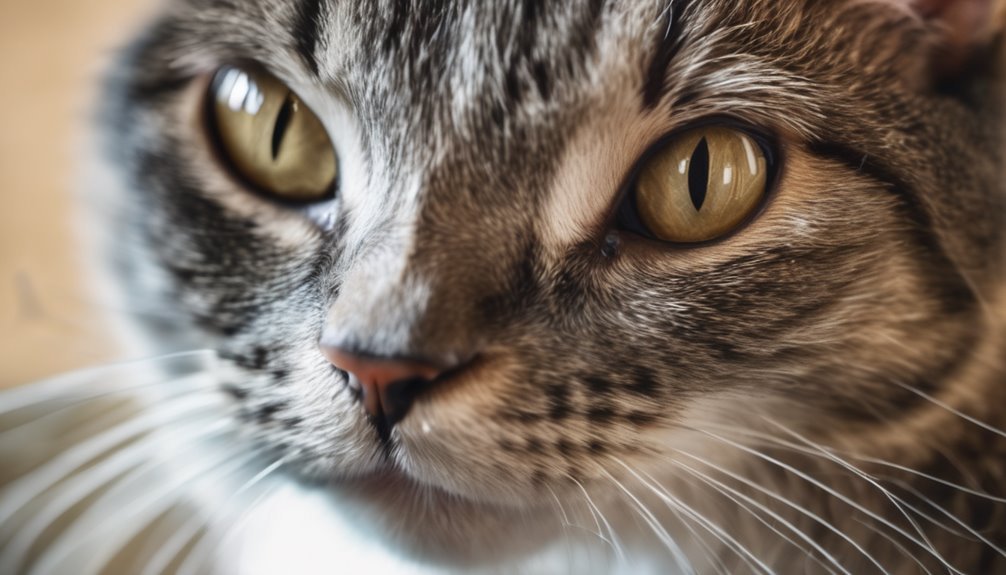
Your cat’s ears are like radar dishes, constantly picking up on sounds and signals in their environment. Pay attention to their ear positions; they reveal a lot about your feline friend’s mood.
When ears are perked up and facing forward, your cat’s alert and curious. If they’re flattened against the head, it’s a clear communication cue of fear or aggression. Ears that swivel can indicate your cat’s trying to locate a sound, showing their interest or concern.
When relaxed, ears may rest sideways, reflecting comfort. By observing these subtle changes, you can deepen your connection and respond appropriately to your cat’s needs, ensuring a safe and nurturing environment for them.
Facial Expressions: Understanding Your Cat’s Emotions
Facial expressions can be a window into your cat’s emotional world. By observing their subtle cues, you can deepen your bond and understand their needs better.
Pay attention to the following signs:

- Eye contact: Soft, slow blinks indicate trust; wide eyes can signal fear or excitement.
- Whisker position: Forward-facing whiskers show curiosity or excitement, while whiskers pulled back may mean discomfort.
- Mouth shape: An open mouth can indicate aggression, while a relaxed mouth suggests contentment.
- Facial tension: A relaxed face often means your cat feels safe, whereas a tense expression signals stress.
- Ears: Though not facial, ear position complements expressions; ears forward mean interest, while flattened ears indicate fear or annoyance.
Understanding these signals fosters empathy and enhances your relationship.
Responding to Your Cat’s Body Language: Effective Strategies
Recognizing the subtle signals your cat sends is just the beginning; knowing how to respond makes all the difference in your relationship.
When your cat displays playful body language—like a swishing tail or pouncing posture—encourage those playful interactions. Join in with a feather toy or a laser pointer, fostering a sense of joy and connection.
Conversely, if your cat seems anxious or agitated, use calming techniques, like speaking softly or providing a cozy spot to retreat.
Pay attention to their cues; a slow blink can signal trust, while an arched back may indicate discomfort.
Frequently Asked Questions
How Can I Tell if My Cat Is Happy?
You can tell your cat’s happy by noticing its purring signals and relaxed tail position. When it’s content, its tail might be upright, and it may gently knead or nuzzle you, showing affection.
Do Different Breeds Have Unique Body Language?
Yes, different breeds have unique body language. You’ll notice breed characteristics in communication styles, body posture, and tail movements. Observing these nuances helps you connect with your cat on a deeper, more intimate level.
What Does It Mean if My Cat Kneads?
If your cat kneads, it often shows comfort and affection. This behavior can signal emotional signs like happiness or nostalgia, as they recall kittenhood. Embrace this moment; it’s their way of expressing love for you.
Why Does My Cat Sometimes Ignore Me?
Your cat might ignore you to establish independence or because it’s focused on something else. This feline behavior reflects their unique communication signals, reminding you that their need for attention can vary during social interactions.
Can Stress Affect My Cat’s Body Language?
Yes, stress can significantly affect your cat’s body language. You’ll notice stress signals like tense posture, anxiety indicators such as hiding, or fearful reactions instead of playful behavior and relaxed posture, which signify comfort and contentment.
Conclusion
Understanding your cat’s body language can transform your relationship from mere coexistence to a deep, mutual bond. While a swishing tail may signal joy, flattened ears can reveal fear lurking beneath the surface. By observing these contrasts, you unlock a world of emotions that enrich both your lives. Tune in to those subtle cues, and you’ll not only respond effectively but also foster trust and affection, creating a safe haven where your cat truly feels at home.