At dusk, you might catch a raccoon slipping through a gutter like a shadow with a purpose. You see city wildlife adapting to heat, noise, and constant movement with remarkable precision. Pigeons, foxes, and rats use human structures for shelter, food, and travel. Their routines are shaped by your habits, often in ways you don’t notice yet. What they do next may change how you see the city.
Key Takeaways
- Urban wildlife adapts quickly, favoring flexible diets, noise tolerance, and rapid learning to survive near people.
- Common city species like pigeons, sparrows, starlings, squirrels, and raccoons use unique behaviors to find food and avoid danger.
- They hide in shrubs, drains, attics, and other sheltered spaces, resting quietly during the day to avoid heat and traffic.
- Their foraging and nesting patterns follow trash, restaurants, green spaces, and seasonal food availability across the city.
- Responsible coexistence means securing trash, limiting food sources, and preserving habitat corridors and safe urban green spaces.
Why City Wildlife Adapts So Well
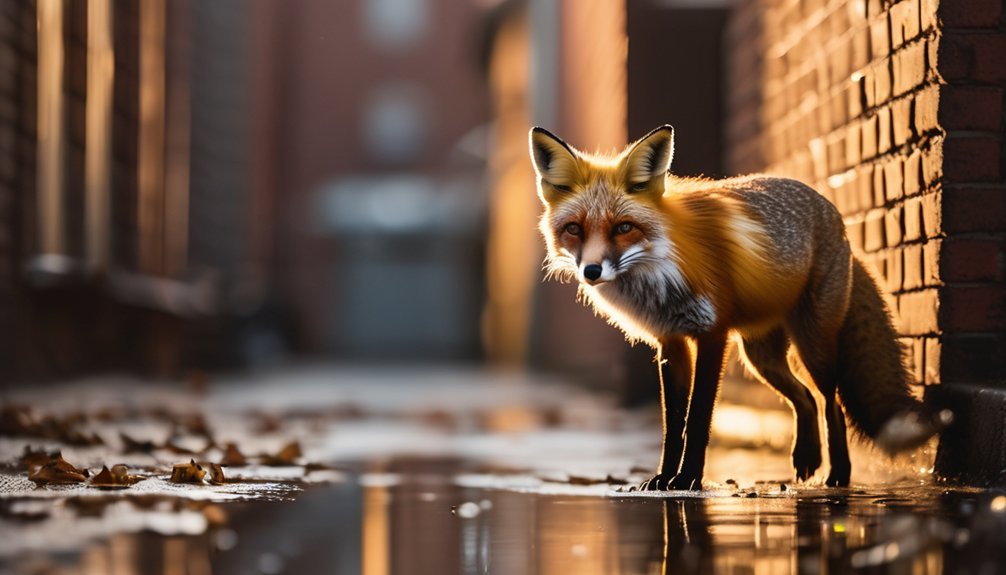
City wildlife adapts so well because urban environments create strong selective pressures that reward flexibility, generalist diets, and behavioral boldness.
You can see urban adaptability in animals that exploit varied food sources, tolerate noise, and adjust activity to avoid people. Hard surfaces, fragmented habitat, and artificial light reshape movement and foraging, so individuals that learn quickly gain an advantage.
You’re watching natural selection at work when some animals thrive near traffic, nesting ledges, and garden edges while others withdraw. This pattern reflects ecological resilience, because populations persist by shifting behavior instead of waiting for perfect conditions.
In cities, survival often depends on close attention, rapid learning, and low fear, which let wildlife occupy niches that change by the hour.

Common Urban Wildlife You’ll Spot First
Look first at the animals that have learned to live closest to people: pigeons, house sparrows, starlings, squirrels, raccoons, and crows. You’ll notice them by movement, noise, and boldness, not by size. Their patterns tell you how cities shape wildlife.
| Species | Typical cue | Behavioral note |
|---|---|---|
| Pigeon | Flocks | Ground forager |
| Sparrow | Quick chirps | Edge user |
| Starling | Synchronized turns | Social |
| Squirrel | Tail flicks | squirrel behavior |
| Raccoon | Hand use | raccoon intelligence |
You can track crows by their measured calls and problem solving. Each species exploits food, structure, and human timing with precision. If you watch carefully, you’ll see adaptation expressed in posture, spacing, and repeated routes.
Where City Animals Hide During the Day
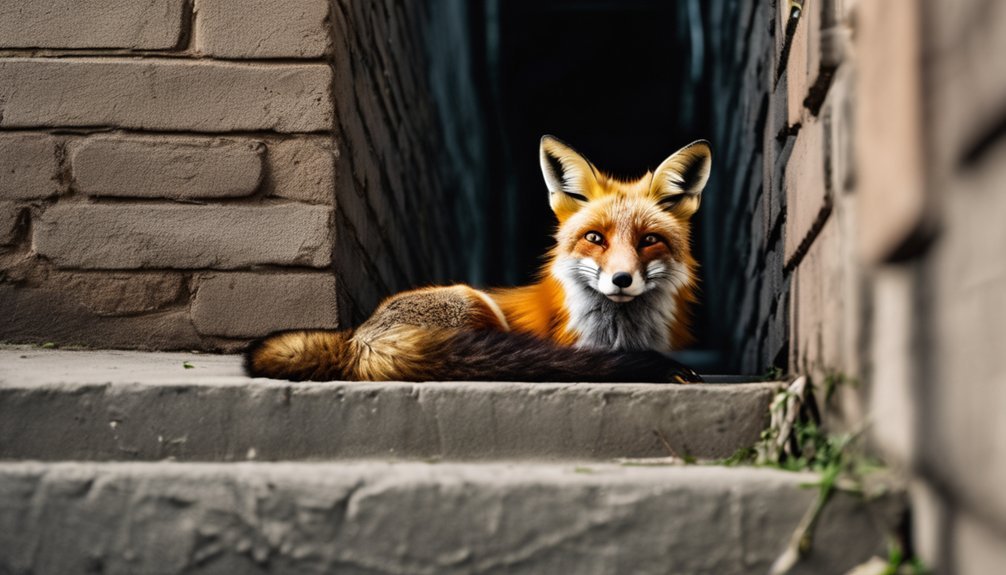
By day, urban animals usually slip into places people overlook: dense shrubs, drainage culverts, attic gaps, bridge spans, abandoned lots, and the shadowed edges of parking structures.
You’re seeing hidden habitats shaped by heat, noise, and human traffic. In these pockets, birds flatten their posture, raccoons curl inside voids, and foxes rest beneath brush piles. Their daytime behaviors stay low-energy and still, reducing exposure while temperatures rise.
If you pause near retaining walls or overgrown fences, you may notice a brief ear flick, a tail twitch, or the faint shift of breathing. These signs reveal that city wildlife isn’t absent; it’s conserving itself in cover, waiting for dusk to widen the safe corridor between you and it.
How Urban Wildlife Finds Food
After dusk, urban wildlife forages by matching feeding behavior to the city’s patchwork of resources. You can watch raccoons, coyotes, and birds shift foraging strategies as they track food sources that change block by block.
After dusk, urban wildlife forages by matching feeding behavior to the city’s shifting patchwork of resources.
They exploit human waste, raid urban gardens, and visit artificial feeders when access is easy. Their scavenging behaviors often peak where restaurants, bins, and alleys overlap, because those sites concentrate calories with little search effort.
Seasonal availability matters too: fruit, insects, and dropped seeds rise and fall through the year, so animals adjust routes and timing.
Competition dynamics also shape these choices; dominant individuals claim richer patches, while others settle for quieter margins. In this way, your city becomes a living map of appetite, risk, and opportunity.
Where City Animals Nest and Den
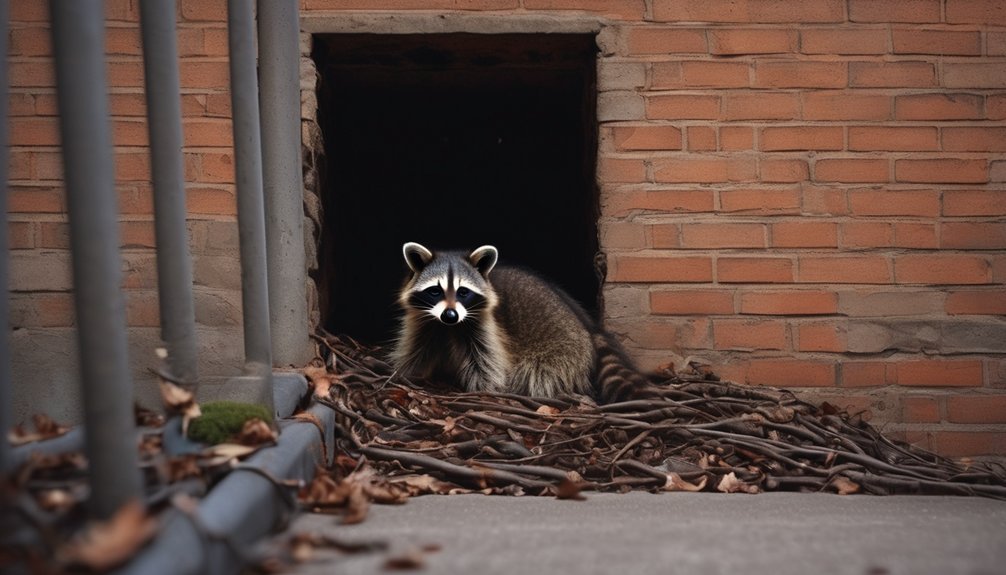
When urban wildlife settles for the day, it chooses nesting and den sites that balance concealment, warmth, and quick access to food. You can see this animal behavior in attic voids, drain culverts, hedges, and abandoned lots, where shelter structures vary with habitat diversity.
| Site | Use |
|---|---|
| Roof gaps | Nesting |
| Tree hollows | Den locations |
| Storm drains | Cover |
| Brush piles | Nesting materials |
| Basements | Shelter |
Urban predators, including cats and crows, shape these choices, and seasonal changes shift demand for insulation and shade. In urban ecosystems, you’re observing precise spatial decisions, not random refuge-seeking. Animals select dry, quiet sites, then line them with grass, fur, paper, or leaves. Their denning patterns reveal how closely cities mirror fragmented wild habitat, even at night, when you’re least likely to notice them.
What Survival Tricks Do City Animals Use?
City wildlife survives by using flexible tactics that reduce risk and increase access to food, water, and shelter. You can observe urban camouflage in pigeons, rats, and coyotes as their colors and movement patterns blend with concrete, brick, and shadow. Their scavenging strategies let them exploit crumbs, bins, and storm drains with little waste.
- Adaptive behavior shifts quickly when traffic, people, or pets appear.
- Predator avoidance depends on brief exposures, tight cover, and alert pauses.
- Resourcefulness techniques include opening containers, rerouting paths, and using shared shelter.
You’ll notice habitat utilization changes with season and disturbance, while social structures help some species share warnings, defend food, and maintain spacing.
These traits don’t make city life easy; they make it survivable.

How Nightlife Shapes Urban Wildlife
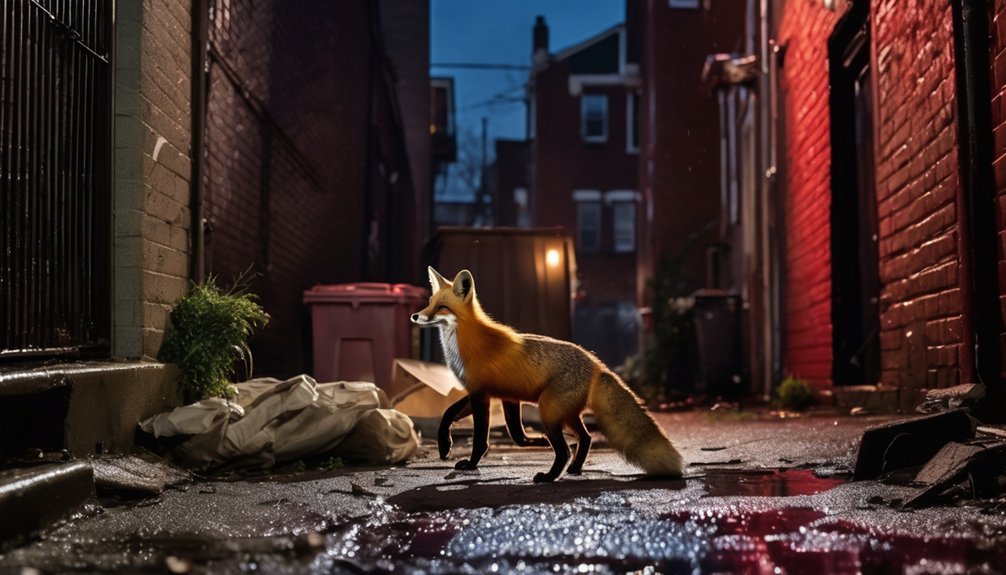
As daylight fades, many urban animals shift their activity into the night, when traffic thins, temperatures drop, and human detection declines. You’ll notice foxes, raccoons, and coyotes using this dim interval to forage, travel, and avoid direct encounters.
Their nocturnal behaviors let them exploit urban habitats with less competition and fewer disturbances. Streetlights can extend feeding opportunities for some species, while deep shadows guide others along fences, drains, and alleyways.
In these hours, your city becomes a layered landscape of scent, sound, and movement, and each species tracks those cues with precision. Nightlife doesn’t just hide wildlife; it reorganizes their routines, shaping when they eat, move, and rest.
Watch closely, and you’ll see a parallel city emerging after dark.
How Human Habits Affect Wildlife
Your daily routines shape urban wildlife more than you may realize: feeding pets outdoors, leaving trash unsecured, watering lawns at night, and maintaining bright lighting all alter where animals move, feed, and hide.
You also intensify human encroachment, urban pollution, and habitat fragmentation when you drive, build, and prune.
Wildlife reads your food waste as a signal, while noise disturbance masks calls and shifts activity.
- Green spaces become feeding sites.
- Wildlife corridors narrow under pavement.
- Climate adaptation pressures favor bolder species.
When you trim hedges or remove dead wood, you reduce cover and nesting sites.
Your habits can either compress or connect populations, changing survival, movement, and reproduction across the city.
How to Coexist With Urban Wildlife Safely
To coexist safely with urban wildlife, reduce direct contact and remove attractants that draw animals into close range. You should secure trash, feed pets indoors, and keep birdseed tidy, because these cues shape urban animal behavior.
Observe from a distance, especially at dawn and dusk, when movement and feeding peak. If you garden, choose wildlife friendly gardening methods: use native plants, dense cover, and fenced beds that guide animals without inviting conflict.
You’ll lower stress for both you and the animals when you avoid cornering, touching, or feeding them. If you see an injured creature, contact local wildlife professionals rather than intervening.
Your home becomes safer when you treat wildlife as neighbors with boundaries, not intruders, and let careful habits set the terms.
Frequently Asked Questions
How Do Urban Wildlife Populations Affect Local Ecosystem Balance?
Urban wildlife populations shape ecosystem balance by altering prey, predator, and scavenger roles; you’ll see population dynamics shift as habitat fragmentation limits movement, reduces genetic exchange, and can destabilize food webs while favoring adaptable species.
Can City Animals Recognize Individual Humans?
Yes, you can find that some city animals recognize individual humans through repeated human animal interaction. Urban animal cognition lets them distinguish faces, voices, or routines, especially when you feed, threaten, or regularly pass them.
Do Urban Animals Change Their Behavior Across Seasons?
Yes—urban animals often change behavior across seasons, because weather, food, and breeding pressure don’t politely stay constant. You’ll observe seasonal adaptation: altered foraging, nesting, and movement. Their behavioral changes are measurable, predictable, and oddly theatrical.
How Do City Lights Affect Animal Migration Patterns?
City lights can disorient you by increasing light pollution, causing migratory disruptions and impairing nocturnal navigation. You’ll often see birds and bats alter routes, delay travel, or avoid fragmented habitats near illuminated urban areas.
What Diseases Can Urban Wildlife Transmit to Pets?
Urban wildlife can transmit rabies, leptospirosis, roundworms, fleas, ticks, and giardia to your pets, creating disease transmission risks and threatening pet health. You’ll reduce exposure by avoiding contact, controlling parasites, and vaccinating regularly.
Conclusion
You can see urban wildlife succeed because city life gives them shelter, food, and fewer predators. You’ll notice raccoons, pigeons, and other species adjusting their routines to your streets, parks, and buildings, like modern Darwinian courtiers in concrete kingdoms. If you reduce waste, secure food, and give them space, you help keep encounters safe. By observing them carefully, you’ll better understand how your habits shape their survival and how coexistence can stay balanced.