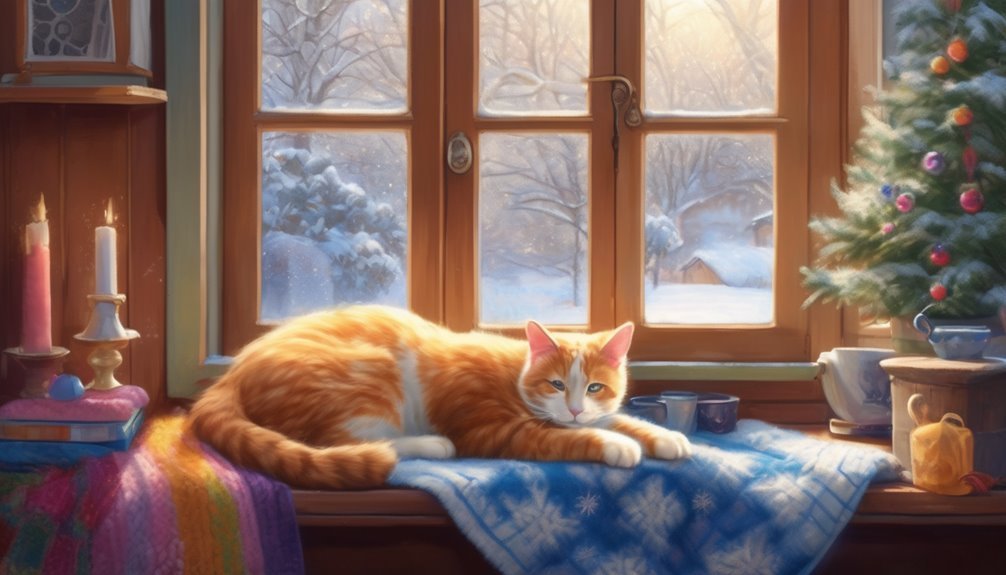
Winter can feel like a frozen wasteland for your cat, but it doesn’t have to be. Keeping your feline friend safe and comfortable during the colder months is crucial for their health and happiness. From creating a warm indoor space to managing outdoor adventures, there are practical steps you can take. Let’s explore how to ensure your cat thrives in winter while avoiding potential hazards.
Key Takeaways
- Ensure indoor safety by removing hazards like electrical cords and toxic plants that cats may nibble on during winter.
- Create a cozy environment with warm bedding, sunny spots, and interactive toys to keep your cat engaged.
- Limit outdoor time in extreme cold and supervise short excursions with a leash or harness for safety.
- Dress your cat in pet-safe sweaters if they tolerate it, and monitor for signs of hypothermia or frostbite.
- Schedule a vet check-up to discuss nutrition adjustments and necessary vaccinations to boost your cat’s winter health.
Why Winter Safety Matters for Cats
When winter rolls in, it’s easy to overlook your cat’s safety, but this season poses unique risks that can impact their well-being. Indoor hazards like electrical cords, holiday decorations, and toxic plants can pose serious threats. You may not realize that your cat might nibble on these items, leading to dangerous situations.
Additionally, winter grooming becomes crucial as your cat’s coat may accumulate more dirt and dander during this time. Regular brushing helps prevent matting and reduces hairballs, keeping your cat comfortable.
Be mindful of their hydration, too, as heated indoor air can lead to dryness. By staying vigilant about these winter-specific concerns, you’ll ensure your furry friend remains happy and healthy throughout the chilly months.

Creating a Cozy Indoor Environment for Your Cat
Creating a cozy indoor environment for your cat is essential during the winter months, as it helps keep them warm and content. Here are some practical ideas to ensure your feline friend feels snug:
- Soft, warm bedding: Invest in blankets or heated cat beds to provide comfort.
- Cat furniture: Arrange cat trees or shelves near sunny windows for warmth and entertainment.
- Enclosed spaces: Create a cozy nook with a box or tent where your cat can curl up.
- Toys and distractions: Keep them engaged with interactive toys to prevent boredom.
- Humidifier: Adding moisture to the air can help prevent dry skin and keep your cat healthy.
Safe Outdoor Activities for Cats in Winter

While your cat might enjoy the fresh air and winter scenery, it’s crucial to ensure their outdoor activities are safe and enjoyable. Start with short supervised jaunts into the snow, allowing your furry friend to experience snow play without getting overwhelmed.
Keep sessions brief, as cats can easily get chilly.
Consider using a leash or harness for added security during winter exploration. This way, you can guide your cat safely while they investigate their snowy surroundings.
Look for areas with soft snow instead of icy patches to minimize the risk of slips.
Always keep an eye on your cat’s behavior; if they show signs of discomfort, it’s time to head back inside for a warm, cozy cuddle session.
Protecting Your Cat From Frostbite and Hypothermia
As temperatures drop, it’s essential to protect your cat from the dangers of frostbite and hypothermia. Taking proactive measures ensures your feline stays safe and warm.
Here are some tips for effective frostbite prevention:
- Limit outdoor time, especially during extreme cold.
- Provide a warm, sheltered space for your cat to retreat.
- Dress your cat in a cozy, pet-safe sweater if they tolerate it.
- Regularly check for hypothermia signs, such as shivering, lethargy, or difficulty moving.
- Keep your cat dry, as wet fur increases the risk of frostbite.
Why Does Your Cat Need a Vet Check-Up This Winter?
Keeping your cat warm and safe from the cold is just the beginning of winter care. This season can pose unique challenges to your cat’s health, making a vet check-up essential.
Winter illnesses, like respiratory infections, can sneak up on even the healthiest cats. A quick visit to the vet allows for early detection and prevention of potential issues.

Your vet can also advise on nutrition and any necessary vaccinations to boost your cat’s immunity during these colder months.
Additionally, they can assess any weight changes, which can be critical as indoor activity decreases.
Prioritizing your cat’s health with a winter check-up will ensure they stay happy and healthy throughout the season.
Don’t wait; schedule that appointment today!
Keeping Indoor Air Safe and Healthy for Cats
How can you ensure the air inside your home remains safe and healthy for your cat this winter?
Maintaining good air quality and humidity control is essential for your feline friend’s well-being. Here are some practical tips:
Maintaining optimal air quality and humidity is crucial for your cat’s health and happiness.
- Use an air purifier: This can help filter out allergens and pollutants.
- Monitor humidity levels: Aim for a comfortable range of 30-50% to prevent dry skin and respiratory issues.
- Ventilate regularly: Open windows when possible to let fresh air circulate, even briefly.
- Avoid harsh cleaners: Opt for pet-safe, non-toxic cleaning products to reduce harmful fumes.
- Limit smoke exposure: Keep indoor smoking to a minimum, as it can severely affect air quality.
Winter Diet Adjustments for Cats
With the colder months approaching, it’s important to consider how your cat’s diet might need to change. As temperatures drop, your cat may require an increase in calorie intake to maintain body warmth.
Focus on high-quality food types that offer essential nutrients, like protein and healthy fats, to support their energy needs.
It’s also crucial to monitor their hydration. Cats can be less inclined to drink water in winter, so provide fresh water daily and consider wet food options to boost their fluid intake.
Remember, adjusting your cat’s nutritional needs during winter can help keep them healthy and comfortable.
Recognizing Signs of Winter Stress in Cats
As the cold weather sets in, you might notice your cat behaving differently, which can be a sign of winter stress. Recognizing these behavior changes is crucial for your furry friend’s well-being.
Look out for these stress indicators:
- Increased hiding or avoidance of social interactions
- Excessive grooming or changes in grooming habits
- Changes in appetite, either overeating or not eating at all
- Aggression or irritability towards other pets or people
- Frequent vocalizations or meowing for attention
Conclusion
As you embrace the winter season, remember that your cat’s comfort and safety are your top priorities. Much like how we bundle up for a chilly day, your feline friend needs a warm, cozy haven too. By creating a nurturing indoor space and keeping an eye on their health, you’re not just a pet owner; you’re their guardian against the cold. So, let the winter wonderland outside be a backdrop, while your home remains their purring paradise.