Just like a ship navigating through turbulent waters, managing your overweight cat’s health requires careful guidance. It’s essential to approach this journey with a tailored plan that ensures safety and effectiveness. By understanding the underlying issues and making gradual changes, you can help your feline friend achieve a healthier weight. Discover the steps you can take to foster a balanced lifestyle for your cat, starting with recognizing the signs of obesity and setting realistic goals.
Key Takeaways
- Consult your veterinarian to establish a safe target weight and personalized weight loss plan for your cat.
- Implement gradual dietary changes, focusing on high-protein, low-calorie options while controlling portion sizes.
- Increase physical activity through daily playtime with interactive toys to encourage movement and burn calories.
- Regularly monitor your cat’s weight and health, celebrating small milestones to maintain motivation during the weight loss journey.
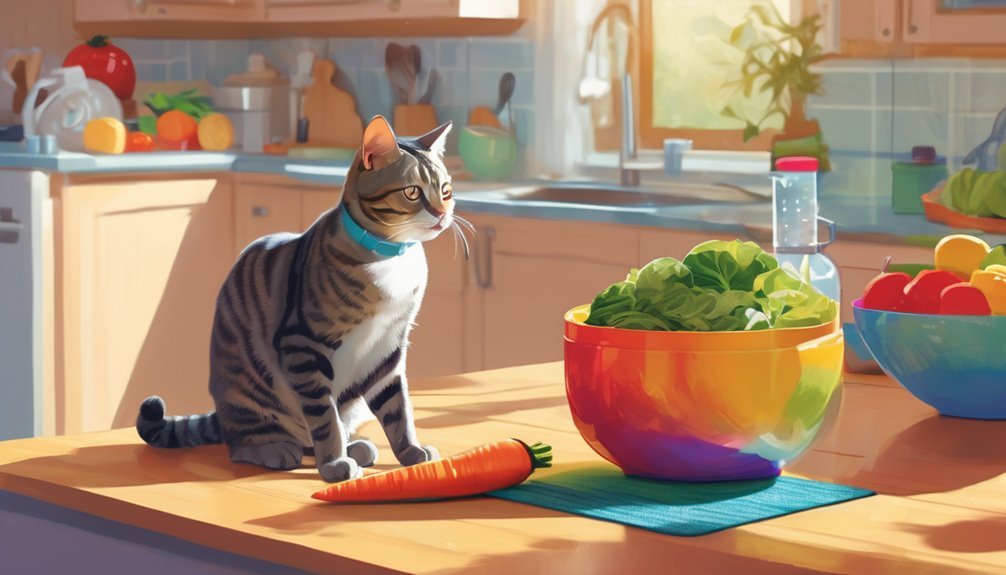
- Provide healthy snacks like cooked chicken or cat-friendly veggies to satisfy cravings without excess calories.
Why Cat Obesity Is a Problem

Cat obesity is a serious issue that can significantly impact your feline friend’s health and well-being. When your cat carries excess weight, it faces various health risks, including diabetes, heart disease, and joint problems.
These conditions can lead to chronic pain and a reduced quality of life. Additionally, overweight cats often experience behavioral issues, such as decreased energy levels and increased irritability, making it harder for them to engage in play and interact with you.
This can create a cycle of emotional distress for both you and your cat. By understanding the severity of cat obesity, you can take proactive steps to promote a healthier lifestyle for your beloved companion, ensuring they live a longer, happier life.
How to Recognize Cat Obesity
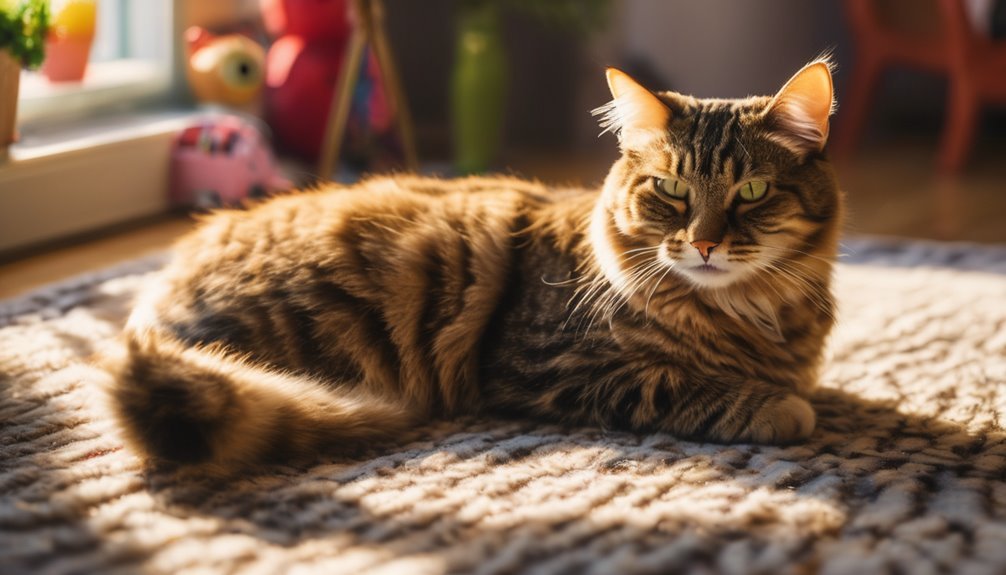
How can you tell if your feline friend is overweight? Start with a simple weight assessment. Check if you can easily feel their ribs; if not, they might be carrying extra weight.

Observe their body condition—an ideal cat has a defined waist when viewed from above and a slight tuck in their abdomen. If your cat has a rounded belly and lacks that waistline, it’s a sign of obesity.
An ideal cat displays a defined waist and a slight abdominal tuck; a rounded belly signals obesity.
Additionally, watch for changes in activity; if they’re less playful or seem lethargic, that could indicate weight issues. Regular vet visits can provide professional insights and help track your cat’s health.
Recognizing these signs early can make a difference in your beloved pet’s well-being.
Set Realistic Weight Loss Goals for Your Cat

Setting realistic weight loss goals for your cat is essential, especially since rapid changes can negatively affect their health. Start by consulting your veterinarian to determine a healthy target weight.
Remember, it’s important to establish realistic expectations; losing 1-2% of their body weight per week is a safe guideline. Focus on gradual changes to their diet and exercise routine, making small adjustments to avoid overwhelming them.
Consider incorporating playtime or interactive toys to encourage movement. Track their progress regularly, and celebrate milestones to keep both you and your cat motivated.
Best Diets for Cat Weight Loss
Achieving your cat’s weight loss goals requires a thoughtful approach to their diet. Focusing on high protein diets can help maintain muscle mass while promoting fat loss. It’s essential to practice portion control to prevent overeating. Here’s a quick comparison of diet options you might consider:
| Diet Type | Key Benefits | Considerations |
|---|---|---|
| High Protein Diet | Preserves muscle, boosts metabolism | May require vet approval |
| Grain-Free Diet | Reduces carbs, promotes satiety | Monitor for allergies |
| Limited Ingredient | Reduces food sensitivities | Ensure balanced nutrition |
| Wet Food | Higher moisture, aids hydration | May be more expensive |
| Prescription Diet | Tailored for weight loss | Requires vet supervision |
These options can guide your choices and support your beloved feline in achieving a healthier weight.
How to Adjust Your Cat’s Feeding Schedule for Weight Loss
To help your cat shed those extra pounds, adjusting their feeding schedule can make a significant difference.
Start by implementing portion control; measuring their food ensures they receive the right amount without overindulging. Gradually shift to multiple smaller meals throughout the day, increasing meal frequency to keep their metabolism active.
Implement portion control by measuring food and shift to smaller, more frequent meals to boost metabolism and prevent overeating.
Instead of two large meals, aim for four or five smaller servings, which can help prevent hunger-driven snacking. This approach not only controls calorie intake but also mimics their natural hunting behavior, making mealtime more satisfying.
Always consult your vet to tailor this feeding schedule to your cat’s specific needs. With patience and consistency, you’ll support your furry friend in achieving a healthier weight.
Fun Ways to Encourage Your Cat to Move More
Encouraging your cat to move more can be a fun and rewarding journey for both of you. Engaging in play not only helps your cat lose weight but also strengthens your bond.
Here are three enjoyable ways to get started:

- Interactive Toys: Use treat puzzles and laser pointers to stimulate your cat’s hunting instincts, making playtime exciting and rewarding.
- Outdoor Adventures: Explore cat-friendly games outdoors, like gentle walks on a leash or supervised explorations in a secure garden.
- Agility Challenges: Set up vertical spaces for climbing or create agility courses at home to keep your cat active and entertained.
Incorporating these activities into your daily playtime routines can make movement enjoyable and effective for your furry friend.
Track Your Cat’s Weight Progress
Tracking your cat’s weight progress is essential for ensuring their health and well-being, especially as you embark on a weight loss journey together. Regular weight tracking helps you see how far you’ve come and keeps you motivated. You might find it helpful to maintain a simple chart for progress monitoring, allowing you to celebrate small victories along the way.
| Date | Weight (lbs) |
|---|---|
| Week 1 | 12.5 |
| Week 2 | 12.0 |
| Week 3 | 11.5 |
| Week 4 | 11.0 |
| Week 5 | 10.5 |
Each time you record your cat’s weight, you’re not just noting a number; you’re taking a step toward a healthier, happier life together.
When Should You Talk to Your Vet?
When should you consider reaching out to your vet about your overweight cat? It’s essential to prioritize your furry friend’s health. A vet consultation can help tailor a weight management plan suited to their needs.
Here are three key moments to seek professional advice:
- If your cat’s weight fluctuates significantly, despite your efforts.
- When you notice any changes in their behavior, appetite, or energy levels.
- If your cat has pre-existing health conditions that could complicate their weight loss journey.
Don’t hesitate to involve your vet. They can provide valuable insights and support, ensuring your cat loses weight safely and effectively.
Your love and commitment to their well-being are what truly matter.
Sustaining Your Cat’s Healthy Weight
Maintaining your cat’s healthy weight requires a consistent approach that balances diet, exercise, and regular vet check-ups.
Start by practicing portion control; measure your cat’s food to avoid overfeeding. This not only helps manage weight but also fosters a routine they can rely on.
Incorporate healthy snacks into their diet—think small amounts of cooked chicken or cat-friendly veggies. These treats can satisfy their cravings without adding excess calories.
Engage your cat in daily playtime; interactive toys and laser pointers can make exercise fun.
Lastly, keep up with vet visits to ensure your cat’s weight remains stable and to address any concerns early.
Your commitment to these practices will help your beloved companion lead a longer, healthier life.
Frequently Asked Questions
Can I Free-Feed My Cat While Trying to Lose Weight?
You shouldn’t free-feed your cat while trying to lose weight. Instead, focus on portion control and establish a consistent feeding schedule. This helps manage their calorie intake and encourages healthier eating habits, fostering a happier, healthier kitty.
Are Certain Cat Breeds More Prone to Obesity?
Certain cat breeds, like Persians and British Shorthairs, show a strong breed predisposition to obesity, with genetics playing a significant role. Understanding this helps you manage their weight more effectively and compassionately.
What Are the Signs My Cat Is Losing Weight Too Fast?
If your cat’s experiencing rapid weight loss symptoms like excessive thirst, increased hunger, lethargy, or noticeable changes in behavior, it’s crucial to consult your vet. These signs can indicate serious health issues needing immediate attention.
Can Treats Be Included in a Weight Loss Plan?
Yes, you can include treats in your cat’s weight loss plan. Just focus on healthy treat options and practice portion control to ensure they don’t sabotage your efforts. It’s all about balance and moderation.
How Often Should I Weigh My Cat During Weight Loss?
Weigh your cat weekly during weight loss. This frequency allows for effective monitoring of their progress and helps you adjust their plan as needed, ensuring a safe and supportive journey towards a healthier weight.
Conclusion
Helping your cat achieve a healthy weight is crucial, as studies show that nearly 60% of cats are classified as overweight or obese. By following a tailored diet and incorporating regular exercise, you’re not just aiding weight loss; you’re enhancing your cat’s overall well-being. Remember, gradual progress is key, so stay patient and consistent. With your commitment and care, your feline friend can lead a happier, healthier life.