It’s interesting how many people mistakenly think guinea pigs can eat the same foods as other pets. In reality, their dietary needs are quite specific. High-quality hay forms the cornerstone of their nutrition, while fresh greens and pellets play crucial roles. Understanding what to feed them ensures their health and well-being. What happens if you introduce the wrong foods? Let’s explore what you should include in your guinea pig’s diet.
Key Takeaways
- Guinea pigs require a diet rich in high-quality hay, such as timothy hay, for essential fiber and dental health.
- Fresh leafy greens, like romaine lettuce and kale, should be included daily for nutrients and variety.
- Specially formulated guinea pig pellets provide essential vitamins and minerals; choose those with at least 18% fiber and no added sugars.
- Small amounts of fruit, like apples or blueberries, can be given as occasional treats, but avoid harmful fruits like citrus.
- Always avoid toxic foods, including onions and garlic, to ensure your guinea pig’s health and well-being.
Common Misconceptions About Guinea Pig Diets
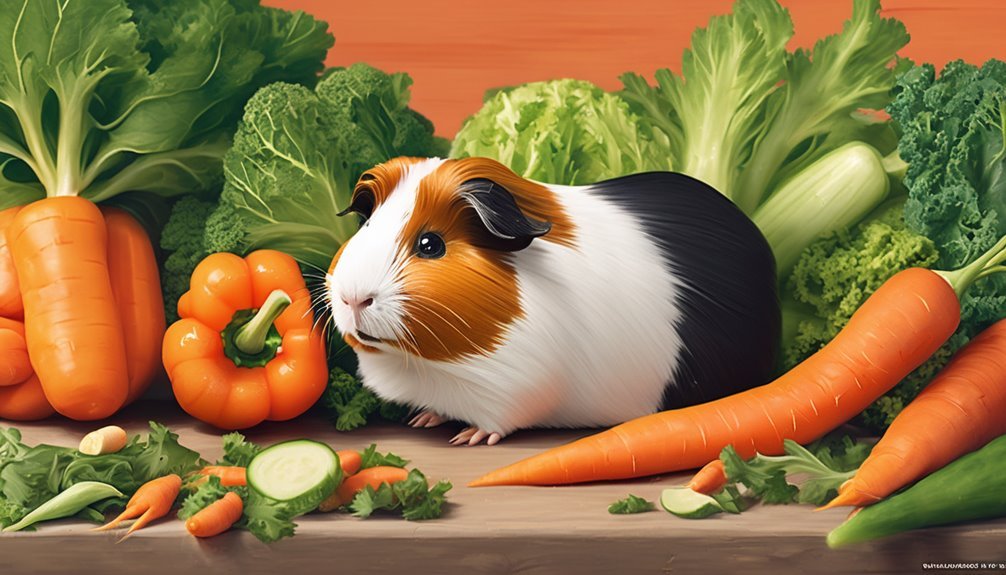
When considering what guinea pigs eat, it’s easy to fall for common misconceptions that can harm their health. Many people believe that all veggies are safe, but some, like spinach, are high in calcium and can disrupt their calcium balance. Over time, this can lead to kidney issues or bladder stones.
Additionally, while guinea pigs need vitamin C, many assume that a diet rich in fruits will suffice. In reality, they require a consistent source of vitamin C, like specially formulated pellets or fresh veggies, to thrive.
Understanding these nuances is crucial for keeping your furry friend healthy and happy. Be mindful of their specific dietary needs to ensure they live a long, vibrant life.

The Importance of High-Quality Hay
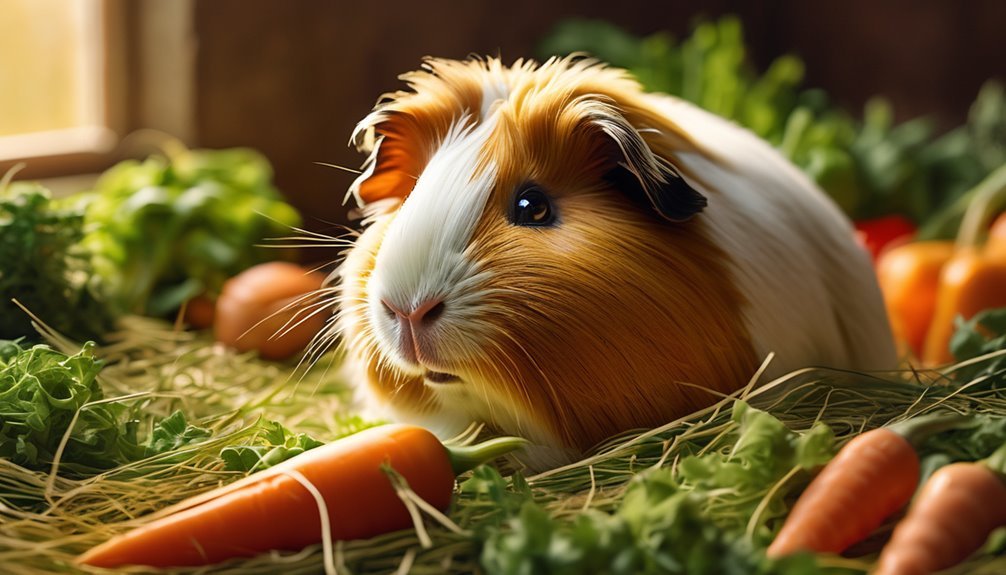
A balanced diet for guinea pigs heavily relies on high-quality hay, which serves as the foundation of their nutritional needs. Choosing the right hay types is crucial for maintaining their health and digestive function.
Timothy hay is a popular option, but you might also consider orchard grass or botanical blends for variety.
Timothy hay is a favored choice, but exploring orchard grass or botanical blends adds delightful variety for your guinea pig.
To ensure your guinea pig thrives, remember these key points:
- Fiber Content: High-quality hay supports digestive health.
- Dental Health: Chewing hay helps wear down teeth.
- Variety: Different hay types can prevent boredom.
- Storage: Keep hay in a cool, dry place to maintain freshness.
Fresh Foods for a Healthy Guinea Pig Diet
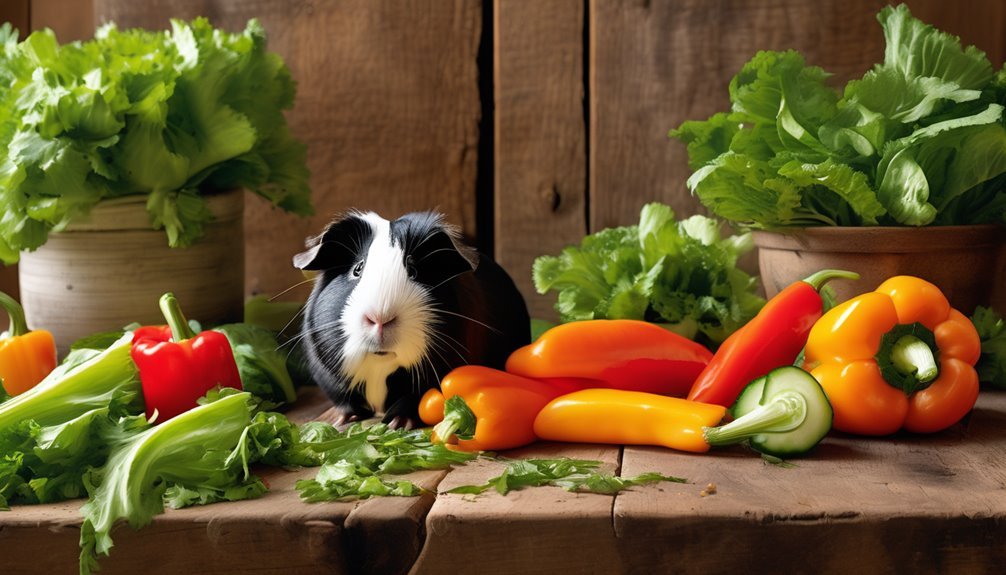
While high-quality hay forms the dietary foundation for guinea pigs, incorporating fresh foods is essential for their overall health.
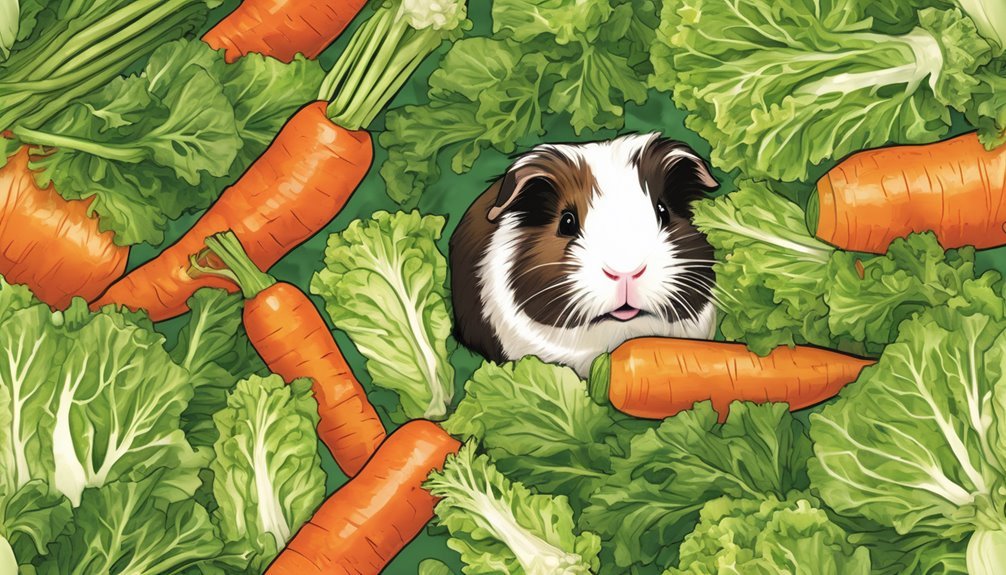
Leafy greens like romaine lettuce, kale, and cilantro provide vital vitamins and minerals. Aim to offer a variety of these greens daily, as they support digestion and boost your guinea pig’s immune system.
Fruit treats, like small pieces of apple or blueberries, can be given occasionally for a sweet reward. However, keep portions minimal due to their sugar content.
Always wash and chop these fresh foods to ensure safety and ease of eating. By balancing hay, leafy greens, and occasional fruit treats, you’ll create a vibrant, nutritious diet that keeps your guinea pig happy and healthy.
Choosing the Right Pellets for Your Guinea Pig
Selecting the right pellets for your guinea pig is crucial for their health, as these provide essential nutrients that complement their diet.
When choosing, consider the pellet ingredients carefully, focusing on high-quality options. Here are some tips to guide you:
- Look for pellets high in fiber, ideally around 18% or more.
- Avoid those with added sugars or artificial colors.
- Compare brands to find one that offers balanced nutrition.
- Check for fresh, natural ingredients like timothy hay.
Foods to Avoid for Your Guinea Pig’s Health
Even with the right pellets, it’s important to be aware of what foods can harm your guinea pig’s health. Certain toxic vegetables, like onions and garlic, can lead to serious health issues.

Avoid harmful fruits such as citrus or avocados, as they can upset your pet’s digestive system. Stick to safe, high-fiber options instead.
Additionally, be cautious with unsafe treats; sugary snacks or processed foods can lead to obesity and dental problems. Your feeding habits play a crucial role in your guinea pig’s well-being, so always choose fresh hay and veggies over harmful options.
How to Introduce New Foods Safely
Introducing new foods to your guinea pig can be a rewarding experience, provided you do it carefully. Start by ensuring a smooth food transition to avoid digestive upset. Here’s how to introduce new foods safely:
Introducing new foods to your guinea pig can be enjoyable, but it’s essential to proceed with care to ensure their health.
- Research: Learn which foods are safe and nutritious for guinea pigs.
- Introduce Gradually: Add one new food at a time and monitor their reaction for 3-5 days.
- Small Portions: Offer tiny amounts initially to gauge tolerance and interest.
- Observe Closely: Watch for any signs of discomfort or allergy, adjusting as needed.
Safe experimentation is key. If your guinea pig enjoys the new food and shows no adverse reactions, you can gradually increase the amount.
Enjoy this enriching journey together!
Signs of a Healthy Diet in Guinea Pigs?
How can you tell if your guinea pig is thriving on a healthy diet? Look for these signs to ensure dietary balance and overall well-being:
| Sign | Description |
|---|---|
| Bright Eyes | Reflects good health and hydration |
| Soft, Shiny Coat | Indicates proper nutrition |
| Active Behavior | Shows energy and engagement |
| Regular Droppings | Suggests digestive health |
| Healthy Weight | Maintains an ideal weight range |
If you notice any changes, it might be time to consider nutritional supplements. A well-rounded diet, rich in hay, fresh veggies, and occasional treats, supports your guinea pig’s health. Keep these signs in mind to ensure your furry friend stays happy and thriving!
Frequently Asked Questions
Can Guinea Pigs Eat Fruits Every Day?
No, you shouldn’t feed guinea pigs fruits every day. Limit them to small portions of safe fruit types, like apples or berries, a few times a week. This helps maintain their health and prevents digestive issues.
How Much Water Should Guinea Pigs Drink Daily?
Guinea pigs should drink about 4-5 ounces of water daily. Ensure their hydration sources, like water bottles, provide fresh, room-temperature water. Regularly check for cleanliness to keep them healthy and hydrated.
Do Guinea Pigs Need Vitamins or Supplements?
Yes, guinea pigs need vitamins, just like a garden needs sunlight. You can provide vitamin sources through fresh veggies or consider supplement types like vitamin C tablets to ensure their health and vitality.
Can Guinea Pigs Eat Human Food Occasionally?
Yes, guinea pigs can eat human food occasionally. Safe snacks include small amounts of fruits like apples and veggies like bell peppers. Always ensure these treats are fresh and free from harmful additives for your furry friend.
How Can I Tell if My Guinea Pig Is Allergic to a Food?
You can tell if your guinea pig has a food allergy by observing symptoms like itching, swelling, or digestive upset. If you notice these, switch to safe food alternatives to ensure their health and comfort.
Conclusion
In conclusion, providing a balanced diet is crucial for your guinea pig’s health. Did you know that a guinea pig’s digestive system relies on fiber-rich hay to function properly? In fact, they need about 80% of their diet to consist of hay! By ensuring they have high-quality hay, fresh greens, and the right pellets, you’ll keep your furry friend thriving. Always remember to avoid harmful foods to maintain their well-being and happiness.