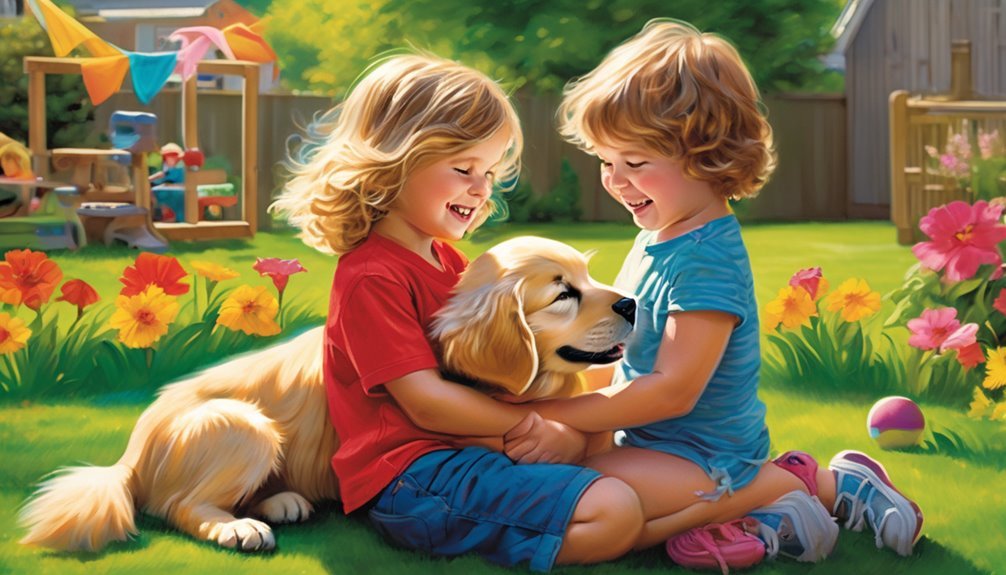
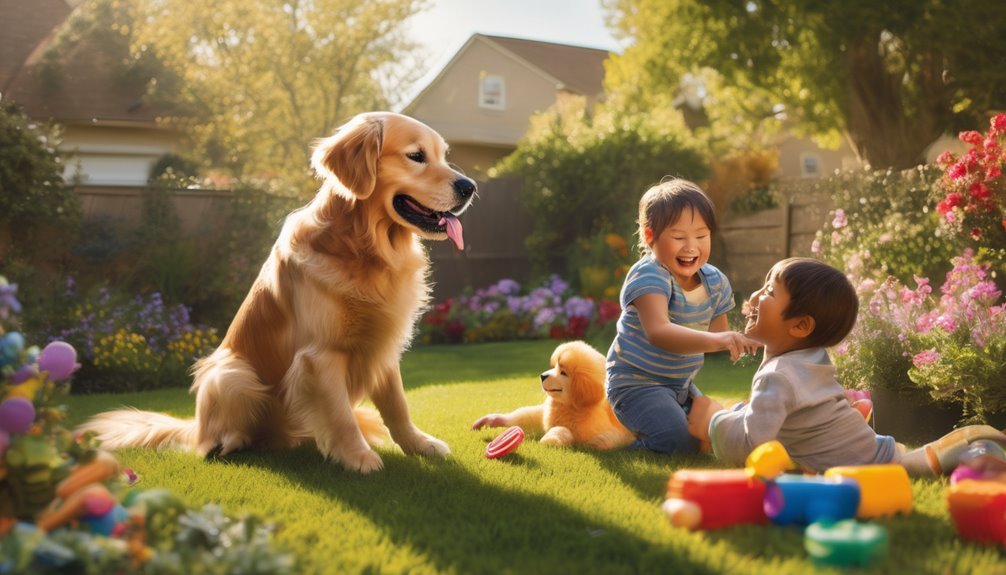
When you’re considering adding a furry friend to your family, the right breed can make all the difference. Some dogs naturally bond well with kids, combining playful energy with a gentle temperament. It’s crucial to find a breed that not only fits your family’s lifestyle but also teaches your children valuable lessons about responsibility and empathy. Are you curious about which breeds top the list for families with children? Let’s explore the best options together.
Key Takeaways
- Labrador Retrievers are playful and gentle, making them ideal companions for active families with children.
- Golden Retrievers thrive in lively environments and are known for their friendly nature, perfect for energetic kids.
- Beagles are affectionate and love to play, providing joy and companionship for families.
- Bulldogs have a calm disposition, offering a comforting presence and stability for children.
- Prioritize dog breeds with patience, gentleness, and playfulness to ensure safe interactions with kids.
Why Choosing the Right Dog Matters for Families
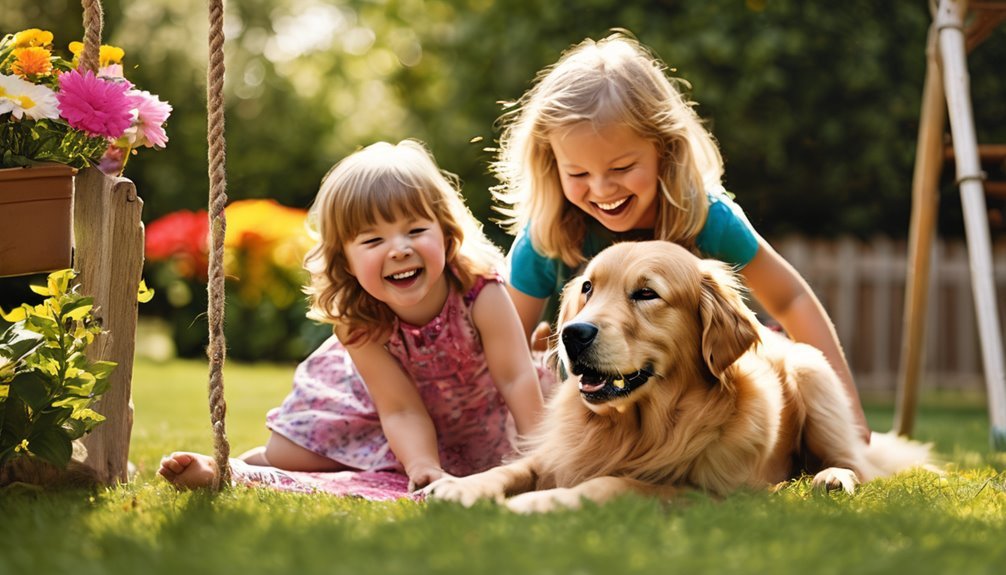
When you bring a dog into your family, it’s more than just adding a pet; it’s about finding a lifelong companion that fits your family’s lifestyle and values.
Understanding dog personality types is essential to this process. Some breeds are energetic and playful, perfect for active families, while others may be more laid-back, ideal for quieter households.
Consider your family lifestyle considerations, like how much time you spend at home, your kids’ ages, and your activity levels. A well-matched dog can enhance family bonds, creating joyful moments and teaching responsibility.

Top Dog Breeds That Thrive With Kids
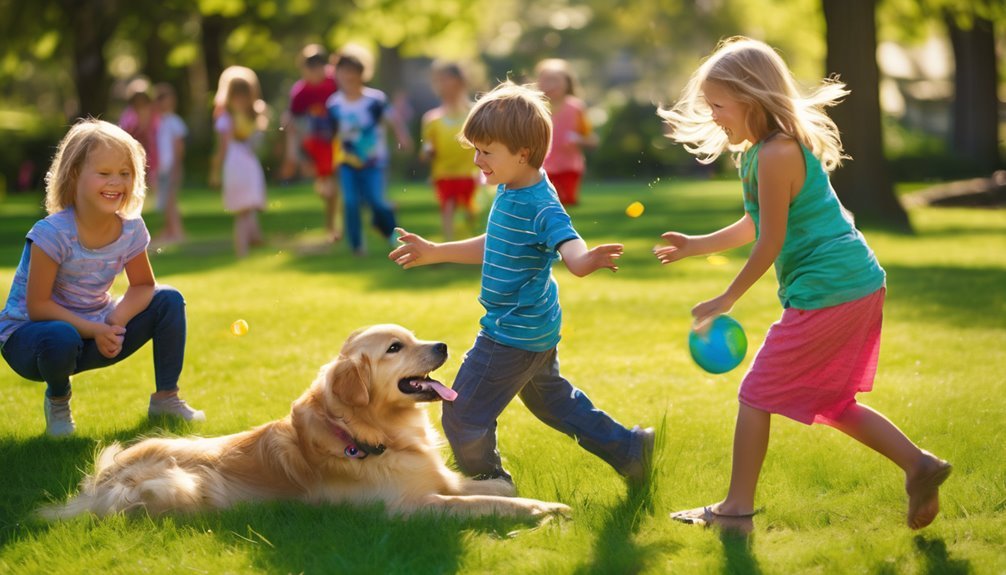
Finding the right dog breed for your family can truly enhance the joy of having a pet, especially when kids are involved. Breeds like the Labrador Retriever and Golden Retriever are fantastic choices, thanks to their playful demeanor and gentle temperament. They thrive in lively environments, making them perfect companions for energetic children.
Another excellent option is the Beagle, known for its affectionate nature and love for playtime.
Additionally, the Bulldog’s calm disposition can provide a comforting presence for kids. Each of these breeds offers a unique blend of joy and gentleness, ensuring your family enjoys countless happy moments together.
Characteristics of Kid-Friendly Dog Breeds

Choosing a dog breed that fits well with your family means understanding the key characteristics that make a breed kid-friendly.
Look for a playful temperament, as dogs that enjoy interaction can keep your children entertained. A gentle disposition is crucial; these dogs will be kind and tolerant, creating a safe environment for your little ones.
Social adaptability also matters, as a dog that can easily adjust to various situations and people will thrive in a bustling household.
Lastly, consider patience levels; a breed that remains calm and understanding during the inevitable chaos of family life will be invaluable.
Training Your Dog for Safe Interactions With Kids
Training your dog for safe interactions with kids is a vital step in fostering a harmonious household. Start by using positive reinforcement to reward good behavior around your children. This builds trust and encourages your dog to associate kids with positive experiences.
Incorporate socialization techniques, exposing your dog to different age groups, noises, and activities. Gradually introduce your dog to children, allowing them to interact in a controlled environment.
Teach your kids to respect the dog’s space, ensuring they know how to approach and handle your pet gently. Consistency is key; practice regularly to reinforce good habits.
With patience and love, you’ll create a safe and joyful atmosphere where both your dog and children can thrive together.

Assessing a Dog’s Compatibility With Children?
When assessing a dog’s compatibility with children, it’s essential to consider the dog’s temperament and behavior. Look for traits like patience, gentleness, and playfulness. Observe how the dog interacts with kids to gauge their comfort level with child dynamics.
Here’s a quick guide to help you evaluate:
| Trait | Positive Indicators | Red Flags |
|---|---|---|
| Temperament | Calm, friendly, and tolerant | Aggressive or fearful |
| Energy Level | Playful and energetic | Hyperactive or lethargic |
| Trainability | Quick to learn commands | Stubborn or unresponsive |
| Socialization | Enjoys meeting new people | Avoids or reacts negatively |
Addressing Safety Concerns With Dogs and Kids
While assessing a dog’s compatibility with children is vital, addressing safety concerns is equally important. Understanding dog behavior is key to ensuring a harmonious household.
Always supervise your child when they’re around the dog, especially during playtime or feeding. Kids mightn’t recognize signs of stress or discomfort in dogs, so it’s your job to guide them. Teach your child how to approach the dog gently and respect its space.
Avoid situations where the dog feels cornered or threatened. By fostering a safe environment, you can help your child and dog build a trusting relationship.
Tips for Introducing a New Dog to Your Family
Bringing a new dog into your family can be an exciting yet challenging experience, so it’s essential to plan the introduction carefully. Understanding dog personalities and how they fit into your family dynamics will help ensure a smooth transition.
| Tip | Description |
|---|---|
| Create a Safe Space | Set up a designated area for the dog to relax. |
| Supervise Interactions | Always watch your kids and the dog together. |
| Positive Reinforcement | Reward good behavior from both the dog and kids. |
Introduce your new furry friend gradually. Allow your dog to explore while keeping interactions calm and supervised. This approach fosters trust and creates a harmonious environment for everyone.
The Lifelong Benefits of Having a Family Dog
Having a family dog can transform your household in ways you mightn’t expect, enriching your lives with love, companionship, and joy.
A family dog brings unexpected joy and companionship, enriching your home with love and connection.
Here are some lifelong benefits you’ll experience:
- Emotional Support: Dogs are natural healers, offering comfort during tough times.
- Lifelong Companionship: They stick by your side through all of life’s ups and downs.
- Enhanced Family Bonds: Caring for a dog together strengthens your family’s connections.
- Active Lifestyle: Dogs encourage outdoor play and exercise, promoting healthier habits.
Frequently Asked Questions
What Size Dog Is Best for Families With Young Children?
For families with young children, medium-sized dogs often strike a perfect balance. However, small breeds can be great companions too, while large breeds might be better for more active households. It’s all about your family’s lifestyle!
How Can Allergies Affect Dog Breed Selection for Families?
Allergies affect dog breed selection significantly; about 10% of people have dog allergies. If you’re prone to allergy symptoms, consider hypoallergenic breeds like Poodles or Bichon Frises, which can help ease your family’s discomfort.
Are Certain Dog Breeds Better for Active Families?
Absolutely, certain breeds suit active lifestyles better. Look for dogs with energetic temperament traits, like retrievers or shepherds. They thrive on exercise and companionship, making them perfect pals for your adventurous family activities.
What Is the Average Lifespan of Family-Friendly Dog Breeds?
Family-friendly dog breeds typically live around 10 to 15 years. Their lifestyle compatibility and temperament traits can enhance your family’s joy, creating lasting memories together, much like a cherished story woven into your daily lives.
How Much Exercise Do Kid-Friendly Dogs Typically Need?
Kid-friendly dogs usually need at least an hour of exercise daily. Their energy levels vary, so be ready for playful walks, games, and training sessions. Keeping them active helps strengthen your bond and keeps them happy.
Conclusion
Choosing the right dog for your family can feel like searching for a missing puzzle piece—it completes the picture of your home. By selecting a breed that thrives with kids, you’re not just gaining a pet; you’re inviting a loyal companion into your lives. With the right training and understanding, your dog can become a source of joy, love, and invaluable lessons in empathy. So, take the leap and watch your family bond grow in wonderful ways!