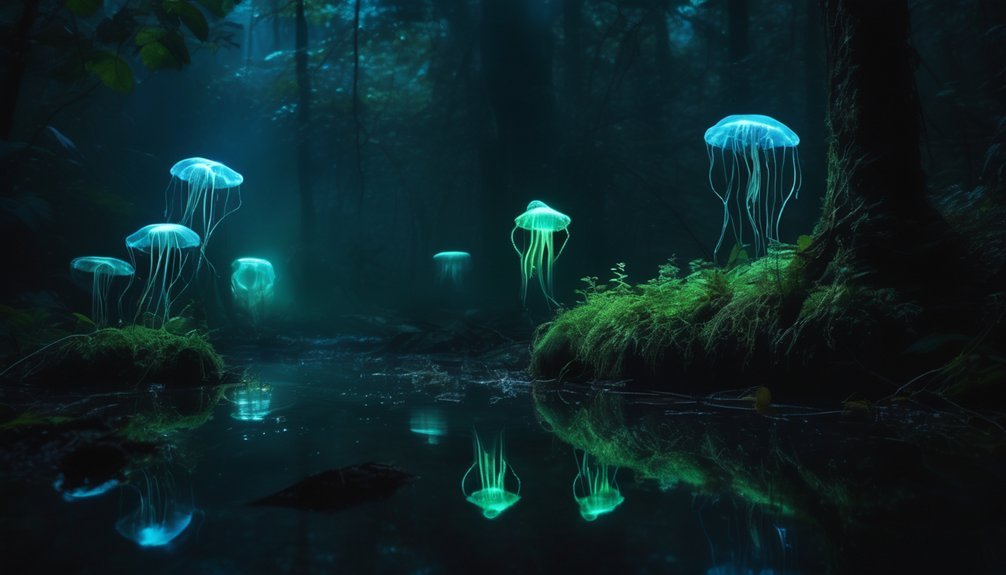
About 80% of known marine animals live in the dark ocean, where you’ll find some of the most striking examples of bioluminescence. You’ll see fireflies using species-specific flashes to find mates, jellyfish pulsing with light for defense, and deep-sea fish producing glow to lure prey. Each glow serves a precise function, but the chemistry behind these signals is even more surprising.
Key Takeaways
- Bioluminescence lets many animals produce their own cool light through chemical reactions involving luciferin and luciferase.
- Fireflies, glow-worms, and click beetles use glowing signals for courtship, attraction, or defense.
- Deep-sea animals like anglerfish and dragonfish glow to hunt, communicate, and survive in darkness.
- Jellyfish and comb jellies emit blue-green flashes for defense, predation, and signaling.
- Some glowing animals rely on symbiotic bacteria, while others make light entirely on their own.
How Do Animals Glow in the Dark?
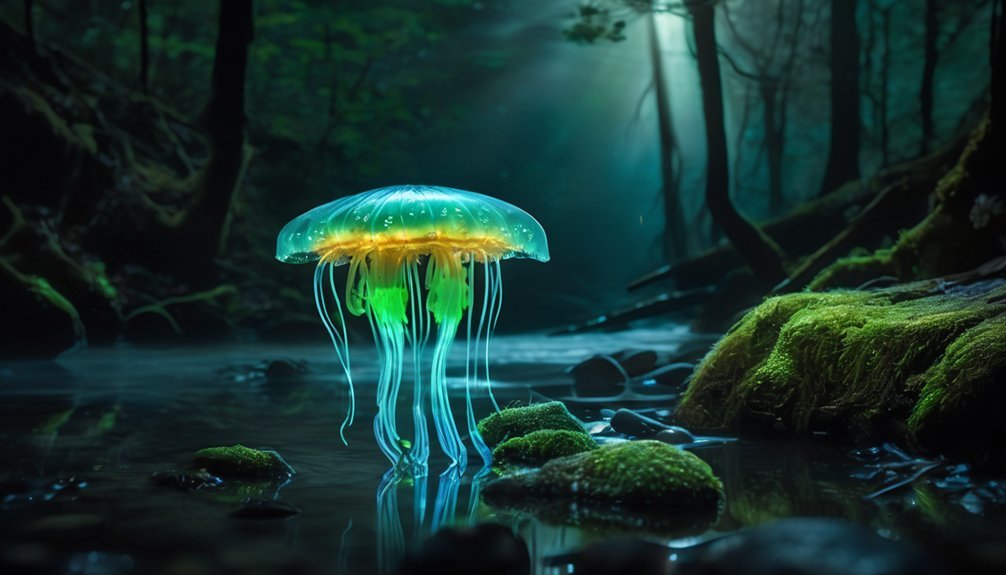
Animals glow in the dark through a few different biological processes, but the most common is bioluminescence, a chemical reaction inside the body that produces light. You see this when luciferin reacts with oxygen, usually with help from the enzyme luciferase. That reaction releases energy as visible light instead of heat, so the glow can stay cool and efficient.
Different species use different bioluminescence mechanisms, and you’ll notice that the light can appear blue, green, or sometimes red. Some animals also glow through symbiotic bacteria that live in special organs and generate light for them.

These traits reflect evolutionary advantages, because the light can be precise, controlled, and biologically economical. When you study it closely, you’re seeing a finely tuned natural system.
Why Animals Glow in the Dark
Glowing in the dark helps organisms survive by improving feeding, defense, and communication. You can see that this trait gives animals ecological advantages in low-light habitats, where visual cues are scarce and prey or mates may be hard to detect.
In bioluminescence evolution, natural selection favors individuals that produce light when it improves hunting success, startles predators, or signals species identity. You’ll notice that glow patterns can attract food, warn attackers, or help groups stay coordinated in darkness.
Because light production costs energy, animals usually keep it when the benefit outweighs the expense. In this way, glowing isn’t random beauty; it’s an adaptive strategy shaped by environment, behavior, and survival pressure.
Fireflies and Other Bioluminescent Insects
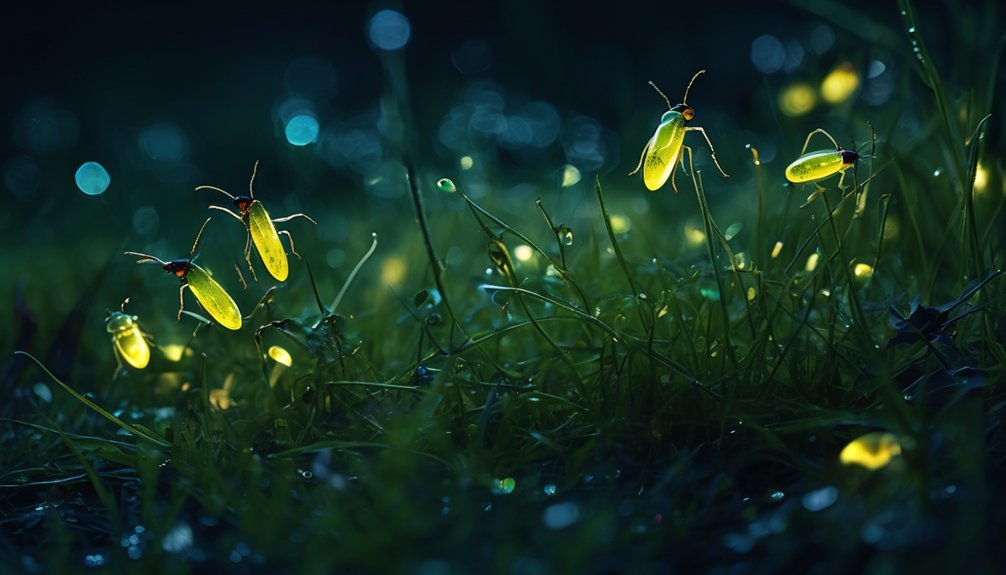
Among the best-known bioluminescent insects, fireflies use light-producing chemical reactions in their abdomens to send species-specific signals during courtship, and you can often see these flashes synchronized or patterned in ways that help males and females find one another. You’re witnessing firefly behavior shaped by insect mating.
| Insect | Light use |
|---|---|
| Fireflies | Courtship flashes |
| Glow-worm beetles | Luring mates |
| Click beetles | Defensive glow |
Each pulse reflects oxygen-driven luciferin reactions, and you can notice that timing, color, and pause length vary by species. These signals let you identify nearby partners without touch, making the exchange feel precise and intimate. Other bioluminescent insects, like some beetles and larvae, use glow to attract prey or warn predators, but fireflies remain the clearest example of a living light code.
Deep-Sea Creatures That Produce Bioluminescence
Far below the sunlit surface, many deep-sea creatures make their own light through bioluminescent chemical reactions that help them hunt, hide, and communicate in darkness.
You’d see anglerfish using glowing lures to attract prey, while dragonfish flash controlled signals to recognize mates and rivals.
These deep sea adaptations let animals survive crushing pressure, cold water, and near-total darkness with remarkable efficiency.
You can think of bioluminescent communication as a precise language of pulses, patterns, and timing that reduces risk in an environment where vision is limited.

Some species also use light to confuse predators or erase their outline with counterillumination.
In the abyss, every glow matters, and you’re witnessing a finely tuned survival system shaped by evolution.
Glowing Jellyfish and Comb Jellies
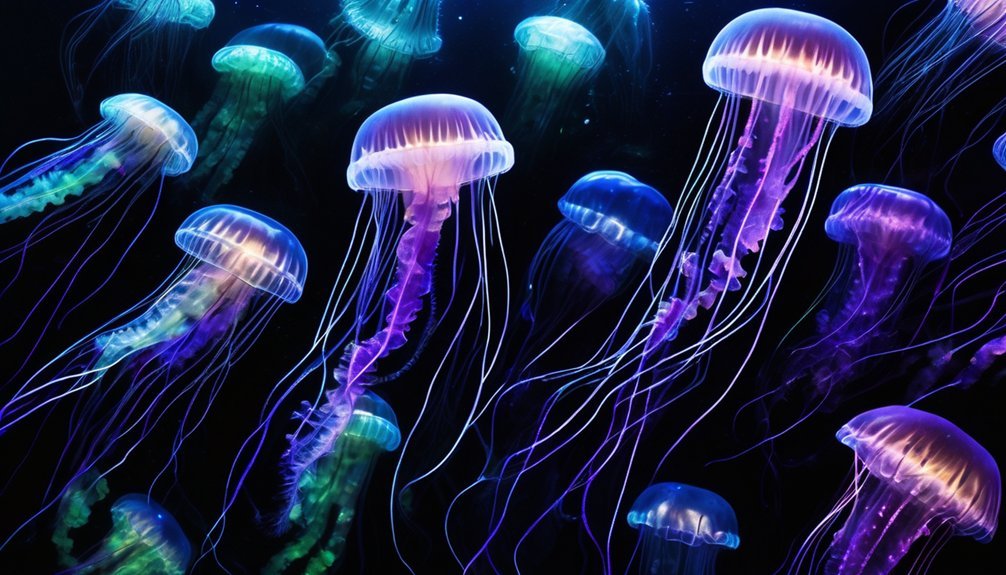
When you look at jellyfish and comb jellies in dark water, you often find that they produce light through bioluminescence for defense, predation, and signaling.
You can see glowing jellyfish behaviors when a touch, wave, or predator triggers flashes that startle attackers and may attract larger threats to them. Many species make light with symbiotic bacteria or chemical reactions in specialized tissues.
A touch or predator can trigger flashes that startle attackers and may draw larger threats.
Comb jellies use comb jelly adaptations such as rows of shimmering cilia that scatter blue-green light as they swim, creating a soft, pulsing display. You may also notice that some comb jellies emit light when disturbed, helping them confuse prey or communicate in the dim ocean.
Together, these animals show how illumination can improve survival in a silent, shadowed world.
Frequently Asked Questions
Which Land Animals Besides Insects Can Glow Naturally?
You’d mainly find glowing mammals and bioluminescent reptiles among land animals besides insects; examples include some opossums, flying squirrels, and geckos. Their glow usually comes from fluorescence under ultraviolet light, not true bioluminescence.
Can Glowing Animals Be Found in Freshwater Environments?
Yes—freshwater bioluminescence exists, and you can find glowing fish in some rivers and lakes, though it’s rare. You’ll almost think nature switched on a secret lamp, but these organisms truly emit light chemically.
Do Glowing Animals Use Their Light to Scare Predators Away?
Yes, you’ll find some glowing animals use light as a predator deterrent. Their bioluminescent defense can startle, confuse, or expose attackers, helping them escape. You can think of it as a remarkable survival signal.
Is Bioluminescence the Same as Fluorescence in Animals?
No—you’re not seeing the same lantern. Bioluminescence mechanisms make animals produce light chemically, while fluorescence examples show them absorb one glow and emit another under light. You’ll notice your sea spark differs.
Can Animal Glow Be Seen Without Complete Darkness?
Yes, you can often see animal glow without complete darkness, though glow visibility depends on ambient light and your light perception. In dim settings, bioluminescent or fluorescent signals stand out more clearly and vividly.
Conclusion
You can see that animals that glow in the dark use bioluminescence as a precise survival tool. Fireflies flash to find mates, jellyfish shine for defense, and deep-sea predators like anglerfish use light to lure prey. In each case, the glow works like a biological signal in the dark. These remarkable adaptations let species communicate, hunt, and avoid danger in environments where sunlight can’t reach, showing how life thrives through chemistry and evolution.