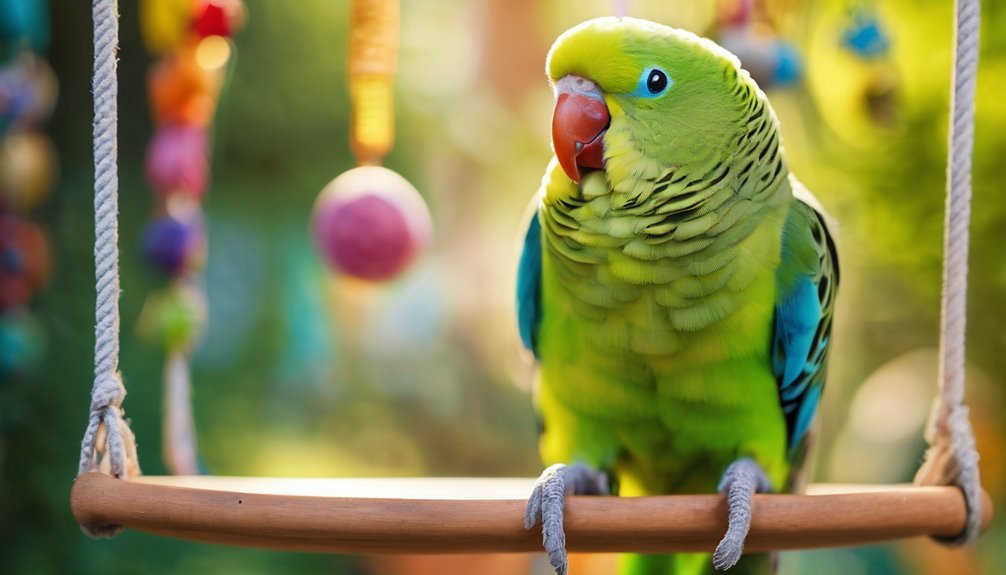
Caring for a pet parakeet is like embarking on a rewarding journey, where each step enhances your feathered friend’s well-being. To create a thriving environment, you’ll need to consider various factors, from habitat design to nutrition. Understanding your parakeet’s needs is crucial for fostering a strong bond and ensuring its happiness. Explore the essential aspects of parakeet care to provide the best life possible for your vibrant companion.
Key Takeaways
- Provide a spacious cage with perches, toys, and natural branches for an enriching environment.
- Offer a balanced diet of high-quality seeds, fresh fruits, and vegetables, ensuring fresh water is always available.
- Regularly check and maintain feathers, beak, and nails to promote health and hygiene.
- Observe your parakeet’s body language to understand its feelings and foster trust.
- Engage in interactive activities like training, games, and social interaction to enhance companionship.
How to Create the Perfect Habitat for Your Parakeet
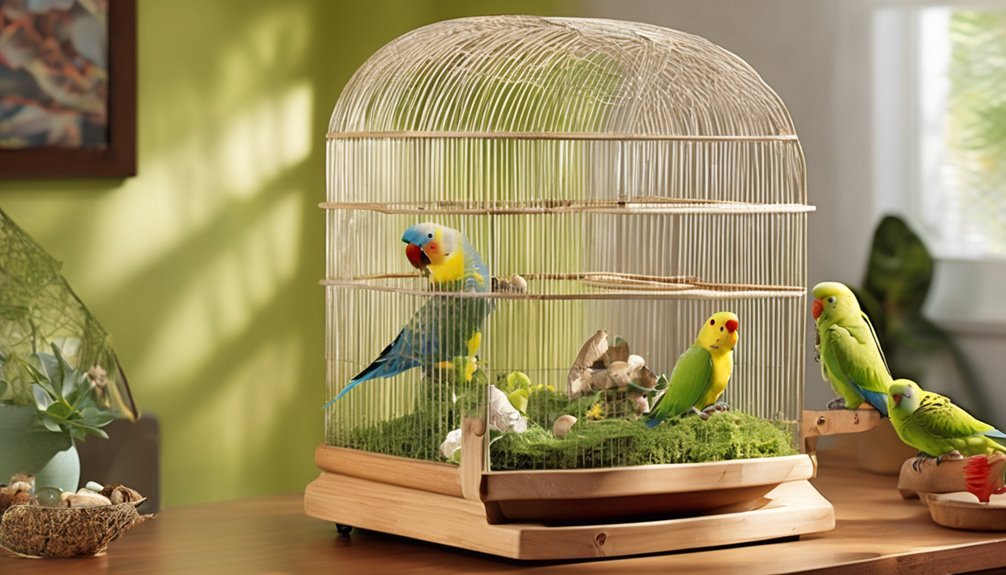
Creating the perfect habitat for your parakeet is essential for its well-being, so start by choosing the right cage. Aim for a spacious cage size that allows your bird to move freely, stretch its wings, and explore. A minimum of 18x18x24 inches is ideal, but larger is always better.
Next, focus on environmental enrichment. Add perches at varying heights, toys for mental stimulation, and safe climbing structures to keep your parakeet engaged. Natural branches can also enhance the habitat, mimicking its wild environment.

Position the cage in a bright, quiet area, away from drafts and direct sunlight. By fostering a stimulating and comfortable atmosphere, you’ll help your parakeet thrive and feel truly at home.
Essential Nutritional Needs for Parakeet Care
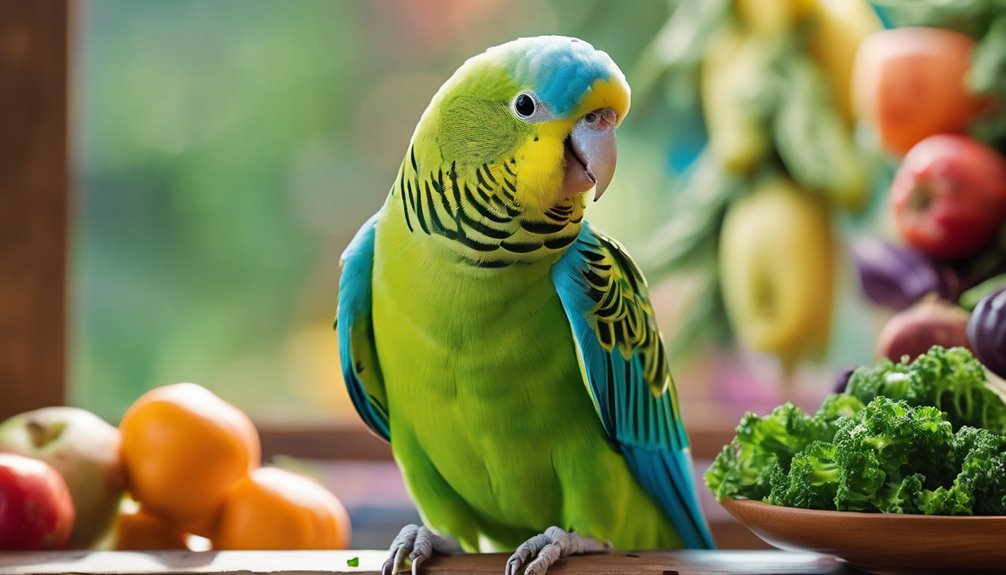
A well-designed habitat lays the foundation for your parakeet’s health, but proper nutrition is equally vital for its overall well-being.
Start with high-quality seed selection, focusing on a mix that includes millet, canary seed, and oats. This variety ensures your feathered friend receives essential nutrients.
However, seeds alone aren’t enough; supplement their diet with fresh fruits and vegetables like apples, spinach, and carrots to provide vital vitamins and minerals.
You might also consider vitamin supplements to bridge any nutritional gaps, especially during molting or breeding periods.
Always ensure fresh water is available, too.
How to Interpret Your Parakeet’s Behavior and Promote Socialization?
Understanding your parakeet’s behavior is essential for fostering a strong bond and promoting socialization. By paying attention to their body language and vocal communication, you can create a nurturing environment.

Here are some key behaviors to observe:
- Fluffed Feathers: This indicates your parakeet is comfortable and relaxed.
- Chirping or Whistling: Your bird is likely trying to engage with you or express happiness.
- Head Bobbing: This playful behavior shows excitement and invites interaction.
- Avoidance: If your parakeet turns away, it may need space; respect this to build trust.
Essential Grooming and Health Tips
Regular grooming and health checks are vital for your parakeet’s well-being. Keeping your feathered friend in top shape requires attention to feather maintenance and beak care. Schedule routine checks to ensure their feathers are clean and free of matting. Trim any overgrown feathers gently, as this helps with their flight and comfort. Beak care is equally essential; monitor for signs of overgrowth or irregularities. Providing appropriate perches and toys can help keep their beak healthy and naturally worn down.
| Grooming Task | Frequency | Notes |
|---|---|---|
| Feather Maintenance | Weekly | Check for cleanliness |
| Beak Care | Monthly | Look for irregular growth |
| Nail Trimming | Every 4-6 weeks | Use specialized clippers |
| Health Check | Bi-weekly | Observe for signs of illness |
Fun Activities to Make Your Parakeet Happy
To keep your parakeet joyful and engaged, incorporating fun activities into their daily routine is essential. Here are some ideas to brighten their day:
- Interactive Games: Set up simple puzzles or mazes for your parakeet to explore. They love challenges!
- Parakeet Toys: Rotate different toys regularly to keep their environment stimulating. Bells, swings, and ladders are great choices.
- Training Sessions: Spend time teaching your parakeet tricks or new words. This strengthens your bond while keeping their minds active.
- Social Interaction: Spend quality time talking or singing to your parakeet. They thrive on companionship and love your attention.
Frequently Asked Questions
Can Parakeets Live With Other Types of Birds?
Parakeets can live with some bird species, but compatibility varies. Consider their socialization needs and temperaments. Always monitor interactions closely to ensure harmony and prevent stress or aggression among your feathered friends.
How Long Do Parakeets Typically Live?
Your parakeet’s lifespan often resembles a delicate feather drifting on the breeze, typically ranging from 5 to 15 years. Factors affecting this include diet, environment, and healthcare, so nurturing them well truly matters.
Are Parakeets Noisy Pets?
Parakeets can be quite vocal, and their noise levels vary. You’ll enjoy their cheerful parakeet vocalizations, but be prepared for occasional loud moments. Understanding their needs helps you appreciate their charming, lively personalities even more.
How Can I Tell if My Parakeet Is Sick?
To tell if your parakeet’s sick, watch for symptom identification like lethargy, changes in appetite, or unusual vocalizations. Notice behavioral changes, too; if it’s withdrawn or less active, it’s time for a vet visit.
What Should I Do if My Parakeet Bites?
If your parakeet bites, stay calm and avoid reacting harshly. Focus on bite prevention through gentle handling techniques. Gradually build trust by letting your bird become comfortable with you, ensuring a positive experience during interactions.
Conclusion
Caring for your parakeet is a rewarding journey that enriches both your lives. By providing a vibrant habitat, balanced diet, and regular interaction, you’ll foster a happy, healthy companion. For instance, consider a scenario where a parakeet named Kiwi thrived after his owner introduced new toys and daily training sessions, leading to a bond that transformed Kiwi into a playful, vocal family member. Embrace these practices, and watch your feathered friend flourish!