It’s funny how summer sneaks up on us, bringing the heat just when we least expect it. As a dog owner, you know your furry friend can struggle in high temperatures. Keeping them cool isn’t just a comfort; it’s essential for their health. From hydration tips to ideal walking times, there are several effective strategies you can implement. Let’s explore how you can ensure your dog stays safe and comfortable throughout the season.
Key Takeaways
- Provide ample fresh water and regularly change it to prevent dehydration.
- Create shaded areas in your yard with trees or canopies for outdoor comfort.
- Use cooling vests or mats made from breathable materials for effective temperature regulation.
- Schedule walks during early morning or late evening to avoid the heat.
- Utilize fans and air conditioning indoors, ensuring access to cool surfaces like tiled floors.
Essential Tips to Keep Your Dog Cool This Summer
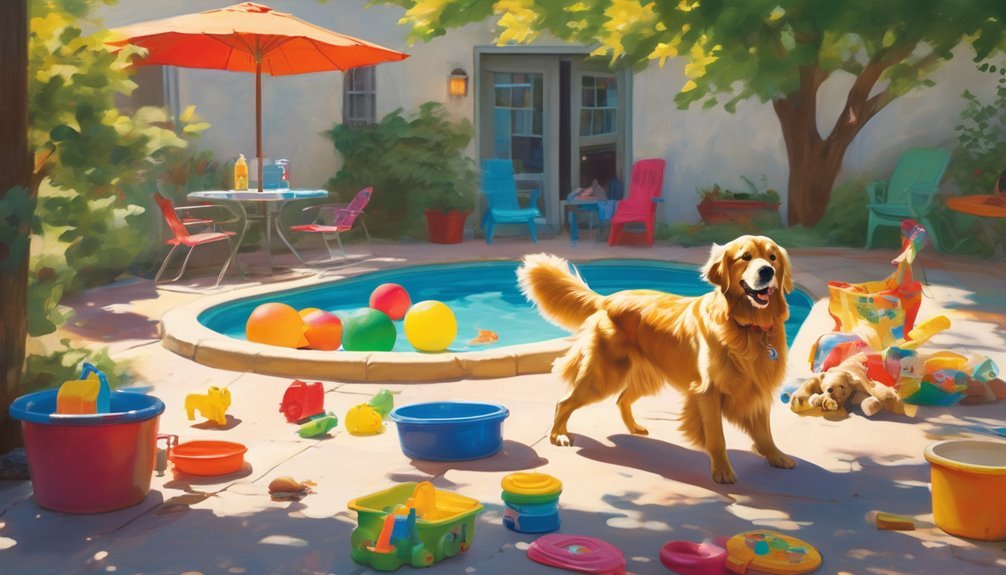
As summer heat sets in, it’s crucial to keep your dog comfortable and safe from overheating. Start by providing plenty of fresh water and creating shaded areas in your yard.
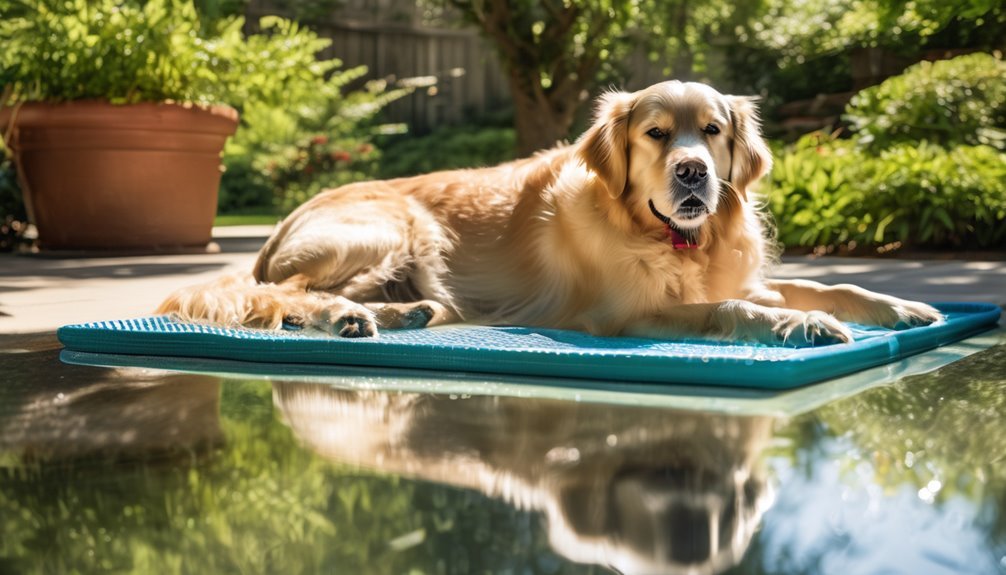
Consider investing in dog cooling accessories, like cooling vests or mats, which can help regulate your pet’s body temperature.
Limit outdoor activities during peak heat hours and opt for early morning or late evening walks instead. Always watch for signs of distress, such as excessive panting or lethargy.

Additionally, never leave your dog in a parked car, even for a short time.
Why Keeping Your Dog Cool Is Important
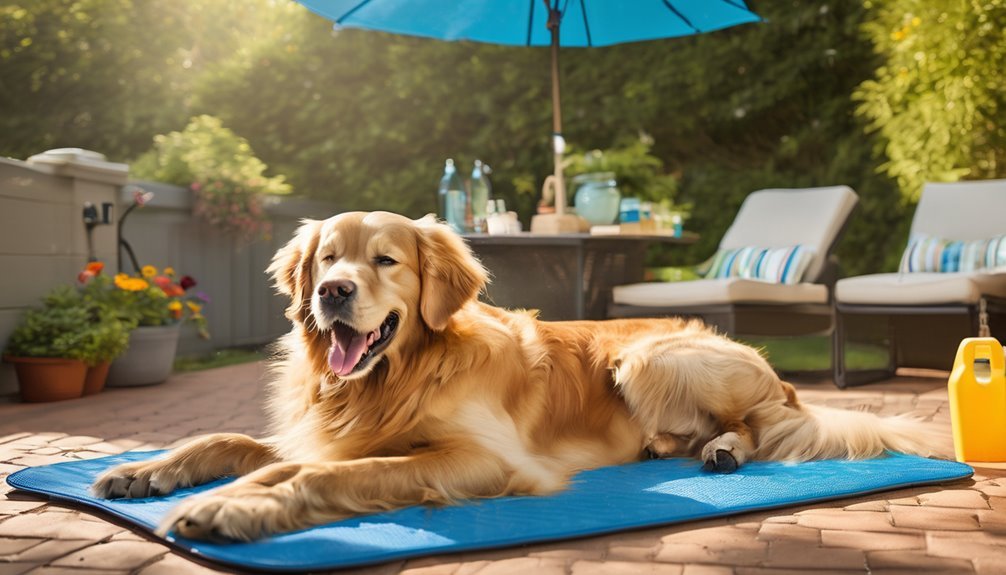
Keeping your dog cool isn’t just a matter of comfort; it’s essential for their health and well-being. During the summer months, high temperatures can pose serious risks to your furry friend.
Keeping your dog cool is vital for their health, especially during the sweltering summer months when high temperatures can be dangerous.
Here’s why prioritizing summer safety is crucial for dog health:
- Heatstroke Prevention: Dogs can’t cool down as effectively as humans, making them vulnerable to overheating.
- Dehydration Risks: Warm weather increases their need for water, and dehydration can happen quickly.
- Skin Issues: Excessive heat can exacerbate skin conditions, especially for breeds with thick fur.
- Behavioral Changes: Overheating can lead to lethargy or irritability, affecting your dog’s mood and behavior.
Signs Your Dog Is Overheating
Recognizing the signs of overheating in your dog is crucial, especially on sweltering days. Look out for heat exhaustion indicators to keep your furry friend safe. Common signs include:
| Signs of Overheating | Description |
|---|---|
| Panting Behavior | Rapid, heavy breathing |
| Excessive Drooling | Unusually wet mouth |
| Lethargy Signs | Lack of energy or weakness |
| Rapid Heartbeat | Elevated heart rate |
| Glazed Eyes | Lack of focus or clarity |
| Disorientation Symptoms | Confusion or staggering |
If you notice any of these symptoms, your dog’s elevated body temperature could be a serious concern. Act quickly to cool them down and consult your veterinarian if needed. Your vigilance can make all the difference!
Provide Plenty of Fresh Water for Hydration
Water is essential for your dog’s well-being, especially during hot weather. Keeping your furry friend hydrated is crucial to prevent overheating.
Here are some tips to ensure they’ve access to fresh water:
- Set Up Hydration Stations: Place multiple water bowls around your home and yard, so your dog has easy access wherever they roam.
- Change Water Regularly: Refresh their water bowls daily to keep the water clean and appealing.
- Add Ice Cubes: On particularly hot days, toss a few ice cubes into the bowls for a cool treat.
- Monitor Intake: Keep an eye on how much your dog drinks, adjusting water availability as needed.
Create Shaded Areas in Your Yard to Keep Your Dog Cool
To ensure your dog stays comfortable during hot days, creating shaded areas in your yard is essential. A simple dog house can provide a cozy retreat, but don’t overlook the benefits of natural tree shade.
Positioning your dog house beneath a tree not only offers protection from direct sunlight but also allows your furry friend to enjoy a cooler breeze. If you don’t have enough trees, consider using pop-up canopies or patio umbrellas to create additional shaded spots.
How to Select Effective Cooling Mats and Vests
Providing shaded areas in your yard helps, but sometimes additional cooling solutions are necessary for your dog.
When selecting cooling mats and vests, consider these key factors:
- Material Types: Look for breathable, non-toxic fabrics that promote airflow, like mesh or gel-infused options.
- Size Selection: Choose the right size for your dog to ensure comfort and effectiveness; measure your dog’s length and girth before purchasing.
- Cooling Mechanism: Some products use water absorption, while others rely on gel technology; test which works best for your dog.
- Ease of Cleaning: Opt for machine-washable materials for hassle-free maintenance.
When’s the Best Time to Walk Your Dog?
When’s the best time to walk your dog? To keep your furry friend cool during the hot summer months, try walking them in the early morning or late evening. The temperatures are typically lower, making it more comfortable for both of you.
Early morning walks not only help avoid the heat but also allow you to enjoy the fresh air and quiet surroundings. On the other hand, late evening strolls can be a lovely way to wind down your day together.

Just be mindful of the pavement temperature; if it’s too hot for your bare feet, it’s likely too hot for your dog’s paws. Prioritizing these cooler times can make your walks enjoyable and safe for your beloved companion.
Offer Frozen Treats and Ice Cubes for Extra Relief
As temperatures soar, offering your dog frozen treats and ice cubes can be a delightful way to provide relief from the heat. Not only do these treats cool them down, but they also keep them entertained.
Here are a few ideas to get you started:
- Frozen Fruit: Blend dog-safe fruits like bananas and blueberries, then freeze them in ice cube trays.
- Yogurt Pops: Mix plain yogurt with fruit puree, pour into molds, and freeze for a creamy treat.
- Broth Ice Cubes: Freeze low-sodium chicken or beef broth in ice cube trays for a savory snack.
- Peanut Butter Ice Treats: Mix peanut butter with water, pour into molds, and freeze.
These simple ice treats can make hot days more enjoyable for your furry friend!
Keep Your Dog Cool Indoors With Fans and AC
To ensure your dog stays comfortable during sweltering days, utilizing fans and air conditioning can make a significant difference. Proper fan placement is crucial; position fans where they can circulate cool air effectively.
Consider directing a fan toward your dog’s favorite resting spot to create a gentle breeze that helps with indoor cooling.
If you have air conditioning, keep it set at a comfortable temperature, ideally between 68°F and 72°F.
Make sure your dog has access to cooler areas in your home, like tiled floors or shaded rooms.
Don’t forget to check on your furry friend regularly, ensuring they’re staying hydrated and comfortable.
With these simple adjustments, you can provide a refreshing, cozy environment for your beloved companion.
Frequently Asked Questions
Can Certain Dog Breeds Tolerate Heat Better Than Others?
Yes, certain breeds handle heat better due to unique breed characteristics. Breeds with lower heat sensitivity often adapt well to warmer climates and have varying exercise requirements, so choose according to your dog’s needs and environment.
Are There Specific Foods That Help Keep Dogs Cool?
Isn’t it wonderful how certain foods can refresh your pup? Cooling treats like watermelon and cucumber, combined with hydration tips, can help keep your dog comfortable and happy during those scorching summer days.
How Can I Tell if My Dog’s Water Is Fresh Enough?
Check your dog’s water bowl daily for cleanliness; it should be free of dirt and debris. Look for signs of hydration, like clear eyes and a moist nose, ensuring your pup stays refreshed and healthy.
Is It Safe for Dogs to Swim in Pools or Lakes?
Swimming’s like a refreshing hug for your dog, but ensure water temperature’s safe—ideally between 70-80°F. Always supervise, check for chemicals in pools, and be mindful of currents in lakes for dog swimming safety.
What Should I Do if My Dog Loves the Sun?
If your dog’s a sun lover, ensure balanced sun exposure. Provide shade options like umbrellas or trees, and create a cool resting spot. Regularly check for signs of overheating to keep your furry friend comfortable and safe.
Conclusion
Keeping your dog cool during summer is crucial for their health and happiness. Did you know that dogs can suffer from heatstroke in temperatures over 85°F? By ensuring they have fresh water, shaded areas, and appropriate cooling gear, you can help prevent overheating. Remember to schedule walks during cooler times and be mindful of the pavement temperature. With these strategies, you’ll keep your furry friend safe and comfortable all summer long.