
Did you know that the frequency of grooming your dog can significantly impact its overall health? While many assume it’s just about aesthetics, regular grooming also helps prevent skin issues and matting. You might be surprised at how often your dog needs attention, depending on its breed and coat type. Understanding these nuances can make all the difference in keeping your furry friend comfortable and happy. Let’s explore what your dog truly needs.
Key Takeaways
- Short-haired breeds typically require grooming once a week to maintain coat health and reduce shedding.
- Long-haired dogs often need daily brushing to prevent tangles and matting.
- Regular bathing, every 4 to 8 weeks, helps remove dirt and allergens while promoting skin health.
- Tailored routines should consider breed-specific needs for optimal grooming frequency and comfort.
- Nail trimming and ear cleaning are essential grooming tasks for all breeds, regardless of coat length.
Recognizing Signs Your Dog Needs Grooming
When you notice your dog scratching more than usual or their coat looking matted, it’s a clear sign they need grooming.
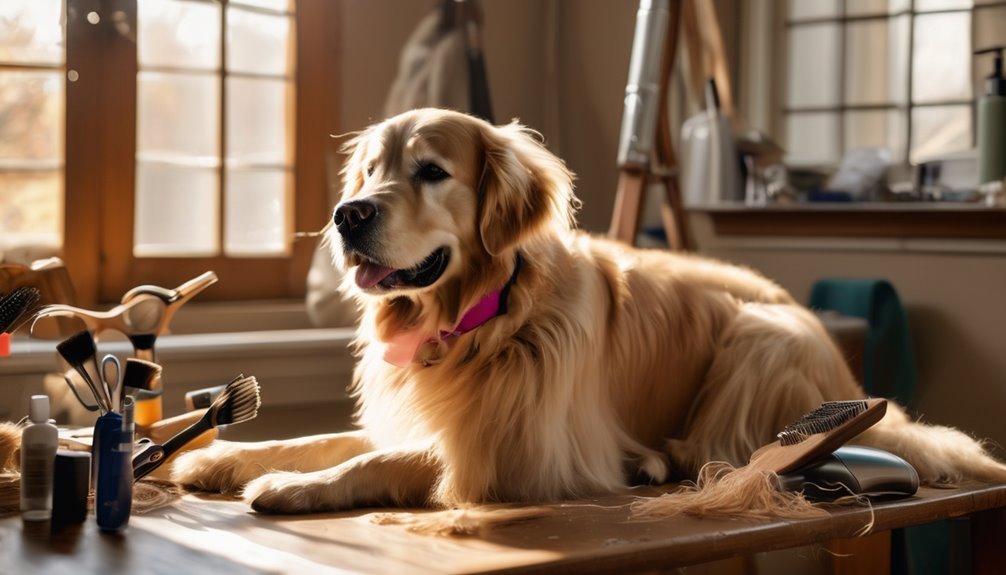
Pay close attention to their dog coat condition; mats can trap dirt and moisture, leading to skin issues. If you see excessive shedding patterns, it might indicate they’re uncomfortable or unwell.
Regular grooming not only helps manage these issues but strengthens your bond with your furry friend.
Look for changes in behavior, like increased irritation or reluctance to be touched. These signs can signal that your dog is in distress.

How Often Should You Brush Your Dog?
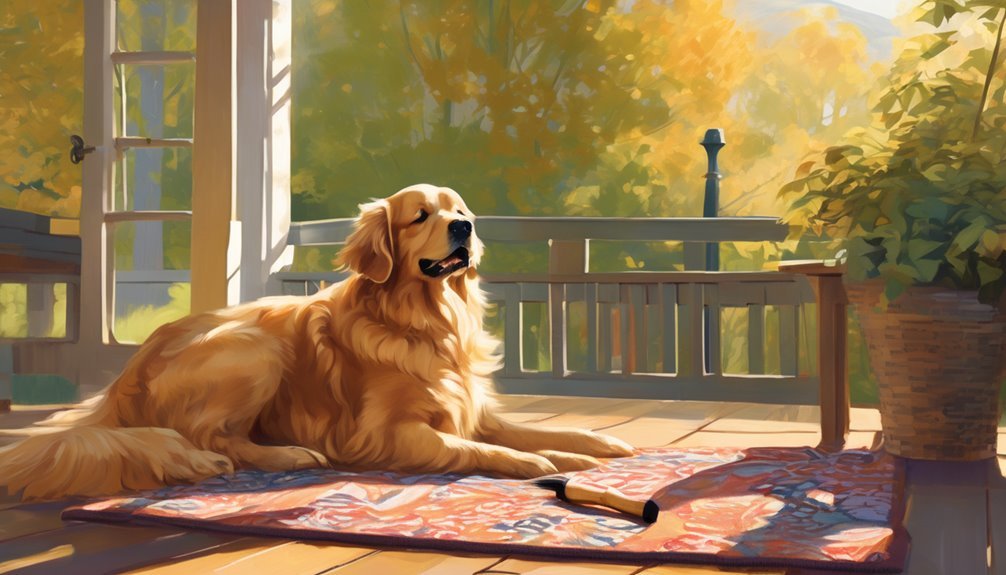
How often should you be brushing your dog? It really depends on your dog’s coat type. For short-haired breeds, brushing once a week might suffice, while long-haired dogs often need daily attention.
Use appropriate brushing techniques, like slicker brushes for tangles or bristle brushes for shine, to keep their coat healthy.
Using the right brushing techniques, such as slicker brushes for tangles and bristle brushes for shine, keeps your dog’s coat healthy.
If your dog sheds heavily, more frequent brushing can help manage that. Pay attention to any matting, especially in curly or dense coats, as this requires immediate action to prevent discomfort.
Regular brushing not only keeps fur in check but also strengthens your bond, providing a calm and loving ritual. Make it a special time together, and your dog will cherish those moments just as much as you do.
The Importance of Regular Bathing for Dogs
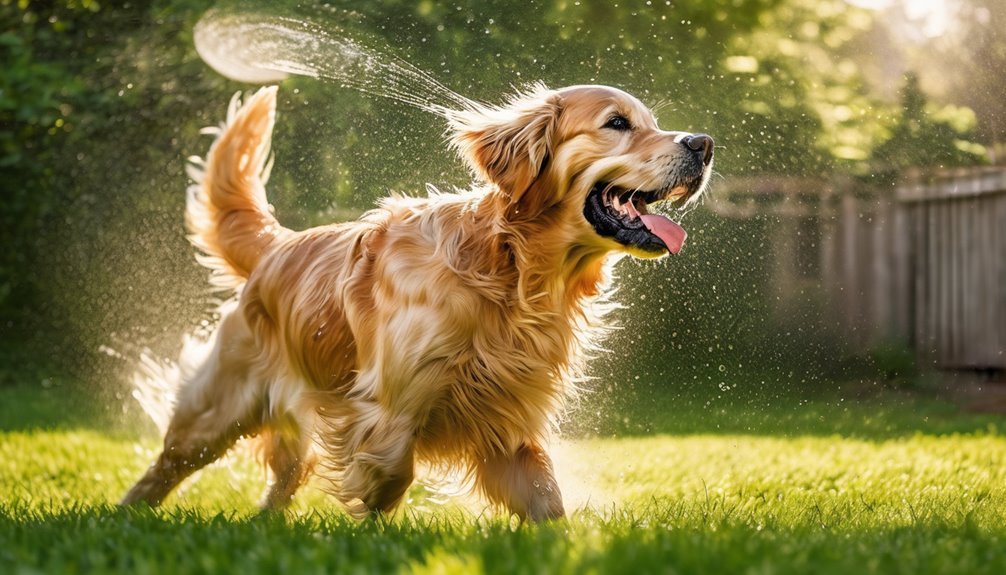
Regular bathing is essential to your dog’s overall health, as it helps remove dirt, allergens, and oils that can build up on their skin. By using effective bathing techniques, you can enhance their skin health and promote a shiny coat.
Choose a gentle, dog-specific shampoo to avoid irritation and ensure thorough rinsing to prevent residue buildup. Bathing not only cleans but also supports coat maintenance, keeping it soft and manageable.
It’s an intimate time for you both—a chance to bond while ensuring proper dog hygiene. Regular baths can also help you spot any skin issues early, so you can address them promptly.
How Often Should You Trim Your Dog’s Coat?
Trimming your dog’s coat is essential for maintaining their comfort and appearance, and it’s generally recommended every 4 to 8 weeks, depending on the breed and coat type.
A well-trimmed coat helps prevent matting, reduces shedding, and keeps your pup feeling fresh. If your dog has a longer coat, you might need to increase grooming frequency to keep it manageable and looking its best.
Shorter coats may require less frequent trims, but they still benefit from regular maintenance. Pay attention to your dog’s coat length and condition; if it starts to look unruly, it’s time for a trim.
A loving touch during grooming can strengthen your bond and ensure your furry friend feels cherished.
Tailored Grooming Routines for Different Dog Breeds
Each dog breed has unique grooming needs that reflect their coat type and lifestyle. For instance, long-haired breeds like Shih Tzus require frequent grooming, ideally every few days, to prevent mats.
In contrast, short-haired breeds, such as Beagles, typically need less frequent grooming—around once a week—focusing on shedding control.
Understanding your dog’s breed-specific needs helps you establish an effective grooming frequency. Regular brushing not only keeps their coat healthy but also strengthens your bond.
Don’t forget about other grooming essentials like nail trimming and ear cleaning, which are vital for all breeds. Tailoring your routine to your dog’s specific needs ensures they stay comfortable and happy, making grooming a cherished time for both of you.
Seasonal Grooming Tips for Your Dog
Seasonal changes can significantly impact your dog’s grooming needs, so it’s essential to adjust your routine throughout the year.
In spring and fall, you’ll notice increased seasonal shedding, so ramp up grooming frequency to manage loose fur and keep your home clean.
During warmer months, focus on coat care by bathing your dog more often to remove dirt and prevent overheating.

In winter, be mindful of temperature changes; ensure you’re brushing regularly to prevent matting from wet or snowy conditions.
Always check your pup’s skin for dryness or irritation, as indoor heating can affect their coat.
How Activity Level Affects Your Dog’s Grooming Needs
While you might think grooming is a one-size-fits-all routine, your dog’s activity level plays a crucial role in determining how often you should groom them.
Active pups, especially those with longer fur types, may require more frequent grooming due to dirt, debris, and shedding patterns that can affect coat condition.
On the other hand, less active breeds might need grooming based on their specific fur types and shedding frequency.
Consider your dog’s lifestyle; if they’re exercising regularly, you may need to adjust grooming frequency to maintain their coat’s health.
Understanding these nuances, along with breed influence, helps ensure your furry friend stays clean, comfortable, and happy.
Tailoring grooming to their activity levels shows your love and care.
Must-Have Grooming Tools for Dog Owners
When it comes to grooming your dog, having the right tools can make all the difference in keeping their coat healthy and manageable.
Investing in essential grooming supplies not only simplifies the process but also strengthens your bond with your furry friend.
Here are three must-have grooming essentials:
- Slicker Brush: Great for removing mats and tangles, it’s perfect for both long and short coats.
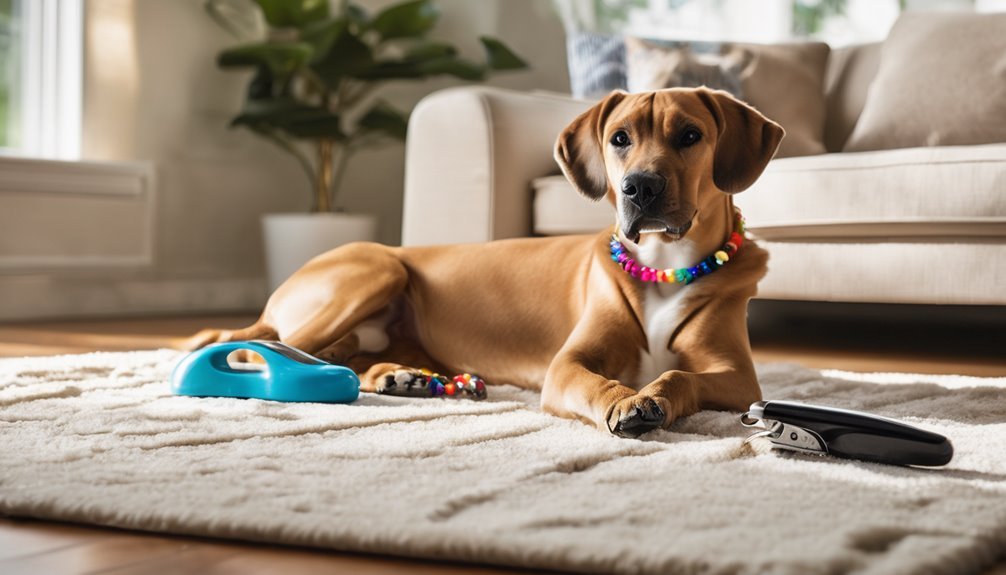
- Nail Clippers: Keeping your dog’s nails trimmed is crucial for their comfort and health; a good pair makes the job easier.
- Dog Shampoo: Choose a gentle, dog-specific formula to keep their skin and coat clean without irritation.
Should You Consider Professional Grooming for Your Dog?
Have you ever wondered if professional grooming is the right choice for your dog? Considering professional services can offer significant grooming benefits that go beyond what you might achieve at home.
Experienced groomers know how to handle various breeds, ensuring your dog looks and feels their best. They can expertly manage matting, shedding, and even skin issues, which you mightn’t tackle alone.
Plus, professional grooming can be a stress-free experience for both you and your pup, as it allows them to adapt to different environments and people. Regular sessions can also help identify health problems early, keeping your furry friend happy and healthy.
Tips for Making Grooming a Positive Experience
To ensure your dog enjoys grooming, start by creating a calm and inviting environment. Incorporate positive reinforcement to build trust and make the process enjoyable.
Here are some tips:
- Use grooming treats: Reward your dog with small treats during and after grooming sessions. This encourages them to associate grooming with positive experiences.
- Implement calming techniques: Play soft music or use a calming spray to soothe your dog. Gentle petting can also help ease any anxiety.
- Establish a regular routine: Consistency is key. Regular grooming sessions help your dog become accustomed to the process, making it feel like a normal part of their day.
Frequently Asked Questions
Can Grooming Help With My Dog’s Allergies?
Yes, grooming can significantly help manage your dog’s allergies. Regular brushing removes allergens from their coat, reducing irritation. Plus, it promotes skin health, making your furry friend more comfortable and happy in their environment.
What Are the Signs of a Good Groomer?
Finding a good groomer’s like discovering a hidden gem. Look for groomer qualifications, ask about grooming techniques, and observe their patience and gentle approach. Your dog deserves someone who truly cares and understands their needs.
How Do I Choose the Right Grooming Products?
Choose grooming products based on your dog’s coat type and specific needs. Look for natural grooming options that are gentle and effective. Always prioritize quality; your dog’s comfort and health depend on the products you select.
Can I Groom My Dog Too Often?
Grooming too often can feel like overindulging in a sweet treat—enjoyable, but excessive. Balance your grooming frequency and techniques; listen to your dog’s needs. They’ll thrive with just the right amount of care.
What Should I Do if My Dog Hates Grooming?
If your dog hates grooming, try gentle techniques like short sessions with positive reinforcement. Gradually desensitize them to grooming tools, and consider calming products to ease dog anxiety. Your patience will build trust and comfort.
Conclusion
Grooming your dog isn’t just about keeping their coat looking great; it’s about understanding their needs and nurturing your bond. As you delve into the specifics of their grooming routine, you might uncover hidden issues or discomforts that could affect their happiness. So, as you brush through that fur or schedule a trim, ask yourself: what other secrets does your dog hold? The moments spent grooming could reveal more than just tangles—they might deepen your connection in unexpected ways.