Your cat’s happiness at home is like a soft melody, subtly woven into their everyday behaviors. As you observe their body language, you might notice the small signs that reveal their emotional state. Are they relaxed or tense? Do they engage with their toys? Understanding these nuances can help you create an environment that nurtures their well-being. What other indicators might signal your feline friend’s joy?
Key Takeaways
- Playfulness: Your cat engages with toys, indicating comfort and joy in its environment.
- Relaxed Posture: Observe a loose tail and calm body language during interactions, signifying emotional well-being.
- Vocalizations: Soft purring and gentle meows express contentment and affection from your cat.
- Grooming Behavior: Gentle grooming indicates happiness, while excessive grooming may signal stress or anxiety.
- Social Interactions: Your cat seeks companionship and enjoys being near you, reflecting a positive emotional state.
Understanding Feline Body Language
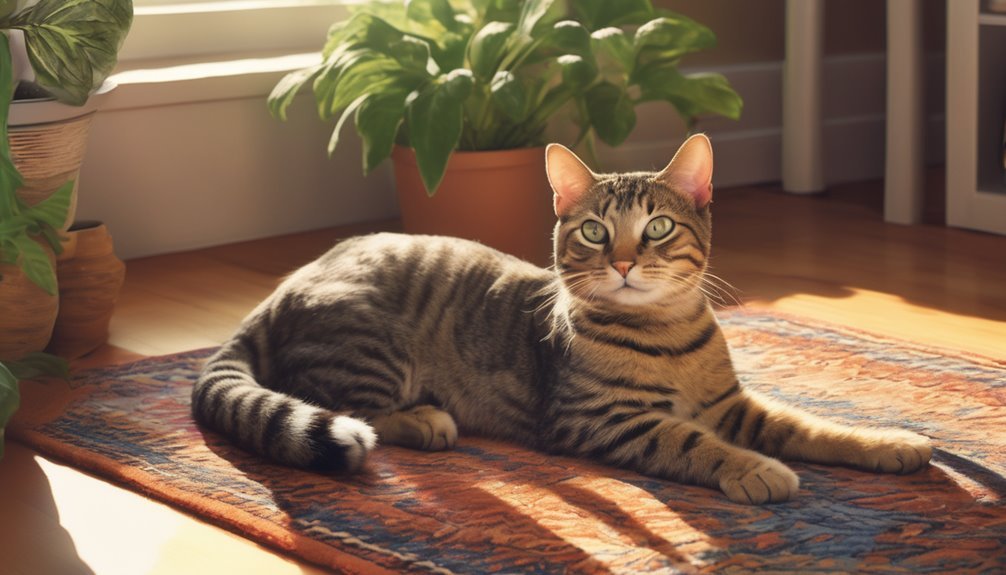
Understanding your cat’s body language is crucial for assessing their happiness. Pay close attention to their tail twitching; a quick, gentle flick often indicates excitement or curiosity, while a low, swishing tail can signal annoyance or agitation.
Notice their ear positioning, too. Forward-facing ears suggest engagement and interest, whereas ears pinned back may indicate fear or irritation.
When you observe these signals, you’re not just seeing movements; you’re connecting with your cat’s emotional state. Each subtle shift tells a story about how they’re feeling in their environment.
Key Signs Your Cat Is Happy
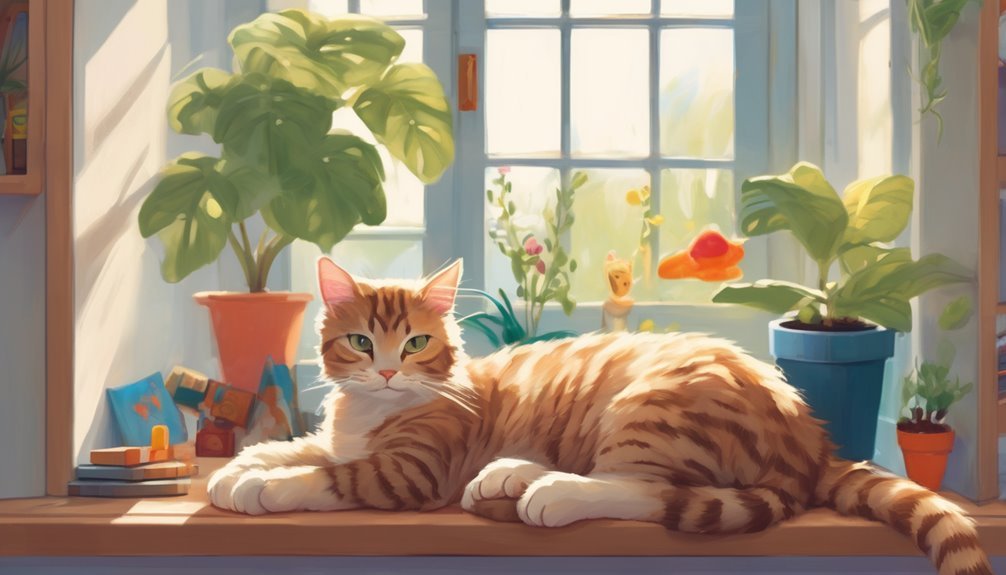
Recognizing happiness in your cat goes beyond just reading their body language. You’ll notice that playful behavior often indicates a content feline. When your cat engages with happy cat toys, it’s a clear sign they’re enjoying their environment. Additionally, observe their purring and relaxed posture during feline playtime.
Here’s a quick reference:

| Sign | Description | Why It Matters |
|---|---|---|
| Playfulness | Engaging with toys and exploring | Indicates comfort and joy |
| Kneading | Pushing paws against soft surfaces | Shows affection and security |
| Slow Blinking | Half-closed eyes towards you | A sign of trust and happiness |
These signs reflect your cat’s emotional well-being, creating a deeper bond between you both.
The Significance of Purring and Meowing
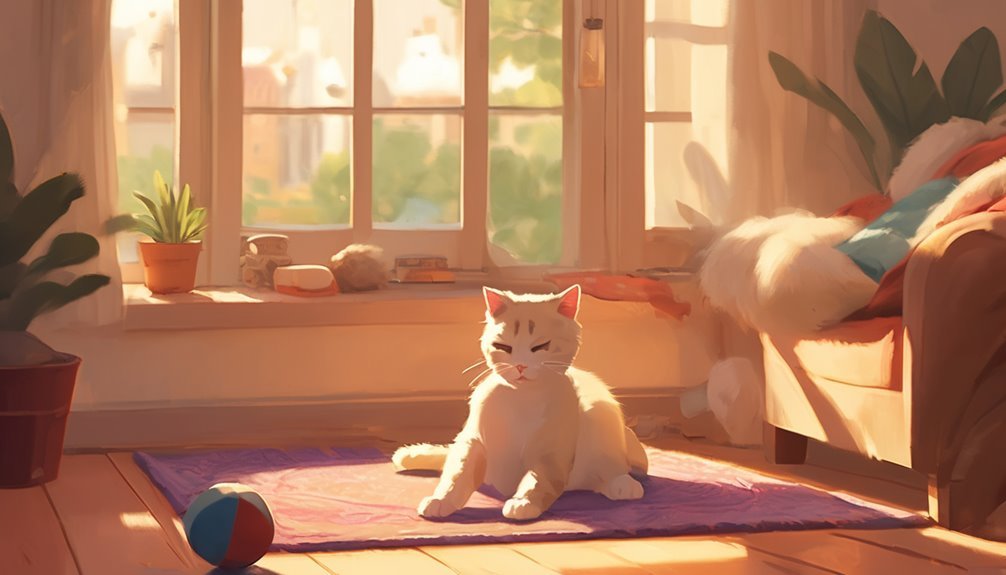
When you hear your cat purring or meowing, it’s not just noise; it’s a window into their emotional state.
Purring, often resonating at a frequency between 25 and 150 Hertz, is typically a sign of contentment, signaling that your cat feels safe and loved. Pay attention to the purring frequency; a steady, rhythmic purr usually indicates happiness, while abrupt changes might suggest discomfort.
Meowing variations also reveal a lot; a soft, gentle meow may express affection, while a louder, more insistent meow can indicate demand or distress.
Playfulness: A Key Indicator of Cat Happiness
Playfulness serves as a vibrant expression of your cat’s happiness, revealing their joy and zest for life. When you notice their playful antics, whether it’s pouncing on interactive toys or chasing shadows, you’re witnessing their innate hunting instincts come alive.
Engaging in social play with you or other pets boosts their engagement levels and strengthens bonds. Catnip effects can elevate this energy, sparking even more spirited activity.
Make time for both solo playtime and shared moments, as each type nourishes their feline energy. Establishing regular playtime routines not only keeps them physically active but enhances their emotional well-being.
When your cat’s chasing behavior is strong, it’s a sure sign they’re thriving in their environment.
Grooming and Its Role in a Happy Cat
A happy cat often displays a keen interest in grooming, reflecting both their physical health and emotional state. Observing your cat during these moments can reveal much about their well-being. When they engage in grooming techniques, they’re not just keeping their fur healthy; they’re also self-soothing and expressing comfort in their environment.
| Behavior | Meaning | Grooming Techniques |
|---|---|---|
| Excessive grooming | Anxiety or stress | Licking, nibbling |
| Gentle grooming | Contentment | Soft strokes |
| Playful grooming | Joy and energy | Pouncing, rolling |
| Minimal grooming | Health concerns | Seeking help from you |
Sleeping Positions That Indicate a Relaxed Cat
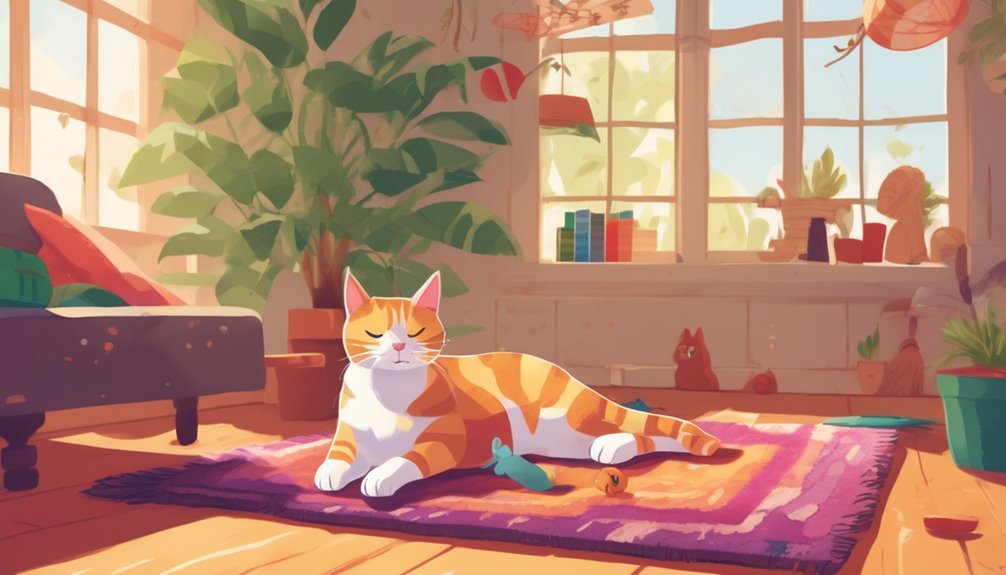
Cats can display a variety of sleeping positions that reveal their comfort and relaxation levels.
When you see your cat curled up or side sleeping with paws tucked, it’s a clear sign they feel safe.
A curled-up cat with tucked paws is a sign of safety and comfort in their environment.
Belly exposure, though rare, indicates total trust; they’re vulnerable but secure.
A stretched-out position often means they’re in a deep, restful state, while relaxed tail movements suggest a calm demeanor.
Watch for kneading behavior before they drift off; it’s a nostalgic act that signifies contentment.
If they’ve found a cozy corner, it’s their way of claiming a personal sanctuary.
Face resting on paws? That’s pure tranquility.
Each unique napping pattern tells you your cat’s feeling at home, happy, and loved.

Why a Safe Space Matters for Your Cat
Creating a safe space for your cat is essential, especially since it helps them feel secure and relaxed in their environment.
Cats thrive in safe zones where they can retreat when feeling overwhelmed. Establishing comfort areas, like a cozy bed or a quiet corner, allows them to claim their personal territory, fostering a sense of ownership and safety.
You might notice your cat gravitating toward these spots when they need stress reduction or simply want to unwind. By providing these spaces, you’re acknowledging their need for solitude and comfort, which ultimately promotes happiness.
Observing how your cat interacts with their safe zones can reveal a lot about their emotional state—an intimate glimpse into their world.
Feeding Habits of Happy Cats
Happy cats often express their contentment through their feeding habits, showcasing a healthy appetite and enthusiasm for mealtime.
Notice how your cat approaches their meal preferences; they’ll eagerly engage with their food if it suits their taste. A consistent feeding routine can also signal happiness, as it provides a sense of security.
Observe your cat’s meal habits; their enthusiasm and routine reveal their contentment and sense of security.
Pay attention to portion control—overeating or disinterest may indicate dietary changes are needed. You might observe their mealtime behavior; a relaxed posture and purring show they feel safe.
Treat frequency and food variety can enhance their enjoyment too. Lastly, ensure a calm eating environment, free from stressors, so your cat can truly savor each bite, reinforcing their sense of happiness at home.
Social Behaviors: Seeking Attention and Affection
After establishing a consistent feeding routine, you’ll likely notice how your cat engages with you socially.
Look for those attention-seeking behaviors, like following you from room to room or gently pawing at your leg. These actions show your cat values your presence and craves connection.
When your feline friend curls up beside you or purrs softly while you pet them, these affection displays speak volumes about their happiness.
You might even see them nudge you with their head or slowly blink, signaling trust and comfort.
Pay attention to these moments; they reflect a deep bond between you and your cat. Understanding these social cues can bring you closer, enriching both your lives in the process.
Do Feeding Habits Signal Contentment?
While your cat’s feeding habits might seem routine, they can reveal a lot about their emotional state. Pay attention to portion control; a cat that eagerly finishes meals often feels secure.
Notice meal frequency—if they’re consistent, it signals contentment. Food variety can also play a role; introducing new flavors may spark meal excitement and show they’re engaged with their environment.
Observe treat preferences; a happy cat enjoys special snacks. The eating environment matters too—calm, familiar spaces encourage relaxed eating.
Stick to a regular feeding schedule to provide stability, and don’t overlook hydration habits; a well-hydrated cat indicates overall well-being.
Frequently Asked Questions
Can My Cat’s Breed Affect Its Happiness Levels?
Yes, your cat’s breed can affect its happiness levels. Some breeds have specific characteristics and social behaviors that influence their needs for companionship and stimulation, shaping how content and fulfilled they feel in your home.
How Does Age Influence a Cat’s Happiness?
Age shapes your cat’s happiness significantly. Kittens thrive on playful energy, while seniors seek comfort and stability. Understanding these needs helps you create a nurturing environment, ensuring both phases of life are joyful and fulfilling.
Are There Specific Toys That Make Cats Happier?
Yes, interactive toys, comfort items, and puzzle feeders can make your cat happier. Observe how they engage with scent enrichment; their joy in play reveals their contentment, deepening your bond and understanding of their needs.
Can Environmental Changes Affect My Cat’s Mood?
Yes, environmental changes can definitely affect your cat’s mood. Look for stress signals like hiding or excessive grooming. Providing environmental enrichment—like new toys or cozy spots—can help your furry friend feel more secure and happy.
How Do I Know if My Cat Is Stressed?
When your cat’s a shadow, retreating and tense, pay attention. Observe body language—flattened ears, twitching tail. Stress indicators like hiding or aggression reveal environmental triggers. Behavioral changes signal their unease; nurture them back to comfort.
Conclusion
In the quiet moments when your cat lounges contentedly versus the anxious pacing when they’re unsettled, the difference is stark. By recognizing the signs of happiness—those slow blinks, gentle purrs, and playful antics—you create a nurturing environment that fosters their joy. Remember, a happy cat isn’t just a blissful pet; they’re a source of comfort and companionship. Tune into their needs, and you’ll witness a bond that enriches both your lives profoundly.