
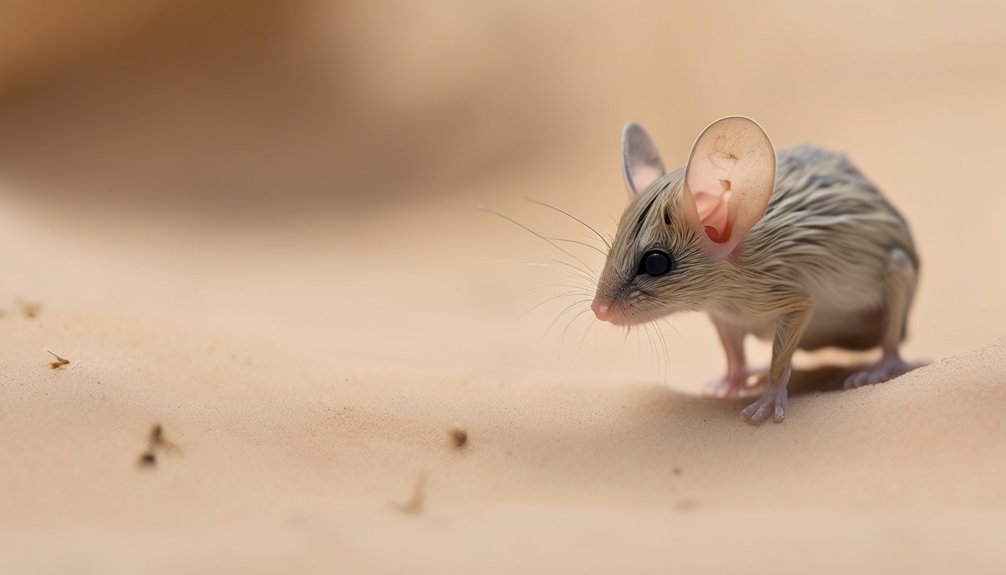
Could it be true that the world’s smallest mammals survive best by matching their size to specific habitats? You’ll find Etruscan shrews in Mediterranean scrub, tiny bats in forests and rainforests, pygmy possums in Australian woodlands, and dwarf rodents in dry grasslands. Remote islands often support unusually small species too. Their success depends on cover, shelter, and low competition, but the most striking adaptations are still ahead.
Key Takeaways
- The Etruscan shrew is among the world’s smallest mammals, weighing only 1.5 to 2.5 grams.
- Tiny bats, pygmy possums, and dwarf rodents also rank among the smallest mammals.
- Small mammals often live in dense ground cover, leaf litter, burrows, bark, and tight shelters.
- The Etruscan shrew prefers warm, dry Mediterranean-like habitats with scrub and rocky concealment.
- Remote islands, woodlands, rainforests, and dry grasslands support different tiny mammal species.
What Makes a Mammal “Small”?
A mammal is generally considered “small” when its body mass, length, or both fall well below the average size of most mammals. You can assess mammal size by comparing mass, head-body length, and, when relevant, tail or limb proportions.
Small size often reflects evolutionary factors that favor rapid reproduction, lower energy needs, and access to narrow ecological niches. You’ll also see that body temperature regulation, food availability, and predator avoidance can shape this pattern.
Small size often reflects evolutionary pressures that favor rapid reproduction, lower energy needs, and access to narrow ecological niches.
In many lineages, selection doesn’t simply shrink bodies; it fine-tunes metabolism, anatomy, and behavior to fit constrained environments. As you examine these traits, you’ll notice that “small” isn’t a fixed cutoff.
It’s a relative category defined by species, clade, and ecological context, and it often reveals close adaptation.

The Smallest Mammals on Earth
Among the smallest mammals on Earth, several shrews, bats, and rodents stand out for their extremely low body mass and compact body size. You’ll notice that these species often weigh just a few grams, yet they still maintain the metabolic rates needed for survival.
Their tiny mammal adaptations include rapid heartbeats, efficient heat regulation, and narrow skulls that support fine-scale feeding. In many cases, miniature mammal diets rely on insects, nectar, seeds, or other energy-rich foods that offset constant energy loss.
You can see how small size shapes anatomy, physiology, and behavior, from short life spans to nonstop foraging. Even so, these mammals remain highly specialized, showing that minimal body mass can still support remarkable ecological success.
The Etruscan Shrew and Its Habitat
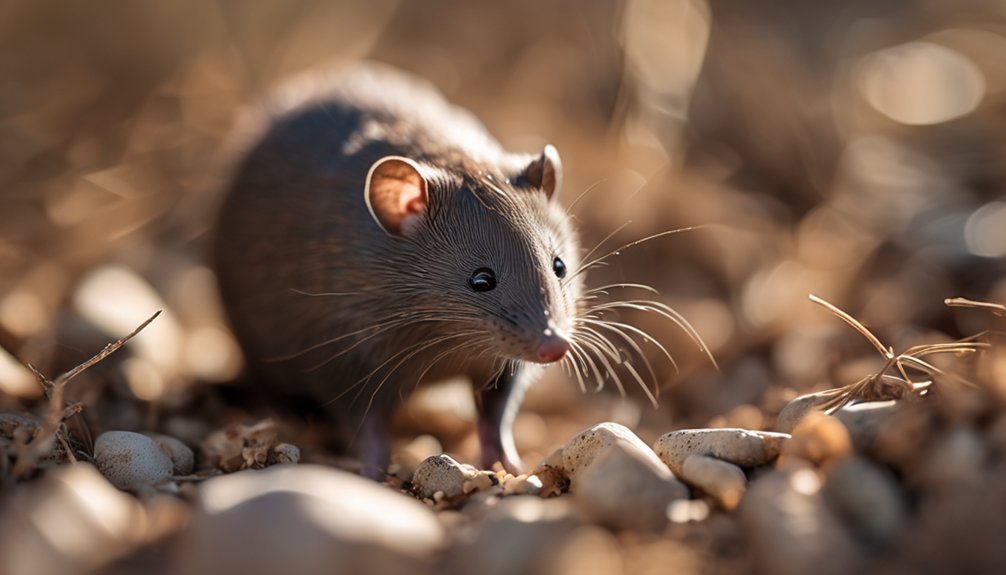
The Etruscan shrew (*Suncus etruscus*) is widely regarded as the smallest living mammal by mass, with adults typically weighing about 1.5 to 2.5 grams. You’ll find its habitat preferences in warm, dry regions with dense ground cover, where insects stay abundant and shelter remains close.
| Feature | Typical setting | Benefit |
|---|---|---|
| Climate | Mediterranean, scrubby, arid | Limits heat loss |
| Cover | Leaf litter, rocks, low vegetation | Offers concealment |
| Food | Small invertebrates | Supports constant foraging |
You can look for the Etruscan shrew in fields, gardens, and shrublands across southern Europe, North Africa, and parts of Asia. It forages almost continuously, so it needs microhabitats that conserve energy and reduce exposure.
Tiny Bats That Roost in Forests
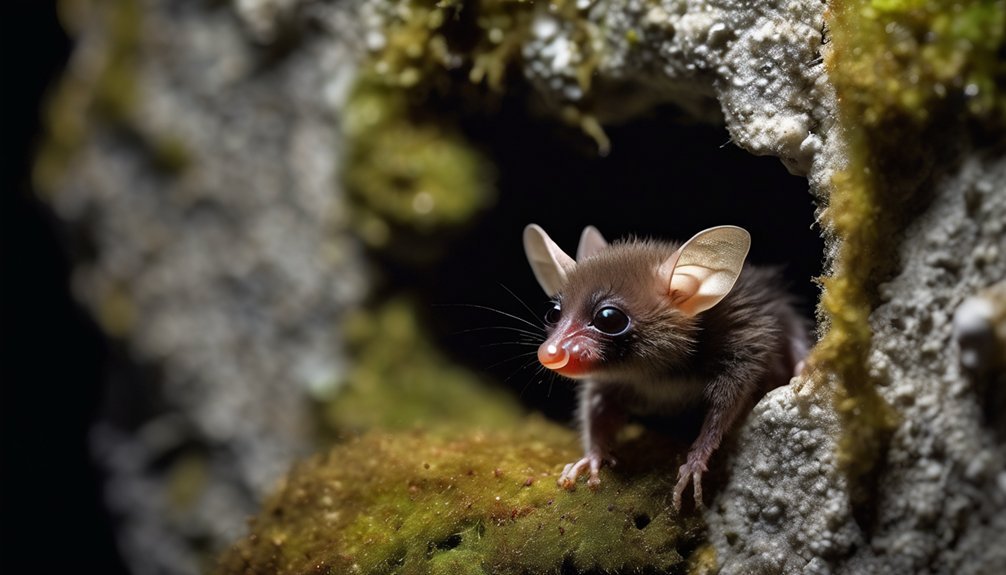
If the Etruscan shrew shows how extreme small size shapes life on the ground, tiny bats show the same pressure in the air. You can find many bat species roosting beneath bark, in leaf clusters, or in narrow tree cavities, where their bodies fit the tightest spaces.
In forest ecosystems, these shelters buffer temperature, reduce wind, and limit predators. You’ll notice that small size helps them conserve energy, but it also demands careful foraging. They leave roosts at dusk, track insects with echolocation, and return before daylight.
Moist, layered forests often support them best because they provide cover, prey, and stable roost sites. Their survival depends on intact canopy structure, so logging or fragmentation can quickly reduce suitable habitat.
Pygmy Possums in Australia’s Wilds
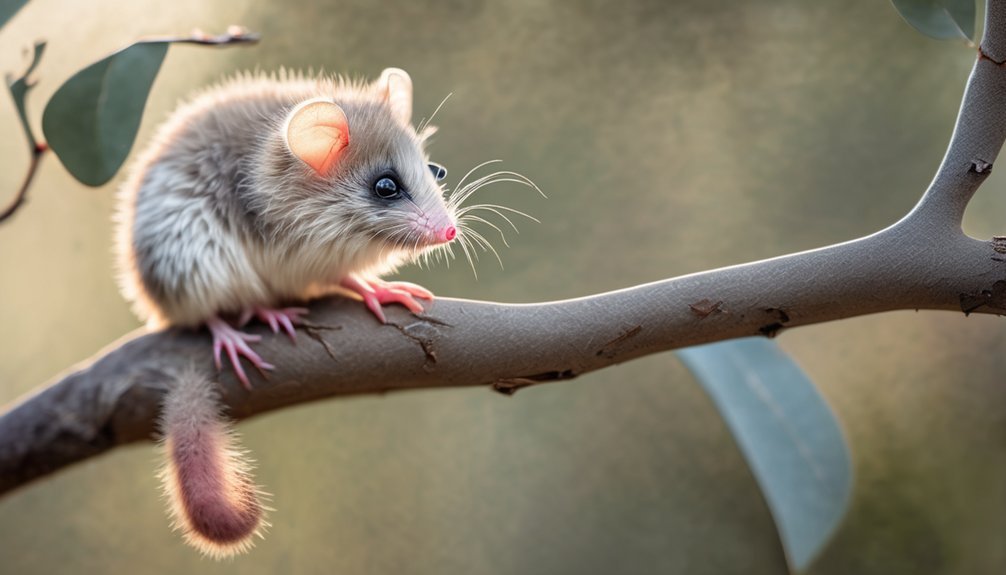
Across Australia, pygmy possums occupy woodlands, heathlands, and rainforests, where dense vegetation gives them shelter and access to nectar, pollen, insects, and fruit.
You can observe pygmy possum behavior as mostly nocturnal, agile, and cautious, with individuals climbing fine branches and using their prehensile tails for balance. Their pygmy possum diet shifts with season and habitat, which helps them survive when floral resources change.
- You’ll notice rapid foraging among blossoms.
- You’ll see brief insect captures during active feeding.
- You’ll find nest use in tree hollows and thick foliage.
- You’ll recognize small body size that conserves energy in cool nights.
These marsupials depend on intact vegetation structure, so habitat loss quickly reduces local populations and limits movement between patches.
Dwarf Rodents of Dry Grasslands
Dwarf rodents occupy dry grasslands, where sparse cover, seed-bearing grasses, and scattered shrubs shape their foraging and shelter choices.
You’ll notice that these tiny mammals stay close to burrows, using them to avoid heat, predators, and water loss. Their dwarf rodent adaptations include efficient kidneys, nocturnal activity, and compact bodies that reduce energy demand.
You can see them feed on seeds, tender shoots, and occasionally insects, which lets them exploit short bursts of plant growth after rain.

In grassland ecosystems, they help disperse seeds and move energy through the food web. Their small size also lets them use narrow runways between grasses, where they can travel quickly and stay concealed.
Small Mammals on Remote Islands
Remote islands often support surprisingly small mammal communities, because long stretches of ocean limit colonization and favor species that can disperse by rafting, swimming, or human transport.
You can see how island ecosystems shape these mammals through isolation and limited resources. Their populations often stay small and genetically distinct, which makes local evolutionary adaptations easier to detect.
- You’ll notice fewer species than on mainlands.
- You can track endemism on isolated archipelagos.
- You’ll find body size often shifts under constrained conditions.
- You can compare nearby islands to test dispersal routes.
These patterns matter because each island records a different colonization history. When you study them closely, you gain a precise view of how geography filters mammal diversity and preserves rare lineages.
How Tiny Mammals Survive So Well
Even the smallest mammals persist by combining high metabolic flexibility with behaviors that reduce energy loss and predation risk.
You can see this in their metabolic adaptations, which let them burn energy quickly when food is scarce and slow down when conditions worsen. Their bodies stay warm through dense fur, compact size, and careful posture that limits heat loss.
You’ll also notice constant activity, brief feeding bouts, and rapid digestion, all of which support steady energy intake.
For predator avoidance, they rely on cryptic coloration, tight shelter use, and erratic movement that makes detection difficult.
These traits work together, so you’re looking at animals shaped by strong selection for efficiency, caution, and resilience in demanding habitats.
Where to Spot the Smallest Mammals
To spot the smallest mammals, you need to know where their survival strategies are most effective: dense ground cover, leaf litter, burrows, rock crevices, and other sheltered microhabitats.
You’ll find them where mammal habitats stay cool, moist, and structurally complex. Focus your spotting techniques at dawn, dusk, and after rain, when movement increases and cover remains dense.
- Scan forest floors for shrews and mice.
- Check grass tussocks and sedge mats for pygmy rodents.
- Examine stone piles and stream edges for marsupials.
- Listen for rapid rustling, then pause and watch.
Move slowly, keep noise low, and use binoculars or a headlamp with red light.
If you respect their cover, you’ll improve your chances and deepen your connection with these elusive animals.
Frequently Asked Questions
How Do Scientists Measure a Mammal’s Body Size Accurately?
You measure a mammal’s body size by using standardized body measurement techniques and size comparison methods, recording length, mass, and proportions with calibrated tools, then comparing results across individuals under consistent conditions.
Which Tiny Mammal Has the Shortest Lifespan?
Among tiny mammals, you’d typically find shrews have the shortest lifespan; the Etruscan shrew often lives only 1–2 years. In a lifespan comparison, habitat preferences can influence survival, but genetics and metabolism drive this brevity.
Do the Smallest Mammals Hibernate in Winter?
Yes, some do, but you’ll find it’s species-specific: many smallest mammals enter torpor or true hibernation in winter to support energy conservation and winter behavior, while others stay active and rely on cached food.
Are Any Tiny Mammals Endangered by Habitat Loss?
Yes, some are. When you ask whether tiny mammals face habitat loss, imagine a shrinking home: habitat destruction can imperil shrews and rodents, and conservation efforts can help you protect vulnerable populations before they disappear.
How Do Small Mammals Avoid Predators at Night?
You avoid predators at night by relying on nocturnal behavior, staying hidden in dense cover, moving quietly, and using sharp hearing and smell. You’ll also freeze, zigzag, or burrow quickly when danger’s near.
Conclusion
When you trace the world’s smallest mammals from Mediterranean scrub to Australian grasslands and rainforest canopies, you see a common pattern: size alone doesn’t limit success. The Etruscan shrew, at just 1.5 to 2.5 grams, survives by hiding in dense cover, while bats, pygmy possums, and dwarf rodents exploit forests, burrows, and islands. Like a key fitting a narrow lock, each species has evolved to match a specific habitat, and that precision is what keeps them thriving.