
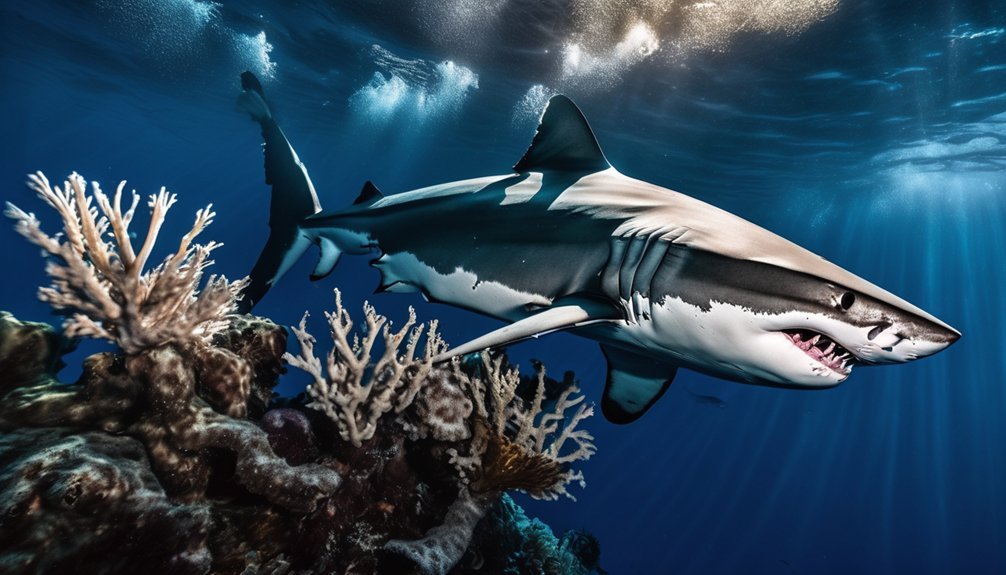
Like a modern Scylla waiting below the surface, the ocean’s most dangerous animals can injure you in very different ways. You might encounter jellyfish with stinging cells, stingrays with venomous spines, or sharks that rely on sharp senses and powerful bites. Barracudas, moray eels, and even deep-sea predators add to the risk. If you want to know which threats matter most, the details become more important than you’d expect.
Key Takeaways
- Great white and tiger sharks cause most serious human attacks, using sharp senses to detect movement and blood.
- Jellyfish and stingrays can inflict painful venomous injuries that cause burning, inflammation, and tissue damage.
- Barracudas and moray eels are coastal predators that strike fast from ambush and can deliver severe bites.
- Giant squid and other deep-sea animals use size, camouflage, and bioluminescence to hunt in extreme darkness.
- Staying calm, avoiding splashing, and keeping distance can reduce the risk of dangerous ocean encounters.
What Makes Ocean Animals So Dangerous?
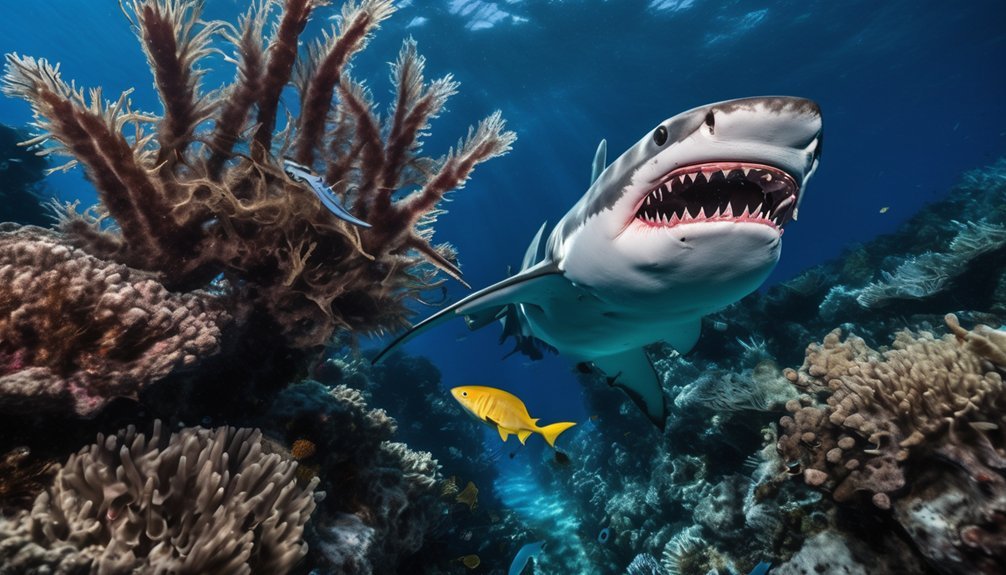
Ocean animals can be especially dangerous because water changes how they sense, hunt, and attack, often making their size, speed, and defenses more effective than they’d be on land.
You’re facing a medium that carries sound, scent, and vibration efficiently, so predators can locate you or their prey from surprising distances. Many species rely on predatory instincts honed by evolution, allowing quick, precise strikes.
Others use camouflage techniques to vanish against reefs, sand, or open water, making them hard to detect until they’re close. Because water supports body weight, large animals can move with less effort and deliver stronger force.

In this environment, even a brief encounter can turn risky, so you need to respect how completely the ocean amplifies natural hunting tools.
Venomous Ocean Animals: Jellyfish and Stingrays
Among the ocean’s most dangerous animals are species that don’t need teeth or brute force to injure you—they use venom instead. If you touch a jellyfish, nematocysts can fire like microscopic harpoons, causing burning pain, redness, and, in severe species, systemic effects. `jellyfish stings` often happen in warm coastal waters, where translucent bells drift close to swimmers. Stingrays rest on sandy bottoms, so you may step on one and trigger a sharp spine wound. `stingray injuries` usually cause intense pain, swelling, and tissue damage, though the venom rarely threatens life.
| Animal | Defense | Common effect |
|---|---|---|
| Jellyfish | Nematocysts | Burning skin |
| Stingray | Tail spine | Puncture pain |
| Both | Venom | Inflammation |
The Deadliest Sharks in the Ocean
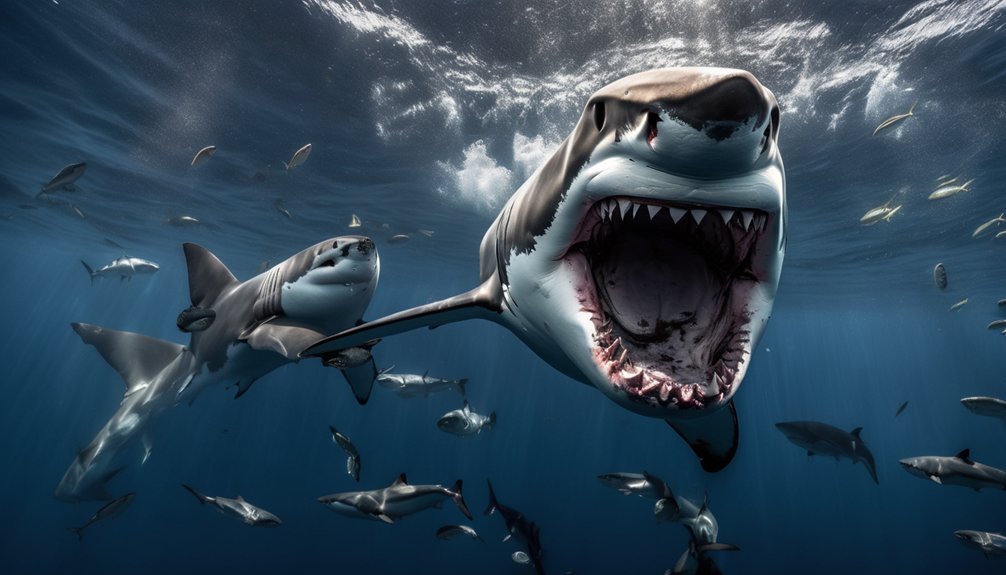
Sharks become especially dangerous when their size, speed, and teeth combine with predatory behavior, and a few species account for most serious attacks on humans.
You’ll hear the great white and tiger shark named most often because they’re large, powerful, and capable of brief explosive strikes. The great white typically targets seals and sea lions, but it can mistake a swimmer or surfer for prey.
The tiger shark is less selective; you may encounter it in coastal waters where it feeds on fish, turtles, and carrion. Both species use sharp senses to detect movement, vibration, and blood in the water.
If you enter their habitat, stay calm, avoid splashing, and leave the area slowly and confidently.
Barracudas and Moray Eels
Not all threats in warm coastal waters have the size of sharks; barracudas and moray eels can also injure swimmers and divers.
You may see barracudas gliding motionless, then sprinting with sudden speed toward shiny gear or small fish. This barracuda behavior reflects an ambush strategy, so keep calm and avoid rapid movements that mimic prey.
Moray eels spend most of their time hidden in crevices, then strike when you come too close. Their moray eel hunting relies on a powerful bite and sharp teeth, which can tear skin deeply.
You should never feed, corner, or touch either animal. Give them space, maintain control of your fins, and watch your surroundings carefully. Respect their instincts, and you’ll reduce your risk in reefs.

Giant Squid and Other Deep-Sea Dangers
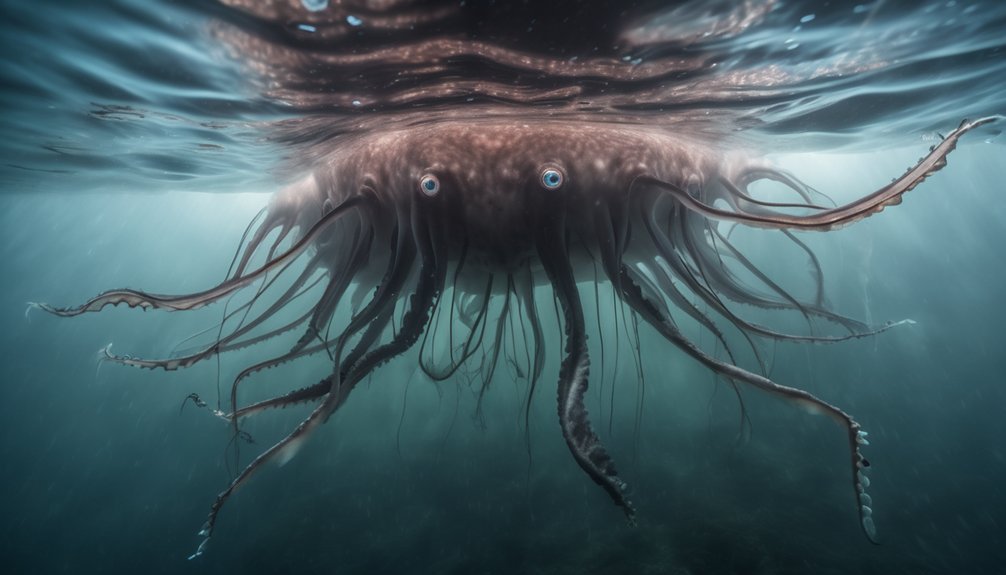
Far below sunlit waters, giant squid and other deep-sea animals face little human contact, but they can still pose real risks if you encounter them. Their giant squid behavior includes ambush predation, rapid tentacle strikes, and powerful beak bites.
You should also notice deep sea adaptations that let them survive crushing pressure, near-freezing temperatures, and darkness.
- Giant squid may exceed 10 meters.
- Their eyes detect faint light.
- Bioluminescent species can confuse prey.
- Sharp hooks improve capture.
Other deep-sea dangers include venomous fish, stinging siphonophores, and swarms of brittle creatures that appear harmless.
Other deep-sea dangers include venomous fish, stinging siphonophores, and fragile swarms that can seem harmless at first glance.
In this realm, you’re facing animals built for extreme efficiency, not aggression toward you. Their anatomy reflects survival in isolation, making every encounter scientifically fascinating and occasionally hazardous.
How to Stay Safe in the Ocean
Even in waters where giant squid and other deep-sea predators are rarely seen, safe ocean travel depends on understanding where hazards actually come from. You protect yourself by checking forecasts, tides, and local advisories before you enter.
For strong ocean safety, swim near lifeguards, stay with a buddy, and keep children within arm’s reach. If you feel a rip current pulling you seaward, don’t fight it; swim parallel to shore until it weakens, then angle back in.
Follow basic swimming tips: enter gradually, avoid alcohol, and wear a fitted flotation device when conditions are rough. Watch for jellyfish, sharp coral, and breaking waves, and leave the water if visibility drops or storms approach.
Frequently Asked Questions
Which Ocean Animal Kills the Most Humans Each Year?
You’ll usually face the box jellyfish as the deadliest ocean animal, because jellyfish stings kill more people globally than shark attacks do. However, deaths vary by region, species, and medical access each year.
Are Orcas Dangerous to People in the Wild?
Not usually; you’re very unlikely to be harmed by wild orcas. Their behavior toward people is generally cautious and curious, and human interactions are rare, because they usually avoid you in the ocean.
Which Ocean Animals Are Most Dangerous to Swimmers?
Sharks, like moving shadows, pose the biggest threat to you; jellyfish stings, stingray injuries, barracuda attacks, sea urchin spines, lionfish venom, cone snail bites, and octopus encounters can injure you, too.
Can Small Ocean Animals Be More Dangerous Than Large Ones?
Yes, you can face greater risk from small creatures, because small creature threats and venomous fish dangers often involve potent toxins, camouflage, or swarming behavior that can injure you faster than larger animals.
What Ocean Animals Are Dangerous Even Without Attacking?
You’ll find danger in jellyfish stings, poisonous fish, electric rays, and sea snakes, even when they don’t attack. Their toxins, venom, or shocks can injure you through contact, ingestion, or accidental disturbance.
Conclusion
As you explore the ocean, remember that it is a living laboratory, not a harmless playground. Jellyfish, stingrays, sharks, barracudas, and moray eels each use specialized defenses or hunting tools that can injure you quickly. Think of the sea as a theater of invisible hazards: beautiful, but full of hidden cues you must respect. If you stay alert, avoid risky behavior, and follow local safety advice, you can reduce danger and enjoy the water more safely.