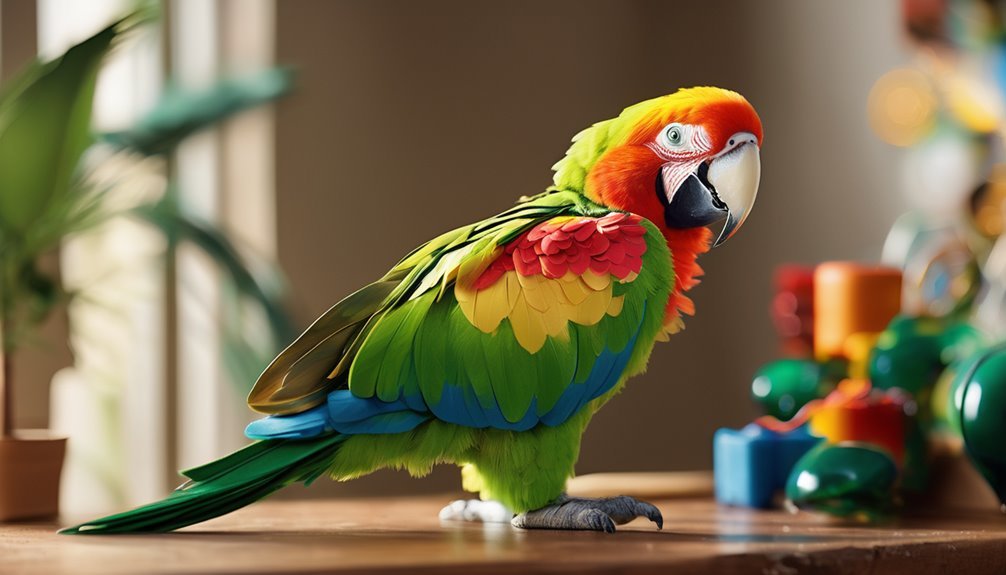
Training your parrot to step up is an essential skill that strengthens your bond and enhances communication. You’ll want to create a calm environment and use positive reinforcement to motivate your feathered friend. Understanding the right techniques and timing can make all the difference. As you embark on this journey, you’ll discover the nuances of effective training and how to overcome common challenges. Ready to explore the steps that can lead to a successful training experience?
Key Takeaways
- Choose a quiet, distraction-free environment and use a favorite treat to motivate your parrot during training.
- Hold your hand close to the parrot’s chest while saying “Step up” to encourage movement.
- Lightly tap the parrot’s feet if it hesitates to step up, reinforcing the command.
- Consistently praise and reward your parrot immediately after it successfully steps up to reinforce the behavior.
- Establish a regular training schedule and keep sessions short, around 5-10 minutes, for optimal engagement.
Understanding the Importance of the Step-Up Command
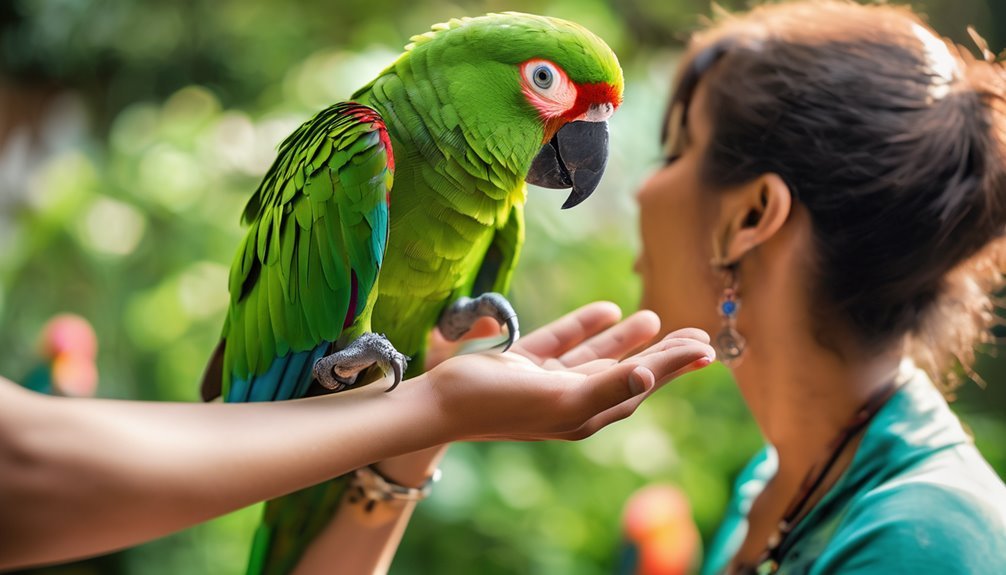
When you begin training your parrot, understanding the importance of the step-up command can make all the difference. This command not only fosters trust between you and your bird, but it also serves as a foundation for more complex training.
By teaching your parrot to step up onto your finger or hand, you create a safe space where it feels secure. The step-up benefits extend beyond just physical interaction; it boosts your parrot’s confidence and enhances its social skills.

Plus, mastering this command can significantly increase your training motivation. When your parrot responds positively, you’ll find it easier to teach other tricks, making your training sessions enjoyable for both of you. Building this bond is crucial for effective communication.
Step-by-Step Techniques to Teach Your Parrot to Step Up
Teaching your parrot to step up is a rewarding process that lays the groundwork for a strong bond. Start by choosing a quiet space with minimal distractions.
Grab your training tools, like a treat your parrot loves. Hold your hand close to your parrot’s chest, using a gentle voice to say “Step up.” If your parrot hesitates, encourage it by lightly tapping its feet or offering the treat.
When it steps onto your hand, praise it enthusiastically and give the treat immediately. Repeat this regularly, gradually increasing the duration between commands.
Pay attention to your parrot’s behavior; if it seems anxious, take a step back. With patience and consistency, your parrot will learn this essential command and strengthen your connection.
Getting Your Parrot Ready for Training
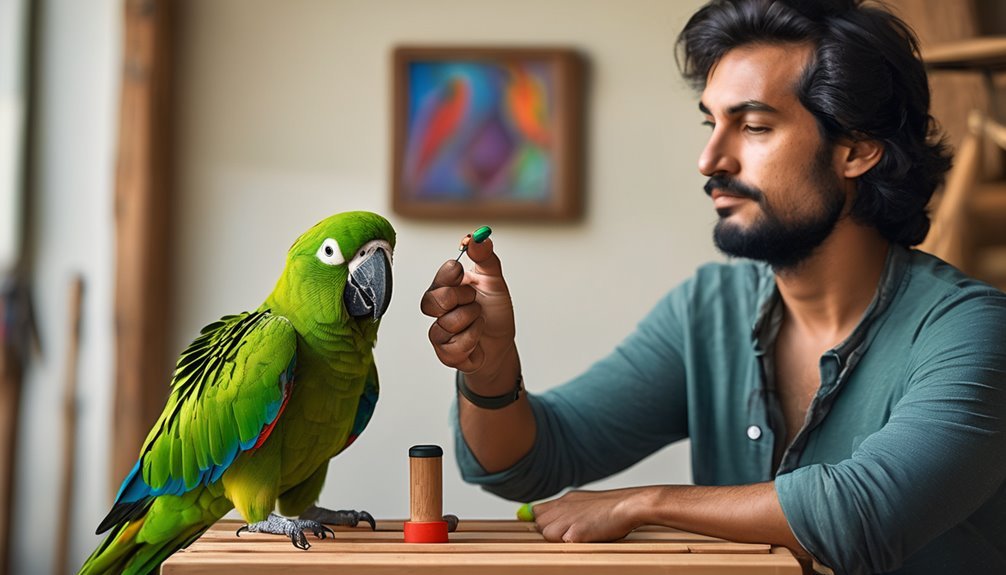
Before diving into training, it’s essential to create a supportive environment for your parrot. Assessing your parrot’s readiness is key to effective training. Ensure they feel safe and comfortable, which fosters trust and engagement. Here are some factors to consider:
| Factor | Importance | Tips |
|---|---|---|
| Calm Atmosphere | Reduces stress | Keep noise levels low |
| Regular Schedule | Builds routine | Train at the same time daily |
| Positive Reinforcement | Encourages learning | Use treats and praise |
| Interactive Play | Strengthens bond | Spend time together daily |
| Patience | Supports progress | Take breaks as needed |
How to Keep Your Step-Up Training Consistent
To ensure your parrot masters the step-up command, consistency is key. Keeping your training frequent and engaging will help reinforce the behavior.
Here are three tips to maintain that consistency:
- Set a Schedule: Train at the same time daily to create a routine. This helps your parrot anticipate training sessions, boosting their motivation.
- Use the Same Cue: Always use the same word or phrase for the step-up command. This clarity helps your parrot understand what you’re asking.
- Keep Sessions Short: Limit training to 5-10 minutes. Short, frequent sessions keep your parrot engaged and motivated, making learning enjoyable.
Using Positive Reinforcement Effectively
Harness the power of positive reinforcement to create a strong bond with your parrot while encouraging desired behaviors.

Start by using clicker training, a simple and effective method. When your parrot performs the desired action, immediately click the clicker to mark the behavior. This helps your parrot associate the sound with a positive outcome.
Start with clicker training to reinforce desired actions, helping your parrot connect the sound with positive outcomes.
Next, focus on reward timing. Deliver a treat right after clicking to reinforce the behavior. This will help your parrot understand what they did right.
Be consistent with your rewards; the more immediate and predictable they are, the better. Remember, patience is key. Celebrate small victories, and your parrot will thrive, making step-up training a rewarding experience for both of you.
Common Challenges and Solutions in Step-Up Training
While step-up training can be a rewarding experience, it often comes with its own set of challenges that can test your patience. Here are some common challenges and solutions to consider:
- Behavioral Issues: If your parrot resists stepping up, assess their body language. Understanding their discomfort can guide you in building trust.
- Timing Challenges: Effective timing is crucial. Use motivation techniques like treats immediately after a successful step-up to reinforce the behavior.
- Distraction Management: Environmental factors can divert your parrot’s attention. Train in a quiet space and gradually introduce distractions as your bird becomes more comfortable.
How to Celebrate Training Success and Strengthen Your Bond
Celebrating your parrot’s training successes not only boosts their confidence but also strengthens the bond you share.
To make these moments special, consider fun celebration ideas like offering their favorite treat or a new toy. You can also engage in bonding activities, such as gentle head scratches or playful interactions, to reinforce positive feelings.
After a successful training session, take a moment to play games that encourage interaction, like hide-and-seek with treats. This not only rewards your parrot but also deepens your connection.
Remember, consistent praise and affection during these celebrations can make your parrot excited for future training sessions, ensuring that your journey together is both enjoyable and rewarding.
Celebrate often, and watch your bond flourish!
Choosing the Right Time and Environment for Training
To ensure effective training sessions with your parrot, it’s crucial to choose the right time and environment. Selecting the best training times and ideal training locations can make all the difference in your parrot’s learning experience.
Here are some tips to consider:
- Pick Calm Moments: Train when your parrot is relaxed, like after a meal or a nap.
- Minimize Distractions: Choose a quiet space free from loud noises or other pets to help your parrot focus.
- Short, Frequent Sessions: Keep training sessions short, around 5-10 minutes, to maintain your parrot’s attention and enthusiasm.
Conclusion
Training your parrot to step up is like nurturing a delicate seedling; with patience and care, it’ll flourish into a strong bond. As you consistently practice and celebrate small victories, you’ll cultivate trust and communication between you and your feathered friend. Remember, each session is a step closer to a harmonious relationship. Keep your heart open and your approach gentle—before long, your parrot will be eager to join you on this journey of connection and companionship.