Have you ever wondered why your cat prefers to sleep on you? This behavior goes beyond mere comfort; it’s a complex mix of trust, warmth, and territorial instincts. When your feline friend cuddles up, it’s not just seeking a cozy spot. It’s a sign of affection and security. Understanding these nuances can deepen your bond. What other factors contribute to this endearing habit?
Key Takeaways
- Your cat sleeps on you to express trust and affection, reinforcing your bond.
- The warmth of your body offers comfort and security, fulfilling their instinctual needs.
- Cuddling allows cats to mark their territory, signaling ownership and safety.
- Your presence provides a calming effect, alleviating anxiety and promoting relaxation.
- Purring while snuggled indicates deep trust and creates a soothing environment for both.
Why Do Cats Sleep on You? Understanding Their Behavior
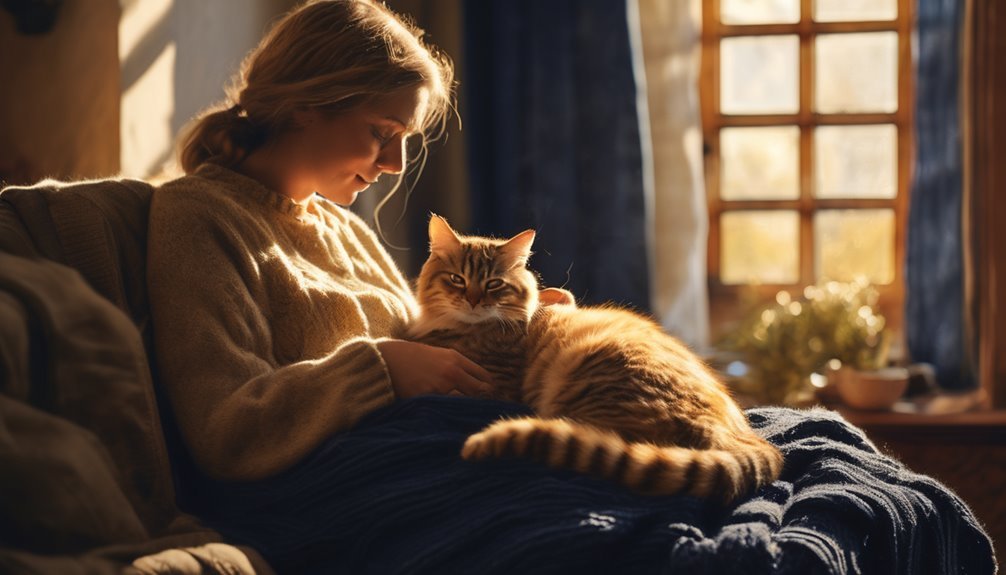
When your cat curls up on you, it’s not just seeking warmth; it’s expressing trust and affection. This behavior is a crucial part of cat communication, showcasing their bond with you.
By choosing to nap on your lap or chest, your feline friend reveals vulnerability, indicating they feel safe in your presence. It’s an intimate gesture that reflects their comfort and love.
Additionally, this behavior can indicate a desire for connection, reinforcing their social nature. Understanding this aspect of feline behavior deepens your relationship, allowing you to appreciate the nuances of your cat’s personality.

The Instinctual Need for Warmth and Safety
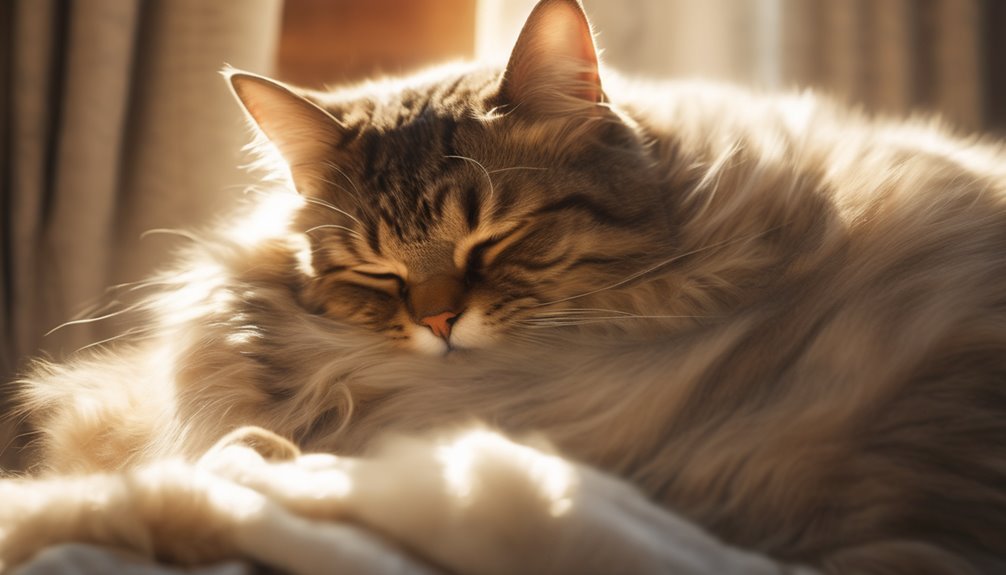
Cats instinctively seek warmth and safety, which is why they often choose to curl up on you. This instinctual behavior stems from their ancestors, who found security in close-knit groups.
When your cat snuggles against you, it’s not just for comfort; it’s a deep-rooted warmth preference that connects them to their survival instincts. Your body heat provides a cozy refuge, making them feel secure and protected.
Your cat’s snuggling is more than comfort; it’s a instinctual need for warmth and security, connecting them to their survival roots.
This intimate act reinforces the bond between you and your feline friend, as they trust you to keep them safe. By allowing them this closeness, you’re not just offering warmth; you’re nurturing their instinctual needs that drive their affectionate behavior.
It’s a beautiful reminder of the connection you share.
Why Cats Show Affection Through Cuddling

While you might think cuddling is just a cute quirk of your cat, it actually serves as a vital expression of affection. When your feline friend snuggles up to you, it’s a form of cat communication that deepens your bond. This behavior reflects their trust and comfort in your presence, showcasing their desire for intimacy.
Feline affection often manifests through purring, kneading, and close physical contact, all of which promote feelings of safety and warmth. By cuddling with you, your cat not only seeks physical closeness but also conveys emotional connection.
Understanding this can enhance your relationship, fostering a deeper appreciation for those quiet moments spent together. Your cat’s cuddles are more than mere habits; they’re heartfelt gestures of love.
Why Your Cat Claims You as Their Territory?
As you relax at home, you might notice your cat claiming you as their territory, a behavior rooted in instinct and affection. By curling up on you, your cat engages in territorial marking, a way to assert their presence and bond with you.
Cats have scent glands in their cheeks and paws, and when they knead or rub against you, they’re using scent communication to signal that you belong to them. This instinctual behavior not only establishes their territory but also offers them comfort and security.
In their eyes, you’re not just a companion; you’re part of their safe space. Embracing this connection deepens your bond, making those moments together feel even more special and intimate.
How Your Presence Makes Your Cat Feel Secure
When you’re nearby, your cat feels a profound sense of security that stems from your presence. Your companionship helps alleviate their cat anxiety, allowing them to relax and feel safe.
Cats are creatures of habit, often seeking comfort zones where they can fully let down their guard. By sleeping on you, they’re not just getting warmth; they’re also reinforcing their trust in you. This bond creates a safe haven, making it easier for them to navigate the world around them.
Your presence signals that all is well, providing reassurance that calms their nerves. Ultimately, your cat’s choice to be close to you reflects their deep-seated need for security, proving that you play a vital role in their emotional well-being.

Why Purring Matters: Strengthening Your Bond
Purring serves as a vital communication tool between you and your cat, reinforcing the bond you share. When your feline friend purrs, it’s more than just a sound; it’s a signal of trust and affection.
Understanding the purring benefits can deepen your connection and enhance both your emotional health and theirs.
Understanding the power of purring can strengthen your bond and uplift both your emotional well-being and your cat’s.
- Stress Relief: The soothing vibrations can calm both you and your cat, creating a peaceful environment.
- Emotional Connection: Purring indicates happiness and comfort, affirming your role as a safe haven.
- Health Benefits: The frequency of purring can promote healing, benefiting both your cat’s and your emotional health.
Embrace those moments of purring; they’re your cat’s way of saying, “I love you.”
What Your Cat’s Sleeping Position Says About Their Mood
Understanding your cat’s sleeping position can reveal a lot about their emotional state. When your feline curls up tightly, it often signifies a desire for security and comfort. This position indicates they’re in their comfort zone, feeling safe and relaxed.
Conversely, if your cat sprawls out with their belly exposed, they’re likely in a playful or trusting mood, indicating they feel secure in their environment.
Pay attention to their body language; a twitching tail or ears flicked back could hint at underlying anxiety. By observing these nuances, you can better understand your cat’s emotions and foster a deeper connection.
When to Worry About Your Cat’s Sleep Patterns?
Cats’ sleep patterns can reveal much about their health beyond just their mood. If you notice significant changes, it might be time to worry.
Pay attention if your cat shows:
- Increased sleepiness: This could indicate sleep disorders or underlying health concerns.
- Restlessness or anxiety: Signs of cat anxiety may manifest as sleep disturbances or pacing.
- Behavioral changes: Sudden shifts in sleeping habits could indicate environmental factors or age differences affecting their comfort.
Being attentive to these signs can help you identify potential issues early.
If you’re concerned about your cat’s sleep patterns, consulting your vet can provide peace of mind and ensure your furry friend remains healthy and happy.
Frequently Asked Questions
Do All Cats Sleep on Their Owners?
Not all cats sleep on their owners, but many do. This behavior often reflects feline bonding, as your cat seeks warmth, comfort, and a sense of security while strengthening your emotional connection.
What Should I Do if My Cat Won’t Sleep on Me?
If your cat won’t sleep on you, create a cozy environment that promotes comfort. Observe their sleep habits, and consider spending more time together. Building trust can encourage your cat to snuggle closer at night.
Can Sleeping on Me Be a Sign of Stress?
Yes, your cat sleeping on you can indicate comfort behavior, especially if they’re experiencing feline anxiety. They seek your presence for reassurance, creating a calming environment that helps alleviate their stress and fosters intimacy between you.
How Can I Encourage My Cat to Cuddle More?
To nurture a deeper bond with your feline friend, create cozy spaces that invite relaxation. Encourage gentle interactions and respect their comfort zones, allowing them to approach you for cuddles when they feel secure.
Is It Normal for My Cat to Sleep Elsewhere Sometimes?
Yes, it’s completely normal for your cat to sleep elsewhere sometimes. Cats have unique sleeping habits and varying feline preferences. Embrace these moments; they reflect your cat’s comfort and independence, enhancing your bond.
Conclusion
In conclusion, when your cat curls up on you, it’s like a warm embrace that speaks volumes about their trust and affection. This behavior not only highlights their need for safety and warmth but also strengthens the bond you share. By understanding these instincts, you can appreciate the comfort your presence brings to your feline friend. So, cherish those moments—each snuggle is a testament to the love and security you provide together.