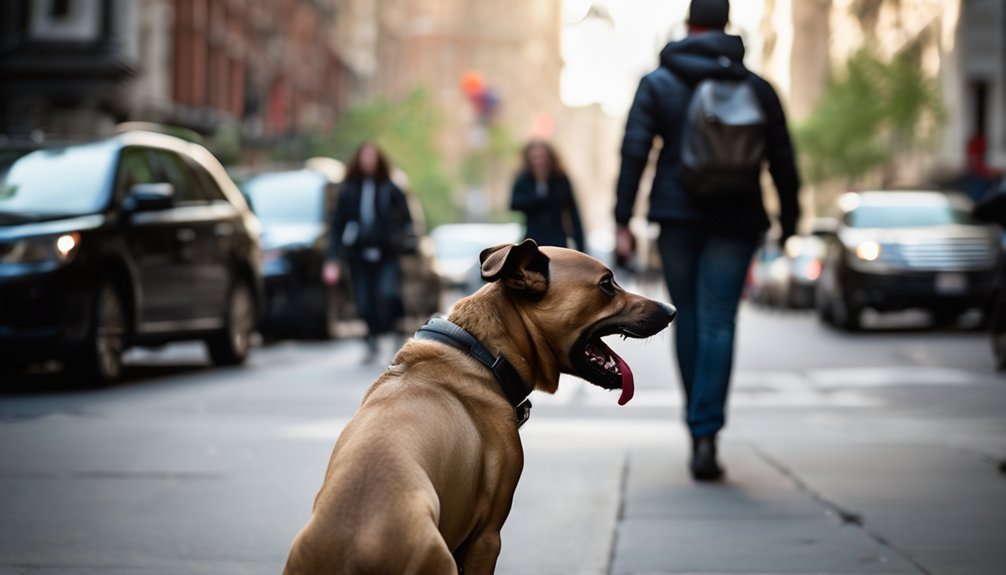
You may notice your dog barks at some people but not others, and that pattern usually reflects how your dog reads cues in real time. Dogs respond to scent, movement, posture, eye contact, and voice quality, then decide whether a person seems novel, threatening, or simply too stimulating. The reasons aren’t always obvious, and some are more predictive than others, which is where the details start to matter.
Key Takeaways
- Dogs bark at certain people because they notice differences in scent, voice, movement, posture, and appearance.
- Barking often signals caution, alertness, or uncertainty rather than simple aggression.
- Unfamiliar people, direct eye contact, abrupt movements, or unusual clothing can trigger barking.
- Dogs may bark from fear, guarding instincts, excitement, or a mix of these emotions.
- Calm, repeated exposure and positive reinforcement can reduce barking over time.
Why Do Dogs Bark at Certain People?
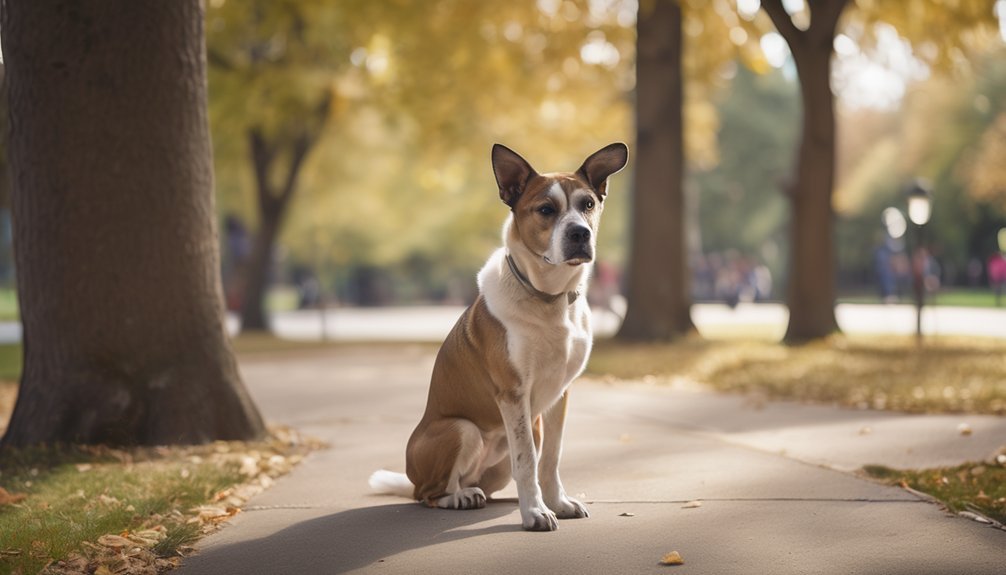
Dogs often bark at certain people because they detect specific cues in a person’s appearance, movement, scent, voice, or behavior that they interpret as unfamiliar or potentially threatening.
You can think of barking as a form of dog communication: your dog is signaling caution, alertness, or a need for distance. Canine instincts push many dogs to assess strangers quickly, then respond before they feel fully comfortable.

If your dog barks at one person and not another, the difference often reflects how that person fits your dog’s threshold for novelty or uncertainty. You don’t need to assume hostility; in many cases, your dog is simply showing guarded social evaluation.
With repeated calm exposure, your dog may learn that the person doesn’t require alarm, and the barking can diminish.
What Dogs Notice About People
A dog can pick up on a wide range of human cues, including facial expression, posture, gait, eye contact, scent, vocal tone, and sudden or asymmetrical movements. You signal through body language and facial expressions long before you speak. Dogs use scent recognition to map familiar and unfamiliar people, and they track vocal tones for emotional context.
| Cue | What your dog detects | Effect |
|---|---|---|
| Posture | Tension, openness | Assessment |
| Eyes | Directness, avoidance | Monitoring |
| Voice | Calm, sharpness | Appraisal |
| Scent | Familiarity, change | Recognition |
| Movement | Smooth, abrupt | Prediction |
Past experiences shape interpretation, so one dog may read you differently from another. Breed tendencies also influence sensitivity, with some dogs showing stronger attention to motion, sound, or scent.
Common Reasons Dogs Bark at Certain People
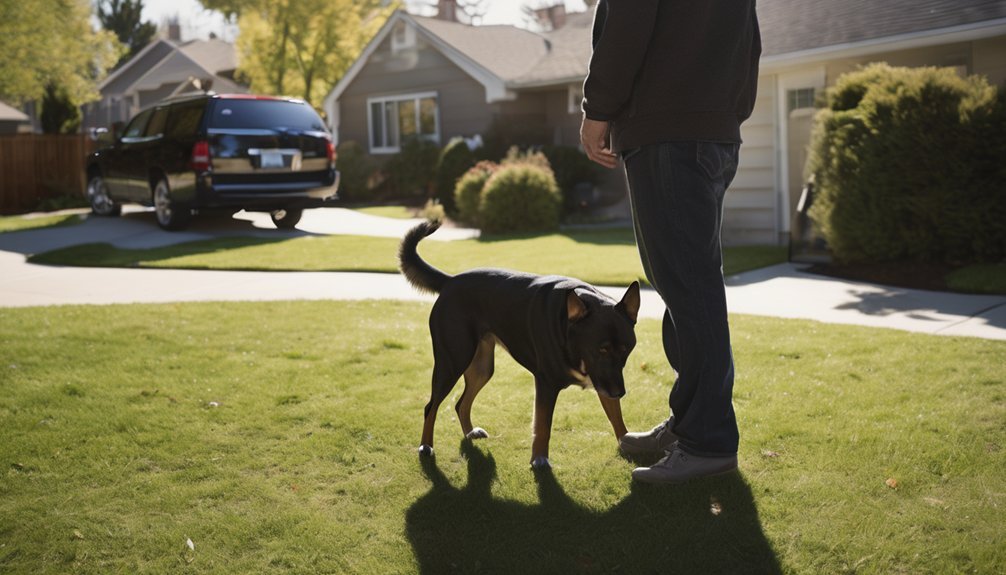
Those cues help explain why a dog may bark at one person and stay quiet around another.
In dog behavior, bark triggers often include unfamiliar scent, direct eye contact, abrupt movement, unusual clothing, or a voice that sounds harsh or high-pitched. You may also see barking when a person carries objects that change their outline, such as hats, umbrellas, or bags.
Dogs rely on learned patterns, so past experiences can shape which people seem safe or significant to them. Some dogs bark because a specific posture or approach feels too fast or unpredictable. Others respond to novelty alone.
When you understand these common bark triggers, you can read your dog’s reactions more accurately and respond with calm, consistent guidance instead of guessing.

Fear, Guarding, or Excitement?
When a dog barks at certain people, the behavior usually falls into one of three categories: fear, guarding, or excitement. You can read the pattern by watching body posture and timing.
- Fear: your dog may lean away, tuck the tail, and show fear responses when a person feels unpredictable.
- Guarding: your dog may stand stiffly, protect space, and use barking as a distance-setting signal.
- Excitement: your dog may bounce, wag, and bark with high arousal when social signals suggest possible interaction.
- Mixed states: you may see fear and excitement together, especially in unfamiliar settings.
Clinical interpretation depends on context, because the same bark can mean different things.
If you track who triggers it, you’ll better understand your dog’s emotional state and intent.
How to Help Your Dog Bark Less at People
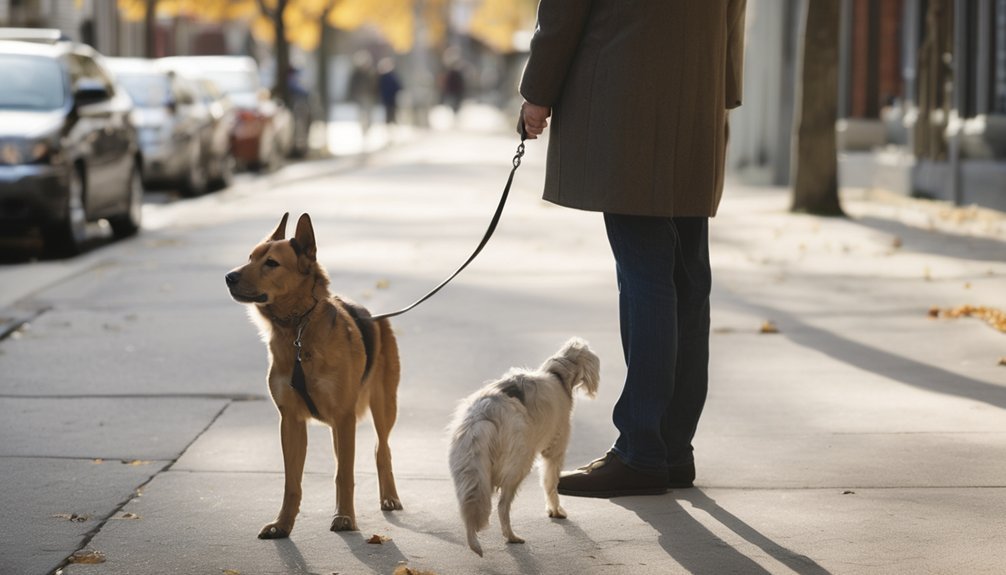
Once you can tell whether barking comes from fear, guarding, or excitement, you can match the response to the cause. Use training techniques that reward quiet behavior before your dog reacts. Keep distance from triggers, then slowly decrease it as your dog stays calm. Behavioral modifications work best when you control exposure and keep sessions brief.
| Trigger | Action | Goal |
|---|---|---|
| Stranger appears | Feed treats | Calm association |
| Dog stiffens | Increase distance | Reduce arousal |
| Barking starts | Cue “quiet” | Interrupt rehearsal |
You should avoid punishment; it can intensify anxiety and worsen barking. Instead, reinforce relaxed body language, teach an alternative behavior, and track progress. If your dog’s barking escalates or feels unsafe, ask a veterinarian or certified behavior professional for individualized support.
Frequently Asked Questions
Can Certain Scents Make Dogs Bark at Specific People?
Yes, certain scents can make your dog bark at specific people. Dogs use scent recognition to detect familiar or unusual odors, and those behavioral triggers can shape alertness, fear, or excitement around you.
Do Dogs Bark More at People Wearing Hats?
You’ll usually see more barking at hats when a dog relies on visual cues and weak hat recognition; the brim, shadow, or unusual silhouette can trigger alertness, especially if they’re already cautious or under social stress.
Can a Dog’s Past Experiences Affect Barking at Strangers?
Yes—your dog’s past experiences can absolutely shape barking at strangers, because apparently the world’s a courtroom. Past trauma, socialization history, fear response, and behavioral triggers can prime vigilant barking when unfamiliar people approach.
Why Do Some Dogs Ignore Children but Bark at Adults?
You may see this because adults trigger a fear response more often, while children’s smaller size and softer movements can lessen it; socialization impact shapes which people your dog trusts, too.
Should I Worry if My Dog Barks Only at One Person?
Not usually, but you should track behavioral triggers and socialization factors. If your dog barks only at one person, you’re likely seeing a learned response, fear, or scent cue; consult your vet or trainer if it escalates.
Conclusion
So, if your dog barks at certain people, you’re not witnessing canine moral judgment; you’re seeing a fast, evidence-based threat assessment. Your dog notices scent, posture, movement, and eye contact, then decides whether to sound the alarm, guard the turf, or panic dramatically. You can reduce the drama with training, calm exposure, and clear cues. In other words, your dog isn’t being rude—just scientifically suspicious of strangers.