You probably don’t know that many animal transformations are timed by precise hormonal shifts, not gradual chance. When you look at metamorphosis, you see larvae, tadpoles, and other juveniles reorganize tissues, organs, and behavior to match new environments. Butterflies, frogs, crabs, and insects each use different developmental strategies, yet all improve survival in distinct ways. The most remarkable changes are often the ones you can’t see at first.
Key Takeaways
- Metamorphosis is a hormonally controlled developmental shift that reshapes an animal’s body for different life stages.
- Butterflies and moths transform from feeding caterpillars into winged adults through egg, larva, pupa, and adult stages.
- Frogs change from gilled tadpoles into land-dwelling adults as limbs grow, tails shrink, and organs reorganize.
- Crabs and insects grow by moulting, shedding rigid exoskeletons so new, larger bodies can form.
- These transformations improve survival by matching anatomy to feeding, movement, reproduction, camouflage, and seasonal conditions.
What Animal Metamorphosis Means
Metamorphosis is the biological process in which an animal undergoes a major change in body form, structure, or function during its life cycle. You can observe it as a coordinated developmental shift, not a random alteration.
Metamorphosis is a coordinated developmental shift, transforming an animal’s body form, structure, or function during its life cycle.
In many species, you’ll see larval stages specialized for feeding and growth, then a transition to a form suited for movement, reproduction, or dispersal. Hormones regulate these metamorphic adaptations, reshaping tissues, organs, and behavior with precise timing.

You’re looking at a strategy that lets one genome produce distinct life-stage functions under changing environmental demands. This process increases survival by separating juvenile and adult roles, reducing direct competition for resources.
In scientific terms, metamorphosis reflects developmental plasticity, physiological remodeling, and adaptive efficiency across the animal’s life cycle.
Butterflies, Moths, and Complete Metamorphosis
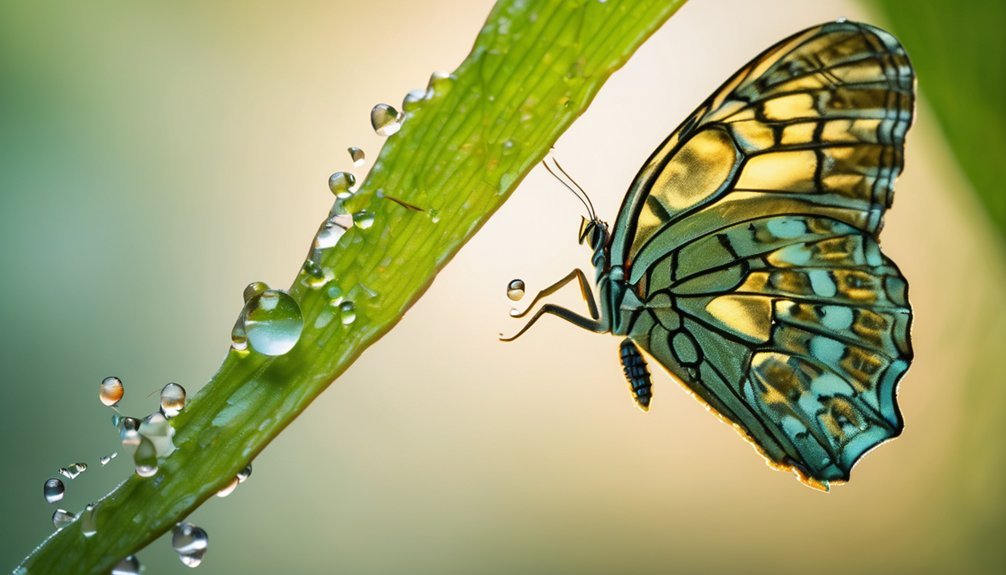
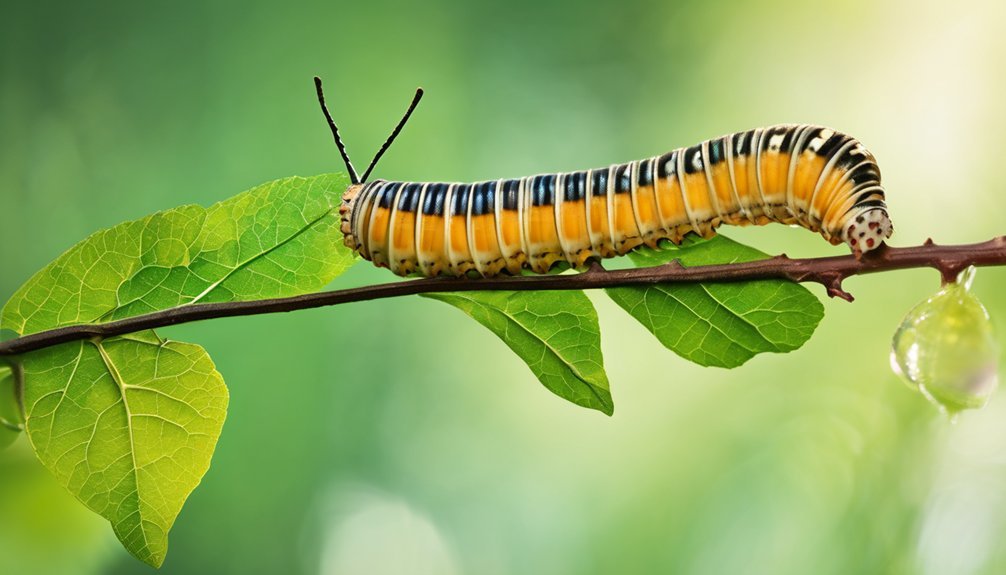
If you watch a butterfly or moth develop, you’re seeing complete metamorphosis, a life cycle with four distinct stages: egg, larva, pupa, and adult. You can track the caterpillar stages as the larva eats, grows, and molts repeatedly.
| Stage | Main task | Key change |
|---|---|---|
| Egg | Development | Embryo forms |
| Larva | Feeding | Rapid growth |
| Pupa | Reorganization | Adult tissues build |
| Adult | Reproduction | Wings function |
| Signal | Metamorphic triggers | Hormones shift |
Inside the pupa, enzymes break down many larval tissues while imaginal discs expand into wings, antennae, and legs. You’re observing a tightly regulated process shaped by metamorphic triggers such as hormones, temperature, and day length. The adult emerges with a new body plan, and its form reflects the insect’s genetic blueprint.
Frogs and Tadpoles: Life in Two Worlds
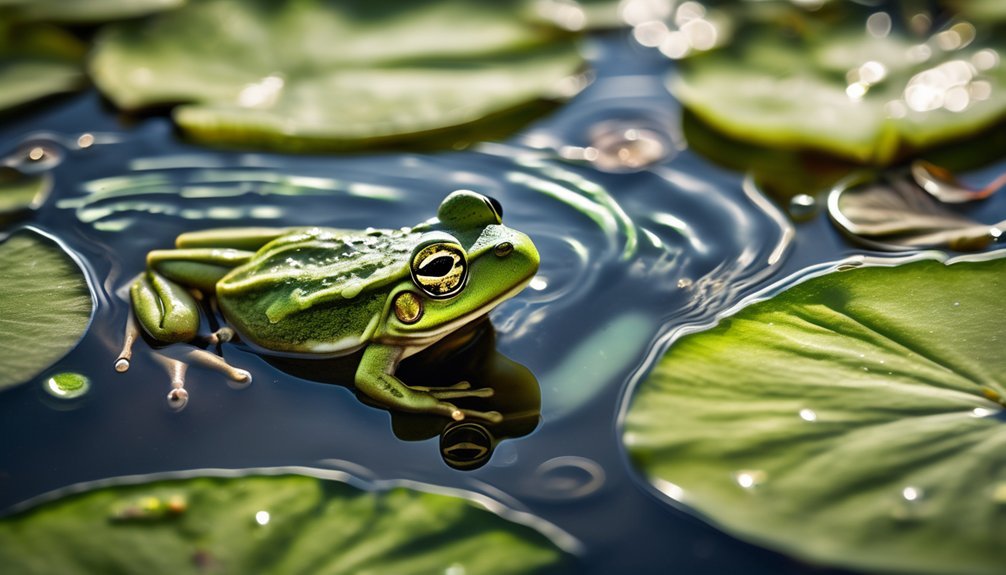
Frogs also undergo metamorphosis, but their life cycle connects water and land in a more visible way. You can watch tadpoles hatch with gills, tails, and finlike bodies that let them swim and feed on algae.
During tadpole development, hormones remodel tissues, and hind legs appear first, followed by front legs and a shortening tail. As lungs form and gills fade, you see frog adaptations suited to terrestrial life, including stronger limbs, improved vision, and skin that helps with gas exchange.
Adults still depend on moisture, so they stay near ponds, streams, and damp ground. This dual existence makes frogs useful indicators of ecosystem health, because you’re observing organisms that respond quickly to changes in water quality, temperature, and habitat structure.
How Crabs and Insects Grow by Moulting
Unlike frogs, crabs and insects grow mainly by moulting, shedding a rigid exoskeleton so a larger one can form beneath it. You can watch crab anatomy and the insect lifecycle rely on this periodic reset, not continuous expansion.

Before shedding, the body secretes enzymes to separate old cuticle from new tissue. Then the animal splits the shell, often along a weak seam, and eases out.
- New cuticle forms soft at first
- Water or air inflates body size
- Hardening follows within hours or days
- Legs, antennae, and claws realign
- Growth pauses between moults
During this vulnerable interval, you’ll notice precise timing, hormonal control, and species-specific patterns.
How Animal Transformations Help Survival
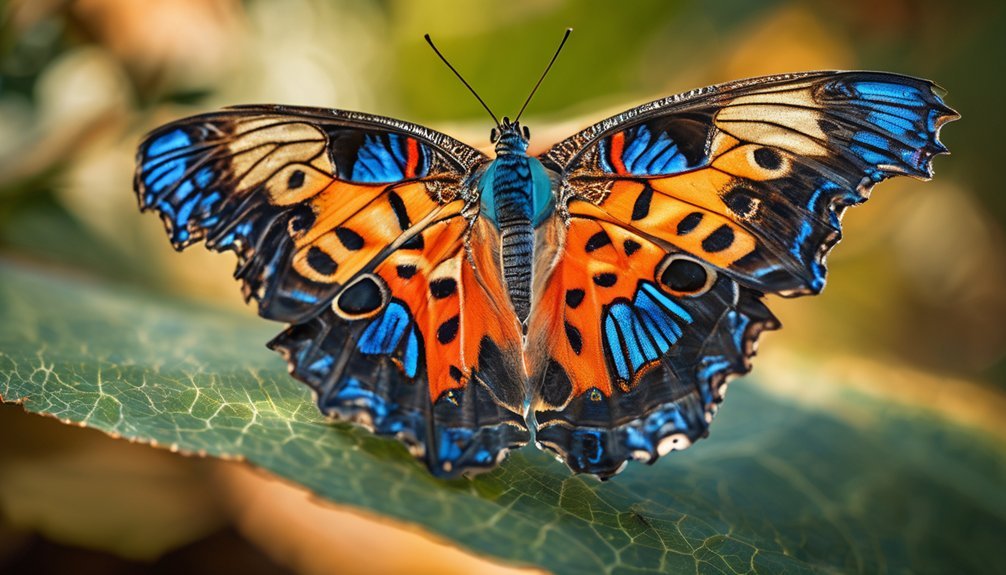
Animal transformations help survival by matching body form to changing environmental demands, life stages, and resource limits. You can see this in adaptive camouflage, where color shifts reduce predation and improve hunting success. Seasonal changes often trigger molt, migration, or fat storage, so you’re watching survival strategies tuned to climate. Environmental triggers such as temperature, light, and food scarcity can activate hormonal pathways that reshape tissues and behavior.
| Transformation | Survival benefit |
|---|---|
| Camouflage | Lowers detection |
| Color shift | Improves signaling |
| Metamorphosis | Separates niches |
| Molt | Restores growth |
| Fat storage | Bridges scarcity |
You gain a clearer view of evolution when these changes align anatomy with immediate conditions.
Frequently Asked Questions
How Do Scientists Discover New Animal Transformations in the Wild?
You discover new animal transformations through field research, genetic analysis, behavioral observation, and habitat monitoring. You track individuals, collect samples, compare life stages, and document environmental triggers, so you can verify changes objectively in wild populations.
Which Animals Change Color Without Changing Their Body Form?
You’d see chameleons, octopuses, cuttlefish, squid, and some fish changing color, not body form. Their color changing mechanisms regulate pigments, reflecting cells, and adaptive camouflage, helping them communicate, hide, and signal rapidly.
Can Environmental Changes Trigger Unexpected Transformations in Animals?
Yes—environmental shifts can trigger surprising changes in you, like weather turning a still pond into ripples. Climate impact can alter hormones, growth, or behavior, and your adaptive strategies may drive rapid, measurable transformation.
What Animal Transformations Happen Over Just a Few Hours?
You can see rapid metamorphosis in some insects, plus instant camouflage in octopuses and quick adaptation in fish or lizards. These temporary changes often happen within hours, helping you observe reversible physiological shifts.
How Do Transformation Abilities Evolve Over Many Generations?
You’d see transformation abilities evolve as genetic mutations create adaptive traits; environmental pressures then favor selective advantages. Over generations, you’d notice those traits spread through populations, becoming more efficient, refined, and tightly matched to survival demands.
Conclusion
You see that animal transformation is both delicate and ruthless: a caterpillar dissolves into a butterfly, a tadpole reshapes into a frog, and a crab abandons its old shell to grow a stronger one. These changes seem like losses, yet they are precise adaptations driven by hormones and environment. In each case, you witness form giving way to function, vulnerability becoming survival, and one life stage yielding to the next.