When you look at animal architecture, you see more than instinct at work. Termites regulate heat with mud towers, beavers redirect water with engineered dams, and spiders turn silk into a structure that’s both light and strong. Birds and prairie dogs also build with clear purpose, protecting young and conserving energy. But the real question is how these animals shape entire ecosystems, not just their own shelters.
Key Takeaways
- Termite mounds are climate-controlled homes with tunnels and porous walls that regulate temperature, humidity, and airflow.
- Beaver dams and lodges reshape wetlands, creating insulated shelters and habitats for many other species.
- Spider webs are precision-built traps that balance strength, elasticity, and vibration sensitivity to catch prey efficiently.
- Bird nests use carefully chosen materials to provide warmth, drainage, and stable protection for eggs and chicks.
- Prairie dog burrows form complex underground networks with chambers and escape routes for social living and survival.
What Makes an Animal Architect?
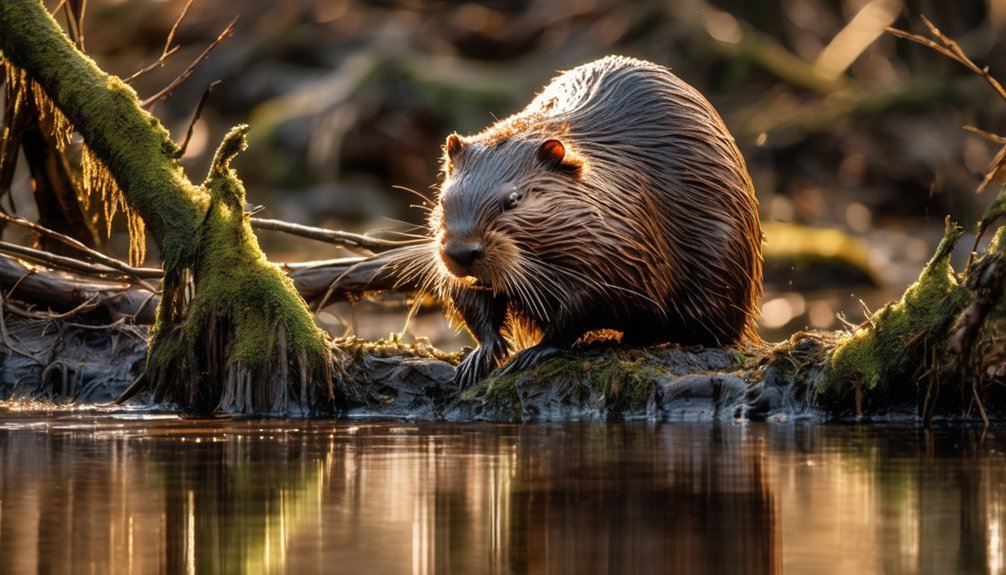
An animal architect is a species that actively shapes its environment to meet essential needs such as shelter, safety, temperature control, or food storage. You can identify one by its intentional tool use, careful material selection, and consistent spatial awareness.
Its actions blend instinctual behavior with learned responses, so you see purposeful construction rather than random disturbance. These animals don’t just occupy space; they modify it with precision, often in ways that reflect social structures and shared labor.
You may notice environmental adaptation in how they place, reinforce, or arrange resources to reduce risk and improve function. When you observe this work closely, you’re seeing biology express itself through design, with each choice serving survival while revealing a quiet, intimate intelligence.

Termite Mounds: Climate-Controlled Homes
Far from being simple dirt piles, termite mounds are engineered structures that regulate temperature, humidity, and airflow with remarkable efficiency. You can almost feel their disciplined design when you study their chambers and vents.
Termites use local construction materials, mixing soil, saliva, and fecal matter into durable walls that hold steady against heat and rain. Their thermoregulation strategies include narrow tunnels, porous surfaces, and chimney-like passages that move warm air out and draw cooler air in.
- You notice how each mound serves the colony’s shared needs.
- You see precise ventilation without wasted energy.
- You appreciate nature’s calm, adaptive intelligence.
Beaver Dams and Lodges: Wetland Engineers
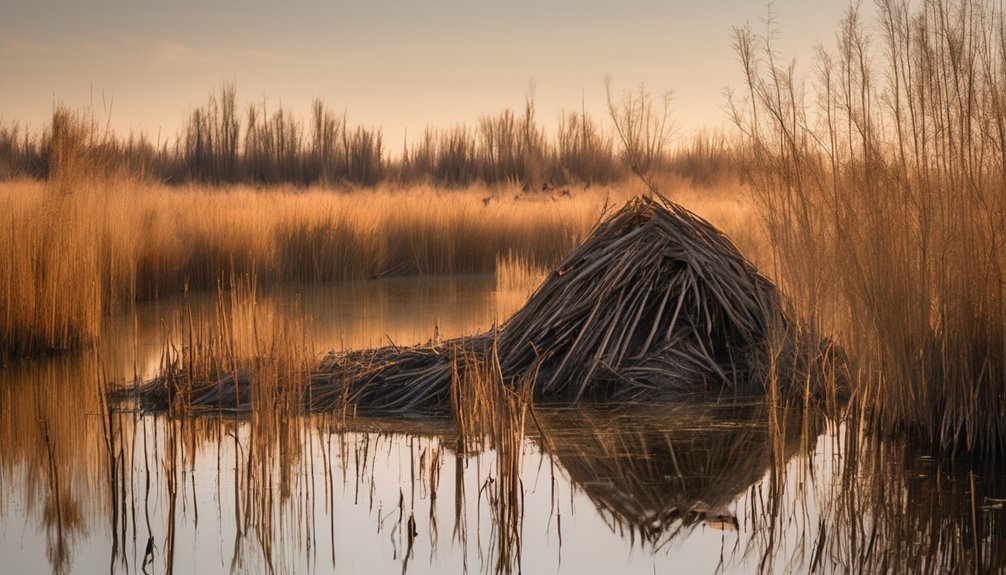
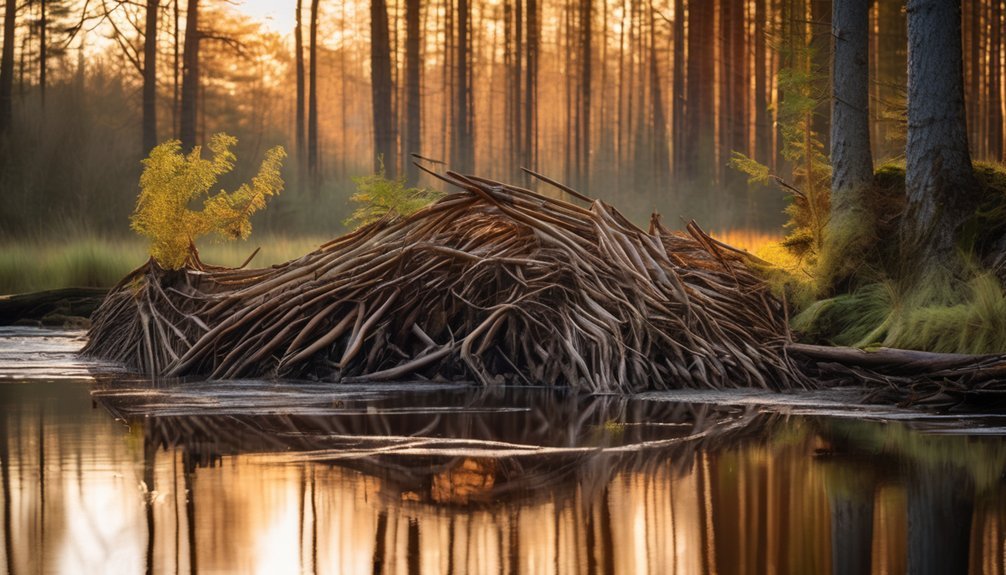
If termite mounds reveal how insects shape climate inside a structure, beaver dams show how a single species can reshape an entire wetland.
You can watch beaver behavior translate need into engineering: they cut saplings, pack mud, and slow water with calm persistence. Their lodges rise as safe, insulated chambers above the pond line, giving families dry refuge through cold nights and floods.
This work has a clear ecosystem impact. Water spreads, soils saturate, and new marsh plants root where streams once rushed. Fish, amphibians, birds, and insects then find shelter and food in the softened landscape.
You may feel the quiet intelligence in this design, because the beaver doesn’t dominate nature so much as patiently reorganize it for shared survival.
Spider Webs: Nature’s Perfect Traps
A spider’s web is a precisely tuned capture system: each silk strand balances strength, elasticity, and spacing to intercept prey with minimal material. You can see how sticky silk works like a selective adhesive, catching insects while letting the spider move with care and speed.
Your attention may shift to the design’s efficiency: radial lines transmit vibration, and spiral threads distribute force without wasting energy.
- You notice how different hunting strategies shape web form.
- You feel the precision in each tensioned strand.
- You understand how the web protects the spider’s effort.
When prey strikes, the web responds instantly, and the spider reads those signals through its legs. This intimate architecture shows nature’s restraint: enough material to trap, not enough to clutter.
Bird Nests: Smart Designs in Small Spaces
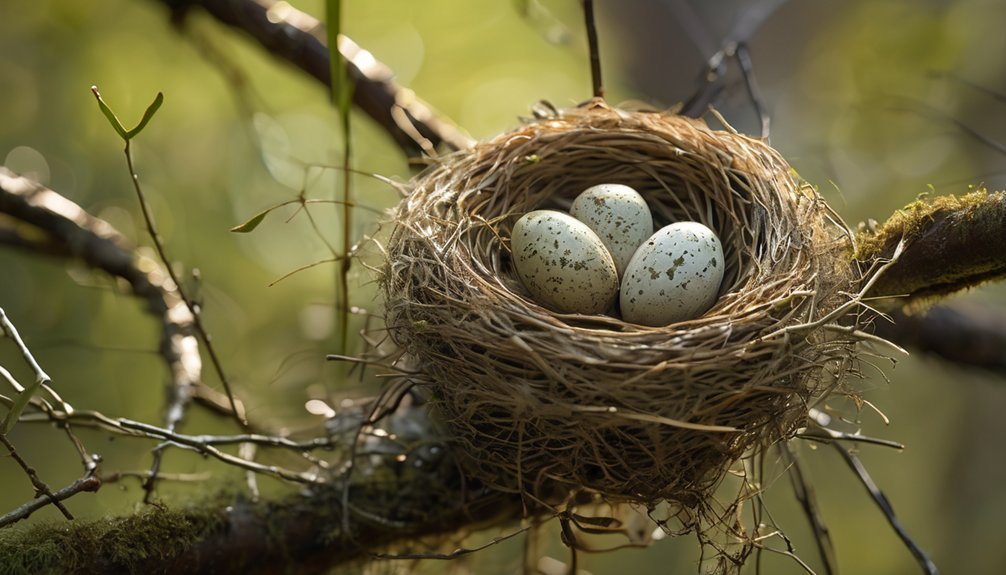
Bird nests solve a difficult spatial problem with remarkable economy: within a few cupfuls of twigs, grass, mud, or feathers, a bird creates a stable cradle that insulates eggs, shields chicks, and fits the available site.
You can see how each choice matters: nest materials affect warmth, drainage, and strength, while nesting strategies shape safety and access. Some birds weave tight cups, others glue fibers to branches, and some line hidden cavities with soft down.

Nest materials shape warmth and strength, while nesting strategies balance safety, access, and the demands of each site.
You’re watching careful engineering at close range, not decoration. The nest holds fragile life in a compact, measured form, and every curve serves a need.
In that small structure, you can sense patience, vulnerability, and the quiet competence that lets young birds grow with protection.
Prairie Dog Burrows: Underground City Plans
Prairie dog burrows solve a different spatial problem, but with equal intelligence: instead of a small nest, they build an underground network that can stretch for meters, with sleeping chambers, nursery rooms, escape tunnels, and lookout mounds arranged to support daily life and survival.
You can see how their burrow systems reflect social structures, with shared passages that let families stay close yet protected.
- Sleep chambers hold warmth and reduce stress.
- Nursery rooms keep young prairie dogs safer.
- Escape tunnels give you a quick route when danger nears.
You’ll notice precise engineering in every turn, shaft, and entrance. Each feature serves a practical purpose, but it also shows care: the colony builds for rest, vigilance, and mutual protection, creating a home that feels remarkably intimate beneath the grass.
How Animal Builders Shape Ecosystems
Animal builders don’t just create shelters; they reshape the environments around them. When you watch beavers, termites, or ants, you see engineering that alters water flow, soil structure, and nutrient cycling.
Their dams, mounds, and tunnels create microhabitats for fish, insects, birds, and plants, increasing habitat diversity. You benefit from these changes because they stabilize banks, store moisture, and reduce erosion.
In clinical terms, they function as ecosystem regulators, helping maintain ecosystem balance through disturbance and renewal. Their work can also open space for vulnerable species that need edge conditions or shade.
When you understand their influence, you recognize a quiet, intimate truth: animal construction isn’t decorative. It’s a biological force that supports resilience, connection, and survival across whole landscapes.
Frequently Asked Questions
Which Animal Builds the Strongest Structure Relative to Its Body Size?
You’d likely pick termites: their termite mounds can be astonishingly strong for their size, though beaver dams, spider webs, and coral reefs also show remarkable engineering. You’re seeing nature’s most efficient builders, hands down.
How Do Animal Architects Learn Their Building Techniques?
You learn animal architects’ skills like a child with a blueprint: through imitation learning, practice, and environmental adaptation. They watch others, copy motions, then adjust techniques to local materials, weather, and needs, compassionately.
Do Animal Buildings Ever Get Reused by Other Species?
Yes—you’ll often see nest sharing. Other species reuse abandoned dens, burrows, and nests when structural adaptation suits them. This can reduce habitat competition and sometimes enable species collaboration, but it also carries risks and limits.
What Materials Do Animals Choose in Changing Environments?
Like a shifting toolbox, you’ll see animals choose nesting materials based on resource availability, environmental adaptation, construction methods, habitat diversity, and behavioral flexibility. You’ll notice they’re precise, compassionate, and intimate with changing surroundings.
How Do Animal Structures Influence Local Weather Conditions?
You’ll see animal structures alter wind, shade, humidity, and temperature, driving climate modulation and habitat creation. They buffer extremes, trap moisture, and soften storms, helping nearby organisms persist with less stress and greater intimacy.
Conclusion
You’ve seen how termites, beavers, spiders, birds, and prairie dogs build with a precision that puts many human designs to shame. Ironically, these “simple” animals often create safer, smarter, and more sustainable structures than you do. Their work isn’t just impressive; it quietly holds ecosystems together. When you look closely, you realize nature hasn’t been copying architecture at all—you’ve been trying, imperfectly, to copy nature’s long-standing expertise.