
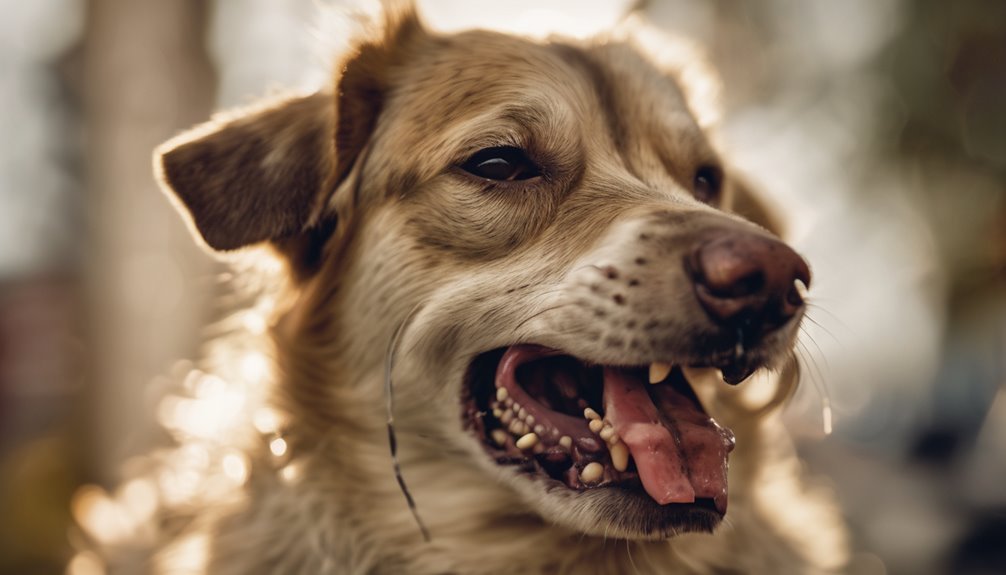
Have you ever wondered how your dog’s dental health can impact their overall well-being? Recognizing the signs of dental problems is essential for preventing serious health issues. Symptoms like difficulty eating, excessive drooling, and bad breath often signal underlying concerns. Ignoring these signs can lead to more severe complications. Understanding these indicators can help you take proactive steps to ensure your dog’s health, but what should you look for specifically?
Key Takeaways
- Difficulty eating or chewing often indicates dental pain or discomfort in dogs.
- Excessive drooling and bad breath frequently signal underlying dental issues.
- Reluctance to play with biting toys may suggest oral health problems.
- Brown or yellow stains on teeth are signs of plaque buildup.
- Swollen, red, or bleeding gums can indicate potential gum disease in dogs.
Recognizing Common Signs of Dental Problems in Dogs
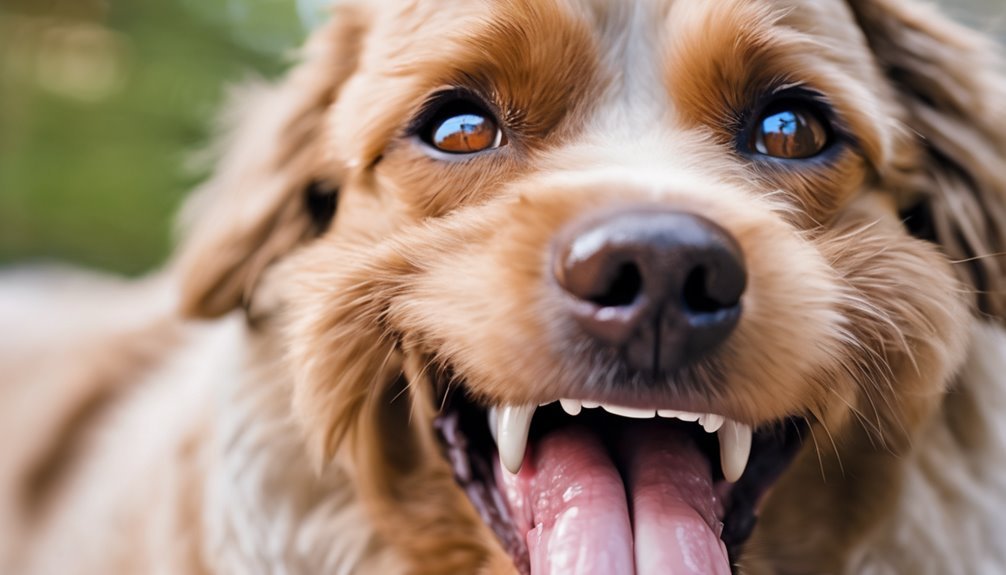
How can you tell if your dog is suffering from dental problems? Look for signs like difficulty eating or chewing, which may indicate pain from tooth decay.
You might also notice excessive drooling or a reluctance to play with toys that require biting. If you see brown or yellow stains on their teeth, that’s a clear sign of plaque buildup.
Bad breath can be another indicator, but it’s essential to focus on these more subtle signs, too. Pay attention to your dog’s behavior and oral hygiene; regular dental check-ups can prevent serious issues down the line.

Early detection is key to maintaining your dog’s overall health and comfort, so don’t ignore these warning signs.
Why Bad Breath Is a Key Indicator of Dental Issues
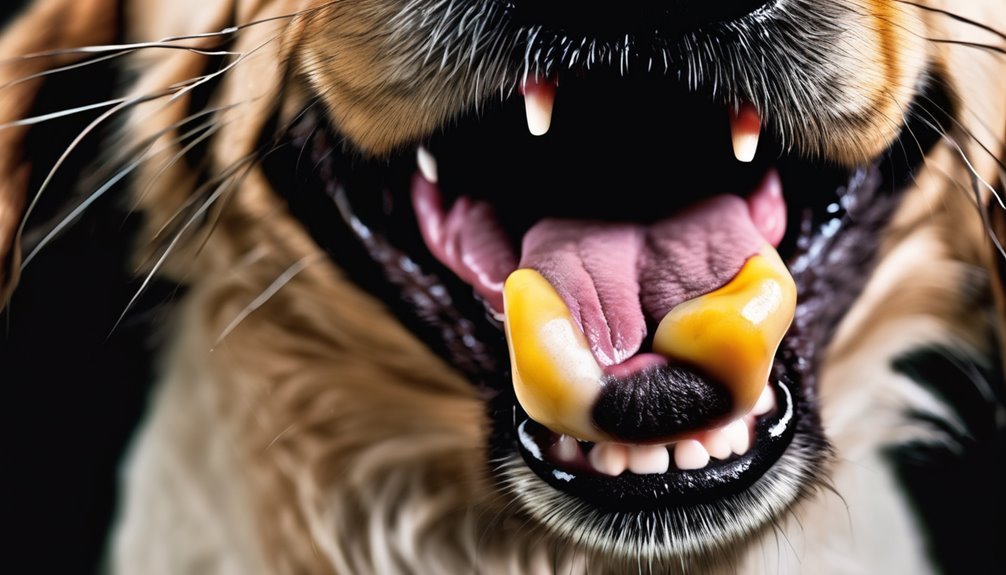
While bad breath may seem like a minor inconvenience, it’s often a key indicator of underlying dental issues in dogs. This unpleasant odor typically stems from plaque buildup, periodontal disease, or even infections.
Understanding bad breath causes is crucial for your dog’s health. When bacteria accumulate, they produce toxins that can lead to more serious conditions, potentially affecting your pet’s overall well-being.
By recognizing this sign early, you can take proactive steps for dental disease prevention. Regular vet check-ups and proper dental care, such as brushing and dental chews, can help maintain your dog’s oral hygiene.
What You Should Know About Gum Inflammation in Dogs
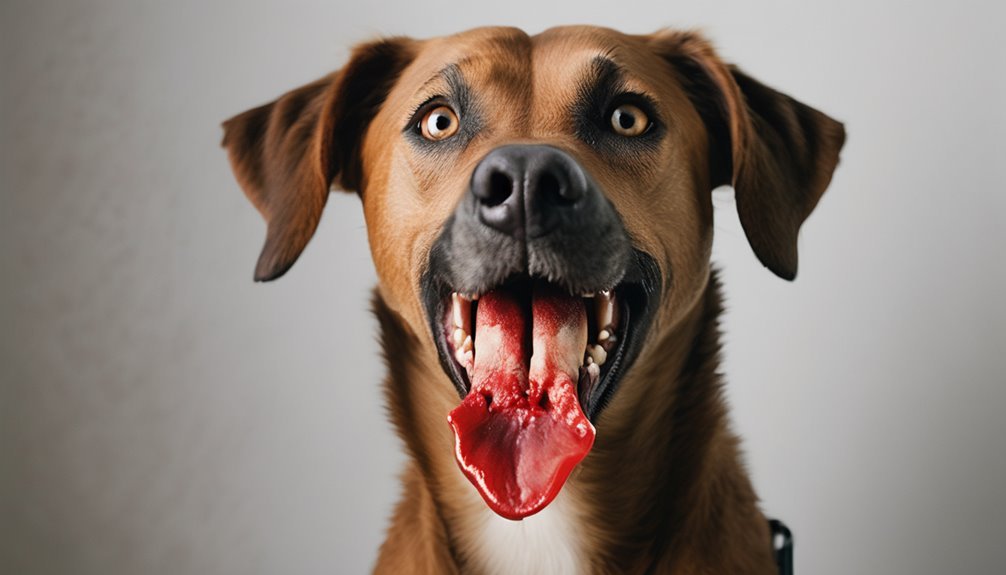
Gum inflammation, or gingivitis, is another significant sign of dental problems in dogs that often accompanies bad breath.
If you notice swollen, red, or bleeding gums, it’s a clear indication that your dog may be suffering from gum disease. Poor oral hygiene can lead to plaque buildup, which irritates the gums and escalates the issue.
Regular dental check-ups and proper at-home care, such as brushing your dog’s teeth, are essential in preventing gum inflammation.
If left untreated, gingivitis can progress to more severe conditions, impacting your dog’s overall health. Always consult your veterinarian if you suspect your dog has gum issues.
Difficulty Eating: A Warning Sign for Your Dog’s Dental Health
Noticing your dog struggling to eat can be a significant warning sign of dental health issues. Changes in your dog’s eating behavior or food preference may indicate pain or discomfort.
Pay attention to these signs:
- Reluctance to chew or bite down
- Preference for softer foods over kibble
- Dropping food while trying to eat
- Excessive drooling or bad breath
- Unusual pawing at the mouth
These behaviors can stem from various dental problems, such as gum disease, tooth decay, or oral infections.
If you observe any of these signs, it’s crucial to consult your veterinarian. Early intervention can prevent further complications and ensure your furry friend maintains a healthy, happy life.

Your dog’s well-being depends on your attentiveness.
Why Regular Dental Check-Ups Matter for Dogs
Regular dental check-ups are essential for maintaining your dog’s overall health, as untreated dental issues can lead to severe complications. By prioritizing these visits, you’re investing in your pet’s long-term well-being.
Professional exams allow veterinarians to identify early signs of dental disease, ensuring timely intervention. This preventive care is crucial; it helps prevent pain, tooth loss, and even systemic infections that can affect vital organs.
Moreover, regular check-ups promote good dental hygiene, as your vet can provide tailored advice on your dog’s specific needs. This proactive approach not only enhances your dog’s quality of life but also strengthens the bond you share, knowing you’re taking the best possible care of your furry companion.
Don’t overlook the importance of these vital appointments.
Tips for Keeping Your Dog’s Teeth Healthy
Maintaining your dog’s dental health goes beyond periodic vet visits; it involves daily care routines that can prevent serious issues.
Here are some effective tips to keep those pearly whites in top shape:
- Use proper brushing techniques: Aim for at least two to three times a week.
- Introduce dental toys: These can help reduce plaque and tartar build-up while keeping your dog entertained.
- Regularly check for bad breath: It can indicate underlying dental problems.
- Provide dental treats: Look for ones endorsed by veterinary dental associations to ensure effectiveness.
- Monitor their diet: A balanced diet contributes to overall dental health.
When to Consult Your Veterinarian About Dental Problems?
Wondering when it’s time to consult your veterinarian about your dog’s dental health? If you notice persistent bad breath, swollen gums, or difficulty eating, don’t hesitate to reach out.
These signs can indicate serious dental issues that require early intervention. Additionally, if you see excessive tartar buildup or loose teeth, it’s crucial to consult your vet.
Regular check-ups are essential for maintaining your dog’s dental hygiene and catching problems before they escalate. If your dog seems unusually irritable or has changes in behavior, that could signal pain related to dental issues.
Frequently Asked Questions
Can Dental Problems Lead to Other Health Issues in Dogs?
Yes, dental problems like gum disease and tooth decay can lead to serious health issues in dogs. They may result in infections that affect vital organs, ultimately compromising your dog’s overall well-being and longevity.
How Can I Prevent Dental Problems in Puppies?
To prevent dental problems in your puppy, maintain proper puppy dental hygiene with regular brushing. Use oral care products like vet-recommended toothpaste and dental chews to promote healthy teeth and gums while establishing a routine for care.
Are Certain Dog Breeds More Prone to Dental Issues?
Yes, certain breeds are indeed more susceptible to dental issues. Genetic factors play a significant role, with smaller breeds often facing higher risks. It’s crucial to monitor their dental health closely to prevent complications.
What Home Remedies Help With Dog Dental Care?
You can improve your dog’s dental health by using natural toothpastes and providing dental chews. Regular brushing and these remedies help reduce plaque buildup, freshen breath, and support overall oral hygiene for your furry friend.
Is Professional Dental Cleaning Safe for My Dog?
Yes, professional dental cleaning is safe for your dog. With proper dog dental anesthesia and regular cleaning frequency, you ensure their oral health while minimizing risks, creating a healthier and happier life for your furry friend.
Conclusion
Don’t let your dog’s dental problems spiral into a mouthful of misery! Ignoring those warning signs can lead to pain, expensive treatments, and a whole lot of woeful whines. Regular check-ups and proper dental care aren’t just nice-to-haves; they’re essential for your pup’s happiness and longevity. So, keep that tail wagging and those pearly whites shining! Schedule that vet visit today, because your dog deserves a dazzling smile and a life free from dental woes.