You might think camouflage is just about blending in, but in animals it’s a precise survival tool. You can see it in leaf mantises that mimic torn foliage, bark spiders that vanish against tree trunks, and desert species that match sand with uncanny accuracy. Some animals even shift color with the seasons. Once you notice the pattern, you start to wonder how far this disguise can go.
Key Takeaways
- Camouflage helps animals blend into surroundings using color, pattern, shape, and stillness.
- Leaf mantises and bark spiders mimic leaves or tree bark to disappear in forests.
- Desert animals like sidewinder snakes and fringe-toed lizards match sand, shadows, and pale tones.
- Snowshoe hares, ptarmigan, and arctic foxes turn white to blend with snow and ice.
- Predators such as tigers, leopards, and flatfish use camouflage to ambush prey unnoticed.
How Camouflage Works in Animals
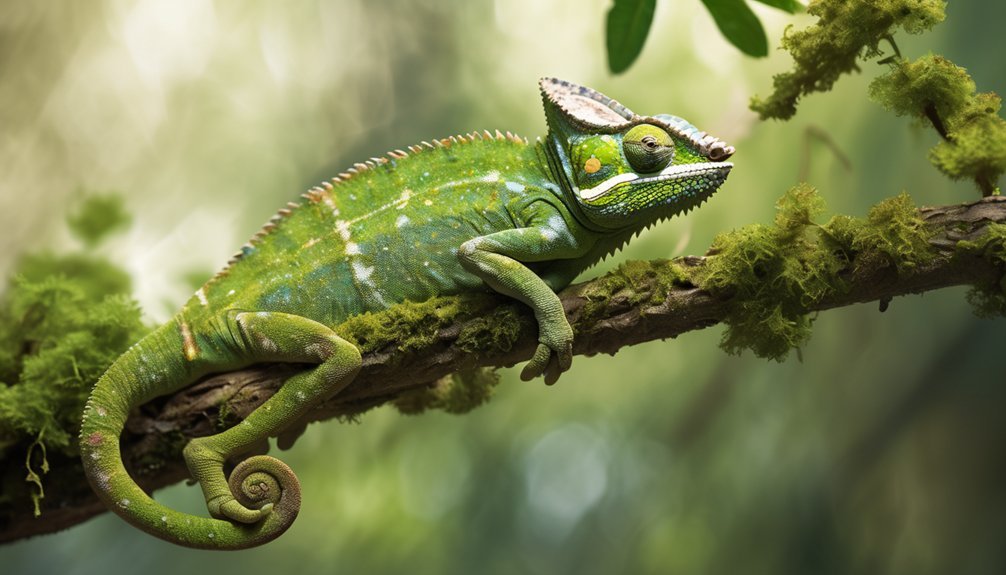
Camouflage works when an animal’s colors, patterns, shape, or behavior help it blend into its surroundings or break up its outline. You can see it as a negotiation between body and environment, where light, shadow, and texture matter.
Your visual perception can miss an animal when its edges fade, its contrast drops, or its posture mimics nearby forms. Some species rely on stillness, while others shift coloration or display disruptive markings that confuse your eye.
Through adaptive evolution, these traits persist because they improve survival and reduce detection by predators or prey. You’re witnessing a precise biological strategy, not chance.

Camouflage doesn’t hide life completely; it bends attention, letting an animal remain present while slipping past notice in plain sight.
Animals That Blend Into Leaves and Bark
Among leaves and bark, some animals disappear by matching texture as much as color. You notice a leaf mantis, its body flattened and veined like a torn leaf, while a bark spider presses close to rough trunk grooves. Their stillness helps you miss the outline; their mottled greens, browns, and grays echo the plants around them.
- A leaf mantis sways like a petiole in a breeze.
- A bark spider folds its legs to break its shape.
- Veins, speckles, and ridges blur the body’s edge.
- Shade deepens the illusion, especially on layered branches.
- Your eye passes over them because the pattern feels familiar.
When you study them closely, you see camouflage isn’t just hiding; it’s borrowed structure, finely tuned to the surface beneath.
Desert Animals That Disappear in Sand
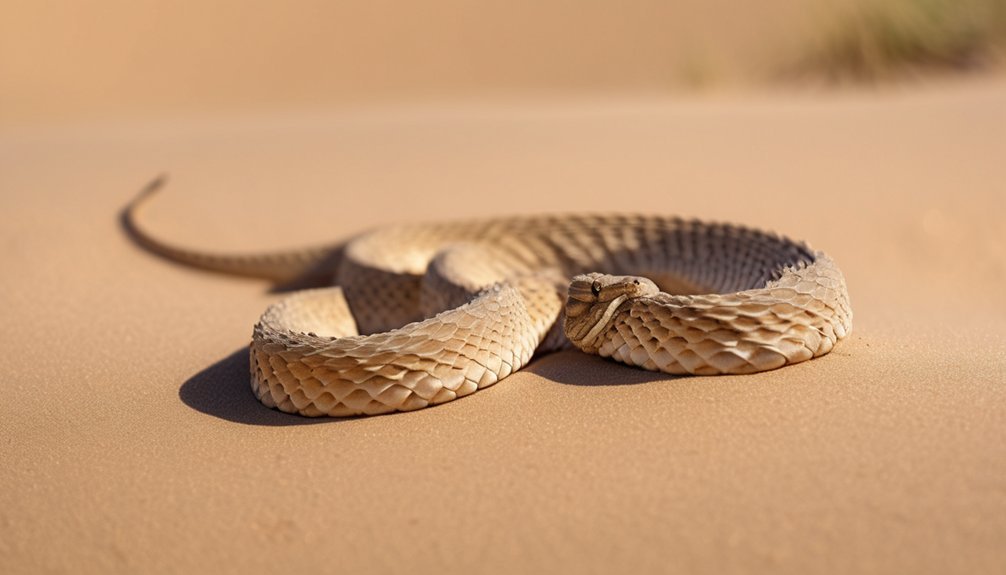
In bright desert light, some animals nearly vanish by matching the color, grain, and shadow of the sand around them. You can watch sand dwelling reptiles flatten their bodies, mute their outlines, and let the wind cover their tracks.
Sidewinder snakes leave only brief S-shaped traces, while fringe-toed lizards sink lightly, their scales reflecting pale gold and tan. Their skin doesn’t just look like sand; it breaks up glare and softens contrast, making your eyes slide past them.
Even desert chameleons, rare in these harsh habitats, shift tone enough to echo nearby dunes. You notice how stillness helps as much as pattern. In that quiet adaptation, each animal becomes a study in precision, patience, and survival.
Snow Animals That Vanish in Winter
As winter settles over the tundra and forests, snowshoe hares, ptarmigan, and arctic foxes trade summer tones for white coats and plumage that nearly erase them against the snow. You can watch arctic adaptations at work as seasonal changes trigger new fur, feathers, and behavior.
Their bodies blend with drifts, broken branches, and wind-carved ice, so predators lose their outlines fast.
- White fur softens the edge of a hare.
- Ptarmigan feathers match frozen ground.
- Fox paws spread weight on crusted snow.
- Dark eyes stay alert above the white.
- Motion, stillness, and light shape survival.
When you look closely, camouflage feels intimate: a living response to cold, exposure, and the need to vanish without moving.
Sea Creatures Hidden in Coral and Kelp
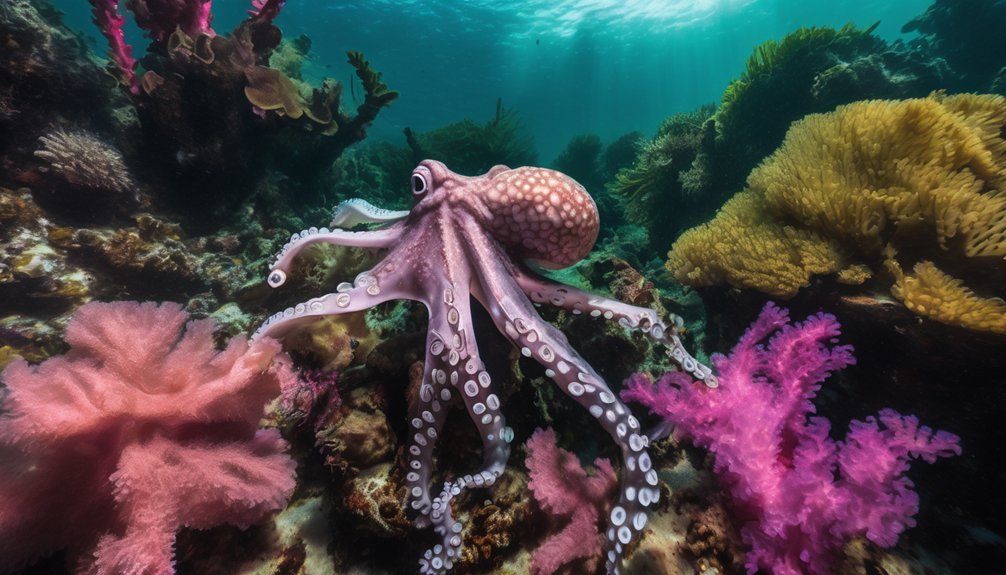
Reef and forest merge underwater, where cuttlefish, octopuses, leafy sea dragons, and kelp crabs use color, texture, and shape to disappear into coral branches and swaying fronds.
You watch reef inhabitants hold still, then shift with startling precision. A cuttlefish can pulse through shades in seconds, while an octopus raises papillae to match rough rock.

Leafy sea dragons carry leaflike appendages that break up their outline, and kelp crabs angle their bodies to mimic stems. Their color changing abilities aren’t magic; they’re controlled responses to light, texture, and mood.
In this living maze, you see how camouflage protects fragile bodies by blurring edges and blending patterns. Each organism feels intimate, almost secret, as if the reef itself were breathing through them.
Predators That Use Camouflage to Hunt
Camouflage doesn’t only shield prey; it turns hunters into part of the background. You can watch predators exploit pattern, shadow, and stillness to erase their outlines. A stalking tiger melts into tall grass, while a leopard’s rosettes break up its body on bark and stone.
In water, a flatfish lies motionless, matching sand so closely that your eye slides past. Their success depends on stealthy ambush and visual deception, not speed alone.
- striped fur fading into reeds
- mottled skin against rocks
- eyes fixed without a blink
- bodies pressed low and still
- sudden motion after long silence
When you notice these hunters, you’re seeing biology tune perception, turning the environment into cover and the predator into surprise.
How Animals Change Color and Body Shape
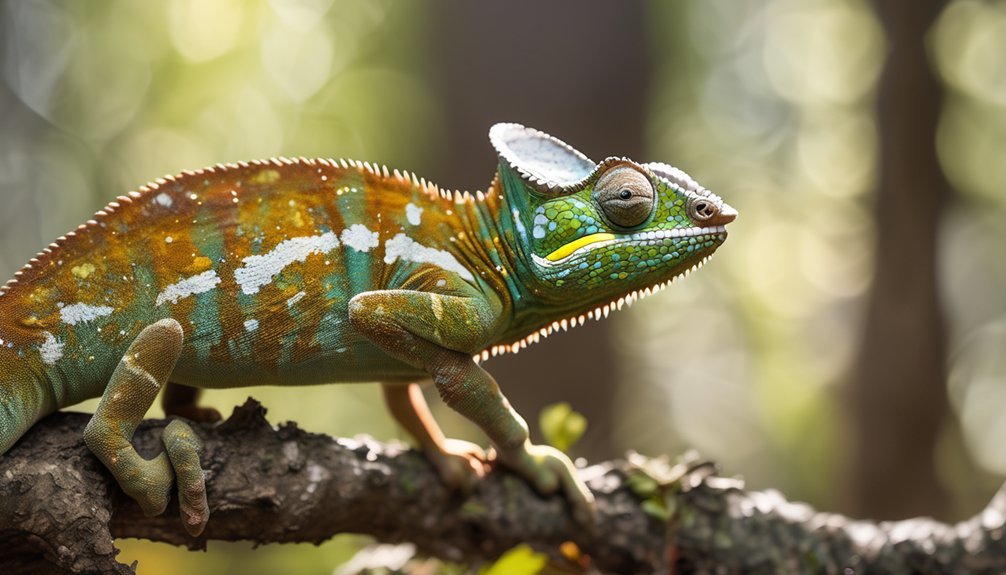
Some animals don’t just blend in; they actively remake themselves to match the scene around them. You can watch a chameleon darken, pale, or flash patterned bands as pigments shift inside specialized skin cells.
Cephalopods go further: their color changing mechanisms rely on nerve-controlled sacs that expand, contract, and rearrange light-reflecting layers in seconds. You may also notice cuttlefish and octopuses flattening, elongating, or puffing up, using adaptive body shapes to erase their outline against coral, sand, or rock.
These changes aren’t random; they respond to light, texture, mood, and threat. In that instant, camouflage becomes a living performance, and you’re seeing biology solve danger with precision, speed, and quiet intimacy.
Frequently Asked Questions
Which Animals Camouflage Themselves Using Bioluminescence?
You’ll find bioluminescence in bioluminescent jellyfish and glowing octopuses; they don’t simply hide, they confuse predators with shifting light. Some squids and deep-sea fish do this too, creating shimmering, intimate camouflage in darkness.
Do Camouflage Abilities Affect Mating Success in Animals?
Yes, you can see camouflage shape mating success, like a hidden signal in plain sight. It affects your mating strategies and survival tactics; concealed, healthy animals often attract partners more effectively while avoiding predators.
Can Baby Animals Camouflage Better Than Adults?
Sometimes you’ll find baby animals camouflaging better than adults, thanks to baby animal adaptations and juvenile survival strategies. You can observe softer patterns, smaller bodies, and instinctive stillness helping them hide more effectively from predators.
Which Animals Use Camouflage to Protect Their Eggs?
You’ll find egg protectors like plovers, killdeer, and many reptiles use nesting strategies that blend eggs with sand, leaves, or pebbles. You can observe their mottled shells and concealed nests reducing predators’ chances.
How Do Animals Learn Camouflage Behaviors?
You learn camouflage through observation and practice; a young cuttlefish watching siblings blend into coral may imitate their patterns. Such learning strategies and environmental adaptations help you adjust quickly, staying hidden from predators nearby.
Conclusion
You’ve seen how camouflage lets animals slip into leaves, bark, sand, snow, coral, and kelp, turning their bodies into living data points in the landscape. You can almost watch evolution sketch these patterns with a careful hand, shaping color, texture, and form for survival. When you study these masters of disguise, you realize nature doesn’t just hide life—it refines it, teaching you that visibility and invisibility are always in delicate balance.