Many people don’t realize that cat urine can bond with furniture materials, making it tough to eliminate the odor completely. If you’ve noticed a lingering smell, you’re not alone, and it can be frustrating. Understanding the right approach can make a significant difference. From identifying affected areas to using effective cleaning solutions, there are practical steps you can take. Let’s explore how to tackle this common issue effectively.
Key Takeaways
- Use a blacklight to locate all hidden urine stains on furniture before cleaning.
- Blot excess liquid with paper towels immediately to minimize odor spread.
- Prepare a cleaning solution with equal parts water and vinegar, applying it generously.
- Use enzymatic cleaners specifically designed to break down urine compounds for effective odor removal.
- Allow cleaned areas to dry completely to prevent lingering smells and discourage future accidents.
Understanding Cat Urine Smell Causes
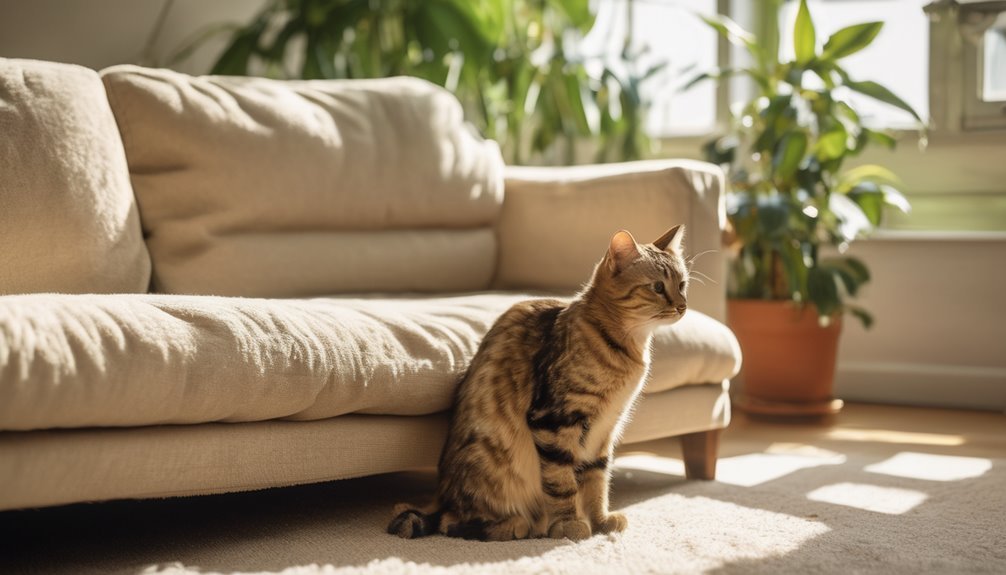
Understanding the causes of cat urine smell can make tackling the issue much easier.
Cat urine’s unique scent stems from its complex urine composition, which includes various scent compounds. These compounds, like ammonia and uric acid, contribute to that strong, lingering odor.
Cat urine has a distinct smell due to its complex composition, primarily driven by ammonia and uric acid.
When your cat marks their territory or has an accident, these substances can seep into fabrics and surfaces, making it hard to eliminate the smell completely.
It’s essential to recognize that the intensity of the odor can vary based on factors like diet or health issues.

Identifying Affected Furniture Areas
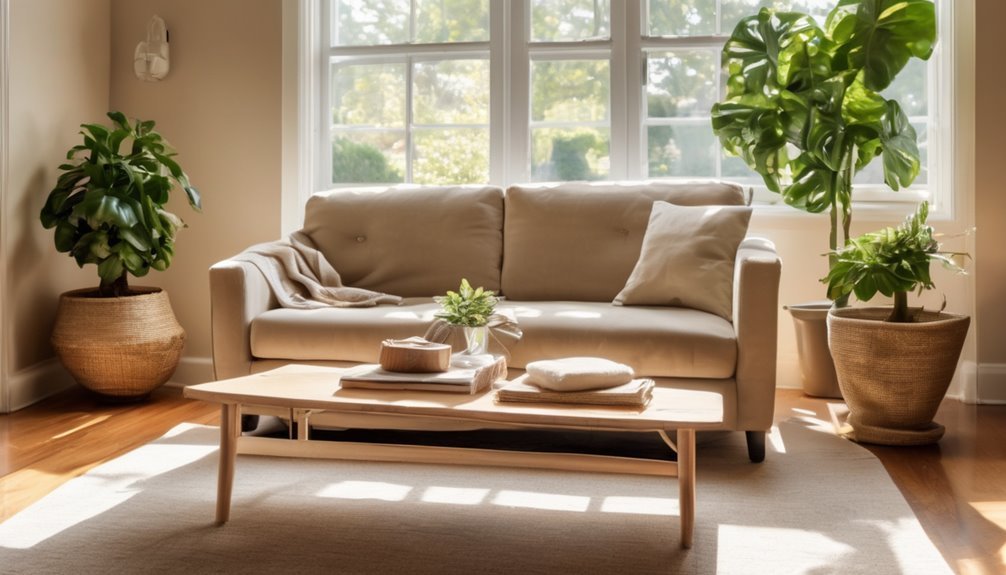
To effectively tackle the lingering smell of cat urine, it’s important to pinpoint which areas of your furniture have been affected. Start with a thorough furniture inspection; check cushions, seams, and any crevices where accidents might occur.
Use your senses for odor detection—if you notice a strong scent, you’ve likely found a problem area. Trust your instincts; sometimes, you can even spot stains that aren’t immediately visible.
If the odor is persistent, consider using a blacklight to reveal hidden spots that might need extra attention. Remember, this process can feel overwhelming, but identifying the affected areas is the first step toward creating a fresher home for both you and your feline friend.
Must-Have Supplies for Tackling Cat Urine Odors
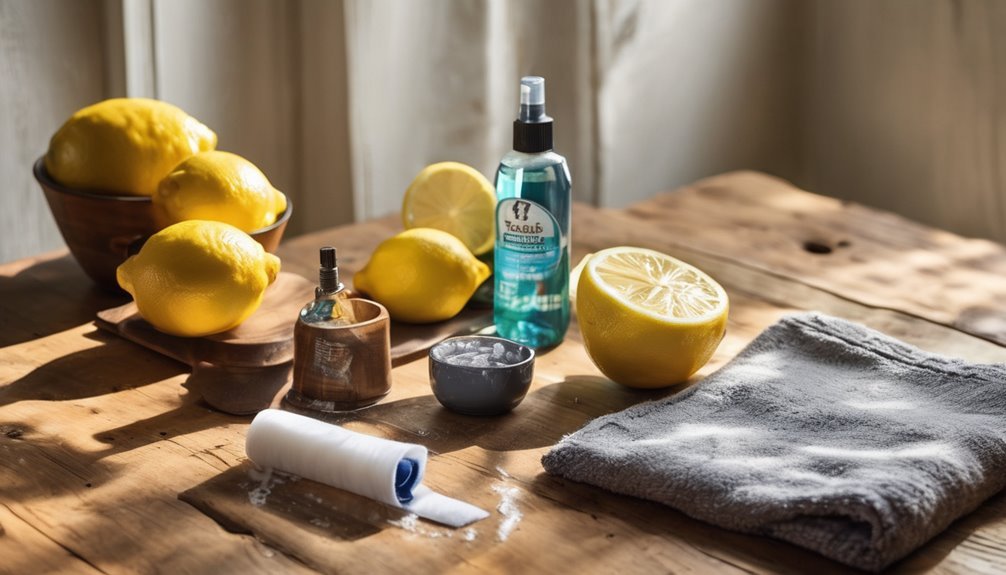
When it comes to eliminating cat urine odors, having the right supplies on hand makes all the difference.
You’ll want a few essential items to tackle those stubborn smells effectively. Here’s what you need:
- Enzymatic cleaners: These specially formulated solutions break down the urine compounds and are crucial for complete odor removal.
- Odor neutralizers: Look for products that specifically target pet odors, ensuring lingering smells don’t return.
- Paper towels: For quick clean-ups and to absorb as much liquid as possible.
- Spray bottle: Handy for applying cleaners evenly and reaching tricky spots on your furniture.
With these supplies, you’ll be well-equipped to restore your home’s freshness and comfort.
Your Step-By-Step Guide to Cat Urine Removal
Removing cat urine smell effectively requires a clear, step-by-step approach.
First, start with urine detection; use a blacklight to find all affected areas.
Once you’ve located the spots, blot up any excess liquid with paper towels.
Next, prepare your cleaning solution for odor neutralization—mix equal parts water and white vinegar, or use an enzymatic cleaner specifically designed for pet stains.
To neutralize odors, mix equal parts water and white vinegar, or opt for a specialized enzymatic cleaner for pet stains.
Apply your solution generously and let it sit for at least 10 minutes.
Blot again to absorb the cleaner, and rinse with water if necessary.
Finally, allow the area to dry completely.

This method not only helps eliminate the smell but also reassures your furry friend that their space is fresh and inviting again.
Natural Remedies for Stubborn Cat Urine Odors
Even though cat urine odors can be tough to tackle, natural remedies offer effective solutions that are safe for both your home and your pet.
Here are some practical options to consider:
- Baking soda: Sprinkle it on the affected area; it absorbs odors and moisture.
- Vinegar solution: Mix equal parts vinegar and water to neutralize the smell. Spray it on and let it sit before blotting.
- Enzymatic cleaners: These break down odor-causing compounds, making them a great choice for stubborn stains.
- Essential oils: Lavender or tea tree oil can help mask odors. Just dilute them and add a few drops to your cleaning solution.
Using these remedies can help create a fresher, more inviting space for both you and your furry friend.
Comparing Natural Remedies and Commercial Products
Choosing between natural remedies and commercial products for eliminating cat urine smell can feel overwhelming, but understanding their differences can make your decision easier. Natural remedies like a vinegar solution and baking soda are budget-friendly and eco-conscious. They effectively neutralize odors without harsh chemicals. On the other hand, commercial products often promise quick results but can sometimes contain strong fragrances or irritants.
| Type | Pros | Cons |
|---|---|---|
| Natural Remedies | Safe, eco-friendly | May require multiple applications |
| Commercial Products | Fast results, convenience | Can contain harsh chemicals |
Ultimately, it’s about what fits your lifestyle. Trust your instincts and choose what feels best for you and your furry friend.
Tips for Preventing Future Cat Urine Incidents
To prevent future cat urine incidents, it’s crucial to understand your cat’s needs and behaviors. Consistent litter box maintenance and effective behavioral training can make a world of difference.
Understanding your cat’s needs and maintaining their litter box are essential for preventing urine incidents.
Here are some practical tips to help you:
- Keep the litter box clean: Scoop daily and change litter regularly to encourage your cat to use it.
- Choose the right location: Place the litter box in a quiet, accessible area to reduce stress.
- Consider multiple boxes: If you have more than one cat, provide enough boxes to avoid territorial disputes.
- Reinforce positive behavior: Reward your cat for using the litter box to strengthen good habits.
When to Consult a Professional for Cat Urine Odor Issues
If you’ve tried various methods to eliminate cat urine odor without success, it might be time to consult a professional.
Persistent odors often signal deeper issues related to cat behavior, such as urine marking due to stress factors or health issues. A specialist can help identify environmental triggers affecting your cat, ensuring you address the root cause.
Additionally, certain furniture materials can absorb odors more deeply, complicating DIY efforts. Professionals have access to specialized equipment and cleaning solutions that can effectively tackle stubborn smells, providing a fresh start for your home.
Don’t hesitate to seek help; it’s an important step in creating a comfortable environment for both you and your beloved feline.
Frequently Asked Questions
How Can I Tell if the Smell Is Gone Completely?
You’ll know the smell is gone when you no longer detect any odor during your sniff test. For assurance, use an odor detection spray; if it shows no scent, your scent neutralization efforts worked.
Will Cat Urine Smell Affect My Health?
Yes, cat urine smell can impact your health. Studies show prolonged exposure to ammonia can irritate your lungs. It’s crucial to address urine toxicity for both your well-being and your cat’s health. Don’t wait!
Can I Use These Methods on All Furniture Types?
You can use these cleaning techniques on many furniture materials, but test a small area first. Some fabrics might react differently. Always choose gentle methods to avoid damage and keep your furniture looking great.
What if My Cat Keeps Returning to the Same Spot?
If your cat keeps returning, it’s like a moth to a flame. Observe behavioral triggers, and increase cleaning frequency to break the cycle. Consider using deterrents to redirect your furry friend’s habits and restore harmony.
Are There Specific Cleaners to Avoid for Furniture?
You should avoid cleaners with ammonia or bleach, as they can damage furniture materials. Instead, look for enzyme-based cleaners with safe ingredients, helping you effectively tackle the smell while protecting your beloved furniture.
Conclusion
Removing cat urine smell from furniture can feel like trying to find a needle in a haystack, but it’s entirely manageable. By following the steps outlined, you can restore your furniture and home environment. Remember, persistence is key, and using the right supplies makes all the difference. If issues persist, don’t hesitate to seek professional help. With a little effort, you can create a fresh, inviting space for both you and your feline friend.