
If you’ve got a fearful cat, you know how challenging it can be to help them feel safe. Understanding their behavior is crucial to easing their anxiety. By creating a cozy retreat and gradually introducing them to their triggers, you can foster a sense of security. Along with using treats and calming techniques, establishing a daily routine can make a significant difference. Let’s explore how these strategies can transform your cat’s life.
Key Takeaways
- Create a cozy safe space with soft bedding and familiar items to help your cat feel secure and comfortable.
- Use positive reinforcement with high-value treats to reward brave behaviors and build trust over time.
- Gradually expose your cat to fear triggers using gentle socialization strategies to reduce anxiety.
- Incorporate calming techniques like soothing music and pheromone diffusers to promote a peaceful environment.
- Establish a consistent daily routine for feeding and play to provide structure and enhance feelings of safety.
Understanding Your Fearful Cat’s Behavior

Understanding your fearful cat’s behavior is crucial for helping them feel safe and secure. Pay close attention to their body language; signs like flattened ears or a tucked tail indicate fear.
Identify their fear triggers, whether it’s loud noises or unfamiliar people, and approach them with gentle socialization strategies. Gradual exposure to these triggers can help build their confidence.

Recognizing fear triggers, like loud noises or strangers, and using gentle exposure strategies can significantly boost your cat’s confidence.
Enhance their environment with enrichment activities, such as interactive toys or climbing spaces, to stimulate their curiosity. Scent familiarity can also comfort them—consider using your scent on toys.
Always use positive reinforcement to reward brave behaviors, reinforcing their progress. Create safe zones where they can retreat and feel protected, fostering a nurturing space for growth and trust.
Create a Safe and Quiet Space for Your Cat

Creating a safe and quiet space for your cat is essential, especially if they’re feeling anxious.
Start by selecting a cozy, low-traffic area in your home where they can retreat. Use soft, cozy bedding to create a comfortable spot that invites them in.
Add safe hiding spots, like a covered cat bed or a cardboard box, where they can feel secure. Make sure this space is away from loud noises and sudden movements, as these can trigger their anxiety.
You might also include familiar items, like a favorite toy or a piece of your clothing, to provide extra comfort.
Use Treats and Play to Build Trust
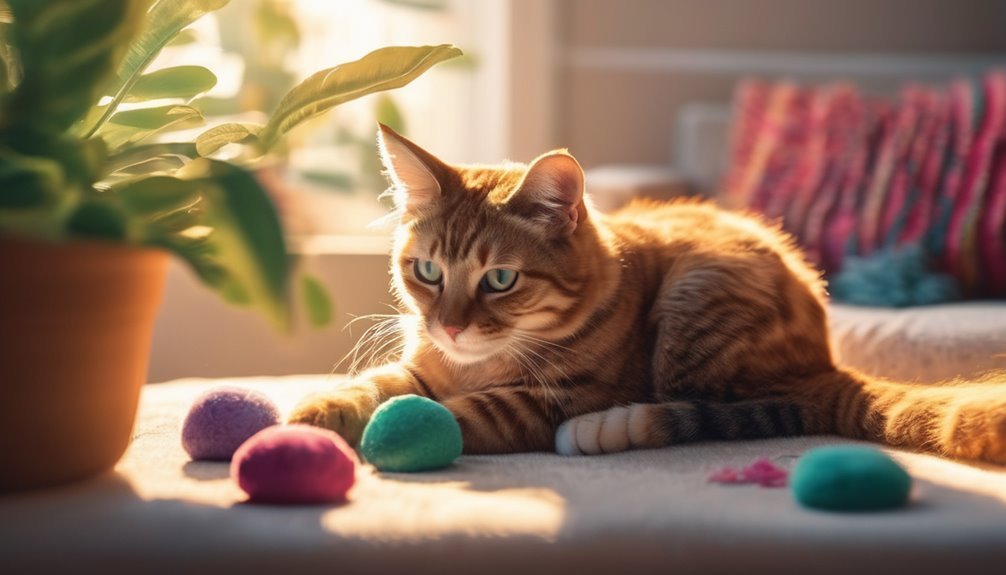
To help a fearful cat feel more secure, using treats and play can be an effective way to build trust. Start with thoughtful treat selection—opt for high-value options that your cat loves. This will make your cat associate you with positive experiences.
Incorporate various play types, like feather wands or laser pointers, to engage their natural hunting instincts. Pay attention to reward timing; give treats immediately after a brave action, reinforcing their courage.
As you spend time together in this way, you’ll notice your cat becoming more comfortable. Remember, trust building takes patience, so be gentle and consistent.
Over time, these small moments will foster a deeper bond, allowing your cat to feel safer and more relaxed in your presence.

Apply Calming Techniques and Tools
While you work on building trust with your fearful cat, applying calming techniques and tools can make a significant difference in their comfort level.
Consider these strategies to create a soothing environment:
- Calming music: Soft tunes can help reduce anxiety and create a peaceful atmosphere.
- Pheromone diffusers: These mimic natural scents that help cats feel secure and relaxed.
- Cozy blankets: Providing a warm, soft place for them to retreat can offer comfort.
- Gentle touching: Slow, gentle strokes can reassure your cat and strengthen your bond.
- Soft lighting: Dim, warm light can create a calming space, reducing stress.
Create a Daily Routine to Help Your Cat Feel Safe
Establishing a daily routine can significantly enhance your fearful cat’s sense of security. By incorporating consistent daily activities, you help your cat understand what to expect, reducing anxiety. Start with regular feeding times, which create a comforting structure.
Engage in interactive play sessions to provide environmental enrichment, allowing your cat to explore and build confidence in a safe space. Always offer quiet areas where your cat can retreat if overwhelmed.
Gradually introduce new experiences, ensuring they fit within your routine, so your cat feels secure. Observe your cat’s responses; adjust the routine as needed to make it more comfortable.
Consistency is key—building this predictable environment nurtures trust, helping your fearful cat thrive in your home.
Frequently Asked Questions
What Are Common Triggers for a Fearful Cat’s Anxiety?
Common triggers for your fearful cat’s anxiety include environmental changes, loud noises, unfamiliar people, sudden movements, new pets, changes in routine, lack of hiding spots, and potential medical issues. Recognizing these can help you provide comfort.
How Long Does It Take for a Fearful Cat to Adjust?
When it comes to your fearful cat, patience is key. The adjustment period can take weeks to months, depending on the cat’s temperament. Gradual exposure to new experiences helps ease their anxiety over time.
Can I Use Pheromone Diffusers for My Fearful Cat?
Yes, you can use pheromone diffusers for your fearful cat. Choose calming pheromone types, and place the diffuser in quiet areas where your cat spends time. This helps create a soothing environment and fosters comfort.
Should I Avoid Petting My Fearful Cat Altogether?
When it comes to your fearful cat, it’s best to tread lightly. A gentle approach is key; avoid petting until trust builds. Pay attention to their behavior, and let them come to you when ready.
How Can I Tell if My Cat Is Feeling Better?
You’ll notice your cat’s body language cues becoming more relaxed, like slow blinks or a raised tail. Gradual exposure to new experiences will also show their comfort level increasing, signaling they’re feeling better overall.
Conclusion
Helping your fearful cat feel safe is a journey, but with patience and care, you can transform their anxiety into confidence. Think of it as building an impenetrable fortress of trust, where your cat can thrive. By creating a cozy retreat, using treats and play, and incorporating calming techniques, you’ll foster a peaceful environment. Stick to a consistent routine, and watch as your cat blossoms from a shadow into a happy, playful companion.