
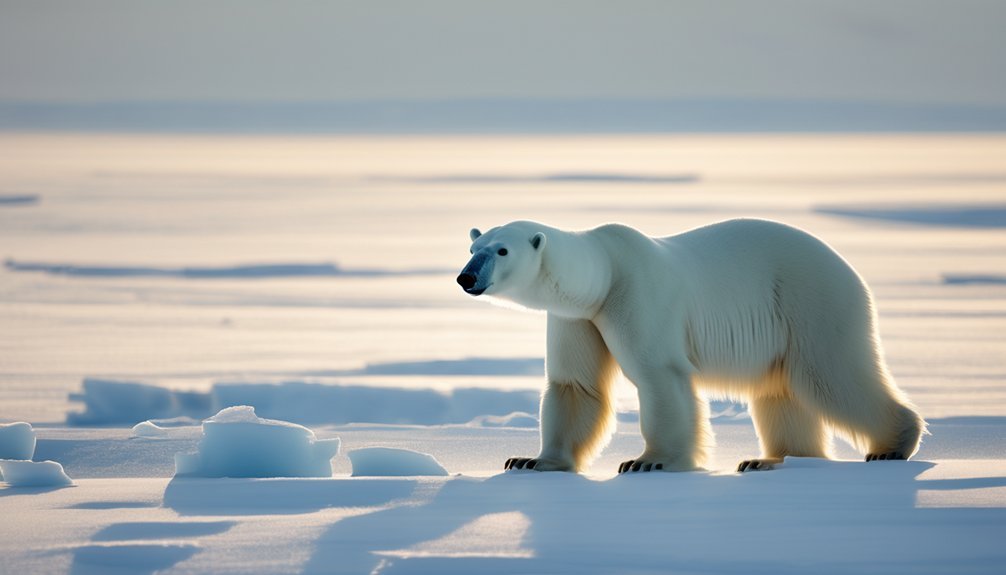
If you watch a polar bear in winter, you’ll see a body built for extremes. Its dense fur and thick blubber trap heat, while dark skin absorbs what little sunlight is available. You’ll also notice how it moves with purpose, conserving energy between hunts on sea ice. But survival depends on more than insulation, and the real challenge starts when the ice begins to change.
Key Takeaways
- Polar bears survive winter with thick fur, dense underfur, and black skin that help trap and absorb heat.
- Their blubber stores energy and provides insulation during long periods of cold and food scarcity.
- They conserve energy by resting more, moving less, and curling up to reduce heat loss.
- White fur, sharp senses, and strong paws help them hunt seals from sea ice efficiently.
- Sea ice is essential because it provides hunting platforms and travel routes across the Arctic.
How Polar Bears Stay Warm in Arctic Winter
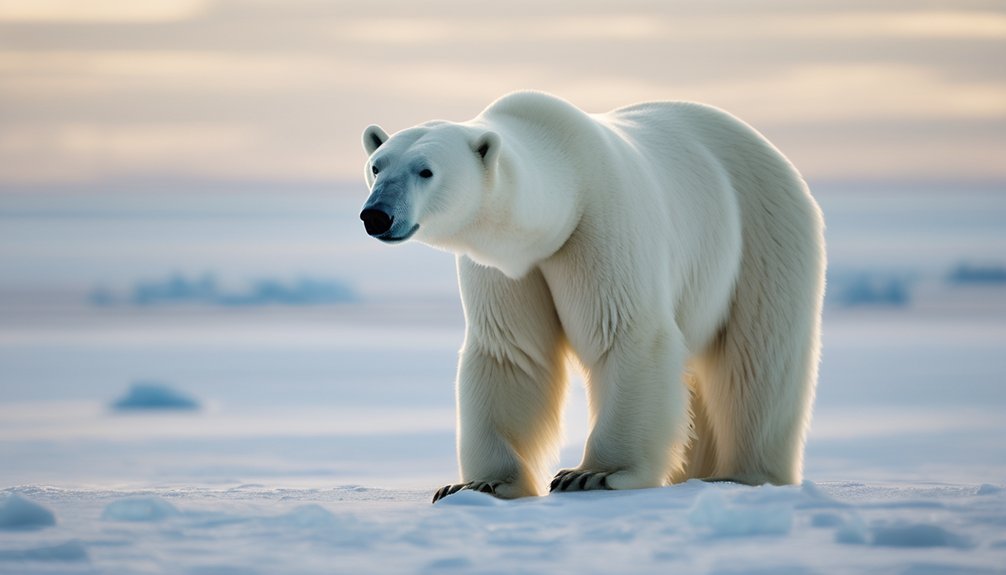
Polar bears stay warm in Arctic winter because their bodies combine several highly effective insulation systems. You can see their insulating fur trap air close to the skin, and that layer reduces heat loss in windy conditions.
Their outer coat sheds snow and moisture, while the dense underfur adds thermal resistance. You also benefit from their compact ears and short tail, which limit exposed surface area.

The black skin beneath the fur absorbs sunlight efficiently, supporting heat retention when light is available. This climate adaptation lets them conserve energy during long cold periods.
Their circulation also helps: blood flow adjusts in the limbs, so core warmth stays stable without unnecessary loss. Together, these traits keep them efficient in extreme Arctic conditions.
How Polar Bears Build Blubber for Winter
As winter approaches, these bears build thick blubber by storing energy from high-calorie prey, especially seals, during the feeding season.
You can think of blubber formation as a seasonal biological response that converts excess calories into insulating fat storage beneath the skin. Hormones help direct this process, and the tissue layer increases in both thickness and energy density.
This reserve does more than provide warmth; it also supports metabolism when food becomes scarce and helps maintain body functions during long cold periods.
You’ll notice that this adaptation lets polar bears conserve energy efficiently, because fat tissue releases calories slowly and insulates well.
How Polar Bears Hunt in Winter
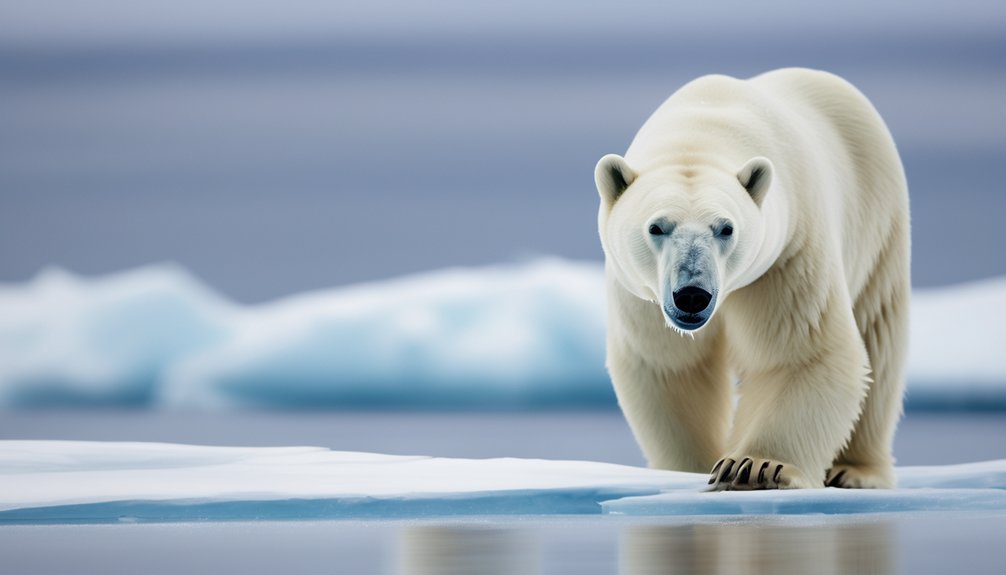
Once winter sets in, polar bears rely on hunting strategies that match the Arctic’s sparse, frozen landscape. You see them use hunting techniques centered on stillness, scent, and timing.
They often wait beside breathing holes in sea ice, where seals surface for air, then strike with rapid force. Their white fur helps them blend into snow and ice, while broad paws give them grip and quiet movement.
These winter adaptations let you observe a predator built for patience rather than pursuit. In colder months, they may also track seal dens or listen for activity beneath the snow.
Because prey is limited, each successful hunt matters, and the bear’s sharp senses and powerful body make winter survival possible.

How Polar Bears Save Energy in the Cold
To conserve energy in extreme cold, polar bears reduce unnecessary movement and rely on thick fat reserves and dense fur for insulation. You can see their energy conservation in subtle behaviors that limit heat loss and metabolic demand.
Their hibernation strategies aren’t true hibernation, but they do rest more, move less, and lower activity when conditions worsen.
- They curl tightly to reduce exposed surface area.
- They choose sheltered positions to block wind.
- They pace their activity to avoid wasting calories.
- They maintain a high-fat diet that supports endurance.
These adaptations help you understand how a polar bear stays functional through long, harsh winters without expending energy needlessly, while preserving body heat and sustaining survival.
Why Sea Ice Is Essential for Polar Bears
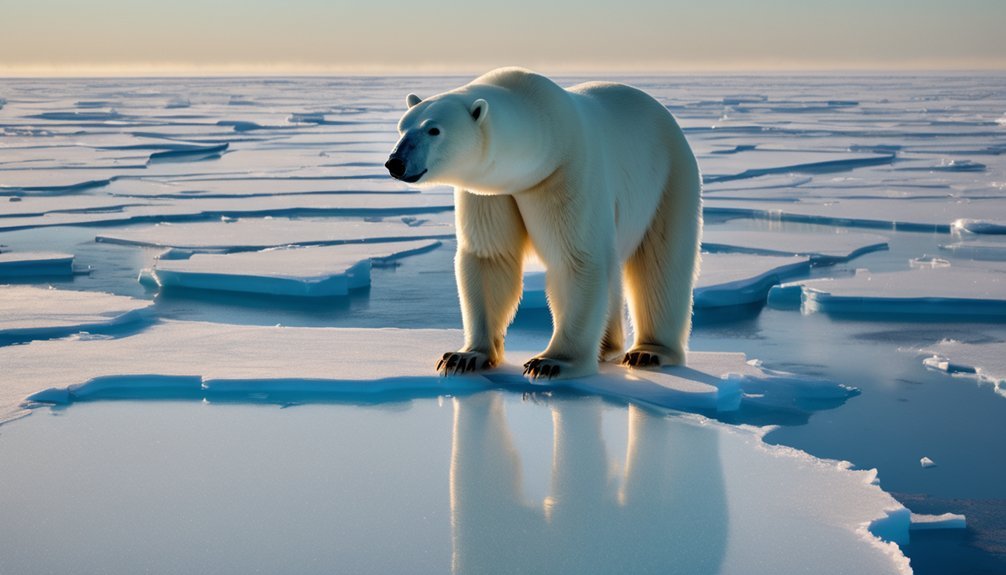
Sea ice is essential for polar bears because it gives them the platform they need to hunt seals, which provide most of their energy. You can think of this floating sea ice habitat as the base that supports their survival through long Arctic winters.
When ice forms, it creates hunting grounds where you’d expect polar bears to wait near seal breathing holes, moving quietly and conserving energy. Without stable ice, they can’t access prey efficiently, and their fat stores decline.
You should also know that sea ice lets them travel across wide frozen regions, linking feeding areas and breeding ranges. As the ice shrinks or breaks apart earlier, polar bears face longer fasting periods, lower body condition, and reduced cub survival.
Frequently Asked Questions
How Do Polar Bears Raise Cubs During Winter?
You’d see polar bear mothers raise cubs in dens, providing maternal care, warmth, and milk. Cubs depend on close cub communication, staying hidden while she nurses, protects, and teaches survival skills during winter.
Do Polar Bears Hibernate in Arctic Winters?
No, you shouldn’t think of polar bears as true hibernators. You’ll see their polar bear behavior stays active, with winter adaptations like thick fat and dense fur helping them conserve energy through Arctic cold.
How Far Can Polar Bears Travel on Snow?
You can’t pin down an exact distance: polar bears often travel tens of miles on snow, and some polar bear migrations span hundreds of miles, aided by efficient snow navigation and vast ice corridors.
What Do Polar Bears Do During Winter Storms?
During winter storms, you’d see polar bears seek shelter strategies in snowdrifts or behind pressure ridges, conserving energy. They’ll pause hunting, relying on stored fat until they can reach food sources again.
How Do Polar Bears Avoid Frostbite in Extreme Cold?
Like a savvy knight, you avoid frostbite because polar bears’ fur insulation traps air, and their blood circulation conserves heat in paws and skin, reducing freezing risk even in extreme cold.
Conclusion
In the Arctic, you can see how polar bears survive winter through insulation, hunting skill, and energy conservation. Their fur, blubber, and dark skin help them retain heat, while sea ice gives them access to seals. One adult bear can carry more than 4 inches of blubber, a key winter reserve. As climate change reduces sea ice, you can understand why their survival depends on a stable frozen habitat.