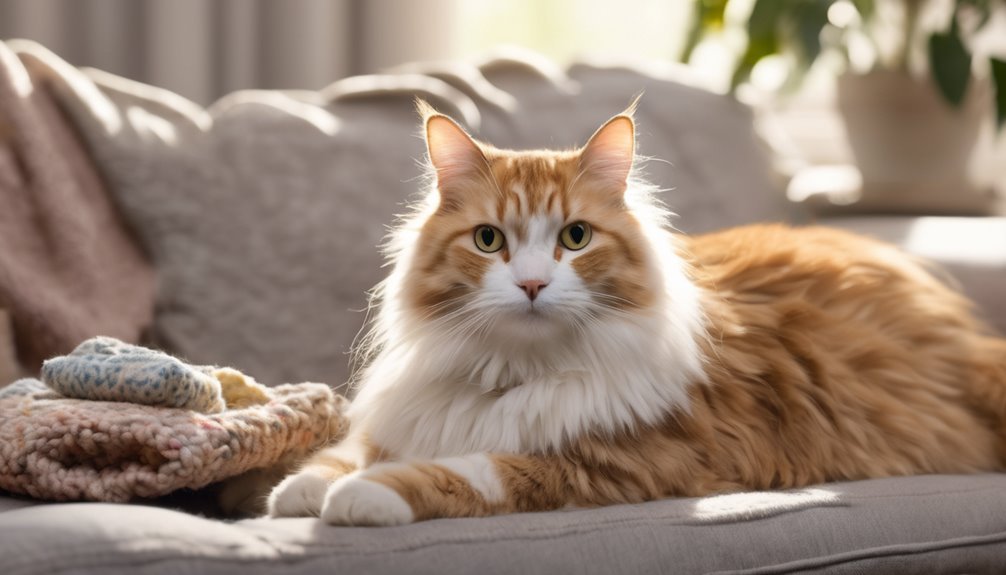
As your furry friend enters their golden years, it’s important to embrace the changes that come with age. You might notice subtle shifts in their behavior or health, and these can signal the need for extra care. By understanding their unique needs, you can enhance their quality of life. Let’s explore how to ensure your senior cat remains comfortable, happy, and healthy for as long as possible.
Key Takeaways
- Provide specialized nutrition with high-quality protein and wet food to support hydration and digestion in senior cats.
- Schedule regular vet check-ups to monitor health and detect issues like kidney disease or dental problems early.
- Encourage gentle exercise through short play sessions to maintain mobility and support overall physical health.
- Create a comfortable environment with safe spaces and familiar surroundings to reduce stress and enhance emotional well-being.
- Offer mental stimulation with interactive toys and maintain a consistent routine to provide security and comfort.
Signs Your Senior Cat Needs Extra Care?
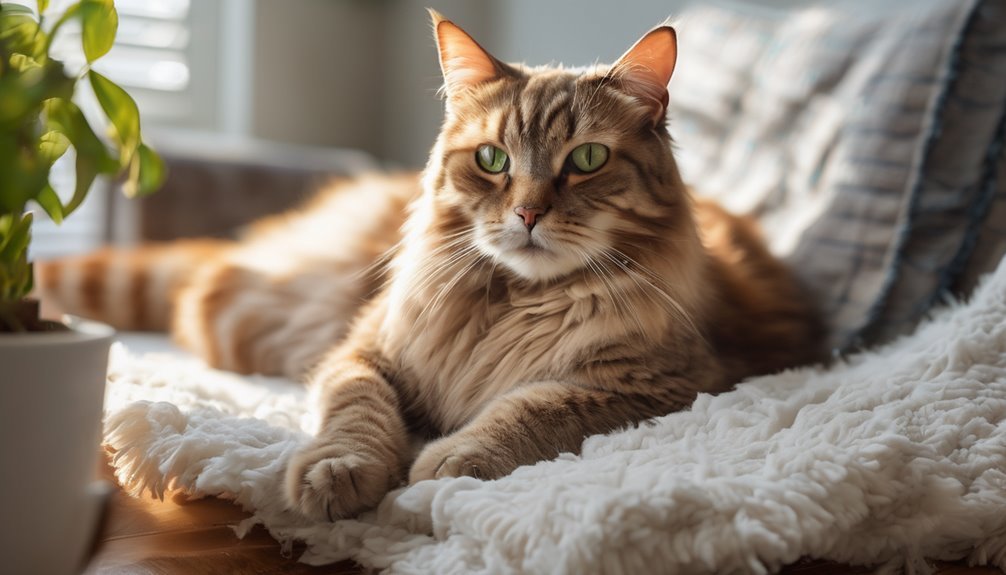
How can you tell if your senior cat needs extra care? Pay attention to any behavior changes. If your once playful cat starts hiding or seems less active, it might be time to take a closer look.
Additionally, increased vocalization or changes in eating habits can signal discomfort or health issues. Don’t forget about their grooming needs; older cats may struggle to keep up with their fur, leading to mats or skin problems.
If you notice your cat isn’t grooming as much, it could indicate arthritis or other health concerns. Regular vet check-ups can help identify issues early.

Understanding the Aging Process in Cats
As your cat ages, you might notice subtle changes that reflect the natural aging process. These aging signs can include behavioral changes and cognitive decline, affecting how your cat interacts with you and their environment. Regular health assessments become crucial to monitor their well-being. You may need to make dietary adjustments to ensure proper nutrition and address their changing exercise needs.
| Aging Signs | Behavioral Changes | Environmental Modifications |
|---|---|---|
| Decreased mobility | Increased irritability | Comfortable resting spots |
| Weight loss/gain | Less social interaction | Quiet, low-stress areas |
| Altered grooming habits | Increased vocalization | Easy access to resources |
| Cognitive decline | Changes in sleep patterns | Safe, clutter-free spaces |
Being mindful of these factors helps create a supportive environment for your senior cat.
Common Health Issues in Senior Cats
While many cats live well into their senior years, they can face various health issues that require your attention.
Kidney disease is common, often leading to weight loss and increased thirst.
Kidney disease is prevalent in older cats, often resulting in weight loss and increased thirst that require careful monitoring.
Dental problems can also arise, causing pain and affecting their appetite.
Hyperthyroidism management becomes crucial as this condition can cause significant behavioral changes and weight loss.
You might notice arthritis symptoms, like difficulty jumping or decreased activity, which can impact their quality of life.
Vision impairment is another concern, as it may make your cat more anxious or withdrawn.
Lastly, urinary issues can lead to accidents outside the litter box, signaling a need for a vet visit.
Keeping an eye on these potential problems helps ensure your cat stays comfortable and healthy.
Managing Health Issues in Senior Cats
Addressing health issues in senior cats requires a proactive approach to ensure their well-being. Regular vet check-ups are essential for early detection and treatment of any problems.
Your cat may need medication management, so stay organized with schedules and dosages to ensure they receive the right treatment on time.
Incorporating gentle exercise routines can also improve their health. Short play sessions or leisurely walks help maintain their mobility and keep them engaged.

Pay attention to your cat’s preferences; some might enjoy interactive toys, while others may prefer quiet time.
Creating a Comfortable Environment for Your Senior Cat
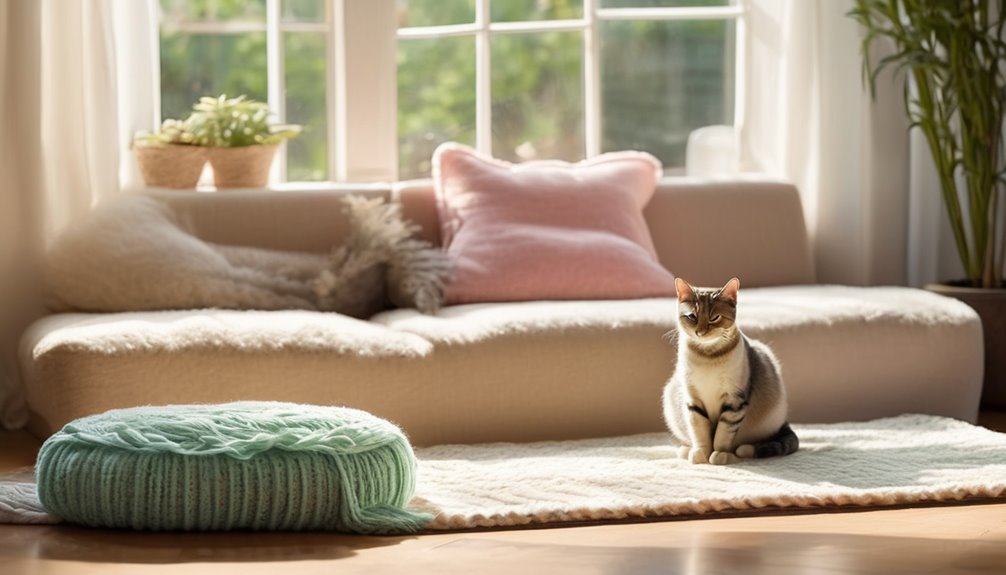
Creating a comfortable environment for your senior cat is crucial, especially since their needs change as they age. You can enhance their quality of life by making a few adjustments. Provide soft bedding in quiet spaces to help them rest comfortably. Ensure easy access to food, water, and litter, placing everything within reach. Create warm areas and cozy hideaways where they can feel secure. Incorporate elevated spots for climbing, which can stimulate their minds and bodies. Don’t forget to control the temperature to keep them comfortable. Lastly, interactive toys can encourage gentle play, keeping them engaged without overstimulation.
| Feature | Description | Benefits |
|---|---|---|
| Soft Bedding | Cushioned, warm surfaces | Better sleep |
| Quiet Spaces | Areas away from noise | Reduced stress |
| Easy Access | Nearby food and litter | Encourages independence |
| Elevated Spots | Cat trees or shelves | Physical stimulation |
Nutritional Needs for Senior Cats: What to Adjust
As your senior cat settles into their cozy environment, it’s important to reassess their nutritional needs. Adjusting their diet can significantly enhance their quality of life. Here are three key considerations:
- Protein Sources: Focus on high-quality protein to support muscle maintenance, but watch their weight management closely.
- Hydration Tips: Ensure fresh water is always available; consider wet food to boost hydration and aid digestive health.
- Dietary Supplements: Talk to your vet about supplements for joint health or dental care to address aging issues.
Additionally, pay attention to feeding frequency and flavor preferences to keep mealtime enjoyable.
Gradual food transitions can help ease digestive changes, ensuring your senior cat thrives in their golden years.
Importance of Regular Veterinary Check-Ups
Regular veterinary check-ups are crucial for your senior cat’s health, especially since their needs can change as they age.
These visits allow your vet to provide preventive care, keeping an eye on any potential issues before they escalate.
Routine screenings can help detect early signs of common age-related conditions like kidney disease or hyperthyroidism.
Managing Pain and Mobility Challenges
Managing pain and mobility challenges in senior cats is essential for their quality of life. As your cat ages, it’s crucial to recognize signs of discomfort and take action.
Here are some effective strategies:
- Consult Your Vet: Discuss pain management options like medications or supplements that can help ease your cat’s discomfort.
- Use Mobility Aids: Consider ramps or orthopedic beds that make it easier for your cat to move around and rest comfortably.
- Create a Safe Space: Ensure your home is free of obstacles, providing a safe environment for your cat to navigate without stress.
Enhancing Mental Stimulation for Senior Cats
While you may think senior cats are content to nap all day, providing them with mental stimulation is vital for their overall well-being. Engage your cat with interactive toys and puzzle feeders that encourage problem-solving.
Incorporate cognitive games to challenge their minds and keep them sharp. Gentle play, like feather wands, can offer both exercise and sensory stimulation, promoting a healthy lifestyle.
Consider routine changes, such as rearranging their environment or adding new textures, to spark curiosity. Feline companionship can also enhance their mental health; if possible, introduce another cat for social interaction.
End-of-Life Care Decisions for Your Senior Cat
As your senior cat ages, it’s important to think about their end-of-life care decisions with compassion and clarity. You want to ensure their comfort and dignity during this challenging time.
Consider these key points:
- Palliative Care: Focus on managing pain and improving quality of life. Consult your vet for appropriate medications and therapies.
- End of Life Options: Discuss with your vet about humane euthanasia if your cat’s suffering is severe and their quality of life diminishes.
- Support for You: Seek emotional support from friends, family, or pet loss support groups to navigate your feelings.
Ultimately, the goal is to prioritize your cat’s well-being, ensuring they feel loved and cared for until their last moments.
Conclusion
Caring for your senior cat is a journey filled with love and attention. By staying vigilant and responsive to their needs, like when Bella, a 15-year-old tabby, began drinking more water and losing weight, you can ensure they enjoy their golden years. Regular vet visits and a cozy environment can make all the difference. Remember, your dedication to their health and happiness will enrich both your lives, creating precious moments together in their twilight years.