
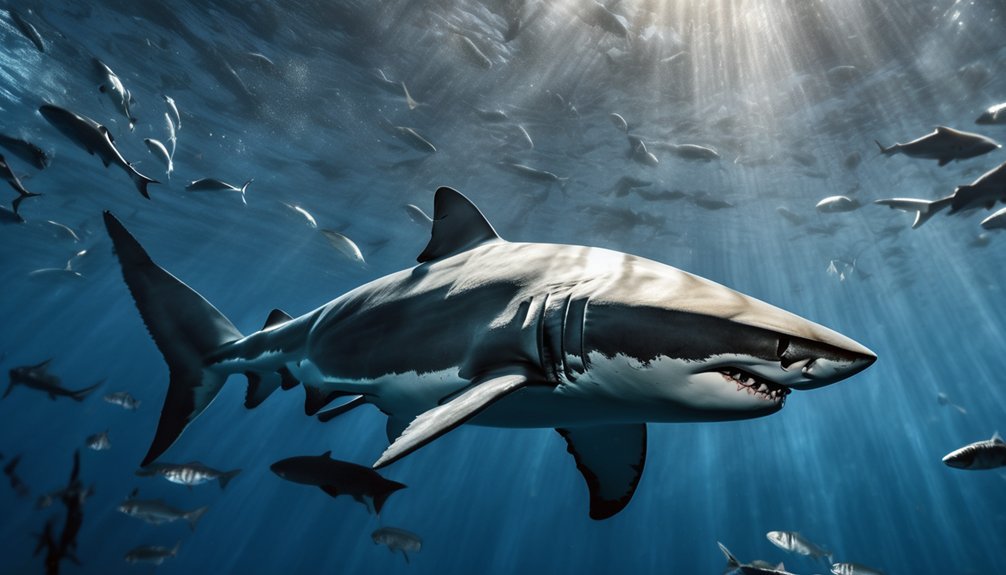
You can trace sharks’ 400-million-year run to a set of traits that keep working under changing conditions. Their cartilaginous skeletons reduce weight and increase flexibility, while sharp senses like smell and electroreception help them find prey in low-visibility water. Their teeth renew continuously, and their bodies adapt across habitats. What seems simple is actually a highly efficient survival system, and one feature may be even more important than the rest.
Key Takeaways
- Sharks survived by evolving efficient bodies, including lightweight cartilaginous skeletons that reduce energy costs and improve mobility.
- Their sharp senses help them detect prey through smell, hearing, electroreception, and pressure changes in difficult conditions.
- Sharks have flexible jaws and rapidly replacing teeth, which make them effective, resilient predators.
- They adapt to many habitats and diets, allowing them to thrive through changing oceans, climates, and prey availability.
- Slow growth, long lifespans, and reproductive strategies that support population stability have helped sharks persist over millions of years.
Why Sharks Have Survived So Long
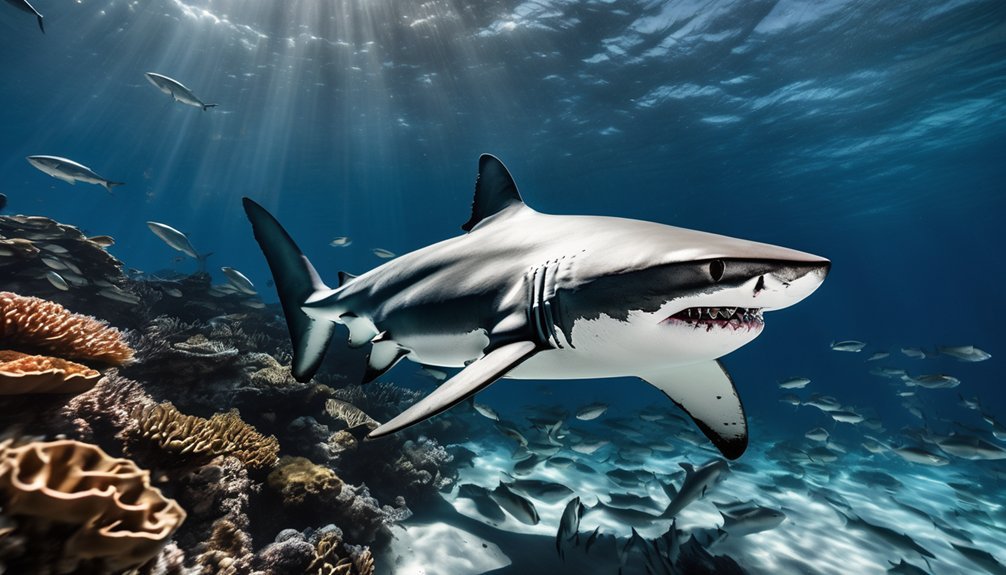
Sharks have survived for more than 400 million years because they’re highly adaptable predators with efficient biology and flexible feeding strategies.
Sharks have endured for over 400 million years through adaptability, efficient biology, and flexible feeding strategies.
You can trace this durability through shark lineage, where natural selection preserved traits that improve energy use, growth, and reproduction. Their cartilaginous skeleton reduces body mass, so you benefit from a design that needs less metabolic investment than bony frameworks.
Many species also exploit varied habitats, from coastal shallows to deep pelagic zones, which broadens their ecological range.

These evolutionary advantages let sharks persist through major climate shifts, ocean chemistry changes, and mass extinctions.
You’re seeing a lineage shaped by resilience, not specialization, and that balance helps explain why sharks still occupy apex and mesopredator roles across modern marine ecosystems.
Shark Senses That Boost Survival
Beyond flexible body plans and broad diets, sharks also survive because their senses give them a powerful edge in finding prey and avoiding threats. You can think of their sensory toolkit as a precision network:
- Olfactory prowess lets you detect trace chemicals in vast water volumes, helping you locate injured animals quickly.
- Hearing sensitivity favors low-frequency vibrations, so you can pick up distant splashes and struggling prey.
- Electroreceptive abilities through ampullae of Lorenzini allow you to sense tiny bioelectric fields, even when visibility drops.
Your lateral line also tracks pressure changes and water movement, improving orientation and strike timing.
Together, these systems let sharks assess their environment with remarkable efficiency, supporting survival in changing oceans.
Why Sharks’ Skeletons Help Them Survive
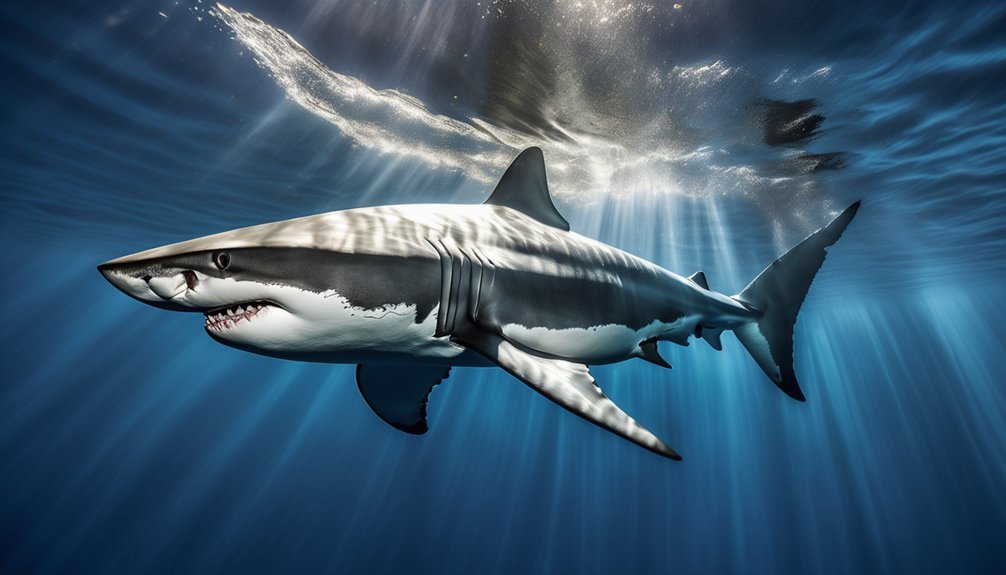
Although it may seem like a minor detail, a shark’s skeleton is a major survival advantage because it is made of cartilage rather than bone. You get a cartilaginous structure that reduces mass and supports flexible movement through the water.
| Feature | Benefit |
|---|---|
| Cartilage | Lower density |
| Lightweight design | Less energy use |
| Flexibility | Agile turns |
| Buoyancy control | Improved lift efficiency |
This anatomy lets you conserve energy during long swims and rapid bursts. Because cartilage bends under stress, your shark body can absorb force without the brittleness of heavy bone. That lightweight design also works with buoyancy control, helping you stay suspended with less effort. In effect, the skeleton’s structure isn’t just support; it’s a performance system that keeps you efficient, mobile, and resilient in changing marine conditions.
Shark Teeth, Jaws, and Feeding
A shark’s feeding system is built for repeated damage and rapid replacement, allowing it to process prey efficiently throughout its life. You can see this in rows of teeth that move forward as older ones break or wear down, a clear example of tooth regeneration.
Their jaws don’t fuse rigidly, so you get a powerful strike, a wider gape, and better grip on struggling prey. This anatomy supports flexible feeding strategies across species:
Their jaws stay flexible, delivering a powerful strike, a wider gape, and a better grip on prey.
- Cutting flesh with serrated teeth
- Crushing hard-shelled animals with broad teeth
- Seizing slippery fish with narrow, pointed teeth
You’re looking at a system that balances speed, force, and renewal. Each bite can remove material, and the next tooth is ready quickly, which keeps feeding efficient and continuous.
Why Shark Skin Helps Them Thrive
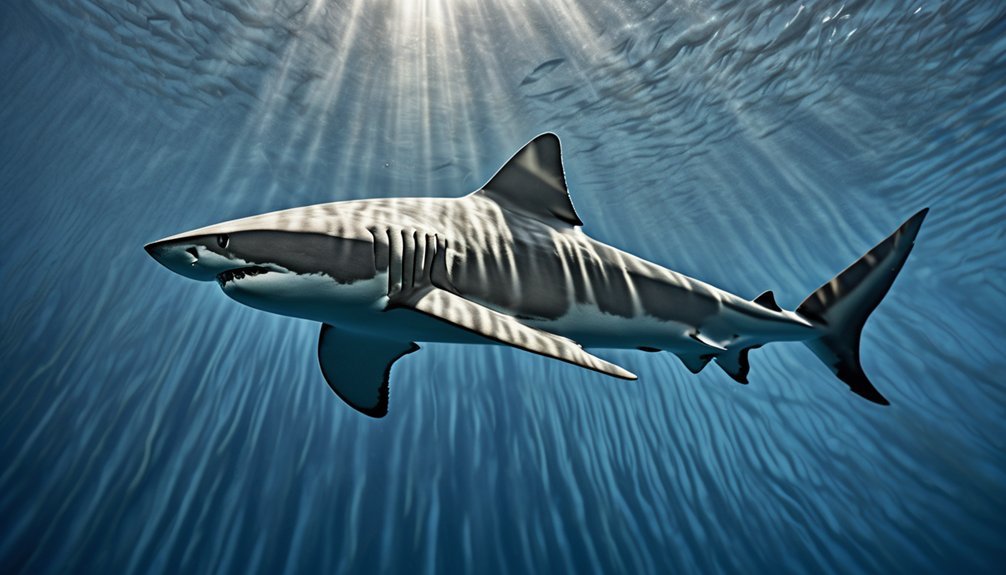
Shark skin helps them thrive because it is covered in tiny tooth-like scales called dermal denticles, which reduce drag and let water move more efficiently over the body. You can see how this texture creates hydrodynamic efficiency, letting flow stay organized across the surface. | Feature | Effect | Value |
| — | — | — |
|---|---|---|
| Dermal denticles | Lower resistance | Faster glide |
| Ribbed microstructure | Guided flow | Stable motion |
| Surface roughness | Fewer turbulence zones | Scaling advantages |
When you study it closely, you notice a precise biological coating that protects tissue while improving movement. The skin also resists biofouling, so you’re seeing a technical adaptation that stays effective in varied marine conditions. This intimate fit between structure and function helps sharks maintain performance across long distances, making their skin a key reason they thrive.
Sharks’ Energy-Saving Body Design
Beyond their streamlined skin, sharks also conserve energy through a body plan built for efficient movement. You can see how their fusiform shape reduces drag, so each tail stroke pushes them farther with less effort.
Their stiff pectoral fins and flexible trunks help maintain streamlined hydrodynamics, while the heterocercal tail generates lift and thrust without wasteful motion. This design improves energy efficiency during steady swimming.

- A narrow head cuts resistance.
- A tapering body limits turbulence.
- A powerful tail maximizes propulsion.
You benefit from understanding this engineering: every contour supports low-cost locomotion. Sharks don’t need bulky muscles everywhere; they concentrate power where it counts.
Every contour supports efficient motion, and sharks channel power only where it matters most.
That focused anatomy lets them patrol long distances while conserving metabolic energy, which helps explain their long-term success.
How Sharks Adapt to New Waters
When sharks enter new waters, they adjust by matching their physiology to local conditions, including temperature, salinity, and oxygen availability. You can see this flexibility across habitat diversity, where gills regulate ion exchange and blood chemistry stabilizes internal balance. Their sensory systems also recalibrate, helping you understand how they locate prey and navigate unfamiliar currents with environmental resilience.
| Factor | Shark response | Benefit |
|---|---|---|
| Temperature | Metabolic tuning | Sustains activity |
| Salinity | Osmotic control | Prevents dehydration |
| Oxygen | Ventilation changes | Preserves function |
| Pressure | Tissue tolerance | Supports depth shifts |
In estuaries, reefs, and open shelves, you’re observing a predator that maintains performance without abandoning core biology. This adaptability lets sharks occupy shifting marine zones and remain effective across changing coastlines.
How Sharks Continue to Evolve
Adaptation in sharks doesn’t stop at immediate physiological adjustment; it also continues through ongoing evolution shaped by selection pressures in changing marine environments. You can see genetic adaptation acting on populations as variants that improve sensory performance, metabolism, and reproductive success persist. This process strengthens environmental resilience when habitats warm, acidify, or shift in prey availability.
- Natural selection filters traits that help you survive local conditions.
- Gene flow can spread useful alleles across regions.
- Population monitoring lets you track evolutionary change over time.
When you study sharks, you’re observing a lineage that keeps refining its biology through measurable heritable change. That continuing evolution helps you understand why they remain effective predators in unstable oceans, even as marine systems keep changing.
Ancient Shark Traits Still at Work
Long before modern oceans took shape, sharks evolved a set of traits that still support their survival today. You can see ancient adaptations in their cartilaginous skeleton, which reduces weight and conserves energy. Their dermal denticles lower drag, improving hydrodynamics.
| Trait | Function |
|---|---|
| Cartilage | Lightweight support |
| Dermal denticles | Reduced resistance |
| Electroreception | Detect prey |
You also benefit from their sensory ampullae, which detect weak electric fields, and from jaws that allow efficient feeding. These evolutionary advantages let sharks move, sense, and strike with precision in varied marine conditions. Their liver stores buoyant oils, helping them maintain depth without constant swimming. Together, these features keep you focused on how ancient biology still operates with remarkable efficiency in present-day predators.
Why Sharks Outlast Many Other Species
Sharks outlast many other species because their biology combines resilience, flexibility, and low energetic demand. You can see evolutionary resilience in their slow growth, high sensory acuity, and efficient metabolism, which reduce resource pressure during environmental change.
Sharks endure through slow growth, keen senses, and efficient metabolism, conserving energy as environments change.
Their ecological adaptability lets you find them in coastal shallows, open oceans, and deep benthic zones, where they exploit varied prey and tolerate broad thermal and salinity ranges.
- You benefit from a lineage that repairs damage and maintains function under stress.
- You observe diet shifts that track prey availability, limiting starvation risk.
- You notice reproduction that can buffer population loss over time.
This combination doesn’t make sharks invincible, but it does help them persist when ecosystems shift.
Frequently Asked Questions
How Many Shark Species Are There Today?
There are about 500 shark species today, though taxonomic estimates vary with species classification. You’ll see remarkable shark diversity across oceans, from tiny lanternsharks to massive whale sharks, each adapted to specific ecological niches.
Do Sharks Sleep Like Other Fish?
Not quite; you’d find shark behavior differs from most fish, because many sharks don’t fully sleep. Their sleep patterns often involve restful, brain-state changes while they keep moving, like a sentinel in deep water.
Which Shark Is the Largest Living Species?
You’ll find the whale shark is the largest living shark species; it can reach about 12 meters. The basking shark is second-largest. You’re looking at filter-feeding giants, both scientifically remarkable and harmless to you.
How Do Sharks Reproduce and Raise Their Young?
You’d see sharks mate, sharks gestate, sharks birth, sharks nurture. Their mating behaviors trigger internal fertilization; gestation periods vary widely; pup development often occurs in utero; parental care’s usually minimal, though some species protect young.
Are Sharks Found in Freshwater Habitats?
Yes, you’ll find a few sharks in freshwater habitats, especially bull and river sharks. Their shark adaptability lets them tolerate low salinity briefly, but most species still need seawater to survive and reproduce.
Conclusion
You can see why sharks have persisted for more than 400 million years: their cartilaginous skeletons reduce mass, their sensory systems detect prey with high precision, and their skin and teeth remain highly efficient for hunting. Remarkably, sharks have survived five major mass extinctions, a statistic that underscores their resilience. As you reflect on their biology, you’ll recognize how these ancient traits still help them adapt, feed, and endure in changing marine environments.