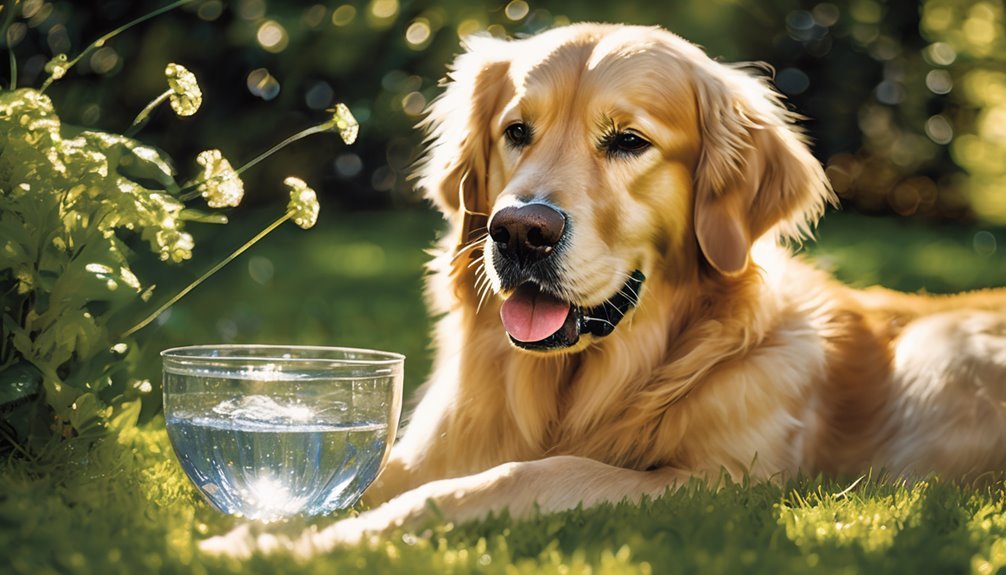
When it comes to your dog’s health, hydration is crucial. You might be surprised to learn that a dog should drink about 1 ounce of water for every pound they weigh daily. However, this guideline can vary based on several factors, including activity level and diet. Understanding your dog’s unique needs can prevent dehydration and promote overall well-being. Let’s explore what influences their hydration requirements and how you can ensure they stay properly hydrated.
Key Takeaways
- A general guideline is 1 ounce of water per pound of body weight daily for dogs.
- Active dogs and those in hot weather need increased hydration.
- Wet food can supplement a dog’s overall water intake.
- Monitor for signs of dehydration like dry gums and lethargy.
- Always provide fresh water throughout the day, regardless of activity.
Daily Dog Hydration: How Much Water Does Your Pup Need?
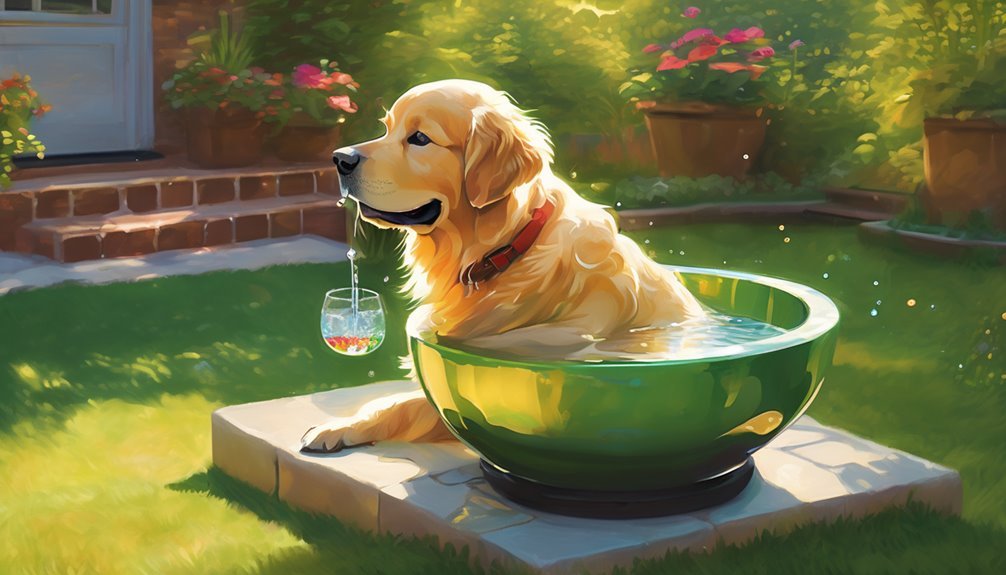
When it comes to your dog’s hydration needs, how much water should they really be drinking each day? Generally, a good rule of thumb is to provide about an ounce of water per pound of body weight.
A good rule of thumb for your dog’s hydration is one ounce of water per pound of body weight daily.
So, if your pup weighs 20 pounds, aim for around 20 ounces daily. Keep an eye on their activity level, as active dogs may need more.
It’s essential to offer fresh water sources throughout the day, ensuring your furry friend stays hydrated.
You can also enhance their water intake with hydration recipes, such as adding low-sodium broth or blending in fruits like watermelon.

These little changes can make hydration more enjoyable, ensuring your beloved companion feels their best.
Factors Influencing Your Dog’s Hydration Needs
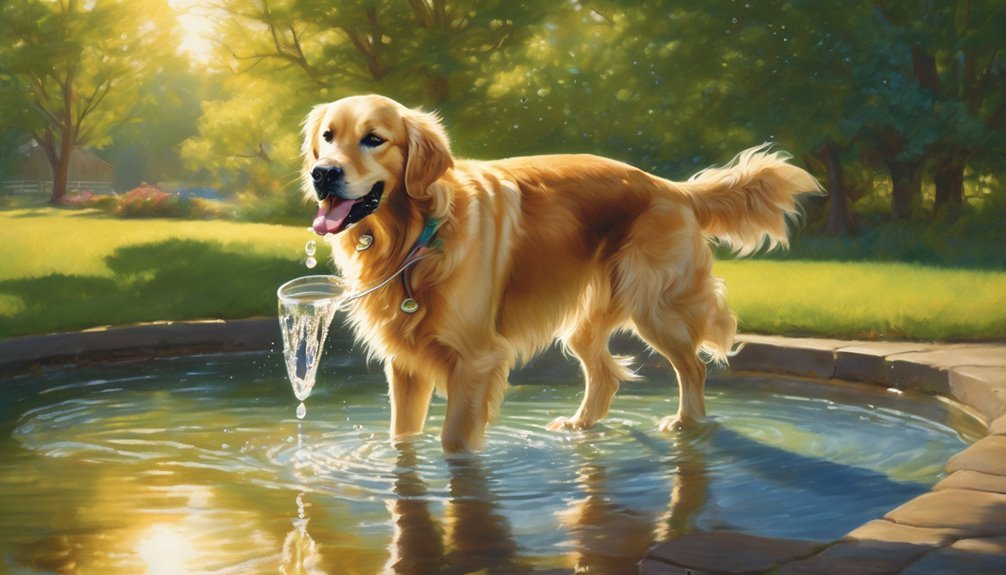
Several factors can significantly influence your dog’s hydration needs beyond just their weight. For instance, their activity level plays a crucial role; an energetic pup will need more water than a couch potato.
Weather conditions matter too—hot days demand extra hydration. Don’t forget about the hydration sources; wet food can contribute to their overall intake, while dry kibble requires more water.
It’s essential to establish hydration schedules, especially after walks or playtime, to ensure they’re drinking enough. Keep an eye on their behavior—signs of dehydration include lethargy and dry gums.
How Size and Breed Change Your Dog’s Water Needs
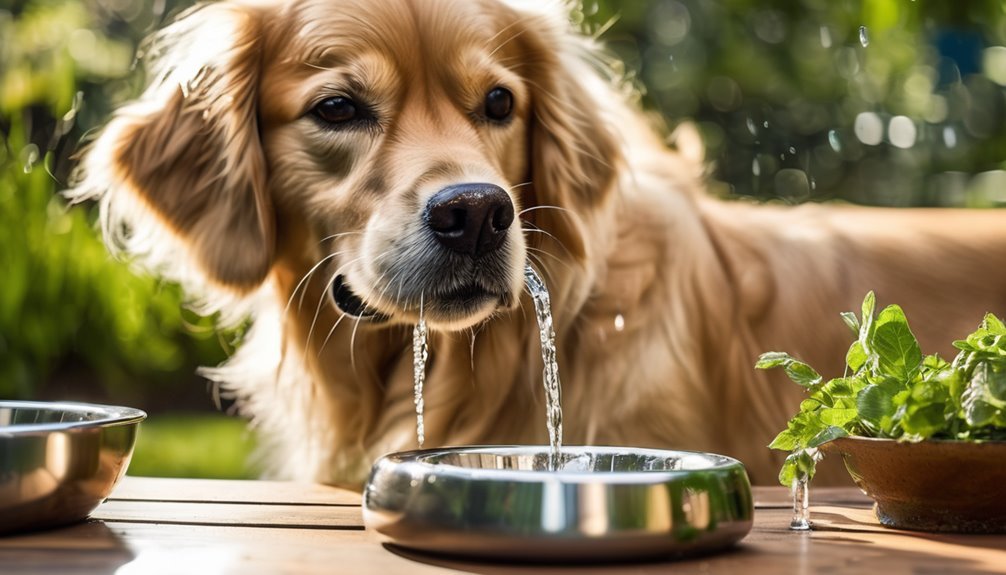
Size and breed play a pivotal role in determining your dog’s water needs. Understanding these can help you ensure your furry friend stays hydrated and healthy. Here are some key considerations:
- Breed Specific Needs: Certain breeds, like Bulldogs, may require less water due to their size and respiratory traits.
- Size Related Factors: Larger dogs generally need more water than smaller ones, as their body mass requires greater hydration.
- Activity Variations: Active dogs need more water, especially after vigorous play or exercise.
- Environment Influences: Hot or dry climates increase water consumption, as dogs lose more fluids through panting.
How Age Affects Your Dog’s Water Needs
As your dog ages, their water needs can change significantly, so it’s crucial to monitor their intake.
Puppies require adequate hydration for growth and energy, while older dogs often have different hydration needs due to reduced activity levels and potential health issues.
You’ll notice that senior dogs may drink less, but it’s vital to ensure they stay hydrated to support their kidney function and overall health.
Keep an eye on their water bowl, and encourage them to drink regularly.
Monitor your dog’s water bowl and gently encourage them to hydrate consistently.
If you notice any sudden changes in their drinking habits, consult your vet.
Understanding these shifts in puppy hydration and senior needs can help you keep your furry friend healthy and happy as they age.
How Activity Level Impacts Your Dog’s Hydration?
When your dog engages in physical activity, their hydration needs increase significantly. Factors like exercise intensity and activity duration play a crucial role in maintaining hydration balance.
Here are some key considerations:
- Breed Specific Needs: Different breeds have varying hydration requirements based on their size and energy levels.
- Age Related Changes: Puppies and senior dogs may need tailored hydration due to their unique health conditions.
- Water Preferences: Some dogs prefer fresh, cool water, while others might drink more from a bowl or during play.
- Climate Considerations: Hot weather can amplify your dog’s need for water, so keep an eye on them.
Weather Effects: Hydration Needs in Hot vs. Cold Days
While weather conditions can change rapidly, your dog’s hydration needs remain a constant priority. On hot days, your pup is more susceptible to heat stress, so ensure they have easy access to fresh water. Increased activity and temperature mean they’ll need more fluids. Conversely, in colder weather, dogs may not feel as thirsty, but they still need hydration to support their cold tolerance.
| Weather Condition | Hydration Needs |
|---|---|
| Hot Days | Increase water intake |
| Cold Days | Maintain regular intake |
| Transition Seasons | Adjust based on activity |
Signs of Dehydration in Dogs: What to Look For
Recognizing the signs of dehydration in dogs is crucial for their health and well-being. Being aware of dehydration symptoms can help you act quickly if your furry friend is in trouble.
Here are four key signs to look for:
- Dry gums: Check if your dog’s gums are sticky or dry instead of moist.
- Lethargy: If your dog seems unusually tired or sluggish, it might be a sign.
- Loss of skin elasticity: Gently pinch the skin on their back; it should snap back quickly.
- Reduced urine output: If your dog isn’t urinating as often, they may need more water.
Understanding hydration importance is vital for keeping your pup happy and healthy.

Stay vigilant to ensure they stay hydrated!
Practical Tips to Boost Your Dog’s Water Intake
Ensuring your dog stays hydrated is essential for their overall health, and there are several practical tips you can implement to boost their water intake.
Start by exploring different water bowl options—some dogs prefer elevated bowls or those with a fountain feature, which can encourage them to drink more.
Exploring various water bowl options, like elevated or fountain styles, can encourage your dog to drink more.
Consider adding ice cubes or a splash of low-sodium broth to their water for a tasty twist.
Hydration tracking is also key; keep a daily log of how much water your dog drinks to identify any changes in their habits.
Lastly, make sure fresh water is always accessible, especially during warm weather or after exercise.
These small adjustments can significantly enhance your dog’s hydration and overall well-being.
When to Talk to Your Vet About Hydration?
When should you consider reaching out to your vet about your dog’s hydration? It’s crucial to pay attention to hydration signs that may indicate your pup needs help.
If you notice any of the following, don’t hesitate to consult your vet:
- Increased thirst: If your dog is drinking much more than usual.
- Lethargy: A sudden drop in energy might signal dehydration.
- Dry gums: Healthy gums should be moist; dryness can be a red flag.
- Loss of appetite: If your furry friend is refusing food, it’s time to check in.
Following vet recommendations is vital for your dog’s health.
Trust your instincts; if something feels off, a quick call can make all the difference.
Common Myths About Dog Hydration Debunked
How often have you heard someone say that dogs can drink seawater when they’re thirsty? It’s a common myth, but in reality, seawater can lead to dehydration, not hydration.
Myth busting is crucial when it comes to understanding your dog’s needs. Another misconception is that dogs only need water when they’re exercising; in truth, they require access to fresh water at all times.
Hydration facts show that a dog’s water intake varies by size and activity level, so it’s essential to monitor their consumption daily.
Remember, your furry friend relies on you for proper hydration. By debunking these myths, you can ensure your pup stays healthy and happy.
Frequently Asked Questions
Can Dogs Drink Flavored Water or Electrolytes?
Yes, dogs can drink flavored water in moderation, but avoid artificial sweeteners. Electrolytes can help maintain their balance, especially during hot weather or intense activity. Always consult your vet before introducing new drinks to your pup.
What Are the Best Bowls for Dog Water?
For your pup’s hydration, stainless steel bowls prevent spills and are nearly indestructible! Ceramic bowls add style, while travel bowls offer convenience. Automatic dispensers ensure fresh water, keeping your furry friend happy and healthy every day!
Do Certain Foods Affect a Dog’s Water Intake?
Absolutely, certain foods impact your dog’s hydration balance. Wet food contains more moisture, helping with hydration, while dry kibble may require more water. Always monitor their intake to ensure they stay healthy and happy.
How Can I Encourage My Dog to Drink More?
If you think your dog won’t drink more, try these hydration tips: offer fresh water frequently, experiment with different bowls, or add water to food. Understanding your dog’s drinking habits can enhance their water preferences.
Is It Safe for Dogs to Drink Ice Water?
Yes, it’s safe for dogs to drink ice water. Many dogs enjoy the coolness, especially on hot days. Just pay attention to their temperature preferences, ensuring they stay comfortable and hydrated without any sudden temperature shock.
Conclusion
Ensuring your dog stays hydrated is as crucial as providing them with love and care. Just like you reach for a refreshing drink on a hot day, your pup needs access to fresh water at all times. By understanding their unique hydration needs and watching for signs of dehydration, you can help keep your furry friend healthy and happy. Remember, a well-hydrated dog is a lively companion, ready for all of life’s adventures with you!