
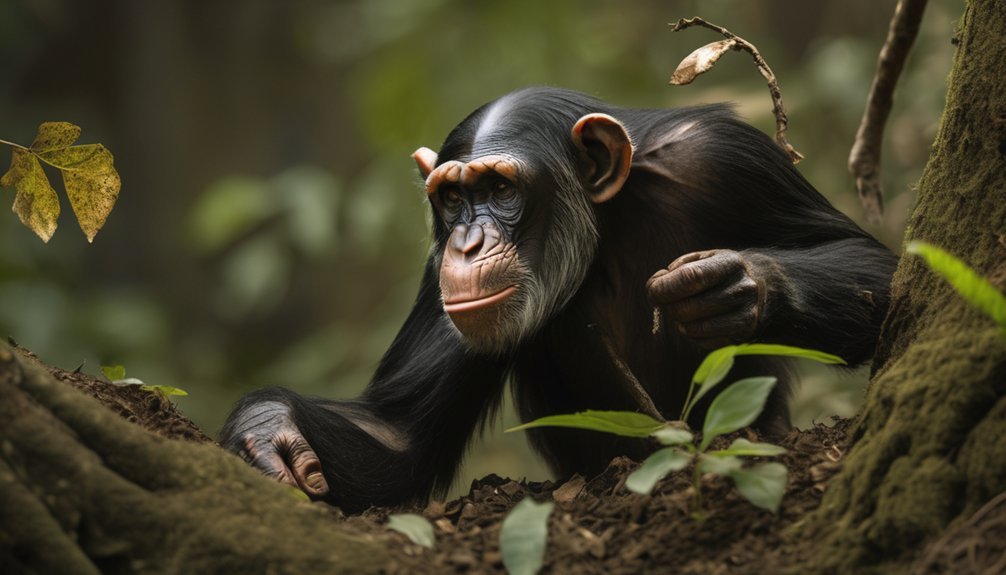
When you watch a chimpanzee slip a stick into a termite mound, you see a simple tool become an extension of the body, like a hand reaching where fingers can’t. Across forests, shorelines, and grasslands, you can find animals that shape, select, or repurpose objects to feed, defend, or solve obstacles. What counts as true tool use, and how do different species learn it? The answers aren’t as straightforward as they first seem.
Key Takeaways
- Animals use tools deliberately to achieve goals like accessing hidden food, protection, or manipulating objects.
- Tool use involves learning through observation, trial and error, and practice.
- Many species use tools, including primates, birds, sea otters, dolphins, insects, and spiders.
- Social learning and cultural transmission help animals copy successful tool-use behaviors across generations.
- Tool use shows cognitive flexibility and adaptation to environmental challenges, but ecology strongly shapes its effectiveness.
What Counts as Animal Tool Use
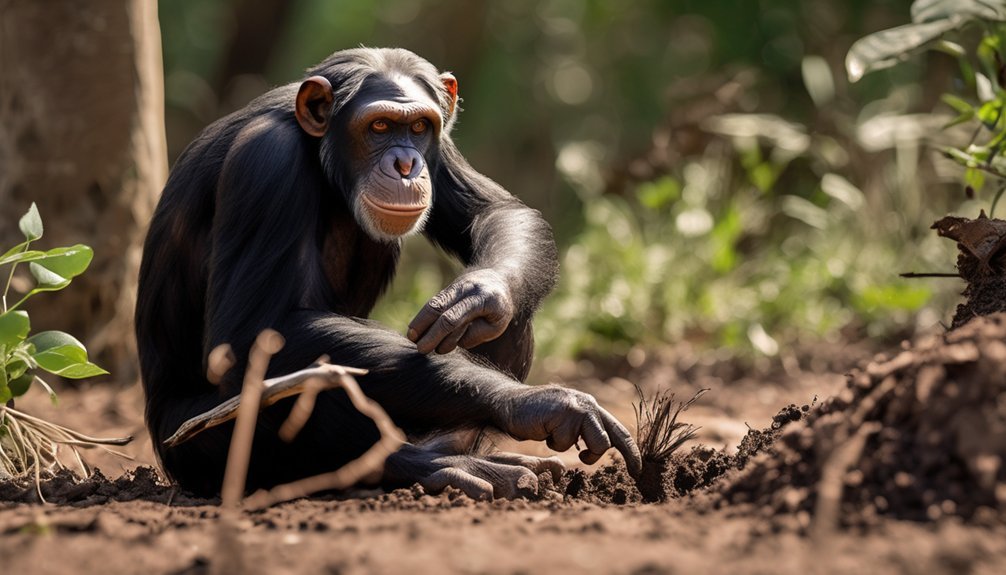
Animal tool use occurs when an animal selects and manipulates an external object to achieve a specific goal, such as obtaining food, building shelter, or defending itself. You can identify it by observing deliberate handling rather than incidental contact. The object stays external to the body and serves as a functional extension during resource acquisition.
In species comparison, you’ll see variation in shape, duration, and complexity, reflecting cognitive evolution and behavioral adaptation. Environmental influence often shapes which materials are available and how they’re used.
Social learning can spread tool use within a group, while problem solving helps an individual match object to task. These behaviors can indicate an evolutionary advantage, but you should assess each case by direct observation and consistent criteria rather than assumption.
Why Animals Use Tools
The reasons animals use tools are closely tied to survival and efficiency in daily tasks. You can observe tool use when it improves resource acquisition, such as reaching hidden food or opening tough shells. This behavior reflects environmental interaction, because animals adjust actions to fit local conditions.

It also shows behavioral flexibility, since the same individual may switch tools as needs change. In many species, tool use supports problem solving by reducing effort and increasing success. Over time, these gains can offer an evolutionary advantage and shape cognitive development.
In some groups, social learning helps spread effective techniques, but the immediate function remains practical. Overall, tool use reveals ecological adaptation: you see animals meeting challenges with precise actions that conserve energy and expand access to resources.
How Animals Learn Tool Use in the Wild
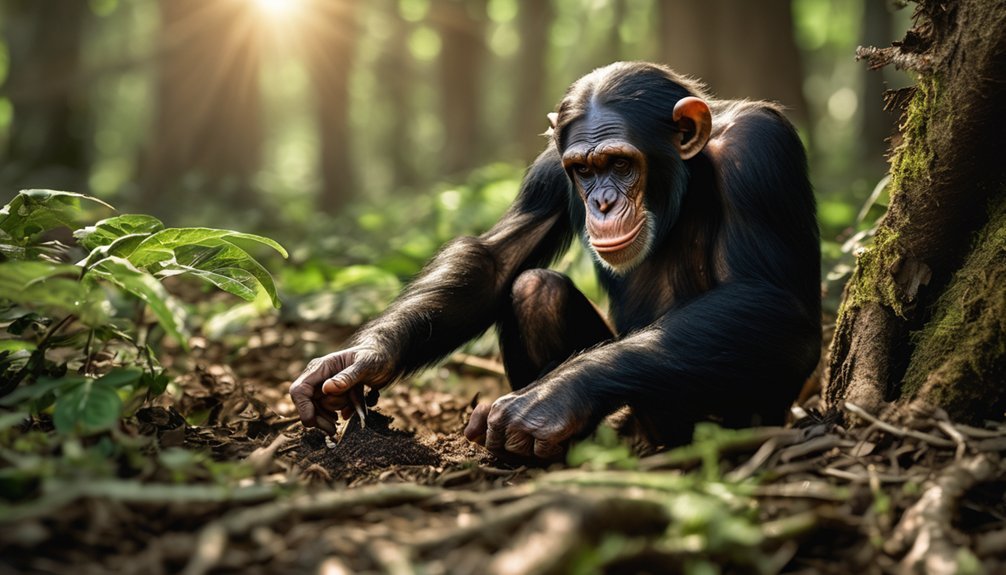
In the wild, animals learn tool use through a combination of observation, trial and error, and repeated practice. You can see social learning shape this process when individuals watch skilled neighbors and copy effective actions. Observational learning speeds problem solving, while trial and error refines technique under changing conditions.
Animals learn tool use by watching others, practicing, and refining techniques through trial and error.
You may notice environmental adaptation when a tool fits local food sources, terrain, or weather. Cultural transmission can preserve successful methods across generations, yet species variation keeps patterns from becoming uniform.
Cognitive flexibility lets you adjust when an object breaks, slips, or proves useless. Each attempt leaves measurable feedback, and that feedback guides future behavior.
Across habitats, tool learning emerges as a dynamic, testable interaction between experience, ecology, and inherited tendencies.
Primates and Their Tool Tricks
Among primates, tool use is often tied to foraging, extraction, and social learning, with chimpanzees, capuchins, and macaques showing especially well-documented examples. You can see primate innovation in simple sticks, stones, and leaves that extend reach or open food sources. Their problem solving reflects environmental adaptation, as individuals adjust tools to local materials and resources.
- Chimpanzees crack nuts with stones.
- Capuchins probe crevices for hidden prey.
- Macaques wash food or objects.
- Juveniles copy adults through social learning.
You’ll notice cultural transmission when these foraging strategies spread within groups rather than across species. Researchers observe that tool choices often vary by habitat, suggesting flexible responses to scarcity, texture, and access.
In these cases, primates don’t just use objects; they refine behavior through repeated practice and local tradition.
Birds That Use Tools

Birds show that tool use isn’t limited to mammals, with several species using objects to obtain food, manipulate prey, or solve access problems.
When you watch crows, ravens, or woodpecker finches, you can see precise actions: they bend twigs, shape leaves, or drop stones to reach hidden resources.
These tool using species often select materials by size, stiffness, and weight, suggesting careful assessment rather than chance.
In some cases, you’ll notice tool making behaviors that improve efficiency, such as trimming a stick into a hook or fashioning a probe from cactus spines.
Observers record repeated use, learning, and adjustment across tasks.
In the wild, such behavior shows flexible problem solving and supports the view that birds can manipulate their environment with skill.

Sea Animals That Use Tools
Sea animals also use tools, especially where access to food requires force, precision, or protection. You can observe clear examples in diverse habitats:
- Sea otter rocks crack open shellfish on their chests.
- Dolphin sponges shield snouts while they probe sandy bottoms.
- Octopus camouflage acts like a tool for concealment, helping you track how it avoids predators and ambushes prey.
- Fish foraging often improves when individuals use coral, shells, or currents as aids.
You’ll notice that these behaviors are practical, repeatable, and adaptive.
Each tool use increases feeding efficiency or safety without requiring complex manufactured objects.
In the ocean, you’re seeing problem solving shaped by pressure, habitat, and opportunity, not chance alone.
Insects That Use Tools
| Insect | Tool use | Observable result |
|---|---|---|
| Ants | Fungus tending | Food production |
| Beetles | Debris use | Protection |
| Termites | Soil shaping | Shelter |
| Spiders | Silk webs | Prey capture |
You’ll notice these actions are precise, repeatable, and adaptive.
What Shapes Tool Use in Different Species
Tool use varies across species because anatomy, ecology, and learning all shape what an animal can do with available materials. You can see species variation when beaks, hands, or teeth limit manipulation, while ecological niches favor different tools.
Tool use varies across species because anatomy and ecology shape what animals can do with available materials.
In some lineages, cognitive evolution supports flexible problem-solving skills; in others, instinctual behavior guides simple actions.
- Environmental adaptation matches local resources.
- Social learning spreads effective techniques.
- Foraging efficiency improves when tools fit prey or food.
- Ecological niches reward methods that save time and energy.
You notice that tool use isn’t random; it reflects selection pressures and individual experience. Across birds, primates, and marine mammals, the balance between inherited tendencies and learned innovation shapes how each species interacts with its world, and what it can exploit.
How Scientists Study Animal Tools
Scientists study animal tools by observing behavior in the wild and in controlled experiments, where they can compare how different species select, modify, and use objects.
You see observation methods paired with experimental designs that test performance under known conditions. Researchers record behavioral analysis of each action, from object choice to repeated manipulation, and they note ecological contexts that shape access to materials.
In some studies, cognitive assessments help track problem solving while avoiding speculation. You also find species comparisons useful for separating shared patterns from unique adaptations.
When animals watch others, social learning can be measured directly through changes in use. Together, these methods reveal evolutionary implications by linking tool use to environment, history, and behavior.
What Animal Tool Use Reveals About Intelligence
Animal tool use offers a window into cognition, but it doesn’t provide a simple measure of intelligence. You can infer cognitive evolution from problem solving, social learning, and environmental adaptation, yet species comparison stays cautious.
- You may see behavioral flexibility when an animal changes a tool to fit a task.
- You can track tool innovation as individuals improve foraging efficiency.
- You should weigh intelligence assessment against context, since access and ecology shape performance.
- You can also note ecological impact, because tool use can alter resources and prey.
When you observe these patterns closely, you see not a ranking, but a profile of how minds respond to pressure, opportunity, and learning.
Frequently Asked Questions
Which Animals Use Tools Most Often in the Wild?
You’ll find chimpanzees, orangutans, and New Caledonian crows use tools most often in the wild, showing strong animal intelligence. Among tool using species, these animals regularly modify sticks, leaves, and stones to solve problems.
Do Animals Make Tools From Scratch or Only Modify Them?
You’ll see both: some animals perform tool creation, shaping objects into workable forms, while others rely on tool modification, altering existing items. Observations show species-specific flexibility, depending on material, task demands, and ecological opportunity.
Can Tool Use Spread Through Animal Groups Culturally?
Yes—tool use can spread culturally: a primate study found 80% of juveniles copied tool techniques from others. You see cultural transmission through social learning, as individuals observe, imitate, and refine shared behaviors within groups.
Do Young Animals Play With Objects Before Using Tools?
Yes, you’ll often see young animals engage in play behavior and object manipulation before they use tools. This lets you observe them exploring textures, weights, and movements, which can build later tool-use skill.
Are There Risks to Animals When Using Tools?
Yes—you’re seeing real risks: sharp shells beside soft paws, success beside strain. You can observe tool related injuries, broken implements, and resource competition, which can expose animals to predators, stress, and inefficient foraging.
Conclusion
You’ve seen that animal tool use is both simple and striking: a stick becomes a probe, a stone becomes a hammer, a twig becomes a hook. In the wild, you observe not just clever actions, but the contrast between instinct and learning, and between environment and adaptation. These behaviors reveal that tools can reshape survival, yet they don’t always signal human-like reasoning. Instead, they show how natural selection and experience can produce flexible, efficient problem-solving.