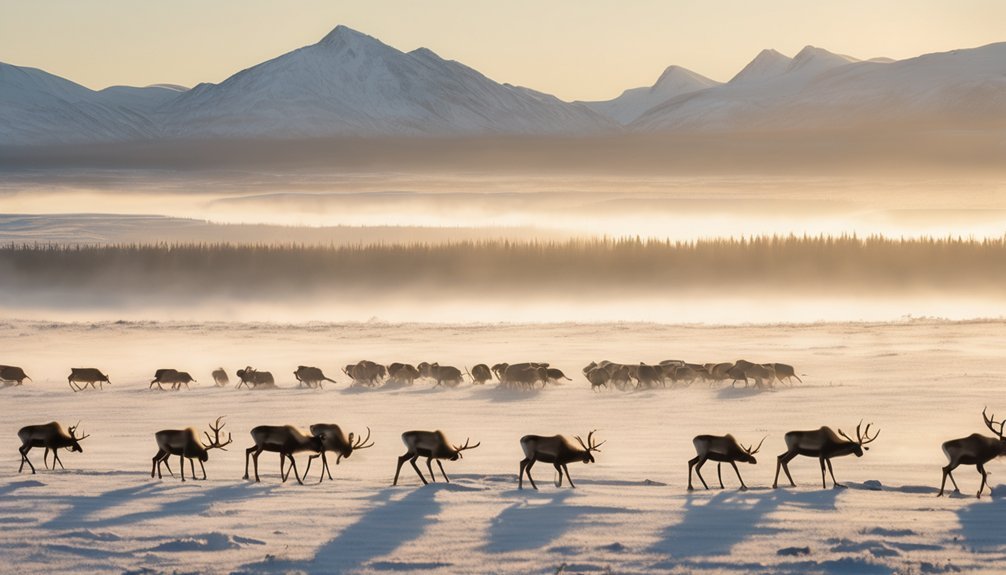
Nearly 40% of migratory species are declining, and you can see why their journeys matter. You study migration as a response to shifting temperature, food supply, and breeding cycles, but the real mechanism is more intricate. Animals track celestial patterns, magnetic fields, and memory with surprising precision, yet climate change is forcing you to question how long these cues will still match the landscape.
Key Takeaways
- Animal migration is driven by seasonal changes in temperature, rainfall, food availability, and breeding needs.
- Migrating animals use multiple navigation cues, including stars, Earth’s magnetic field, sunlight, odors, and landmarks.
- Internal clocks and learned spatial memory help animals time and direct long-distance movement.
- Migration improves survival by reaching better feeding grounds, safer breeding sites, and lower-stress habitats.
- Climate change disrupts migration by shifting timing, reducing habitat quality, and blocking routes or food resources.
What Drives Animal Migration?
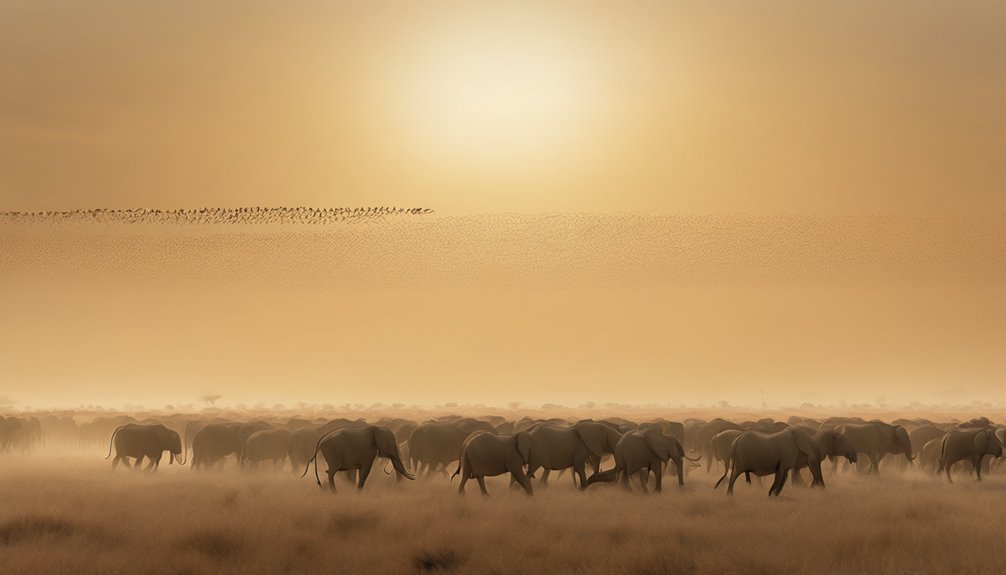
Animal migration is driven by a combination of environmental cues, biological imperatives, and evolutionary pressures.
You can see how seasonal changes alter temperature, rainfall, and food availability, forcing animals to shift ranges to maintain energy balance and survival.
You also notice that breeding patterns strongly shape timing, because many species move to reach sites with safer nesting conditions, abundant mates, or optimal juvenile development.

Over generations, natural selection favors individuals that respond efficiently to these pressures, so migratory behavior becomes adaptive rather than random.
Natural selection favors efficient responders, making migration an adaptive strategy shaped by environmental pressures over time.
When you examine a population closely, you find that migration often synchronizes with resource peaks and reproductive cycles, linking physiology, habitat quality, and fitness in a tightly regulated system.
How Animals Navigate During Migration?
Once animals decide when to move, the next problem is how they find their way across unfamiliar landscapes, oceans, and skies.
You can think of navigation as a layered sensory process: the animal’s brain integrates orientation systems that keep its path stable over long distances.
At night, a star compass lets you align movement with celestial patterns, while during travel, magnetic orientation gives you a directional framework that remains available even when visibility drops.
You also see internal timekeeping matter, because precise navigation depends on matching movement with changing conditions.
These mechanisms don’t act alone; they interact with learned spatial memory and posture control, producing a coherent route.
In this way, migration becomes a disciplined, biologically engineered performance of direction.
What Cues Animals Use to Migrate?
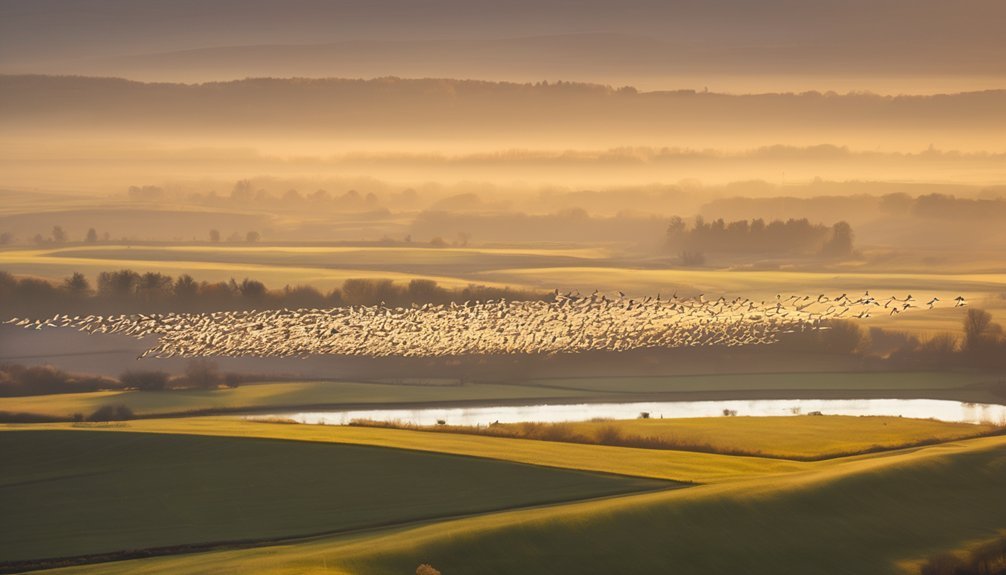
Migrating animals rely on a multimodal cue system that combines external environmental signals with internal state information to maintain orientation over long distances.
You can think of migration as a continuous sensory integration task: animals sample sensory cues from sunlight, polarized light, wind, odors, and landmarks, then weight each input by reliability.
At night, many species depend on celestial navigation, using star patterns and the moon to preserve heading. Others detect magnetic fields through specialized receptors, letting them sense direction when visual cues fade.
You’ll also see temporal calibration, because circadian rhythms help animals interpret changing signals across seasons.

This layered strategy reduces error, supports route stability, and lets each individual adjust its movement when conditions shift unexpectedly during migration.
How Animal Migration Helps Survival
Migration improves survival by linking animals to resources, conditions, and reproductive opportunities that are more favorable than those available year-round in one place.
You can see migration as a set of survival strategies that tracks food availability and seasonal changes with precision. By moving, you improve habitat selection, shifting into sites that support efficient foraging and reduce physiological stress.
You also increase breeding success, because offspring develop when temperature, water, and food align. Many species gain predator avoidance by exploiting temporary refuges, dispersing into broader landscapes, or leaving crowded areas before risk peaks.
In this way, migration isn’t random travel; it’s an adaptive decision process shaped by selection pressures. When you examine it closely, you find a finely tuned mechanism that helps individuals persist and reproduce under variable environmental conditions.
How Climate Change Disrupts Animal Migration?
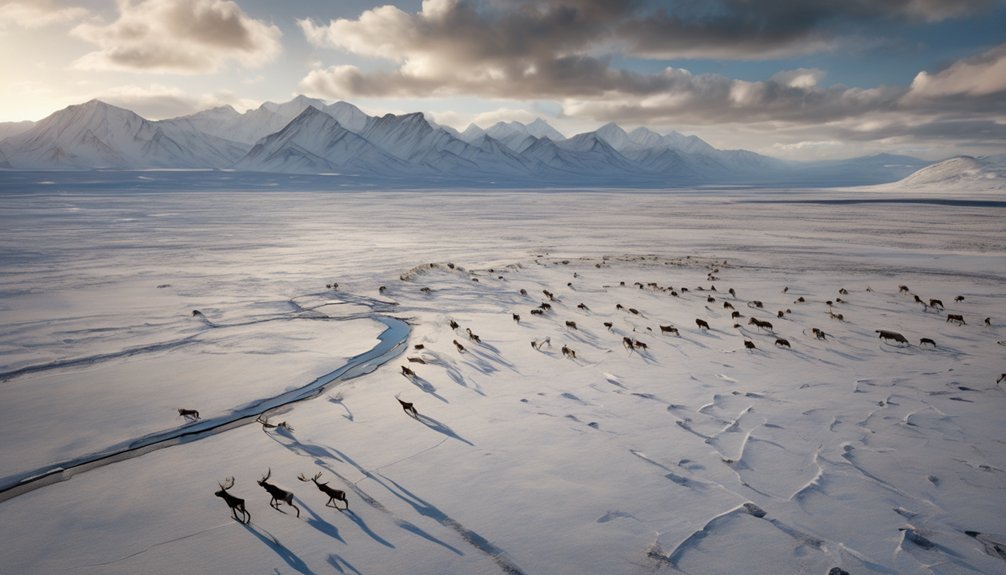
As climate patterns shift, animal migration becomes increasingly difficult to time, route, and sustain, because the environmental cues that once synchronized movement are now less predictable.
You can see temperature changes altering departure dates, compressing breeding windows, and forcing animals to travel farther for suitable conditions. Seasonal shifts disrupt navigational timing, so birds, mammals, and insects may arrive after peak resources appear.
Habitat loss compounds this stress by removing resting sites, corridors, and refuges along established routes. You also face food scarcity when warming waters, drought, or altered plant cycles reduce prey and forage availability.
In response, some populations reroute, delay migration, or fail to complete it, which lowers survival, reproduction, and long-term population stability.
Frequently Asked Questions
Which Animals Migrate the Farthest Distances?
Arctic terns migrate farthest, and you’ll also see bar-tailed godwits and gray whales among long distance travelers. Their migratory routes can span thousands of miles, driven by seasonal cues, navigation, and energy-efficient physiology.
How Do Scientists Track Migrating Animals?
You can track migrating animals with tracking technology like GPS tags, satellite transmitters, and geolocators; you’ll capture migration behaviors precisely, despite doubts about complexity, because data reveal routes, timing, stopovers, and survival patterns intimately.
Do All Animals Migrate in Groups?
No, you don’t see all animals migrate in groups; social behaviors vary by species. Some travel alone, while others gain migration advantages through coordinated movement, reduced predation, and improved navigation efficiency.
Can Migration Patterns Be Inherited Genetically?
Yes—migration patterns can be genetically inherited; in one study, 80% of route variation traced to genes. You’ll see genetic inheritance shape migratory behavior, though learning and environment still modify the precise journey.
What Energy Reserves Do Animals Use Before Migrating?
You’d rely mainly on fat stores, your primary energy storage, with some glycogen and proteins mobilized. As migratory triggers activate, hormones shift metabolism, conserving resources and maximizing endurance before departure.
Conclusion
In studying animal migration, you see a finely tuned system shaped by seasonal shifts, reproductive demands, and navigation cues. You also see how birds, mammals, and fish use stars, Earth’s magnetic field, and memory to travel with remarkable precision. Yet climate change now scrambles these patterns, forcing migrations to miss their timing like a compass in a smartphone. If you protect habitats and reduce disruption, you help preserve these ancient survival strategies.