Imagine noticing your once-vibrant parakeet slowing down, spending more time perched quietly than playing. As birds age, their needs change significantly, requiring you to adapt their care. From diet adjustments to creating a soothing environment, understanding these shifts is crucial for their well-being. You’ll also need to engage their minds and monitor their health closely. How can you ensure your senior bird thrives through this transitional phase?
Key Takeaways
- Provide a balanced diet of senior-friendly pellets, seeds, and fresh fruits or vegetables to meet nutritional needs.
- Create a comfortable environment with soft bedding, warm lighting, and a quiet location to reduce stress.
- Engage senior birds with interactive toys, gentle play, and safe exploration to stimulate their minds and bodies.
- Schedule regular vet check-ups for early detection of age-related health issues and tailored wellness plans.
- Monitor hydration and establish a consistent feeding schedule to maintain energy levels and overall well-being.
Understanding the Unique Needs of Senior Birds
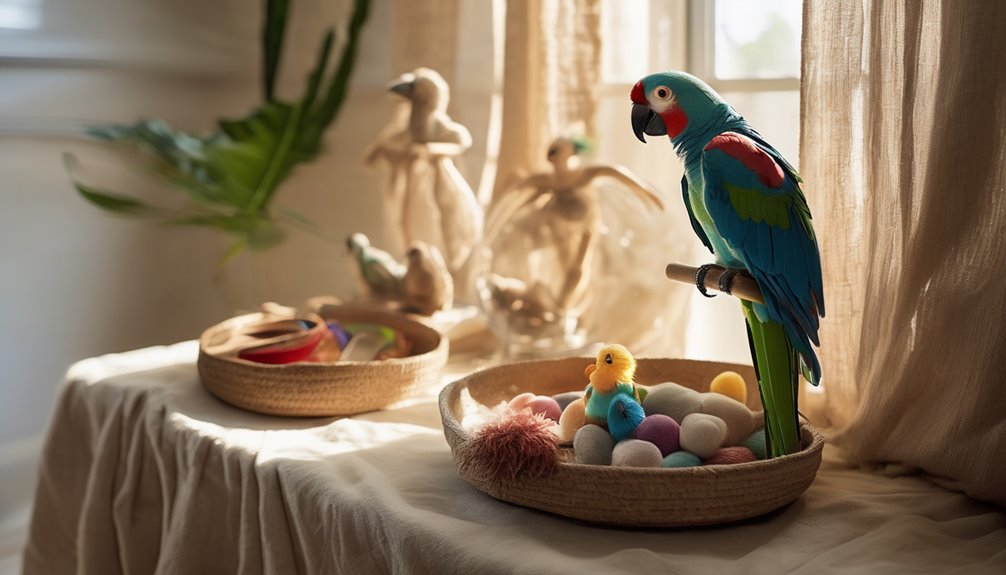
As you care for senior birds, it’s crucial to recognize their unique needs, since aging can significantly affect their health and behavior.
You’ll notice changes in aging behaviors, such as decreased activity and altered social interactions. Nutritional deficiencies can arise, making it essential to monitor their diet closely.
Environmental enrichment becomes vital; providing stimulating toys and safe spaces helps keep their minds engaged.

Be attentive to mobility challenges, as their physical capabilities may decline, impacting their ability to navigate their environment.
Sensory changes, like diminished vision or hearing, require you to adapt their surroundings.
Lastly, effective stress management techniques, such as maintaining a calm atmosphere, can enhance their overall well-being.
Adjusting Diets for Senior Birds
Since aging can lead to specific dietary needs, adjusting your senior bird’s diet is essential for their health and longevity.
Focus on senior nutrition by offering a balanced mix of pellets, seeds, and fresh fruits or vegetables. Consider their food textures; softer options may be easier for them to eat. Incorporate dietary supplements if your vet recommends them to address any deficiencies.
Pay attention to hydration needs, ensuring they always have fresh water available. Establish a consistent feeding schedule to help maintain their energy levels.
You can also introduce special treats, like cooked grains or small bits of nut, to keep mealtimes enjoyable. These adjustments will help your senior bird thrive during their golden years.
Making Your Senior Bird’s Home Cozy
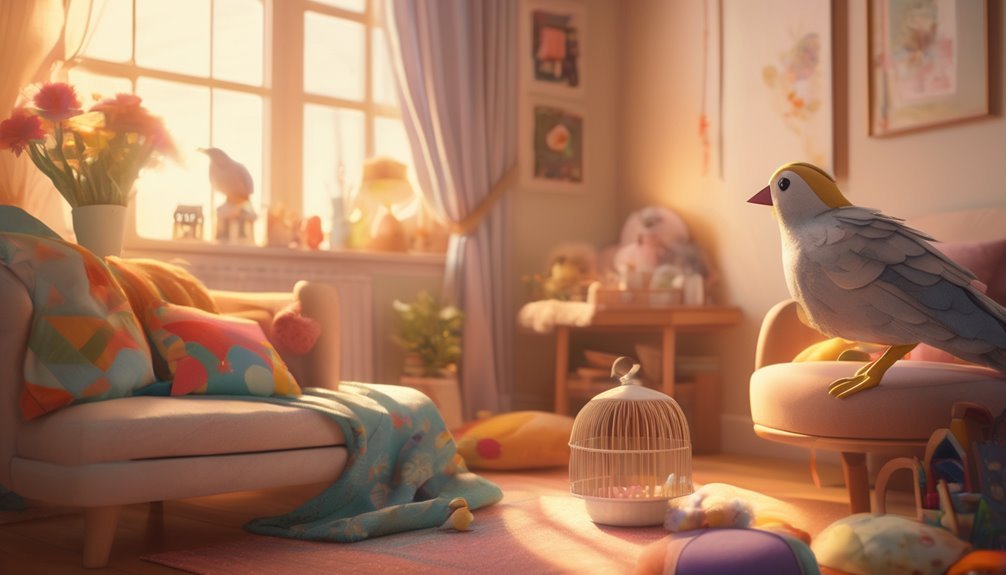
Creating a cozy environment for your senior bird is crucial for their comfort and well-being. Start by providing soft bedding in their cage, like fleece or cotton, to cushion their joints and allow them to rest comfortably.
Creating a cozy space with soft bedding is essential for your senior bird’s comfort and well-being.
This supportive layer helps reduce stress and creates a safe space for your bird.
Incorporate warm lighting to mimic natural sunlight, which can enhance your bird’s mood and activity levels. Avoid harsh fluorescent lights; instead, opt for dimmable lamps that offer a gentle glow.
Also, ensure their cage is positioned in a quiet area, away from drafts and loud noises.
Why Your Senior Bird Needs Regular Vet Check-Ups
A cozy home is just one aspect of ensuring your senior bird thrives; regular vet check-ups play a vital role in their overall health.

These visits are essential for preventive care, allowing for early detection of age-related issues. Routine assessments help you stay informed and proactive.
- Health monitoring: Regular check-ups keep track of your bird’s well-being.
- Veterinary advice: Professionals can tailor wellness plans suited to your bird’s specific needs.
- Proactive measures: Addressing potential problems before they escalate ensures a happier, healthier life.
Providing Mental Stimulation for Senior Birds
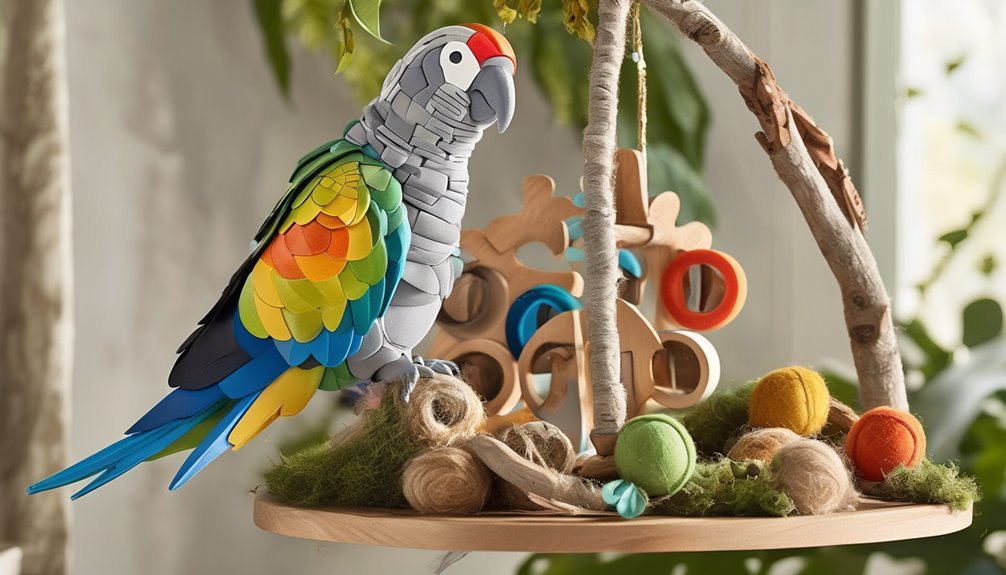
How can you keep your senior bird’s mind sharp and engaged? Providing cognitive enrichment is vital for their well-being.
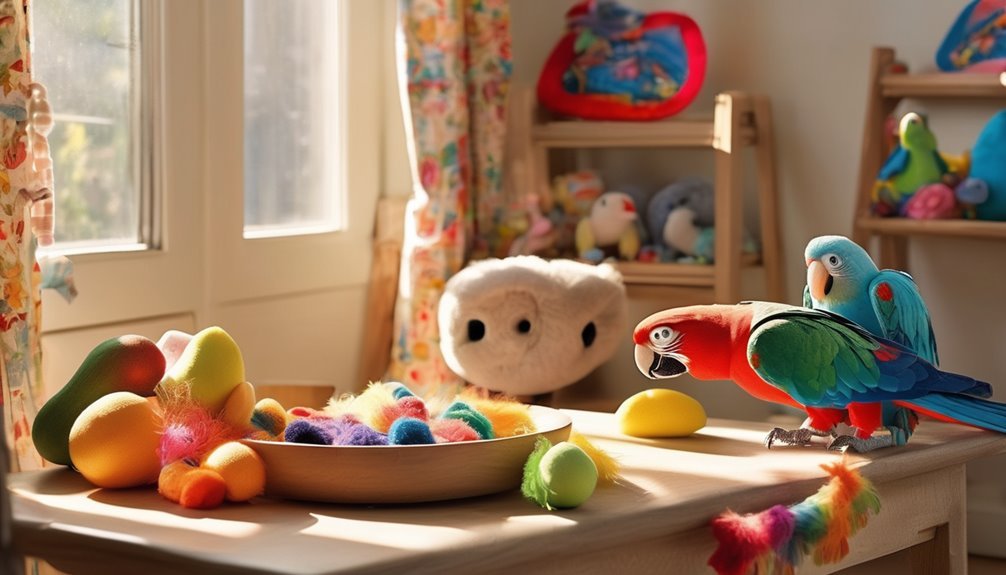
Incorporate interactive toys that challenge their problem-solving skills and offer sensory stimulation. Puzzle feeders are excellent for encouraging foraging activities, mimicking natural behaviors.
Regular training sessions not only strengthen your bond but also keep their minds active. Additionally, introduce environmental changes, like rearranging their cage or adding new perches, to spark curiosity.
Don’t underestimate the power of social interaction; talking to your bird or allowing playtime with other birds can significantly boost their mood.
Engaging Activities for Senior Birds
Engaging your senior bird in various activities can significantly enhance their quality of life. Tailoring these activities to your bird’s toy preferences and social interactions will make them even more enjoyable.
Consider incorporating the following engaging activities:
- Interactive Toys: Choose toys that stimulate their curiosity and encourage gentle play. Puzzle toys can be particularly engaging.
- Social Time: Spend time talking or singing to your bird. This nurtures their need for companionship and strengthens your bond.
- Exploration Opportunities: Allow safe access to different areas of your home. Supervised exploration can ignite their natural instincts and keep their minds active.
What Signs Indicate Illness in Older Birds?
What subtle changes in behavior should you watch for in your older bird? First, observe for any behavioral changes like reduced social interactions or changes in vocalization.
If your bird suddenly becomes quiet, it might be a sign of distress. Pay attention to grooming habits; excessive preening or neglecting feathers can indicate health issues.
Notice any physical symptoms such as weight loss or changes in mobility, which could signal arthritis or other ailments. Additionally, shifts in dietary preferences may suggest discomfort or illness.
Lastly, consider environmental stressors that could affect your bird’s well-being. Identifying these signs early can help you address potential health concerns and ensure your senior bird thrives in its golden years.
Tips for Transitioning to Senior Bird Care
As your bird ages, transitioning to senior care involves understanding their evolving needs and making thoughtful adjustments to their environment and routine.
You’ll likely notice behavioral changes and mobility challenges as they age, requiring you to adapt how you care for them.
Here are some tips to help with this transition:
- Modify their habitat: Ensure perches are easily accessible and provide soft bedding to ease any discomfort.
- Adjust their diet: Incorporate softer foods and ensure they’re getting the necessary nutrients to support aging bodies.
- Increase interaction: Spend more time engaging with your bird, offering mental stimulation and comfort to help them feel secure.
Conclusion
Caring for senior birds is like tending to a delicate garden; with the right nurturing, they can flourish. Just as a wilting flower can bloom again with water and sunlight, your older feathered friend can thrive with proper care. By adjusting their diet, creating a cozy home, and providing mental stimulation, you’re not just extending their life—you’re enriching it. Remember, every moment spent with your senior bird is a chance to celebrate their unique spirit and bond.