Did you know that kittens are naturally curious and can get into trouble in the blink of an eye? To keep your new furry friend safe, it’s crucial to create a kitten-proof environment before they arrive. From removing hazards to setting up a cozy space, each step plays a vital role in their transition. Let’s explore how to prepare your home so your kitten feels secure and welcomed right from the start.
Key Takeaways
- Kitten-proof your home by removing hazards like toxic plants and securing loose wires to create a safe environment.
- Designate a cozy area with a bed, litter box, and food/water dishes for your new kitten.
- Choose high-quality, nutritious food with balanced protein and fat content, offering both dry and wet options.
- Engage in regular play and socialization to build trust and reduce fear of new experiences.
- Establish a consistent litter box routine, ensuring cleanliness and appropriate placement for easy access.
Create a Safe Space for Your Kitten

Creating a safe space for your kitten is essential, especially when they first arrive home.
Begin by kitten proofing your home; remove any hazards like toxic plants, small items they could swallow, or electrical cords they might chew.
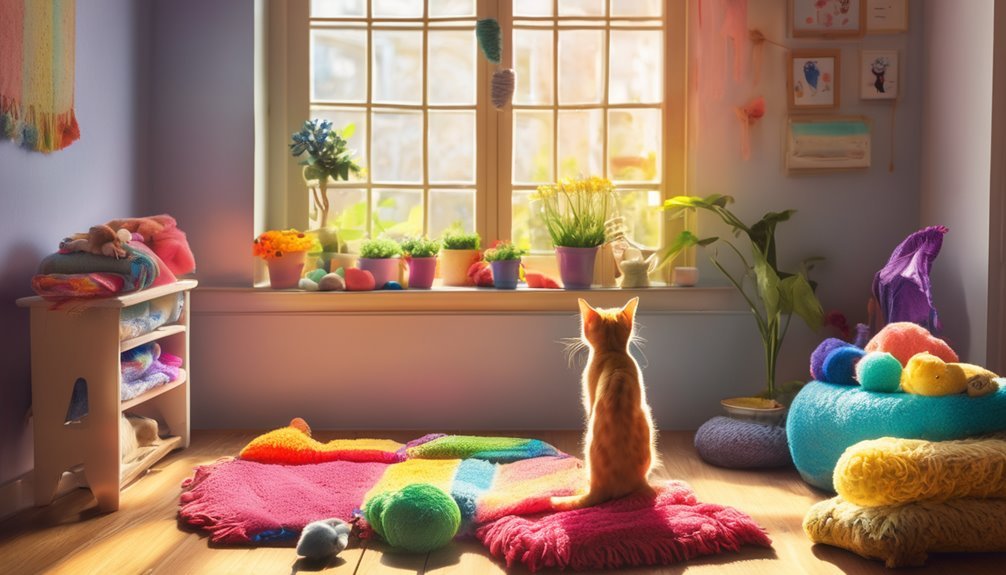
Designate a cozy area with a bed, litter box, and food and water dishes. This will serve as a safe zone where your kitten can relax and explore at their own pace.

Designate a cozy area with essential items, creating a safe zone where your kitten can relax and explore comfortably.
Make sure the area is quiet and away from heavy foot traffic, so they don’t feel overwhelmed.
You can also include some toys to stimulate their curiosity.
Essential Supplies for Your New Feline
Once your kitten has settled into their safe space, it’s time to gather the supplies that will help them thrive. Start with a cozy bed, litter box, and high-quality litter for their bathroom habits.
Don’t forget food and water dishes—opt for ceramic or stainless steel for easy cleaning.
Kitten proofing your home is crucial; secure loose wires and remove toxic plants.
When choosing toys, look for ones that encourage play like feather wands or crinkle balls, ensuring they’re safe and durable.
A scratching post is essential to keep those claws healthy and your furniture intact.
With these supplies, you’ll create a nurturing environment where your new feline friend can flourish and feel at home.
Selecting Nutritious Food for Your Kitten

When it comes to selecting nutritious food for your kitten, choosing high-quality options is essential for their growth and development. Kittens have specific dietary needs, including higher protein and fat content than adult cats.
Look for foods labeled “complete and balanced” to ensure they meet these requirements. Consider both dry and wet options, as they can provide varied textures and hydration.
Establishing a consistent feeding schedule helps regulate their appetite and supports healthy digestion. It’s often recommended to feed kittens three to four small meals a day.

Always consult with your veterinarian for personalized recommendations and to discuss any specific health concerns. With the right nutrition, your kitten will thrive and grow into a healthy adult cat.
Kitten Behavior and Socialization Tips
Understanding kitten behavior and socialization is crucial for nurturing a happy, well-adjusted pet. Engage in playful interactions to build trust and strengthen your bond. Use positive reinforcement during handling exercises to encourage desirable behavior. Incorporate socialization techniques early on, exposing your kitten to various environments and experiences for fear reduction.
Here’s a quick reference table to help you:
| Behavior | Socialization Technique | Body Language Indicators |
|---|---|---|
| Playfulness | Interactive toys | Ears forward, tail up |
| Fearful response | Gradual exposure | Hiding, low posture |
| Overstimulation | Calm environment | Tail twitching, ears back |
| Aggression | Redirection with toys | Hissing, growling |
| Affectionate behavior | Gentle handling | Purring, kneading |
These tips will help you foster a confident, loving kitten!
Establishing a Litter Box Routine
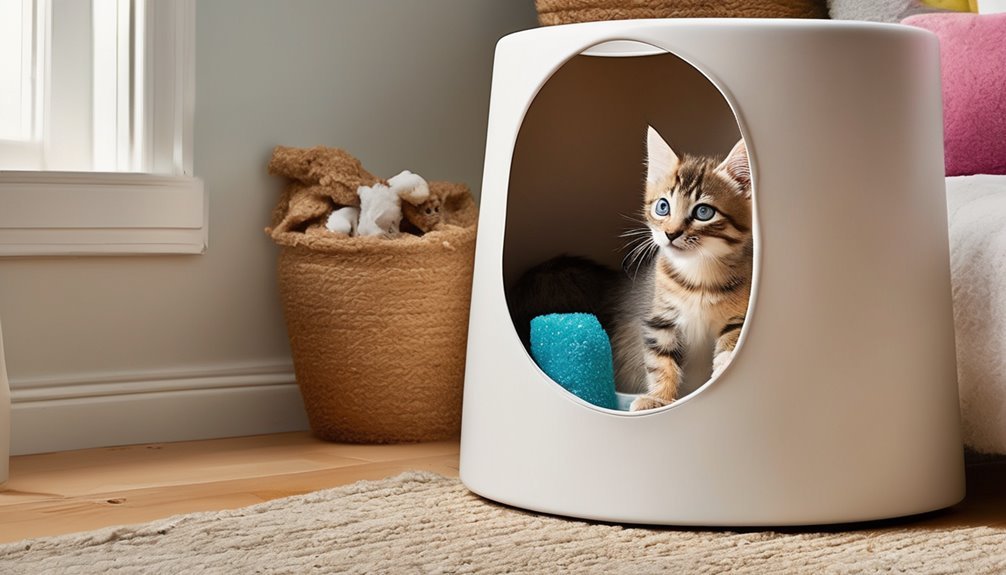
Creating a litter box routine is essential for your kitten’s comfort and hygiene. Start by choosing an appropriate litter box placement—opt for a quiet, accessible spot away from food and water.
Kittens are sensitive to odors, so make sure to scoop the box daily and change the litter weekly. Use cleaning tips like vinegar or enzyme-based cleaners for stubborn messes, ensuring the area remains odor-free.
Encourage your kitten to use the box by gently placing them inside after meals or playtime. If your kitten avoids the box, reassess the placement or try different litter types.
Consistency and cleanliness will help your kitten feel secure and comfortable, making litter box use a natural part of their routine.
Vet Visits and Vaccinations
Taking your new kitten to the vet is crucial for their long-term health and well-being. Early vet visits ensure your kitten receives a proper examination and establishes a vaccination schedule tailored to their needs. Vaccinations protect against serious diseases like feline distemper and rabies, which can be life-threatening.
During these visits, your vet will also discuss essential topics, such as diet, spaying or neutering, and parasite prevention.
Regular check-ups not only keep your kitten healthy but also help you monitor their growth and development.
Don’t hesitate to ask your vet questions—your kitten’s health is a priority. By staying proactive with their veterinary care, you’re setting the foundation for a happy, healthy life together.
Introducing Your Kitten to Other Pets
When you bring a new kitten home, it’s important to introduce them to your other pets gradually to ensure a smooth transition. Start with scent swapping by letting your pets get familiar with each other’s smells. After a few days, arrange supervised meetings in a neutral space. Watch for behavioral cues to gauge everyone’s comfort levels.
Consider incorporating playtime interactions to help them bond. Here’s a quick guide to follow:
| Step | Action |
|---|---|
| Scent Swapping | Exchange bedding or toys |
| Supervised Meetings | Keep initial meetings brief |
| Observe Behavior | Look for signs of stress |
| Gradual Introductions | Increase interaction time |
| Playtime Interactions | Use toys to engage them |
Conclusion
By preparing thoughtfully for your new kitten, you’re setting the stage for a happy, healthy life together. Did you know that around 70% of households in the U.S. have pets, with cats being one of the most popular choices? With your safe space, essential supplies, and a nurturing routine in place, you’re not just welcoming a pet; you’re gaining a loving companion. Enjoy the journey of bonding and watching your playful kitten grow!