Like an intricate clockwork, a guinea pig’s health hinges on its daily diet. To ensure your pet thrives, you’ll need to focus on the right balance of hay, fresh vegetables, and pellets. Each component plays a critical role in their well-being. Are you aware of which vegetables are safe and how much hay they truly need? Understanding these essentials can make all the difference in your guinea pig’s life.
Key Takeaways
- Guinea pigs require a daily diet of hay for fiber, promoting healthy digestion and dental health.
- Fresh vegetables like bell peppers and romaine lettuce provide essential vitamins, especially Vitamin C.
- A small serving of high-quality guinea pig pellets (1/8 to 1/4 cup) ensures balanced nutrition.
- Vitamin C supplements are necessary since guinea pigs cannot produce it naturally.
- Avoid toxic foods like avocado, chocolate, and onions, which can harm their health.
What Are the Essential Dietary Components for Guinea Pigs?
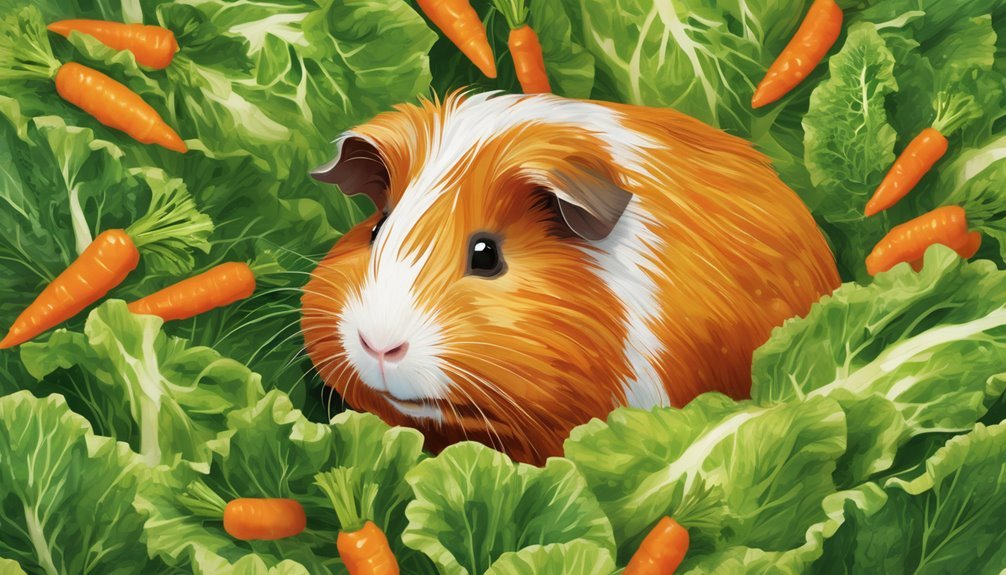
When considering what to feed your guinea pig, it’s crucial to understand the essential dietary components that ensure their health. A primary component is hay, which provides necessary fiber for digestive health and helps maintain a nutritional balance.
Fresh vegetables are also vital, offering essential vitamins and minerals. Additionally, high-quality pellets specifically formulated for guinea pigs can provide a concentrated source of nutrients.

Fresh vegetables and high-quality pellets are crucial for providing essential nutrients and maintaining your guinea pig’s health.
However, it’s important to avoid excessive amounts of sugary fruits, as these can disrupt their dietary balance. You might also consider dietary supplements, particularly vitamin C, since guinea pigs can’t synthesize it on their own.
Ensuring a varied and balanced diet will promote optimal health and longevity for your furry companion.
What Fresh Vegetables Can Guinea Pigs Eat Daily?
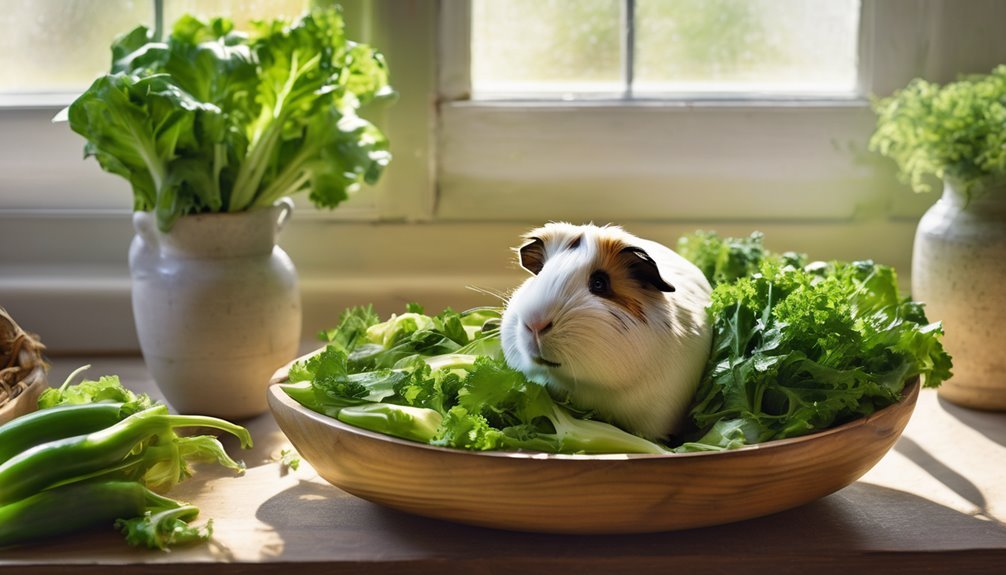
What fresh vegetables can you include in your guinea pig’s daily diet? Offering a variety of vegetables is essential for their health. Some guinea pig favorites include bell peppers, leafy greens, and cucumbers. Aim for a mix to ensure they receive necessary nutrients while enjoying their meals.
Here’s a simple guide to some suitable options:
| Vegetable | Nutritional Benefits |
|---|---|
| Bell Peppers | High in Vitamin C |
| Romaine Lettuce | Good source of fiber |
| Cucumber | Hydrating and low-calorie |
| Carrots | Rich in beta-carotene |
Introduce new vegetables gradually to monitor for any adverse reactions. This vegetable variety helps keep your guinea pig happy and healthy.
Why Is Hay Important for Guinea Pigs?
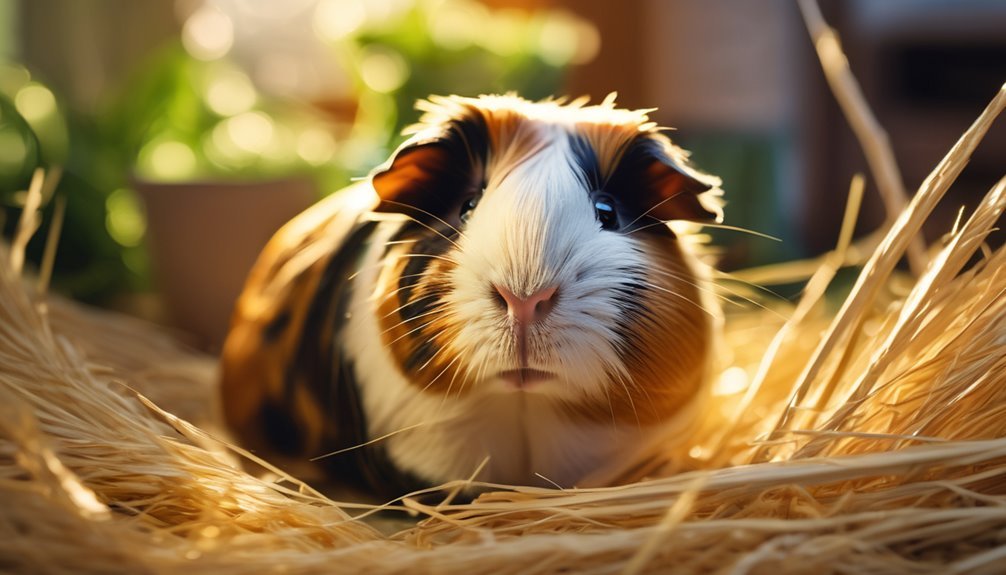
Fresh vegetables are just one part of a balanced diet for guinea pigs, but hay plays an equally vital role. Providing your guinea pig with high-quality hay varieties is essential for their health. Here’s why hay is important:
Fresh vegetables are important, but high-quality hay is essential for your guinea pig’s health and well-being.
- Promotes Healthy Digestion: The fiber in hay aids digestion and prevents gastrointestinal issues.
- Dental Health: Chewing on hay helps wear down their constantly growing teeth.
- Nutrient Source: Hay contains essential nutrients that support overall health.
- Encourages Natural Behavior: Foraging for hay mimics natural behaviors, promoting mental stimulation.
- Weight Management: Hay is low in calories, helping maintain a healthy weight.
Incorporating hay into your guinea pig’s daily diet ensures they reap these digestion benefits and thrive.
How Many Pellets Does Your Guinea Pig Need?
Determining the right amount of pellets for your guinea pig is crucial to their health. Generally, you should provide a daily serving size of about 1/8 to 1/4 cup of high-quality pellets, depending on their age and weight.

There are various pellet types available, so ensure you choose those specifically formulated for guinea pigs, as they contain the essential vitamin C they need. Avoid pellets with added seeds or dried fruits, which can lead to obesity and digestive issues.
Monitor your guinea pig’s weight and adjust the serving sizes accordingly. Remember, pellets should complement a diet rich in hay and fresh vegetables, not replace them, ensuring your pet maintains optimal nutrition and well-being.
Safe Fruits for Guinea Pigs?
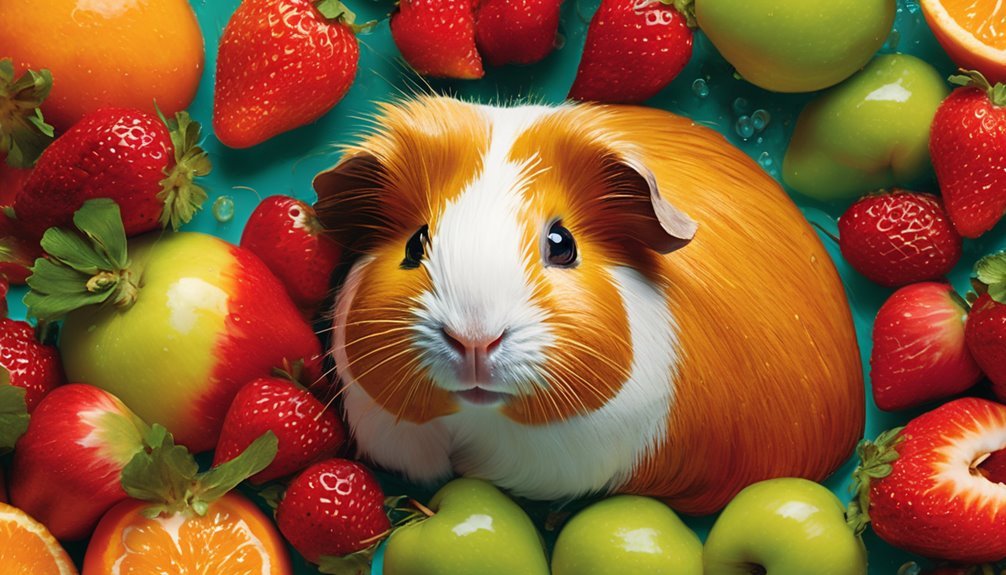
When considering safe fruits for your guinea pig, it’s essential to know which options provide beneficial nutrients without excessive sugars. Offering fruits in moderation is key; a small fruit serving a few times a week is ideal.
Seasonal fruits can add variety and freshness to their diet, but be cautious about portion sizes.
Here are some safe fruit choices:
- Strawberries
- Blueberries
- Raspberries
- Apples (remove seeds)
- Pears (remove seeds)
These fruits aren’t only tasty but also provide essential vitamins and antioxidants.
Always introduce new fruits gradually to monitor for any adverse reactions. Remember, fruits should complement a balanced diet that includes hay and vegetables for optimal health.
Foods That Are Toxic to Guinea Pigs?
Although guinea pigs are generally hardy, certain foods can be harmful or even fatal to them. You should be aware of toxic plant identification to ensure your pet’s safety. Common toxic foods include:
| Food | Toxicity Level |
|---|---|
| Avocado | High |
| Chocolate | High |
| Onions | High |
| Garlic | Moderate |
| Iceberg Lettuce | Low |
Signs of poisoning can vary but often include lethargy, diarrhea, or difficulty breathing. If you suspect your guinea pig has ingested something toxic, seek veterinary assistance immediately. By knowing what foods to avoid, you can help keep your guinea pig healthy and thriving.
Conclusion
In summary, providing a balanced diet for your guinea pig is crucial for their health, much like the foundation of a sturdy house. Focus on high-quality hay, fresh vegetables, and a controlled amount of pellets to ensure they thrive. Remember to include vitamin C-rich veggies daily and steer clear of toxic foods. By monitoring their diet carefully, you’ll help maintain their overall well-being and happiness, ensuring your furry friend leads a long and healthy life.