
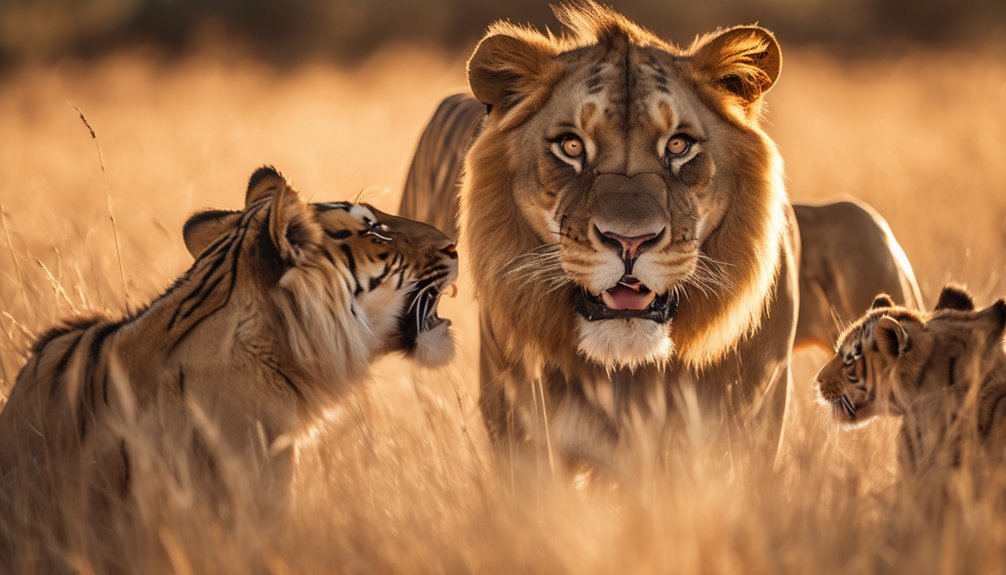
Only about 3% of predators ever reach apex status, yet you still see them shaping entire ecosystems. You can compare big cats, sharks, and birds of prey to see how strength, speed, senses, and stealth each give an edge. Their methods differ, but each one has evolved to solve the same problem: how to catch, kill, and survive when every advantage counts.
Key Takeaways
- Predators’ power depends on strength, speed, senses, hunting strategy, and efficient energy use.
- Big cats dominate through specialized traits like lion strength, tiger stealth, and jaguar bite force.
- Ocean predators such as sharks, barracudas, dolphins, and octopuses use speed, intelligence, and sensory advantages.
- Birds of prey rely on exceptional vision, talons, hooked beaks, and efficient flight to capture prey.
- Apex predators shape ecosystems by controlling territory, competition, and energy flow across habitats.
What Makes a Predator Powerful?
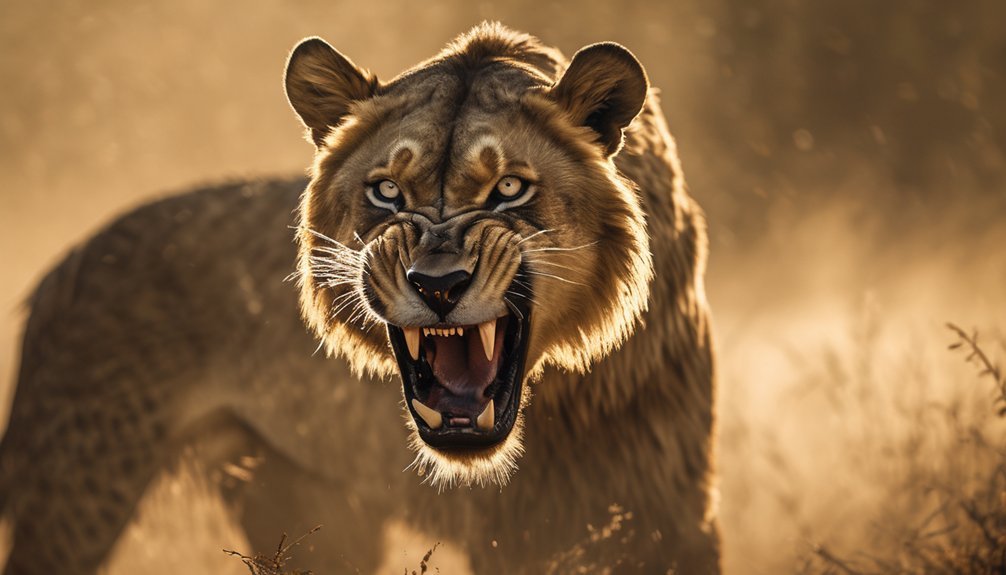
A predator’s power depends on a combination of physical traits, sensory abilities, and efficient hunting behavior. When you examine these factors, you see that strength alone doesn’t define dominance.
You should look at muscle efficiency, skeletal leverage, speed, and stamina, because they shape how well a predator can pursue and subdue prey. Sensory adaptations, including acute vision, hearing, and smell, let you detect movement before escape is possible.
Your analysis should also consider hunting techniques, since ambush, pursuit, and cooperative tactics improve success. A powerful predator conserves energy, responds quickly to changes, and exploits weaknesses with precision.

Hunting technique matters as much as strength, with ambush, pursuit, and teamwork shaping a predator’s success.
In nature, power emerges from the interaction of anatomy, perception, and strategy, not from size alone.
The Strongest Big Cats in Nature
Those same rules of power apply clearly to big cats, where strength, speed, and hunting efficiency combine in different ways across species.
You can see lion strength in its muscular frame, forelimbs, and social role, which let males defend pride territory and overpower large prey.
Tigers often exceed lions in body mass, and tiger hunting relies on explosive acceleration, stealth, and a crushing bite that can subdue deer, boar, or even young buffalo.
Jaguars deliver the highest bite force relative to size, so you get a compact predator built for armored prey.
Leopards trade raw force for agility, climbing skill, and kill security.
In each case, you’re watching a specialized solution to the same problem: how to dominate, capture, and control living prey efficiently.
The Deadliest Ocean Predators
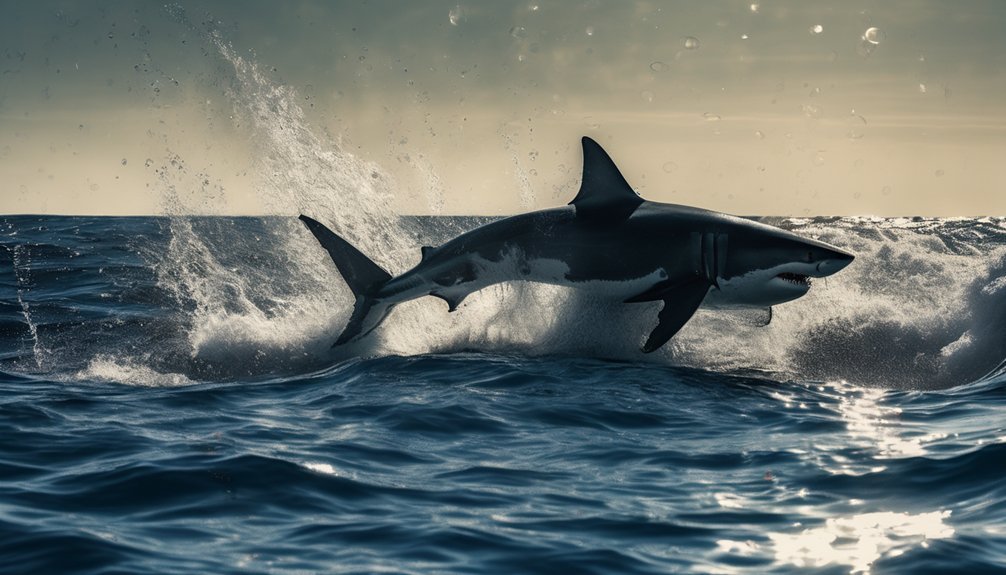
In the ocean, deadliness depends on more than size alone, because speed, sensory systems, venom, and feeding strategy all shape predatory success.
You can see shark adaptations in streamlined bodies, electroreception, and jaws built for rapid strikes. Barracuda speed lets them ambush prey before escape begins, while dolphin tactics rely on coordination, pressure, and pursuit efficiency.
You should also note octopus intelligence, which supports camouflage, problem solving, and precise capture. Jellyfish stings can disable victims with toxins, proving that simple anatomy can be lethal.
In the dark, deep sea hunters exploit scarce light and slow prey, using heightened sensitivity rather than brute force.
Together, these predators show that ocean lethality comes from specialized traits, not from strength alone.
Why Birds of Prey Hunt So Well?
Birds of prey hunt so effectively because their bodies and senses are tightly specialized for capture. You can see this in their hunting techniques: they scan from height, calculate distance, then strike with controlled force.

Birds of prey scan from height, judge distance, and strike with controlled force.
Their vision adaptations give them exceptional acuity, so you’re witnessing a system tuned to detect small, moving targets at long range. Strong talons and hooked beaks improve handling once contact occurs.
Flight efficiency also matters; broad wings, low drag, and precise maneuvering let them conserve energy while tracking prey. Some species even use social hunting, coordinating attacks to flush or overwhelm animals that one bird alone might miss.
Together, these traits reduce uncertainty and increase capture success, making raptors highly effective predators across varied habitats.
The Stealth Hunters That Outsmart Prey
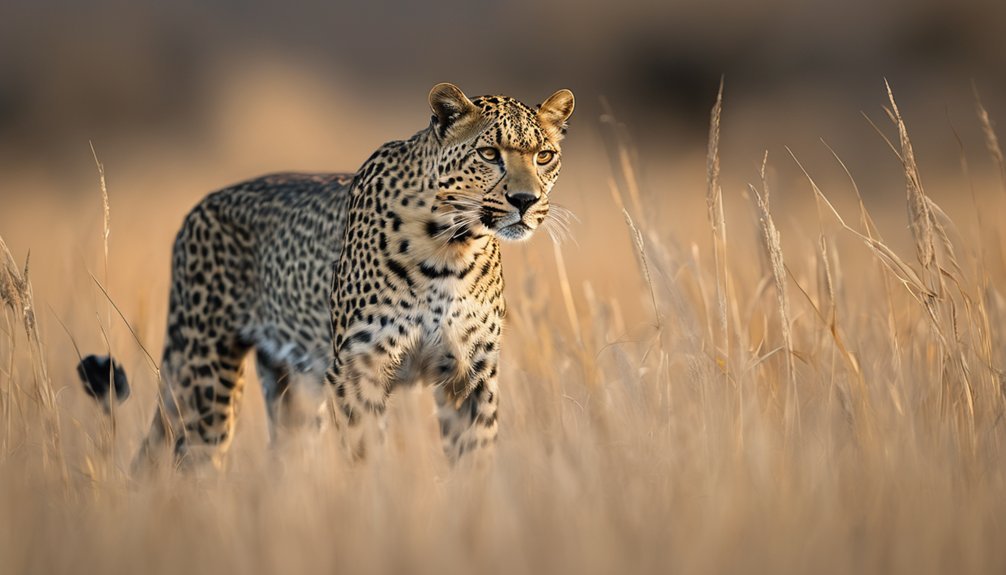
Stealth hunters succeed not by speed alone, but by reducing the chance that prey detects them before the strike. You can see this in silent stalkers that move with low body profiles, controlled steps, and minimal vibration.
Their ambush techniques exploit cover, shadows, and predictable prey behavior, allowing them to close distance without triggering escape responses. You’ll notice that success depends on timing, sensory advantage, and patience rather than brute force.
Many hunters also match background patterns, which lowers visual contrast and makes detection harder. When prey relies on brief gaps in attention, these predators use those moments with precision.
Their strategy shows that survival can hinge on how well you avoid being noticed, not just how well you attack.
How Apex Predators Survive and Dominate
Apex predators persist because they control access to energy, territory, and risk within their ecosystems. You can see their advantage in adaptation strategies that refine speed, stealth, strength, and sensory acuity. Their survival instincts guide precise hunting techniques, from ambush to pursuit, reducing wasted effort and injury.
You also notice how evolutionary traits such as large body size, powerful jaws, and efficient metabolism support dominance across changing habitats. These predators shape competition dynamics by limiting mesopredator numbers and altering prey behavior.
Their environmental impact extends beyond feeding, because they influence vegetation, scavenger activity, and nutrient flow. When you study them closely, you find a system built on efficiency, resilience, and control, where survival isn’t passive—it’s an active process of constant ecological negotiation.
Frequently Asked Questions
Which Predator Has the Strongest Bite Force Ever Recorded?
The saltwater crocodile has the strongest bite force ever recorded. You’d note its bite force reaches extreme levels, shaped by predator evolution, making it a scientifically exceptional apex predator in anatomical power and efficiency.
How Do Apex Predators Affect Entire Ecosystems?
You see apex predators as kings, yet they’re keystones: by controlling prey, they trigger trophic cascades that shape vegetation, biodiversity, and ecological balance. Remove them, and you’ll watch entire food webs unravel.
Which Predator Can Hunt Successfully in Both Land and Water?
You’d identify the crocodile; it hunts successfully in both land and water. Its river predators status, dual environments, hunting techniques, and adaptability factors let it exploit prey efficiently across habitats.
What Adaptations Help Predators Survive Extreme Climates?
You see predators survive extreme climates through Thermal regulation, Camouflage techniques, Sensory adaptations, Defensive mechanisms, and Hunting strategies that improve Prey detection; these traits let you conserve energy, locate prey, and withstand harsh conditions.
Which Animal Is the Fastest Predator in the World?
The cheetah is the fastest predator. You can observe cheetah speed reaching about 70 mph, and its hunting techniques rely on explosive acceleration, sharp vision, and precise timing to catch prey efficiently.
Conclusion
You can see that the most powerful predators in nature succeed through a clear combination of strength, speed, and sensory precision. Big cats strike with force, sharks hunt with efficiency, and birds of prey track targets with exceptional vision. You also notice that stealth, adaptation, and energy conservation help them outcompete prey. In each environment, these predators don’t just survive; they dominate, regulate populations, and maintain ecological balance through highly specialized hunting strategies.