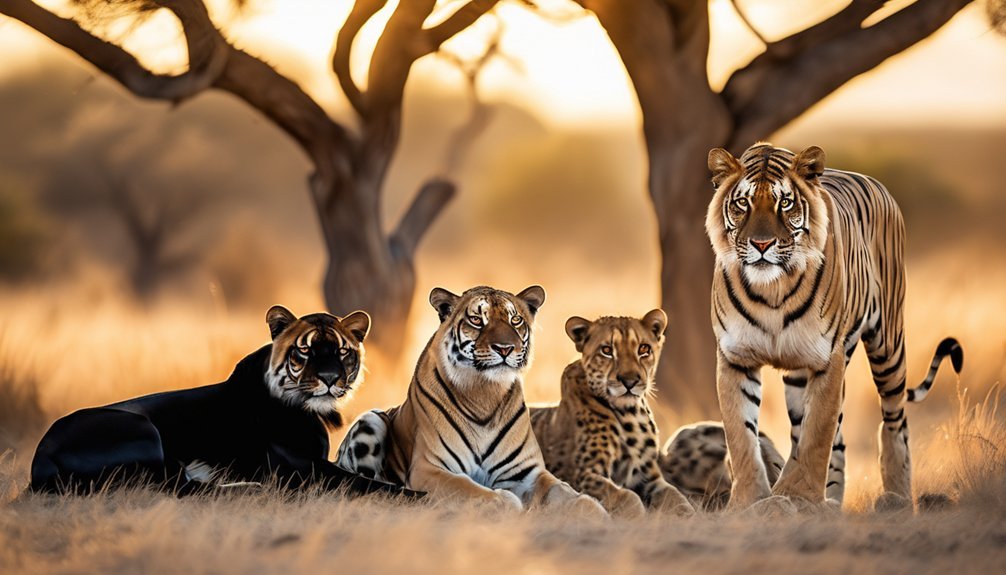
When you look at the world’s big cats, you see more than strength—you see design shaped by nature at its finest. Tigers dazzle with stripes, lions project authority, and leopards move with quiet precision. Jaguars, cheetahs, and snow leopards each bring their own rare appeal. Yet beauty in these predators isn’t just about appearance; it’s also about power, survival, and the mystery that keeps you wondering which one stands above the rest.
Key Takeaways
- Tigers are often considered the most beautiful big cats, with bold stripes, muscular grace, and glowing amber eyes.
- Lions embody majesty through their golden manes, powerful posture, and regal presence.
- Leopards stand out for their rosette-patterned coats, stealth, and elegant agility.
- Big cats combine strength, grace, and striking markings that create a powerful sense of natural beauty.
- Protecting big cats matters because many species face habitat loss, hunting, and declining populations.
What Makes Big Cats Beautiful?
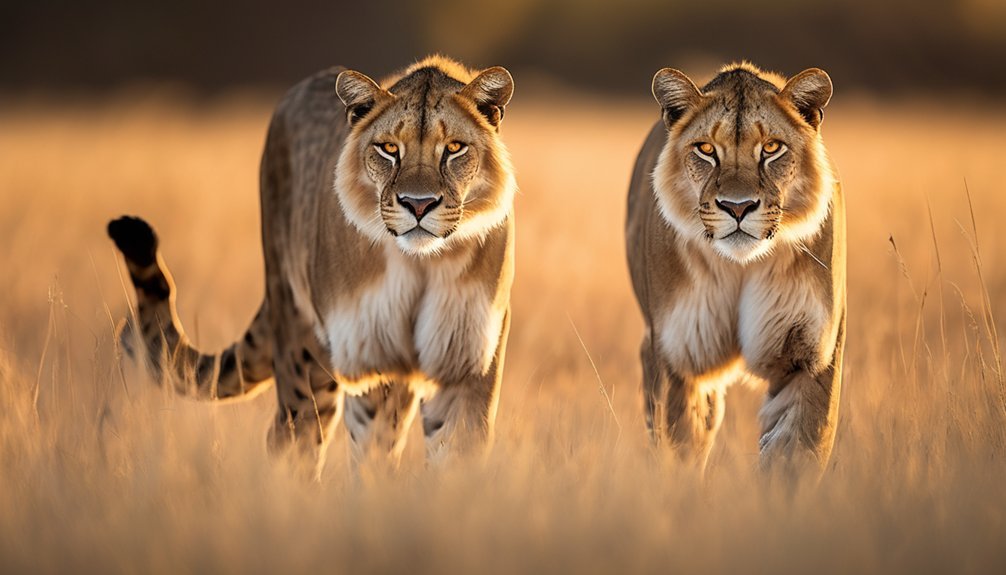
Big cats are beautiful because they combine power, grace, and striking physical features in one animal.
When you watch one move, you see feline elegance in every step, from a silent prowl to a controlled leap. Their muscular bodies show strength without bulk, while sleek coats, bold markings, and bright eyes draw you in.
Silent prowls, controlled leaps, and sleek coats reveal a quiet elegance that commands attention.
You can feel their natural grace in the way they balance speed, agility, and calm focus. Each species has its own beauty, yet all big cats share a refined presence that commands attention.

Their beauty isn’t only physical; it also comes from confidence, mystery, and the ease with which they dominate their environment. That mix makes them unforgettable to you.
Tiger: The Most Beautiful Big Cat
If any big cat captures beauty at full power, it’s the tiger. You see it in the bold stripes, the muscular grace, and the glowing amber eyes that make every movement feel deliberate and electric.
Tigers move with silent strength, and you can almost feel the heat of their presence before you spot them. Their coat isn’t just striking; it helps them vanish in grass, reeds, and shadow.
Across cultures, tiger symbolism connects them with courage, protection, and raw vitality. That power matters now because tiger conservation isn’t optional—it’s urgent.
When you value the tiger, you’re honoring one of nature’s most refined predators and helping preserve a species that still inspires awe, respect, and deep emotional pull.
Lion: The Face of Big Cat Majesty
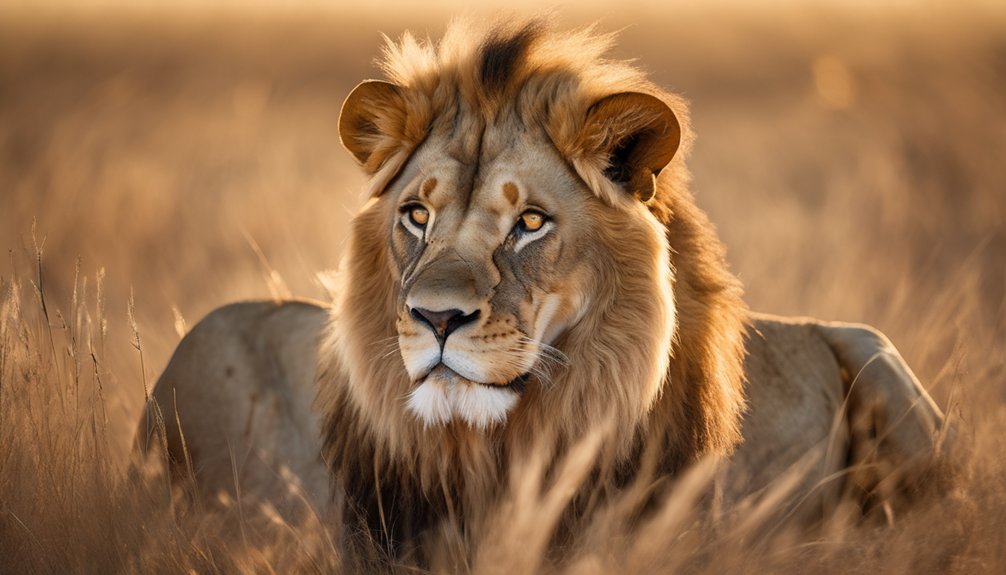
Few animals embody big cat majesty as completely as the lion. When you meet its golden mane and steady gaze, you feel why lion symbolism has long stood for courage, authority, and protection.
You also see how a lion pride works as a family unit, with coordinated hunting, shared care, and powerful social bonds that keep every member safer.
- You notice strength made visible in posture and roar.
- You sense leadership shaped by cooperation, not just force.
- You understand beauty as presence, confidence, and unity.
Unlike other cats, lions carry their grandeur openly, and you can’t ignore it. Their faces seem crafted to remind you that power can be warm, communal, and deeply regal.
Leopard: Spots, Speed, and Style
Where the lion announces its power, the leopard moves with quieter brilliance, and you can spot that elegance in its rosette-patterned coat, explosive speed, and unmatched adaptability.
You’re looking at a master of stealth, built for climbing, stalking, and ambush. In leopard habitats ranging from forests to savannas, this cat uses cover with expert precision.
Its leopard behavior is solitary and secretive, letting it hunt mostly at dawn and dusk, then drag prey into trees to protect it from rivals.
You can admire how every movement feels controlled, every pause deliberate. Few big cats blend beauty and survival so seamlessly, and the leopard’s style comes from that perfect balance of grace, strength, and intelligence.

Jaguar: Gold Fur and Raw Power
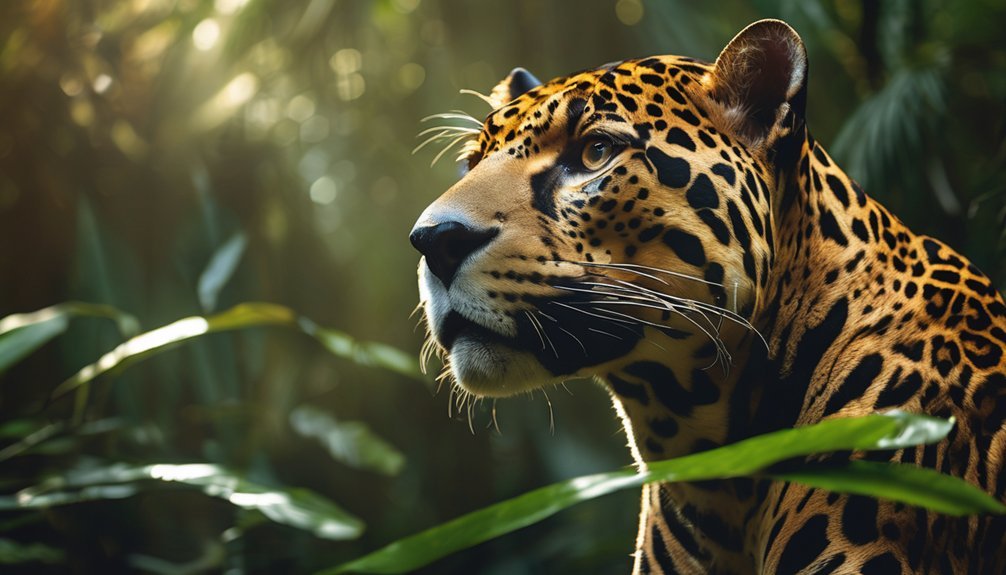
With its golden coat marked by dark rosettes, the jaguar is built for raw power, not speed alone.
When you watch one move, you see a muscular body that can stalk, climb, and swim with confidence. Its bite is legendary, piercing skulls and armored hides with ease.
In jaguar symbolism, it stands for courage, mystery, and authority. Yet you also face a hard truth: jaguar conservation matters, because habitat loss and hunting threaten these cats across the Americas.
- You admire beauty sharpened by survival.
- You respect power that serves the ecosystem.
- You support protection so future generations can feel this awe.
Cheetah: The Sleekest Big Cat
Although the cheetah looks delicate at first glance, it’s a marvel of speed and precision, built to outrun almost any land animal on Earth. You’ll notice its slim frame, long legs, and deep chest, all key Cheetah adaptations. Its black tear marks cut glare, while semi-retractable claws grip the ground like spikes.
| Trait | Effect | Image |
|---|---|---|
| Flexible spine | Longer strides | A spring in motion |
| Large nostrils | More oxygen | Breath in a sprint |
| Long tail | Sharp balance | A living rudder |
| Light body | Less drag | Wind over grass |
| Tear marks | Sun protection | Fierce eyes alive |
You can feel its beauty in every chase. Yet Cheetah conservation matters, because habitat loss and conflict still threaten this elegant hunter.
Snow Leopard: The Mountain Cat You Rarely See
High in the cold, rugged mountains of Central and South Asia, the snow leopard moves like a shadow across rock and ice. You may never see this cat in the wild, yet its presence shapes fragile alpine ecosystems. Its thick fur, long tail, and wide paws help it survive in the snow leopard habitat, where cliffs and thin air rule.
- You protect this rare hunter by supporting snow leopard conservation.
- You honor a species that keeps mountain prey populations in balance.
- You recognize that clean water and healthy peaks depend on wild places.
When you value the snow leopard, you’re also valuing the mountains themselves. Its beauty isn’t loud; it’s quiet, elusive, and deeply moving.
Why Beautiful Big Cats Captivate Us
Why do big cats hold our attention so powerfully? You feel it in their silence, their balance, and their raw control. Their eyes track movement with precision, and every muscle signals power without waste.
You’re drawn to that mix of beauty and danger because it mirrors traits humans admire: courage, grace, and independence. Across cultures, big cats carry cultural symbolism as protectors, rulers, and spiritual guides, which deepens their appeal.
Their presence also reminds you that wild places still matter, making wildlife conservation feel urgent and personal. When you see a lion, tiger, leopard, or jaguar, you’re not just admiring an animal; you’re recognizing a living symbol of nature’s elegance, strength, and fragile survival.
Frequently Asked Questions
Which Big Cat Is the Rarest in the Wild?
You’d likely say the Amur leopard’s the rarest big cat in the wild, with only a tiny population left. Conservation efforts matter urgently, because rare big cats like this need protection, habitat, and anti-poaching action.
How Fast Can a Cheetah Run?
You can expect a cheetah to hit about 50 to 60 mph, with brief bursts near 70 mph. Its cheetah speed powers explosive hunting techniques, letting it sprint, turn sharply, and catch prey fast.
Where Do Snow Leopards Live?
You’ll find snow leopards in high, rugged mountains across Central and South Asia, including the Himalayas and Tibetan Plateau. Their snow leopard habitat is cold and rocky, and their snow leopard behavior stays secretive and solitary.
What Do Jaguars Eat?
You’d see jaguars eat deer, capybaras, peccaries, fish, turtles, and caimans. Their jaguar diet varies by habitat, and their hunting techniques include stealth, powerful bites, and ambushes that let them crush skulls or shells.
Are Big Cats Endangered?
Yes, many big cats are endangered, and you can help by supporting conservation efforts. Habitat loss, poaching, and conflict threaten them worldwide, so your awareness and action can protect these magnificent animals.
Conclusion
When you look at these big cats, you’re seeing more than beauty—you’re seeing survival shaped by power, camouflage, and adaptation. You might think their appeal is just about looks, but each species’ colors, patterns, and strength help it thrive in the wild. From the tiger’s stripes to the snow leopard’s quiet grace, these cats remind you that true beauty isn’t only striking—it’s functional, rare, and unforgettable.