
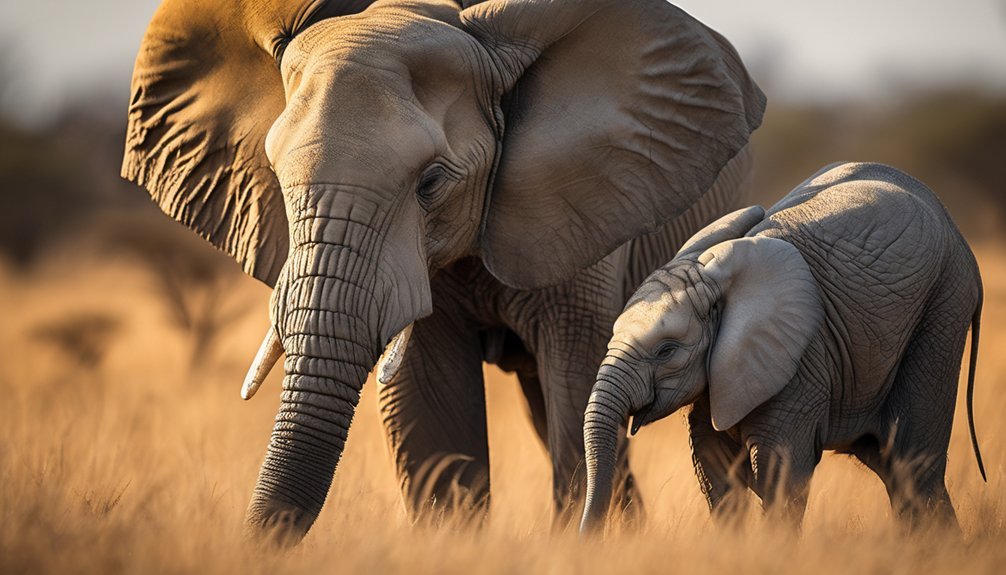
When you look at animal records, you’re really comparing extreme adaptations shaped by evolution, not just impressive numbers. You’ll see speed in a cheetah’s sprint, force in a dung beetle’s lift, size in a blue whale’s mass, and endurance in an Arctic tern’s migration. Yet these figures only become meaningful when you ask how scientists measure them, because some records are less straightforward than they first appear.
Key Takeaways
- The cheetah is the fastest land animal, reaching about 100 km/h in short bursts.
- The peregrine falcon is the fastest animal overall, diving over 300 km/h.
- The blue whale is the largest animal ever recorded, dwarfing all other mammals.
- The dung beetle is extraordinarily strong, pulling over 1,000 times its body weight.
- The Arctic tern has one of the longest migrations, traveling roughly 70,000 km annually.
What Counts as an Animal Record?
An animal record is a documented measurement or achievement that sets a recognized benchmark for a species or an individual animal. You count it only when reliable evidence confirms the claim, such as direct observation, standardized measurement, or verified data from record keeping.
Scientists compare entries within clear animal classifications, because size, longevity, reproductive output, and sensory performance mean different things across taxa. You should expect precise identification of the animal, the method used, the date, and the context.
A record isn’t simply unusual behavior; it must be repeatable, comparable, and traceable to sources. Careful documentation protects accuracy and lets you evaluate whether the claim truly exceeds previous benchmarks. Without that rigor, you can’t separate impressive anecdotes from accepted biological records.
The Fastest Animal Records
Speed records use the same standards of verification, but they focus on how quickly an animal moves, accelerates, or reacts under defined conditions.

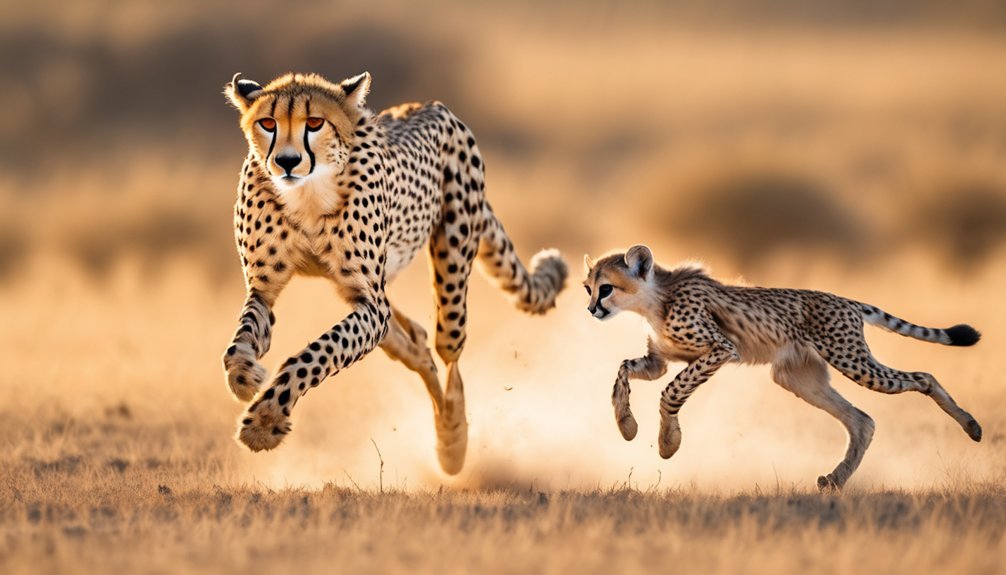
You’ll notice that the cheetah leads land mammals, reaching about 100 km/h in short bursts, thanks to flexible spines, enlarged lungs, and traction claws.
In water, the black marlin and sailfish show extraordinary bursts, using streamlined bodies and powerful tails to slash through prey schools.
Among birds, the peregrine falcon dives past 300 km/h in stoops, and you can trace that speed to aerodynamic shape and precise control.
These speed adaptations shape hunting strategies, letting predators close distance, surprise prey, and conserve energy.
Even tiny animals can be fast, but record claims need careful measurement, because wind, slope, and timing methods can distort results.
The Strongest Animal Records
Strength records shift the focus from how fast an animal moves to how much force it can generate, whether that means lifting, pulling, biting, or resisting pressure. You can measure strength by muscle power, and the standout examples are often tiny relative to their loads.
A dung beetle can pull more than 1,000 times its body weight, while an ant can carry many times its own mass during endurance feats that test its limbs and joints. In water, a pistol shrimp snaps its claw so quickly it creates shockwaves, showing force, not size, drives performance.
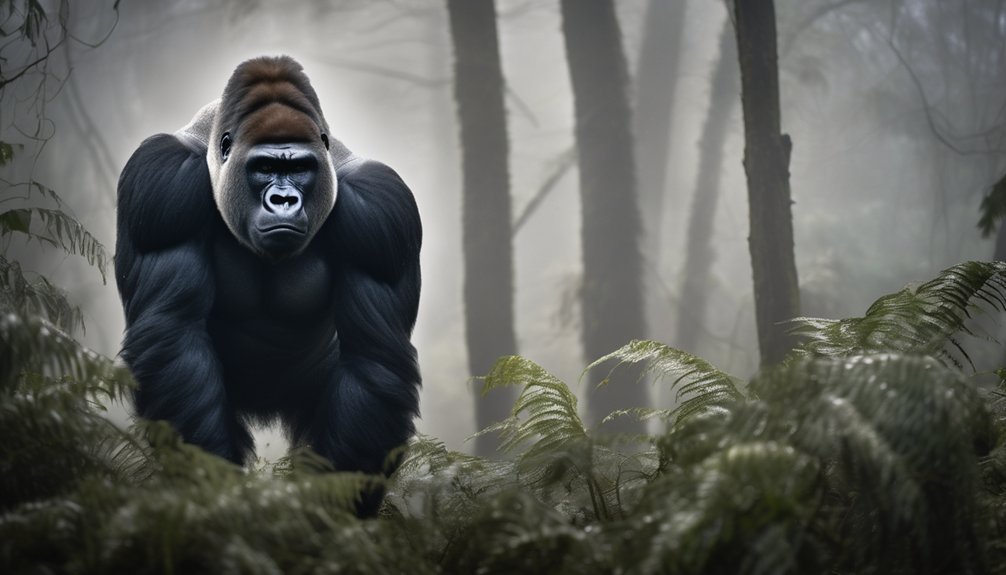
On land, a gorilla’s upper-body strength lets it bend and break vegetation with ease. These records show you that biological design, leverage, and fiber density matter as much as raw size.
The Biggest Animal Records
When you look at the biggest animal records, sheer body size becomes the metric, and the winners usually dominate by mass, length, height, or volume rather than by any single athletic feat.
You’ll see extraordinary scaling limits in nature, where metabolism, buoyancy, and habitat shape outcomes. The blue whale remains the largest mammal, reaching immense masses that outclass all other land and sea vertebrates. Among fish, the heaviest fish is the ocean sunfish, whose thick body can exceed 2,000 kilograms.
Consider these records:
- Mass: marine giants store energy efficiently.
- Length: elongated bodies maximize stride or glide.
- Volume: bulk supports heat retention and reserve fuel.
- Growth: slow maturation often enables extreme size.
You can trace every record to ecological pressure, not luck alone.
The Tallest and Smallest Animal Records
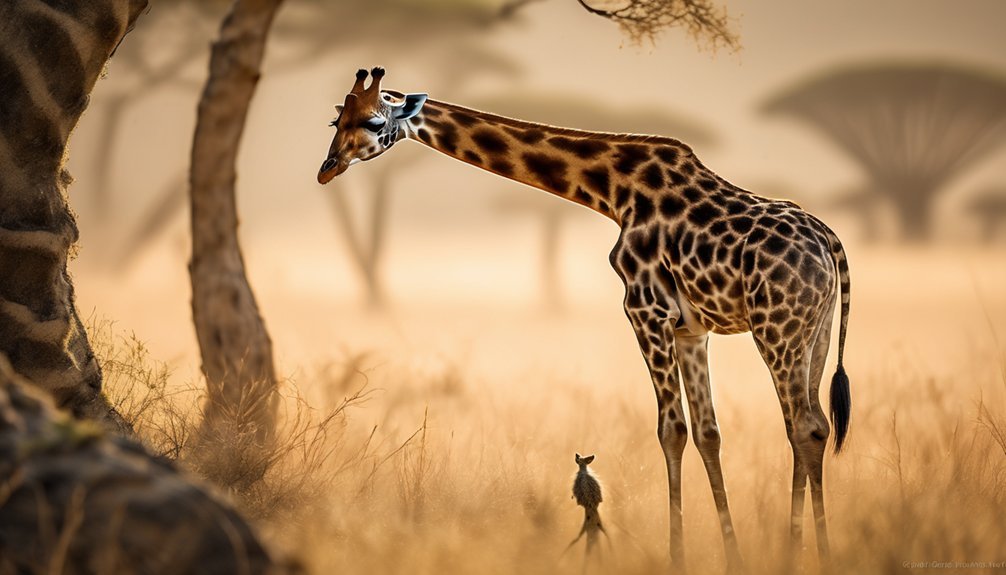
Size records don’t stop at mass; they also capture the extremes of vertical reach and miniature scale. You can admire the tallest giraffe, whose neck and legs let it browse leaves beyond the reach of most herbivores. Adult males can exceed 5.5 meters, and their bodies stay balanced by long, powerful limbs and a specialized cardiovascular system.
At the opposite end, you’ll find the smallest bumblebee, a tiny pollinator only a few millimeters long. Its reduced size lets it slip into narrow flowers and move with startling agility.
These records show how evolution shapes bodies for very different spatial niches. When you compare them, you see that height and minuteness both reflect precise biological design, not just simple measurements.
How Animals Survive Extreme Conditions
In extreme environments, animals survive by combining structural, physiological, and behavioral adaptations that keep their internal conditions stable.

You can see extreme adaptations in desert mammals that conserve water with concentrated urine and heat-tolerant tissues.
In harsh environments, arctic species insulate themselves with thick blubber, dense fur, and low surface-area bodies. Their survival strategies also include torpor, antifreeze proteins, and reduced metabolism during climate challenges.
- You notice resilience mechanisms that limit cellular damage.
- You observe unique habitats shaping body form and function.
- You track behaviors like burrowing, nocturnal activity, and shelter use.
- You learn that temperature, salinity, and oxygen shifts drive rapid adjustment.
The Longest Animal Migrations
Animal migrations can span entire continents and oceans, with some species traveling thousands of kilometers each year to reach breeding, feeding, or overwintering grounds. You can trace these routes with GPS tags, stable isotopes, and satellite data, revealing precise seasonal timing and navigational skill. In sea turtle migration, females often return to natal beaches after crossing entire ocean basins. The arctic tern journey remains unmatched for distance, linking polar summers and winters.
| Species | Annual distance |
|---|---|
| Arctic tern | ~70,000 km |
| Leatherback turtle | ~16,000 km |
| Wildebeest | ~1,000 km |
| Bar-tailed godwit | ~11,000 km |
You’re seeing evolved endurance shaped by food availability, climate, and reproduction. These migrations don’t just impress; they sustain ecosystems across hemispheres.
The Weirdest Animal Body Records
After tracking extreme journeys across oceans and continents, you can also find record-breaking oddities right in animals’ bodies. You’ll notice how anatomy reveals quirky adaptations shaped by pressure, heat, cold, and diet.
Some creatures carry unusual features that seem almost unreal, yet they’re measurable, functional, and evolutionarily stable. Consider these records:
- The giraffe’s neck contains seven elongated vertebrae.
- The blue whale’s heart can weigh about 180 kilograms.
- The bowhead whale has the thickest blubber, near 50 centimeters.
- The naked mole-rat tolerates low oxygen far longer than most mammals.
When you study these traits, you see biology push limits without waste. Each structure solves a survival problem with precision, and that’s what makes these body records so strikingly intimate.
The Smartest Animals Ever Studied
Measured intelligence in animals isn’t one trait but a collection of abilities, including problem-solving, memory, social learning, communication, and self-control.
When you study crows, dolphins, great apes, and elephants, you see striking problem-solving abilities in action. Crows can bend wires into tools; chimpanzees can plan steps to reach hidden food; dolphins can copy complex signals and coordinate with partners.
You’ll also notice strong social intelligence, especially in species that live in groups and track relationships, alliances, and rivalries. These animals often learn from experience and from each other, which makes their behavior flexible rather than fixed.
Scientific studies show that intelligence varies by task, so one species may excel at memory while another leads in cooperation or innovation.
How Scientists Check Animal Records
Scientists verify animal records by combining direct observation, standardized tests, and repeated trials under controlled conditions. You can trust a claim only after record verification confirms it across multiple independent measurements.
During data collection, researchers log body mass, speed, lifespan, or sensory limits with calibrated tools, then compare results with prior studies.
- They define the metric precisely.
- They control temperature, age, and health.
- They repeat trials until results stabilize.
- They archive videos, notes, and raw data.
You’ll often see experts use peer review and museum specimens to rule out error or exaggeration. This process keeps the record honest, and it lets you understand exactly how extraordinary an animal really is.
Frequently Asked Questions
Which Animal Record Is Hardest to Verify?
You’d likely find the longest animal migration hardest to verify, because tracking gaps, tagging errors, and environmental noise complicate confirmation. Verification challenges often undermine record authenticity, especially when observations rely on incomplete, indirect, or outdated data.
Do Pet Animals Ever Set Official Records?
Yes, you can see pets earn official records through pet achievements and animal competitions, if judges verify measurements, times, or behaviors. You’ll need documented evidence, standardized rules, and independent witnesses to confirm the record.
Can Animal Records Be Broken by Hybrids?
Yes, you can see hybrids break records when hybrid vigor boosts performance, but genetic limits still constrain traits. You’ll need rigorous verification, because ancestry, fertility, and measurement standards determine whether any record truly counts.
Are Fossil Animals Included in Record Lists?
Yes, you can include fossil animals when records rely on fossil discoveries, especially for ancient species. You’ll find they document extreme size, speed, or age, but you should separate them from living-record categories.
Which Record Categories Are Most Controversial?
You’ll find size, speed, longevity, and intelligence records spark the most gentle disputes, because ethical considerations and verification challenges can blur comparisons. You should question measurement methods, sample size, and whether claims’re independently confirmed.
Conclusion
As you consider these animal records, you see more than numbers; you see evolution’s quiet brilliance at work. From the cheetah’s speed to the blue whale’s mass, each species shows how life can push limits in different ways. Like a modern bestiary, these facts remind you that nature still writes astonishing feats beyond myth. When you measure these records, you don’t just study animals—you glimpse the remarkable ingenuity of the living world.