Making your yard safe for dogs is essential for their well-being. You’ll need to assess potential hazards, from toxic plants to sharp objects. Regular maintenance and thoughtful design can transform your outdoor space into a safe haven. By taking these proactive steps, you can ensure your furry friends enjoy their time outside without risk. But what specific changes should you consider to create that secure environment? Let’s explore some key areas to focus on.
Key Takeaways
- Regularly inspect and maintain fencing and gates to prevent escapes and ensure secure play areas for dogs.
- Identify and remove toxic plants, replacing them with dog-friendly alternatives for a safe environment.
- Keep the yard clean by removing sharp objects, debris, and thorny branches to minimize injury risks.
- Supervise dogs outdoors to prevent wildlife interactions and ensure safety during playtime.
- Create a designated play space with interactive toys and shade, ensuring it is free from hazards.
Common Yard Hazards That Can Endanger Your Dog
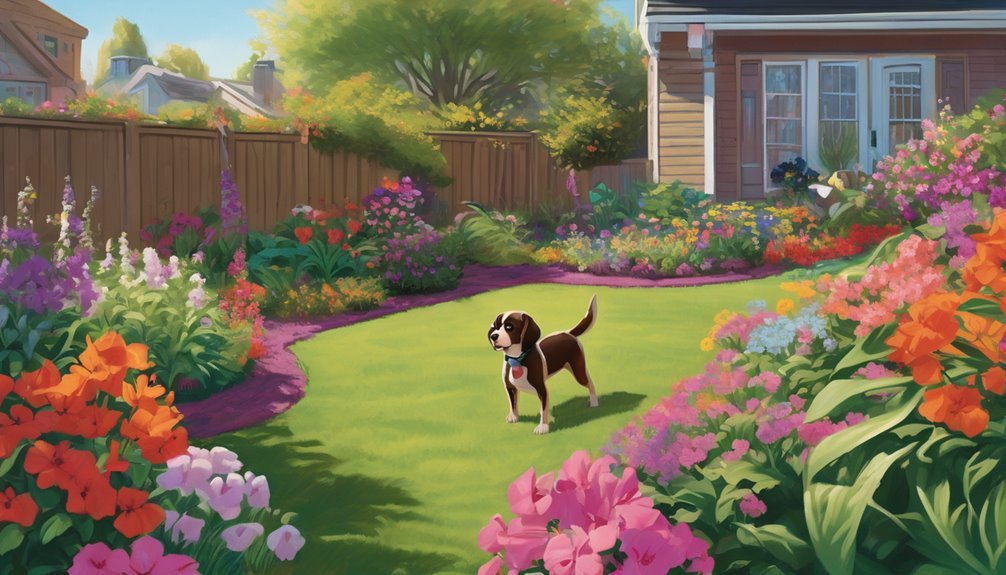
What dangers lurk in your yard that could harm your furry friend?
First, consider wildlife interactions. Raccoons, skunks, and coyotes can invade your space, posing risks through bites or disease. Always keep an eye out for these critters, especially at dusk and dawn.
Next, think about seasonal hazards. In spring, mushrooms might pop up, and some can be toxic.
During summer, heat can lead to overheating if your dog spends too much time outside.
Fall can bring dangers like falling branches or even rattlesnakes hiding in the grass.

Keep your yard clean and secure, and always supervise your dog when they’re outside.
Keeping your yard clean and secure, along with supervising your dog, is essential for their safety outdoors.
Being proactive about these hazards ensures your beloved pet stays safe and sound while enjoying the great outdoors.
Identify Toxic Plants and Find Safe Alternatives
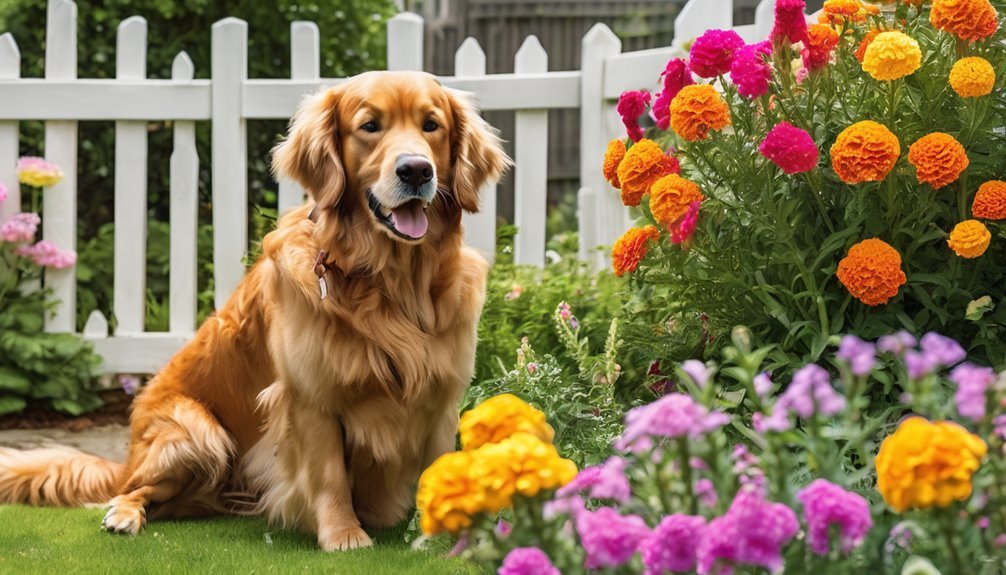
While enjoying your yard, you should be aware that certain plants can be toxic to dogs. Toxic plant identification is crucial for keeping your furry friend safe. Common culprits include azaleas, lilies, and foxglove.
Make a list of plants in your yard and research their toxicity levels.
Once you’ve identified any harmful plants, consider safe plant alternatives. For instance, replace those toxic lilies with dog-friendly marigolds or sunflowers. Herbs like basil and parsley are also safe and can even benefit your dog’s digestion.
How to Keep Your Fencing and Gates Dog Safe
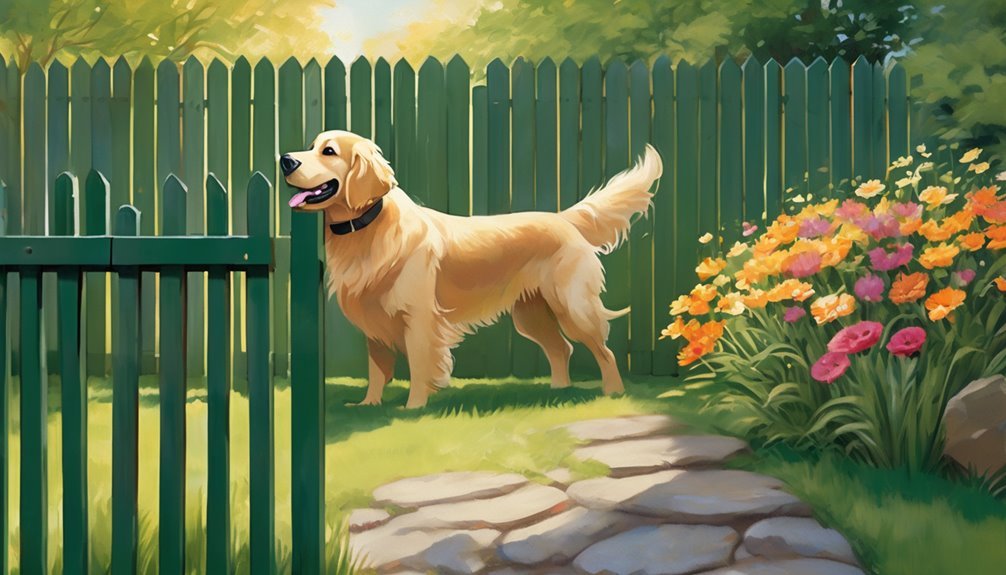
To keep your dog safe in the yard, it’s essential to ensure your fencing and gates are secure and well-maintained.
Start with regular fence maintenance; check for any gaps, loose boards, or rot that could allow your pup to escape. Make necessary repairs immediately to prevent accidents.
Regularly inspect your fence for gaps or damage, and make repairs promptly to keep your dog safe and secure.
For gate security, install sturdy locks and self-closing hinges to keep your dog contained, especially if you have visitors or deliveries.
Always double-check that the gate is fully closed before letting your dog out. If your yard is large, consider adding a secondary barrier for extra safety.
Remove Sharp Objects and Debris From Your Yard
Clear your yard of sharp objects and debris to create a safer environment for your dog. Regular yard maintenance is essential to prevent injuries.
Start by picking up any broken glass, nails, or sharp stones that could harm your pup’s paws. Check for thorny branches or sharp metal pieces that might’ve been left behind during your last clean-up.
Effective debris management also means removing leaves and other organic matter that can harbor pests or mold. Use a rake or a leaf blower to keep your yard tidy and safe.
How to Create Safe Play Areas for Your Dog
Creating safe play areas for your dog is essential for their well-being and enjoyment.
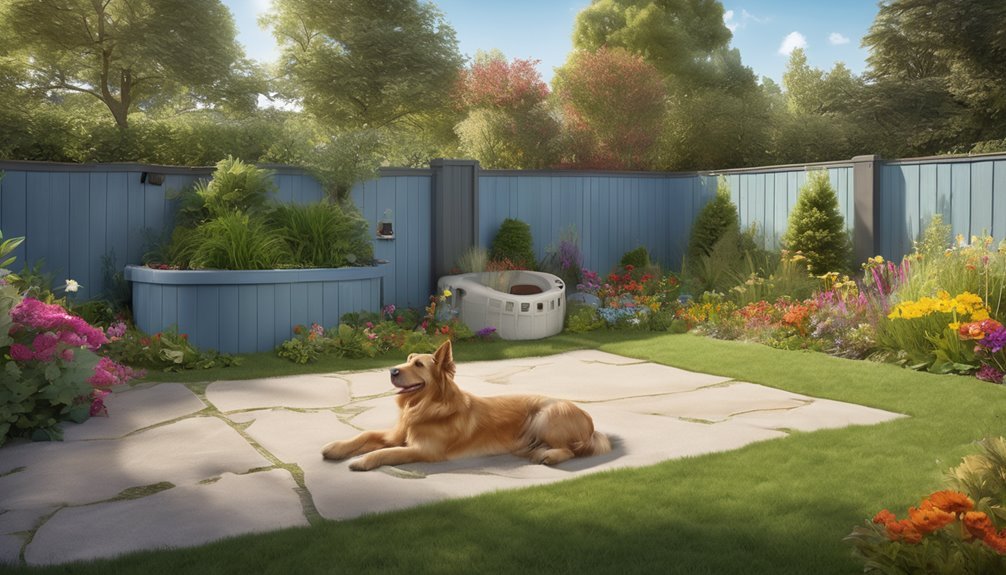
Start by designating a specific space in your yard where your pup can run and explore without worry. Use fencing or natural barriers to keep them contained while providing peace of mind.
Designate a safe space in your yard for your pup to run free, using fencing or natural barriers for peace of mind.
Incorporate interactive toys that challenge their mind and keep them engaged—think fetch balls, tug ropes, or puzzle feeders.
Make sure the area is free from hazards like sharp objects and toxic plants.
Schedule regular designated playtime to strengthen your bond and provide your dog with the exercise they need.

With a little planning, you can create a fun, safe haven that your furry friend will love.
Install Safe and Durable Landscaping Features
Landscaping can enhance your yard’s beauty while keeping it safe for your dog. Choose durable features made from natural materials like stone, wood, or recycled composites. These materials not only withstand wear and tear but also blend seamlessly with the environment.
Incorporate dog-friendly plants like lavender, ferns, and snapdragons, which are non-toxic and provide a safe haven for your furry friend. Avoid sharp-edged rocks or toxic plants that could pose risks.
Create shaded areas with trees or tall plants to keep your dog cool during sunny days. By thoughtfully selecting your landscaping elements, you’ll create a beautiful, safe haven for your dog to enjoy while adding charm to your outdoor space.
Effective Pet-Friendly Pest Control Methods
Even with a beautifully landscaped yard, keeping it pest-free is vital for your dog’s safety and comfort.
You can start by using natural repellents like essential oils, which can deter insects without harming your furry friend. Try mixing a few drops of citronella or peppermint oil with water in a spray bottle and apply it around your garden.
For tougher pests, look into organic pesticides made from plant-based ingredients that won’t pose risks to your dog. It’s essential to read labels carefully and choose products labeled as pet-safe.
Regularly checking your yard for signs of pests and maintaining cleanliness can also go a long way in creating a safe outdoor space for your beloved companion.
Ensure Safe and Accessible Water Sources for Dogs
To keep your dog hydrated and healthy, it’s crucial to provide safe and accessible water sources in your yard.
Start by placing water bowls in shaded areas to keep the water cool and appealing. Make sure they’re stable and won’t tip over easily.
Place water bowls in shaded spots to keep them cool and appealing, ensuring they are stable and won’t tip over.
Consider a hydration schedule as well; refill the bowls at regular intervals, especially during hot weather.
If your dog loves to play outside, think about adding a self-filling water station or a kiddie pool for fun and hydration.
Always check the water quality to ensure it’s clean and fresh.
Tips for Monitoring Your Dog While Outdoors
Keeping a close eye on your dog while they’re outdoors is essential for their safety and well-being. Start with a designated area where your dog can play freely, minimizing distractions and hazards. Use a secure fence to keep them contained.
Pay attention to your dog’s behavior; signs of anxiety or excessive barking can indicate they’re feeling overwhelmed or threatened.
Consider using a long leash or harness for added control during outdoor supervision, especially in open spaces. Regularly check for any potential dangers, like toxic plants or sharp objects.
Finally, spend quality time together in the yard; this not only strengthens your bond but also allows you to monitor their behavior closely. Remember, your attentiveness keeps them safe and happy!
Frequently Asked Questions
What Are the Best Dog-Friendly Plants for My Yard?
For your yard, consider dog-friendly flowers like marigolds and sunflowers, along with safe groundcovers like clover and creeping thyme. These plants not only beautify your space but also keep your furry friend safe and happy.
How Can I Train My Dog to Stay in the Yard?
To train your dog to stay in the yard, consider sturdy fence options and practice leash training. Start with short sessions, rewarding good behavior, and soon you’ll have a yard-loving pup who stays put!
Are There Specific Dog Breeds More Prone to Yard Hazards?
Certain dog breeds, like terriers and hounds, often exhibit traits that make them more prone to common yard hazards, such as digging or escaping. Understanding these characteristics helps you create a safer outdoor space for your pup.
Should I Use Mulch, and Is It Safe for Dogs?
Using mulch can be safe for dogs, but you should check for chemical safety. Have you considered mulch alternatives like pine needles or shredded leaves? They’re often safer and just as effective for your yard!
How Often Should I Inspect My Yard for Safety?
You should inspect your yard for safety at least once a month, focusing on yard boundaries. Seasonal checks are essential too; changes in weather can create new hazards. Regular inspections keep your furry friend safe and happy.
Conclusion
Creating a safe yard for your dog is like building a protective fortress around your furry friend. By removing hazards, securing fences, and providing engaging play areas, you can ensure their outdoor adventures are joyful and safe. Regularly check for new risks and maintain a clean environment to keep pests at bay. With these proactive steps, your yard can become a haven where your dog can explore, play, and thrive without worry.