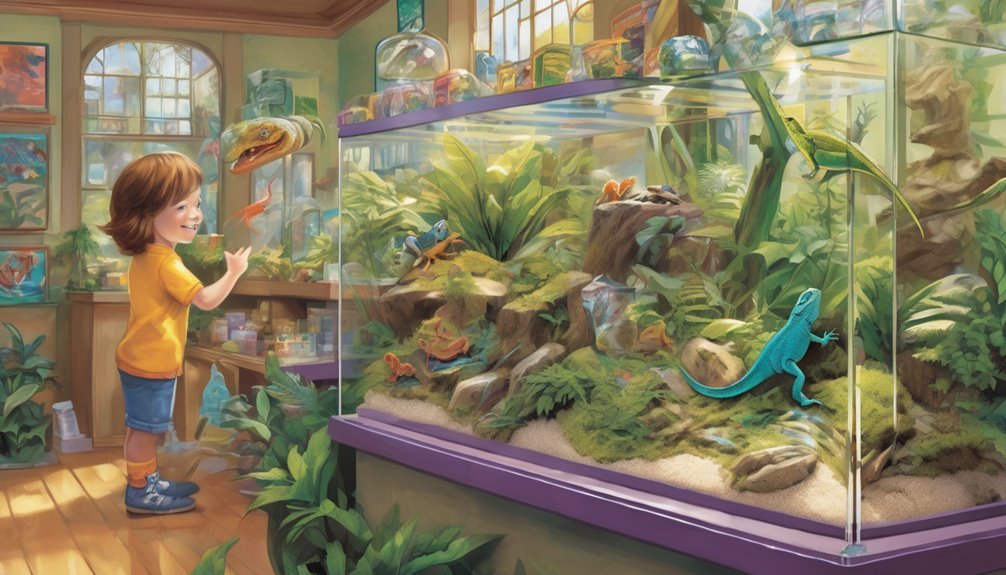
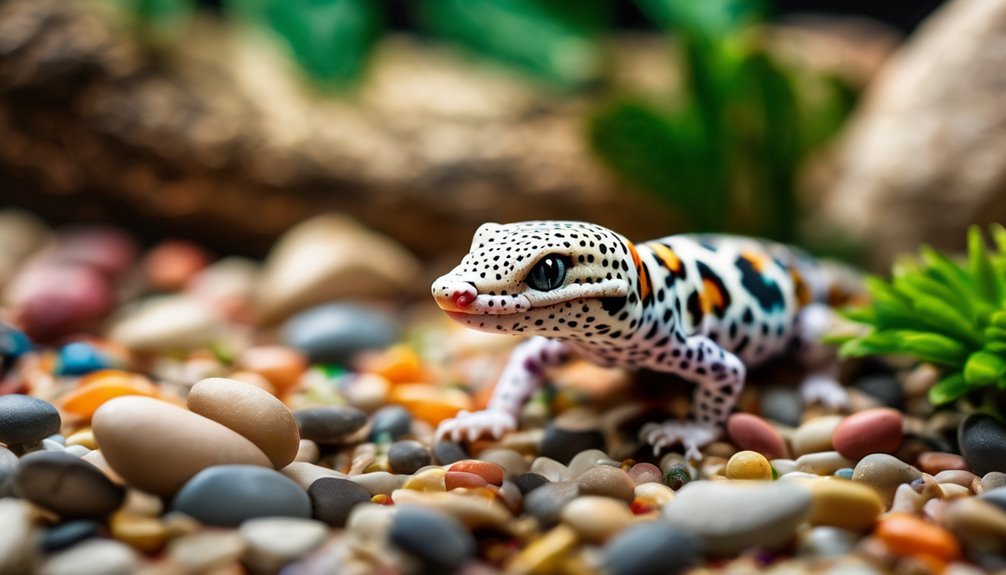
Caring for a leopard gecko requires understanding their specific habitat and dietary needs. You need to set up a suitable environment that replicates their natural conditions, focusing on temperature gradients and safe substrates. Proper handling techniques and regular health monitoring are also crucial. As you consider these factors, you’ll find that even small oversights can lead to significant health issues. Understanding these elements will enhance your gecko’s well-being and longevity.
Key Takeaways
- Set up a minimum 20-gallon tank with a temperature gradient of 75-85°F on the cool side and 88-92°F on the warm side.
- Provide a varied diet rich in protein, including gut-loaded insects like crickets and mealworms, and dust them with calcium.
- Incorporate hiding spots and climbing structures for enrichment and security; use safe substrates like tile or paper towels.
- Monitor humidity levels between 30% and 40% to prevent health issues; adjust conditions regularly.
- Handle gently and observe for stress signs; consult a vet for any health concerns or drastic changes in behavior.
Essential Care Basics for Leopard Geckos
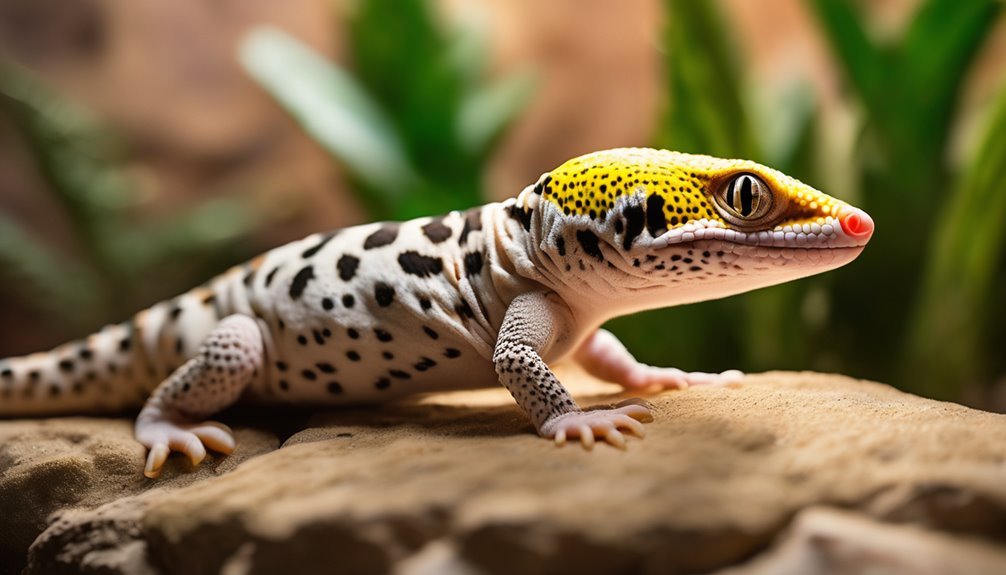
To ensure your leopard gecko thrives, you must focus on several essential care basics. Understanding leopard gecko behavior is crucial; they’re crepuscular, meaning they’re most active during dawn and dusk. This activity pattern dictates their feeding schedule, so offer meals during these times.
Providing gecko enrichment is vital for mental stimulation. Incorporate climbing structures, hiding spots, and varied substrate to mimic their natural environment. Regularly observe their interactions with these elements, as it can reveal their preferences and stress levels.

Ensure that the temperature gradient in their enclosure supports thermoregulation, as this directly influences their metabolic functions. By addressing these aspects, you’ll create an environment that promotes healthy behavior and overall well-being for your leopard gecko.
Setting Up the Perfect Habitat
Creating the perfect habitat for your leopard gecko is essential for its health and well-being, as an improperly set up environment can lead to stress and health issues. Start with a 20-gallon tank, ensuring proper ventilation. Use a substrate that allows for easy cleaning and prevents impaction, like tile or paper towels. Provide multiple hiding spots to give your gecko a sense of security—these can be commercially bought or DIY from safe materials.
| Element | Recommendation |
|---|---|
| Tank Size | Minimum 20 gallons |
| Substrate Options | Tile, paper towels |
| Hiding Spots | Cork bark, commercial hides |
| Temperature | 75-85°F (cool side), 88-92°F (warm side) |
Best Diet Options for Your Leopard Gecko
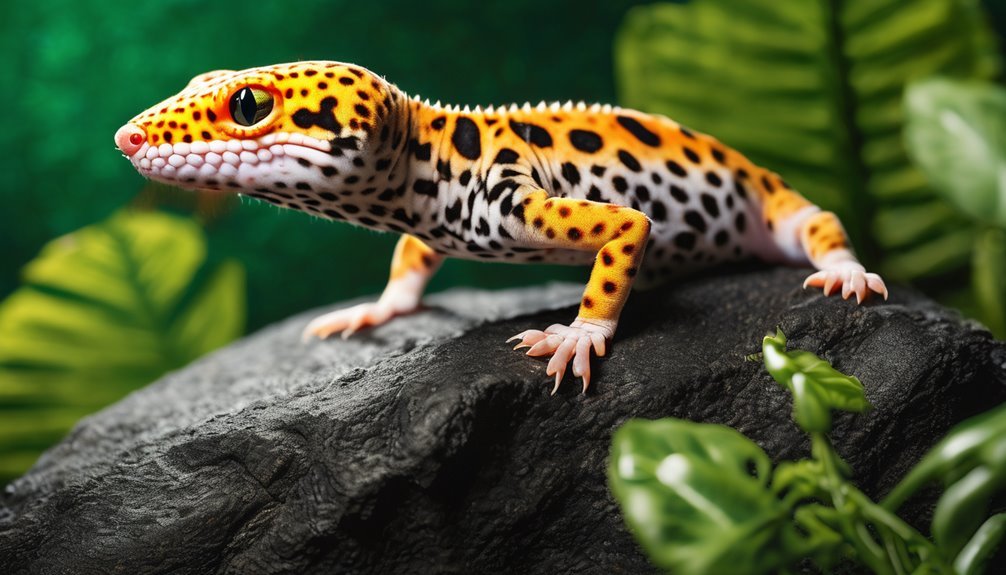
When it comes to feeding your leopard gecko, understanding their dietary needs is crucial for their health and longevity.
Leopard geckos primarily require a diet rich in protein sources, such as crickets, mealworms, and dubia roaches. These insects provide essential nutrients and should be gut-loaded before feeding to enhance their nutritional value.
A well-structured feeding schedule is vital; feed juveniles daily and adults every other day. Dust the insects with a calcium supplement to prevent metabolic bone disease.
Always ensure fresh water is available. Avoid feeding larger prey that could pose a choking hazard.
Keeping Temperature and Humidity Right
Maintaining the right temperature and humidity levels is essential for your leopard gecko’s health, as these factors directly impact their metabolism and activity.
Maintaining optimal temperature and humidity is crucial for your leopard gecko’s health and overall well-being.
Create a temperature gradient within the enclosure, with a warm side ranging from 88°F to 92°F and a cooler side at 75°F to 80°F. This gradient allows your gecko to regulate its body temperature effectively.
Use a reliable thermometer to monitor these temperatures, ensuring they remain stable.

For humidity levels, aim for around 30% to 40%. Too much moisture can lead to respiratory issues, while too little can cause shedding problems.
Regularly check these conditions, adjusting as needed to maintain optimal health for your leopard gecko. Consistency is key for their well-being.
How to Properly Handle Your Leopard Gecko?
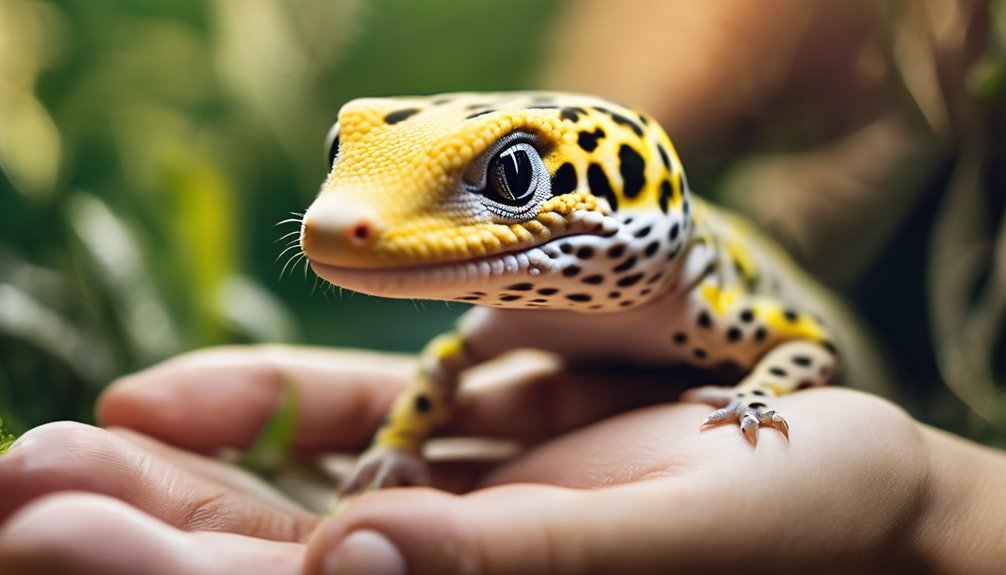
Properly handling your leopard gecko not only fosters trust but also minimizes stress for both you and your pet. Start by using gentle handling techniques; scoop your gecko from underneath rather than grabbing it. Watch for stress signs, such as tail twitching or attempting to hide, which indicate discomfort.
| Handling Techniques | Stress Signs | Recommended Actions |
|---|---|---|
| Scoop from below | Tail twitching | Set the gecko down gently |
| Support its body fully | Rapid movement or hiding | Reduce handling time |
| Use both hands for support | Gaping mouth | Observe from a distance |
Common Health Problems to Watch For
Although leopard geckos are generally hardy reptiles, they can encounter several health issues that require your attention. One common problem is shedding issues, which can arise from inadequate humidity levels or stress.
If you notice retained shed on the toes or tail, it’s crucial to address environmental conditions and provide gentle assistance to prevent further complications.
Another significant concern is weight loss, often indicative of underlying health problems like parasites or metabolic bone disease.
Regularly monitor your gecko’s weight and appearance; a loss of appetite or drastic change in body condition should prompt a veterinary consultation.
Tips for Cleaning and Maintaining Your Gecko’s Environment
To ensure a healthy habitat for your leopard gecko, regular cleaning and maintenance are essential. Start by selecting an appropriate substrate; options like reptile carpet or paper towels are easy to clean and prevent impaction risks.
Remove any waste daily, and perform a deep clean weekly by replacing the substrate and disinfecting the enclosure with a reptile-safe cleaner.
Inspect enclosure accessories—like hides, climbing structures, and water dishes—regularly for cleanliness and damage. Clean these items with warm, soapy water, rinsing thoroughly to eliminate residue.
Maintain temperature gradients and humidity levels by monitoring equipment like heat mats and water bowls. Consistent upkeep not only enhances your gecko’s environment but also promotes its overall health and well-being.
Conclusion
In conclusion, creating an optimal environment for your leopard gecko is crucial for its health and well-being. Many believe that simply providing food and water suffices, but neglecting proper habitat conditions can lead to stress and illness. By ensuring a well-ventilated tank with appropriate temperature gradients, suitable substrates, and a balanced diet, you’ll foster a thriving gecko. Regular monitoring and maintenance aren’t just good practices; they’re essential for preventing common health issues and ensuring a long, happy life.