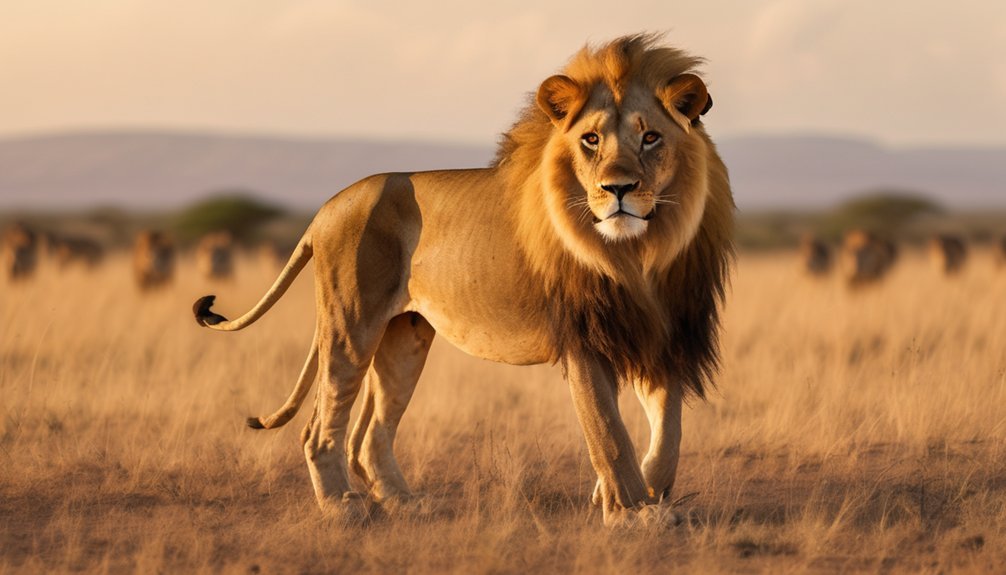
On the African savannah, lions move like living engines of power, built to sit at the top of the food web. You can see how their muscles, claws, and jaws make them efficient hunters of large hoofed prey. Their prides support coordinated hunts and territorial control, while their predation helps shape herbivore numbers and the wider ecosystem. What gives them such lasting dominance?
Key Takeaways
- Lions dominate the savannah with powerful bodies, sharp claws, and jaws built for taking down large prey.
- Female lions form stable prides, cooperating to hunt, raise cubs, and defend territory.
- Group hunting lets lions use stealth, teamwork, and speed to capture strong or isolated animals.
- Lions defend land with roars, scent marking, patrols, and coordinated group displays.
- By controlling herbivores and providing scavenger food, lions shape grasslands and support biodiversity.
What Makes Lions Apex Predators?
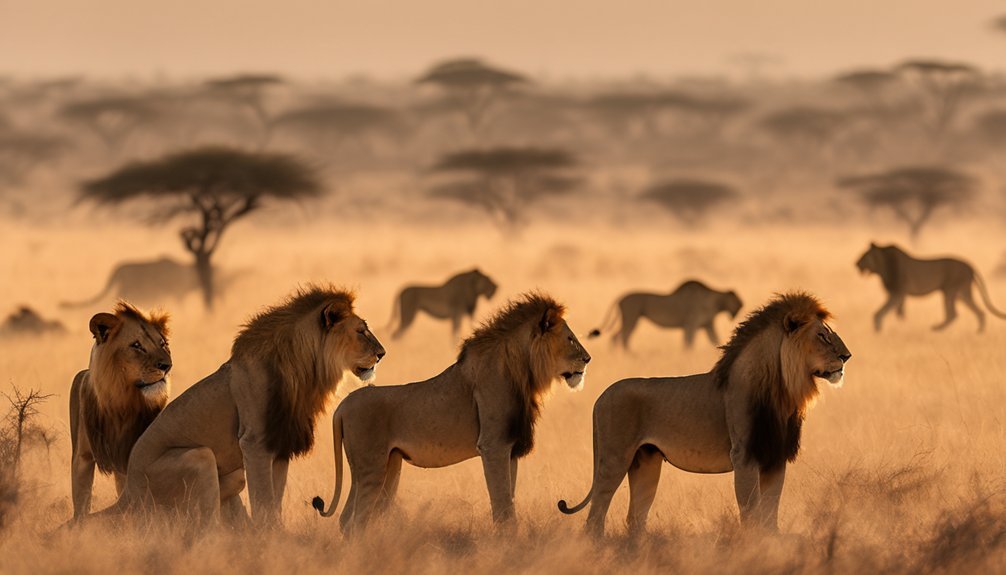
Lions are apex predators because they sit at the top of the food chain in the African savannah and have few natural enemies as adults.
Lions are apex predators, ruling the African savannah with few natural enemies once fully grown.
You can see their lion adaptations in muscular bodies, sharp claws, and powerful jaws that support efficient hunting techniques. Their prey selection favors large hoofed animals, which they track with careful coordination and bursts of speed.
You’ll notice social behaviors that improve survival, including shared vigilance, vocal communications, and cooperative defense of resources. Territorial markings, such as scent and scrapes, signal control of space and reduce conflict.

Mating rituals trigger reproduction, while cub rearing depends on protection and teaching. Together, these traits make lions highly effective predators in open grassland ecosystems, where success requires strength, timing, and constant environmental awareness.
How Lion Pride Structure Works
Within a lion pride, females usually form the stable core, often remaining together for life and sharing related kinship ties that strengthen cooperation.
You can observe a pride hierarchy that places adult males above females in size and access to breeding, yet females maintain strong influence through coordinated group living.
Juveniles stay close to mothers and aunts, learning social bonds that regulate grooming, resting, and tolerance.
You’ll notice that related females often synchronize movement and defend a shared territory, while males may join or leave after years.
This structure reduces conflict and helps you understand why prides function as organized social units rather than loose gatherings.
Each member’s role shifts with age, sex, and reproductive status, creating a stable, flexible system.
How Lions Hunt Prey
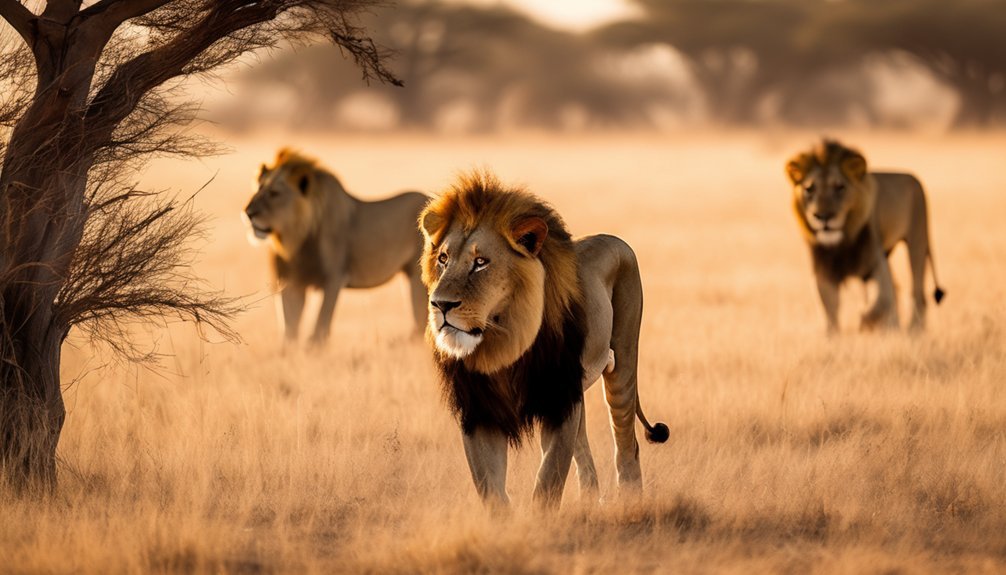
That same social structure shapes the way lions bring down prey, because coordinated groups can overpower animals far larger than a single hunter could manage.
You can see their hunting strategies rely on close teamwork, with each lion using group dynamics to position itself before the attack. They often choose prey selection based on age, injury, or isolation, which raises their success rate.

During a stalk, they use stealth tactics, moving low through grass and avoiding sudden motion. One lion may drive the target toward hidden partners, while others wait to intercept.
The final rush is brief and explosive, combining strength, timing, and precision. You’re watching a predator that depends on patience as much as power, and each hunt reflects careful adaptation to the savannah’s open terrain.
How Lions Defend Their Territory
When a rival pride or wandering male approaches, a lion’s defense of territory begins with constant surveillance, scent marking, and vocal warning calls that advertise ownership over the area. You can see how territorial markings on grass, rocks, and shrubs reinforce boundaries and reduce direct conflict.
| Defense cue | Function |
|---|---|
| Roars | Signal presence |
| Scent marks | Define borders |
| Patrols | Detect intrusion |
| Group stance | Strengthen social dynamics |
You’ll notice lions coordinate these behaviors with precision, especially when cubs or females stay nearby. Males usually lead the response, but the pride’s united posture matters too. By combining sound, scent, and movement, they limit challenge risk and keep control of resources.
How Lions Shape the Savannah Ecosystem
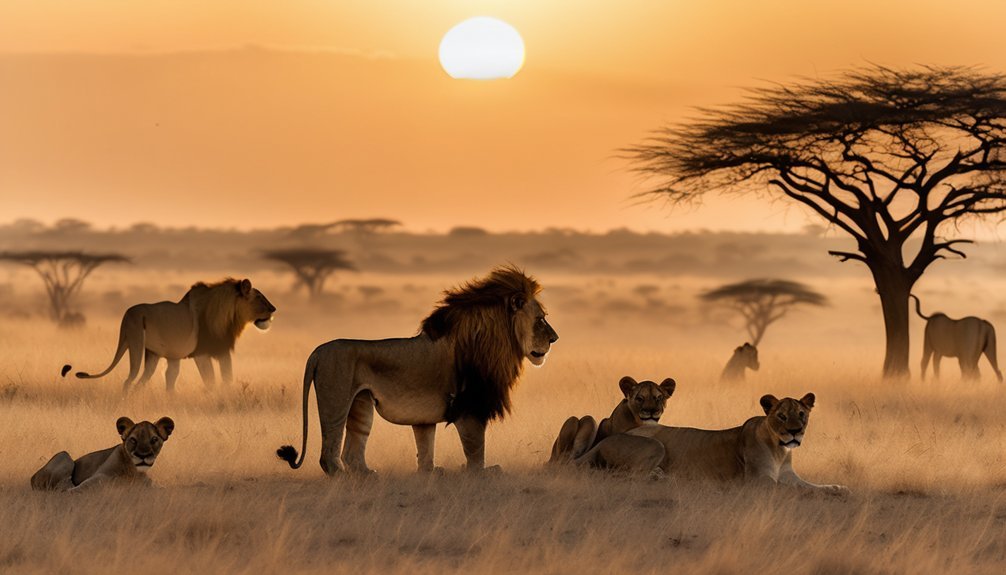
Lions shape the savannah ecosystem by regulating herbivore populations and influencing where and how animals feed, move, and rest.
When you observe a pride, you see coordinated hunting that limits overgrazing and allows grasses to recover. This pressure creates patches of fresh growth, which support insects, birds, and smaller mammals. Their kills also feed scavengers, recycling nutrients into the soil.
Through lion socialization, cubs learn hunting roles, and adults maintain group stability, which strengthens predation efficiency. You can trace this effect across habitats: fewer vulnerable grazers in one area often means more plant cover and greater savannah biodiversity elsewhere.
Frequently Asked Questions
How Long Do Lions Typically Live in the Wild?
You’d usually see a lion lifespan of about 10–14 years in wild habitats, though males often live less long due to conflict, injury, and scarce prey; females sometimes reach 15 or 16 years.
What Sounds Do Lions Use to Communicate?
You’ll hear roars, grunts, growls, snarls, moans, and purr-like sounds—what more could a lion use? Their roaring behavior and vocal communication help you track territory, coordinate hunts, and signal social bonds.
How Far Can Lions Travel in a Single Night?
You can expect a lion to travel about 5 to 10 miles in one night, though some cover farther while patrolling territorial range or pursuing night hunting, depending on prey, terrain, and hunger.
Do Lions Have Any Natural Predators as Adults?
Adult lions have few natural predators, like apex fortresses on the savannah. You’ll mostly see human-related lion threats and occasional injury from rival males, hyenas, or buffalo, but healthy adults rarely face adult predators.
How Do Lion Cubs Learn Survival Skills?
You’d see lion cubs learn survival skills by watching adults, practicing play, and joining hunts. Through social learning, they absorb hunting techniques, stalking, and teamwork, while mothers’ guidance sharpens coordination, timing, and responses to threats.
Conclusion
In the African savannah, you can see why lions stand as apex predators, much like the ancient kings of legend. You’ve seen how their strength, pride structure, hunting skill, and territorial defense work together with remarkable efficiency. By controlling herbivore numbers and supporting scavengers, they help keep the ecosystem stable. In this balance, you witness not just power, but a role as vital as any force in nature’s enduring order.