
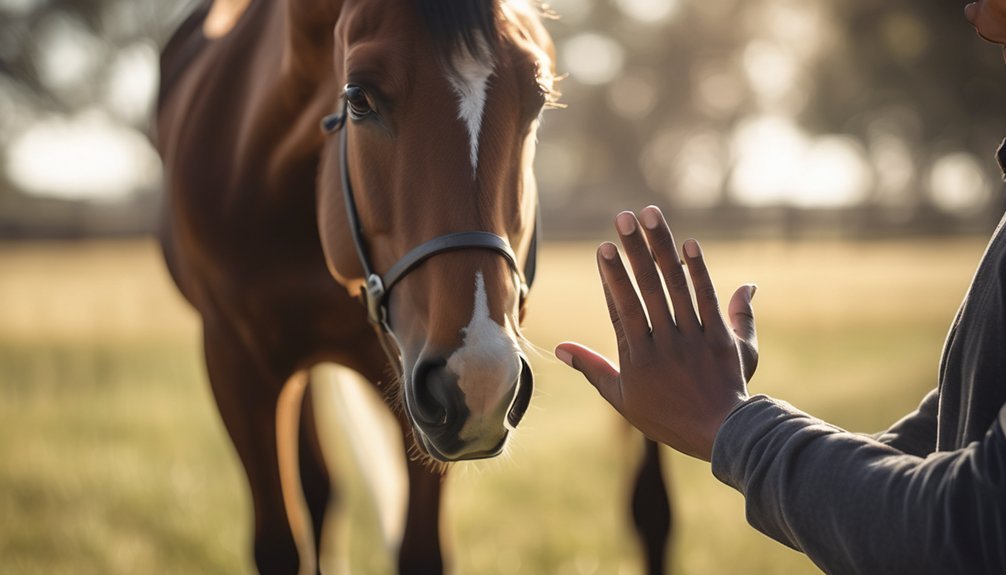
When you first notice a horse pinning one ear back while the other tracks you, it’s like watching a radar shift in real time. You can learn a lot from that small adjustment, because horses often speak through posture, touch, and quiet sounds before they ever move their feet. If you can decode those signals, you’ll see how much they’re already telling you—and why your next response matters.
Key Takeaways
- Horses communicate through body language, including posture, muscle tension, breathing, and weight shifts.
- Ear, eye, and tail positions reveal whether a horse is relaxed, alert, or stressed.
- Touch and proximity show comfort, trust, and whether the horse welcomes interaction.
- Calm, loose behavior signals safety, while stiff, restless, or pinned-ear behavior signals stress.
- Clear timing, consistent cues, and positive reinforcement improve communication and build trust.
What Horse Body Language Means
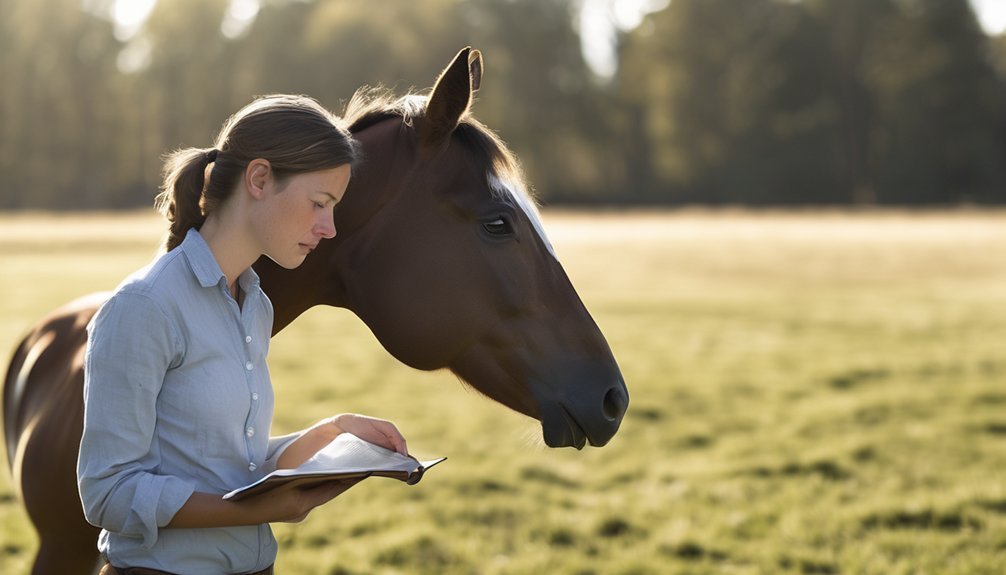
Horse body language is a fast, precise signaling system that tells you what a horse is feeling and what it may do next. You read it by tracking posture, muscle tension, weight shifts, and breathing.
When you notice horse facial expressions, you can infer comfort, caution, or stress before a horse acts. A loose topline and elastic step usually show relaxation; a rigid back, braced neck, and abrupt horse movement patterns often signal discomfort or alertness.
You’ll build trust faster when you respond before pressure escalates. Watch for small changes, then adjust your approach, pace, or distance. Your calm, accurate reading helps the horse feel understood, which lowers conflict and deepens your connection.
Reading Horse Ears, Eyes, and Tail
Once you start watching the ears, eyes, and tail together, a horse’s state becomes easier to read with greater precision.
You’ll notice that ear positioning shifts fast: forward ears often signal alert interest, while pinned ears usually mark tension or irritation.

Eye contact matters too; soft, steady eyes suggest calm focus, but a hard stare can indicate vigilance or pressure.
Track tail movement as well, because a loose swish may simply clear flies, yet a tight, elevated tail often accompanies arousal.
Read these signals beside facial expressions and body posture, not alone. A relaxed muzzle, balanced stance, and rhythmic breathing usually align with low stress.
When vocal cues appear alongside these signs, you gain a clearer, intimate picture of the horse’s emotional state.
How Horses Use Touch to Communicate
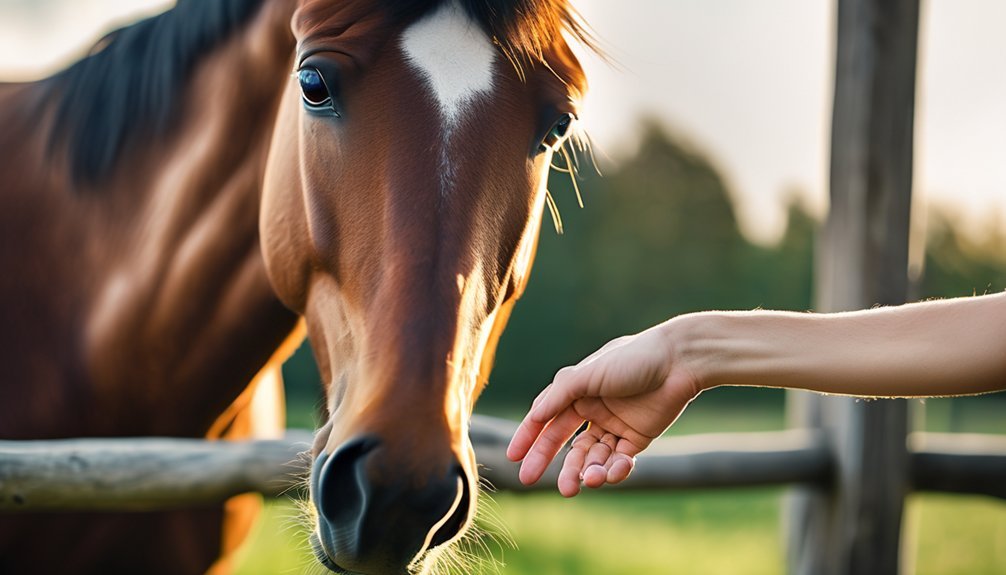
Touch doesn’t start at the ears or eyes; it begins when a horse chooses how close to stand, which body part to present, and how firmly to make contact. You can read gentle nudges as low-risk requests for attention, while comforting pressure against your shoulder often signals trust and social grounding.
During playful interactions, the horse may tap, mouth, or lean, using rhythmic movements to test your response and adjust force. When you stay still, body warmth through the muzzle or neck can reinforce calm affiliation.
Soothing strokes from your hand can mirror this exchange, but the horse still relies on intentional contact to measure your comfort and consent. More assertive touches usually mark insistence, not aggression, if the rest of the body stays relaxed and receptive.
Understanding Horse Vocal Sounds
If you listen closely, a horse’s vocal sounds reveal more than simple noise: whinnies, nickers, squeals, and snorts each carry different social and emotional functions.
You can read neigh meanings by tracking pitch, length, and repetition. High, urgent whinny types often mark separation or active searching, while softer calls usually sound more familiar.
Track pitch, length, and repetition to read neigh meanings: urgency, separation, or familiar contact.
Nicker nuances tend to stay low and rhythmic, functioning as close-range contact cues. Sharp squeal emotions signal brief conflict, protest, or surprise, and you should note the context before judging intent.
Snort signals and blow patterns matter too: a forceful exhale can punctuate alertness, curiosity, or irritation.
Signs Your Horse Feels Safe
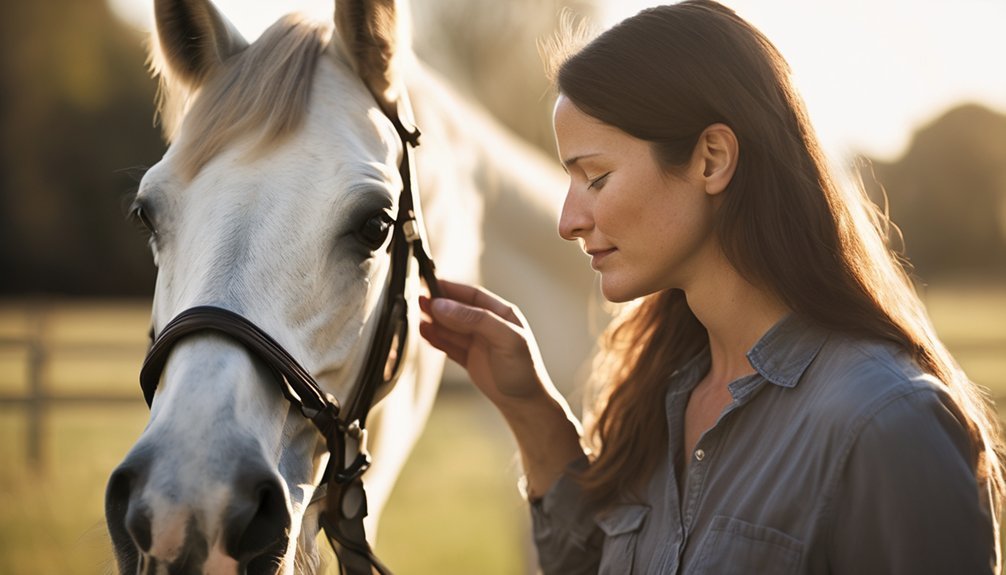
A relaxed horse usually shows safety through loose, balanced body language: an even weight distribution, soft eyes, and ears that move naturally rather than locking onto every sound.
You can read horse comfort in a relaxed posture, slow breathing, and calm chewing, all of which suggest a safe environment.
Look for trust indicators such as approaching you willingly, standing quietly during handling, and accepting touch without hesitation.
In close contact, some horses show affectionate behavior by nudging, resting their head near you, or seeking gentle contact.
Grooming signals, like lowering the neck or leaning into the brush, also suggest ease.
Strong social interactions with familiar horses and consistent positive reinforcement help maintain this state.
When you observe these patterns, you’re seeing a horse that feels secure with you.

Signs Your Horse Is Stressed
When a horse is stressed, its body language often becomes tighter and more reactive: the neck may stiffen, the head may rise, and the ears may pin back, flick rapidly, or stay locked in one direction.
You’ll often see wide eyes, a tense muzzle, and a tail that clings or swishes sharply. These signals usually reflect environmental stressors, such as noise, crowding, or sudden changes, and they can also indicate physical discomfort.
- Short, shallow breathing
- Muscle stiffness or trembling
- Restless shifting or repeated pawing
If you notice these patterns, trust your observations. A stressed horse isn’t being difficult; it’s showing that something feels wrong.
Your calm attention helps you read the message early and respond with care, before tension escalates into a bigger problem.
How Horses Communicate During Training
During training, horses communicate through subtle changes in posture, timing, and muscle tone that tell you how they’re processing your cues. You can read vocal cues, training signals, and non verbal cues in a lifted ear, a softened jaw, or a delayed step.
These behavioral responses show whether your request is clear or needs adjustment. When attention shifts toward you, the horse is engaged; when it drifts, your timing may need refinement.
Trust building happens through consistent feedback loops, where your release follows the correct response. Using reinforcement techniques with precision helps the horse predict outcomes and stay calm.
If you watch closely, you’ll notice that communication isn’t one-sided; it’s a measured exchange shaped by your sensitivity, timing, and quiet consistency.
How Horses Communicate While Riding
While riding, communication becomes even more immediate because your horse responds through weight shifts, stride rhythm, head position, and tension through the back and mouth. You send riding cues with seat, leg aids, and rein tension, and your horse translates them into movement rhythm.
Tiny balance shifts alter saddle pressure, so your posture should stay aligned and quiet. Your breathing patterns matter too; they can steady the tempo and soften subtle signals.
- Feel the back yield before you ask harder.
- Notice whether leg aids sharpen or lengthen steps.
- Watch how rein tension changes the neck and jaw.
When you stay observant, you can read these responses like data. That makes each ride a precise, intimate exchange built on sensation, timing, and trust.
Common Horse Communication Mistakes
Even subtle mistakes can distort the conversation, because horses read inconsistencies in timing, pressure, and body language with remarkable sensitivity. When you rush cues, you blur cause and effect; when you hold pressure too long, you create noise. You may also slip into misinterpreting signals, reading ear flicks or tail movement as defiance instead of information. Ignoring posture, especially your own, weakens the message further.
| Mistake | Effect |
|---|---|
| Late release | Confuses learning |
| Inconsistent cues | Raises uncertainty |
| Too much tension | Increases vigilance |
| Misreading gaze | Skews intent |
| Ignoring posture | Reduces clarity |
If you watch closely, you’ll notice that tiny delays, uneven breath, and stiff shoulders can change how safely and clearly your horse responds.
Build Better Communication With Your Horse
Clear communication with a horse starts with making your signals consistent, timely, and easy to read. You can sharpen non verbal cues by watching ear angle, breath, and weight shifts, then matching your body with calm intent.
- Use observation techniques to notice consistency patterns in response and tension.
- Practice spatial awareness so your horse can predict your movement.
- Reinforce calm choices with positive reinforcement and gentle release.
These small adjustments support trust building and an emotional connection that feels steady rather than forced.
When your horse hesitates, pause and apply relaxation strategies: soften your shoulders, slow your breathing, and reduce pressure.
You’ll see clearer answers when your timing stays precise and your signals stay coherent. Over time, your horse reads you with less effort and more confidence.
Frequently Asked Questions
How Do Horses Communicate With Other Horses?
You’ll see horses communicate through body language, vocal sounds, subtle cues, and play behavior. They constantly negotiate social hierarchy and herd dynamics, using posture, ears, grooming, and movement to signal intent, comfort, warning, or affiliation.
Can Horses Recognize Human Emotions?
Yes, horses can recognize your emotions, reading tension like a storm cloud over your posture and voice. Their emotional sensitivity shapes human interactions, and you’ll notice them soften, hesitate, or approach when you’re calm and open.
Do Different Horse Breeds Communicate Differently?
Yes, you’ll notice different breeds often communicate differently. You can read their body language, vocal sounds, breed characteristics, social behaviors, training methods, and instinctual responses, which shape how each horse signals trust, stress, and attention.
How Long Does It Take to Understand a Horse’s Signals?
You’ll usually need weeks to months to read a horse’s quiet messages, depending on training consistency, body language, vocal sounds, emotional awareness, personal connection, and environmental cues. Your attention sharpens as patterns gradually reveal themselves.
Can Horses Learn New Communication Cues From People?
Yes, you can teach horses new communication cues with body language and training techniques. They learn through repetition, consistency, and reward, and you’ll notice subtle shifts in attention, posture, and responsiveness as they adapt.
Conclusion
When you learn to read your horse’s quiet signals, you begin to notice the full conversation beneath the surface. You can spot soft ears, a gentler eye, and an easy tail as signs that your horse feels at ease. By responding with calm timing and steady feedback, you help replace tension with trust. In that shared space, communication becomes clearer, and your work together feels less like correction and more like a mutual understanding.