
You might find it interesting that many dog owners face similar challenges when their pets have sensitive stomachs. Choosing the right food can significantly impact your dog’s health and comfort. High-quality proteins and easily digestible ingredients are crucial, but there’s more to consider. Understanding the signs of sensitivity and the essential ingredients can help you make informed choices. What should you look for to ensure your dog’s digestive health?
Key Takeaways
- Choose dog foods with high-quality, easily digestible proteins like chicken or lamb to minimize gastrointestinal distress.
- Look for formulations that include probiotics to support gut health and stabilize digestion.
- Select options with fiber sources such as pumpkin or sweet potatoes to help regulate bowel movements.
- Avoid fillers and artificial additives to prevent exacerbating sensitivities and discomfort.
- Consider brands like Hill’s Science Diet and Royal Canin, which offer specialized formulas for sensitive stomachs.
Understanding Sensitive Stomachs in Dogs

Understanding your dog’s sensitive stomach is crucial for maintaining their overall health. Sensitivity can stem from various causes, including food intolerances, allergies, or gastrointestinal disorders. These issues often manifest as discomfort or digestive upset.
Recognizing the underlying causes can guide you in making effective dietary adjustments. For instance, switching to a limited-ingredient diet may help identify specific triggers, while incorporating easily digestible proteins can alleviate symptoms.
Additionally, gradual transitions between foods can minimize gastrointestinal distress. By observing your dog’s reactions to different foods, you can tailor their diet to support a healthier digestive system.
Prioritizing these adjustments not only enhances their comfort but also contributes to their overall well-being and vitality.

Signs Your Dog Has a Sensitive Stomach
Five common signs indicate your dog might’ve a sensitive stomach.
First, frequent vomiting can signal dietary triggers affecting digestion.
Frequent vomiting in dogs may indicate dietary triggers disrupting their digestion.
Second, diarrhea, especially if persistent, is a clear indication of gastrointestinal distress.
Third, you may notice your dog having inconsistent bowel movements, which can reflect underlying sensitivity.
Fourth, excessive gas or bloating often accompanies sensitive stomachs, leading to discomfort.
Finally, if your dog shows signs of discomfort after eating, like whining or pacing, it’s a strong indicator.
These common symptoms suggest that your dog may need dietary adjustments to alleviate their symptoms and promote better digestive health.
Observing these signs closely can help you determine the best course of action for your pet’s well-being.
Essential Ingredients for Soothing Sensitive Stomachs
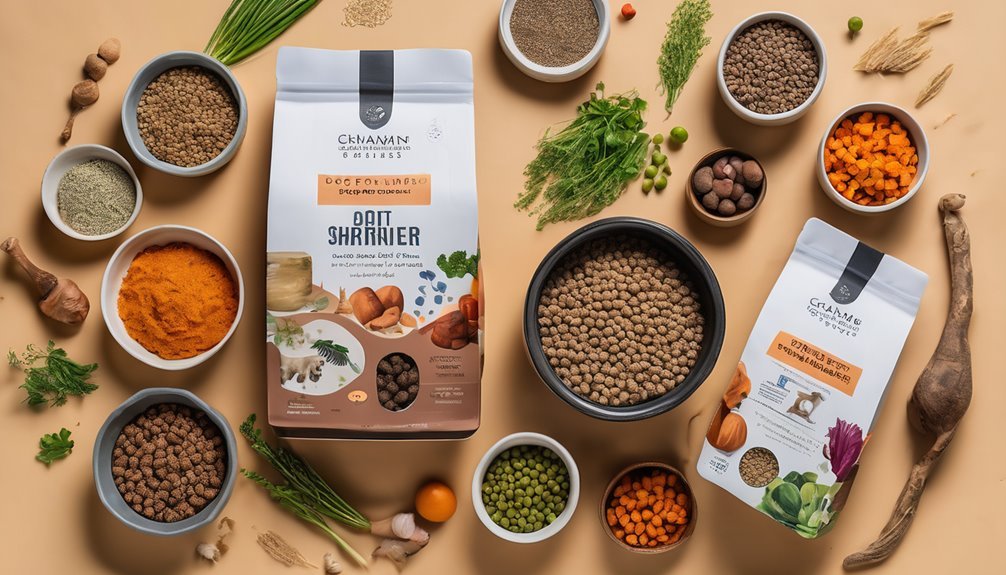
To effectively soothe a sensitive stomach, including specific ingredients in your dog’s diet can make a significant difference.
Look for high-quality protein sources, which are easier to digest and less likely to cause irritation. Incorporating probiotics can enhance gut health, offering probiotic benefits that stabilize digestion and reduce gastrointestinal distress.
Additionally, fiber sources like pumpkin, sweet potatoes, or brown rice help regulate bowel movements and promote gut health. These ingredients work together to create a balanced diet that minimizes discomfort.
Always consult your veterinarian before making dietary changes, ensuring you select the best options tailored to your dog’s unique needs.
Prioritizing these essential ingredients can lead to a happier, healthier dog with a calmer stomach.
Grain-Free or Grain-Inclusive: What’s Better?
When considering how to soothe your dog’s sensitive stomach, the choice between grain-free and grain-inclusive diets often arises.
Grain-free diets can offer benefits like easier digestion and reduced allergen exposure, especially for dogs with sensitivities to common grains. However, it’s essential to ensure that these diets are balanced and nutrient-rich, as some grain-free options may lack essential nutrients.
On the other hand, grain-inclusive diets can provide important carbohydrates and fiber, but they may have drawbacks. Some dogs experience digestive upset or allergic reactions to grains like wheat or corn.

Ultimately, the best choice depends on your dog’s specific needs, lifestyle, and how they respond to each type of diet. Always consult your veterinarian for tailored advice.
Best Dog Foods for Sensitive Stomachs

Finding the right dog food for a sensitive stomach can significantly improve your pet’s overall health and comfort.
Look for options with easily digestible ingredients and a balanced food texture that suits your dog’s needs. High-quality protein sources, such as chicken or lamb, can help minimize gastrointestinal distress.
Choose dog food with easily digestible ingredients and high-quality proteins like chicken or lamb to support digestive health.
Additionally, consider foods that include probiotics to support gut health. Avoid fillers and artificial additives, as they can exacerbate sensitivities.
Brands like Hill’s Science Diet and Royal Canin offer specialized formulas designed for sensitive stomachs, ensuring your dog gets the nutrition they need without irritation.
Always transition gradually to a new food to prevent further digestive issues and consult your veterinarian for tailored recommendations.
Homemade Dog Food Options for Sensitive Stomachs
What homemade dog food options can you consider for a sensitive stomach? Start with simple homemade recipes using easily digestible ingredients like boiled chicken, rice, and pumpkin.
These staples provide essential nutrients without overwhelming your dog’s system. If your dog has specific allergies, consider ingredient substitutions, such as using sweet potatoes instead of rice or ground turkey instead of chicken.
You can also incorporate plain yogurt for probiotics, which may aid digestion.
Always ensure that your homemade meals are balanced; consult a vet for guidance on vitamin and mineral supplementation.
Keeping the recipes straightforward and monitoring your dog’s reactions can help you tailor meals effectively to support their sensitive stomach.
Tips for Transitioning to New Dog Food
Switching to a new dog food can be tricky, especially after trying homemade meals for a sensitive stomach.
To ensure a smooth transition, start with a slow introduction over a transition period of about 7 to 10 days. Begin by mixing about 25% of the new food with 75% of the old food for the first few days. Gradually increase the new food to 50% for the next few days, then 75%, before fully switching.
Start the transition by mixing 25% new food with 75% old, gradually increasing to ensure your dog’s comfort.
This method allows your dog’s digestive system to adjust and reduces the risk of gastrointestinal upset. Keep an eye on any signs of intolerance, like vomiting or diarrhea, and adjust the transition pace accordingly.
Patience is key for a successful switch!
When Should You Talk to Your Vet?
When should you consider consulting your vet about your dog’s diet? If your dog shows persistent symptoms like vomiting, diarrhea, or excessive gas, it’s crucial to seek veterinary advice.
Vet consultation timing is vital; waiting too long could worsen underlying health issues. If you’re introducing dietary restrictions due to allergies or intolerances, discussing this with your vet ensures you select appropriate foods that meet your dog’s nutritional needs.
Additionally, if you notice behavioral changes or weight fluctuations, it’s a sign to get professional guidance. Remember, early intervention can prevent more serious health problems down the line.
Always prioritize your dog’s well-being by seeking expert dietary restrictions advice when needed.
Conclusion
Choosing the right food for your dog with a sensitive stomach can feel daunting, but the right formula can transform their health. Imagine your pup, once restless and uneasy, now happily bounding around, free from discomfort. By focusing on high-quality ingredients and gentle digestion, you can help restore their vitality. Don’t overlook the signs; the right choice awaits just around the corner. Trust in the power of nutrition to bring peace to your furry friend’s tummy.