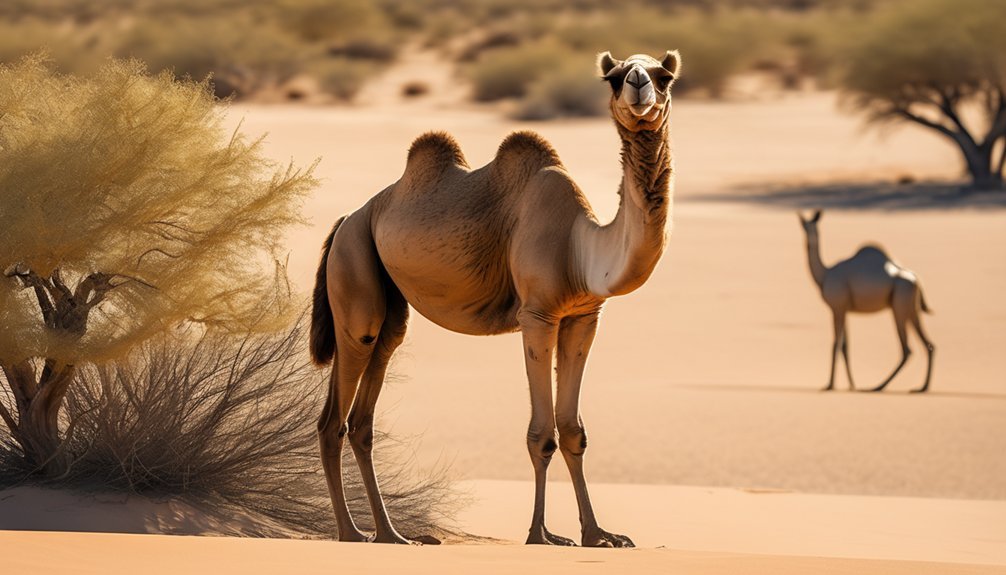
You might expect water to be essential every day, yet some animals manage long periods with little or none. You’ll see kangaroo rats, camels, and thorny devils using precise ways to conserve, recycle, or capture moisture. Their bodies show how survival can depend on limits, not abundance. What seems impossible at first becomes a careful biological strategy, and one species in particular may surprise you.
Key Takeaways
- Kangaroo rats conserve water tightly and can survive long periods without drinking.
- Camels recycle body water efficiently and obtain moisture from food and fat stores.
- Thorny devils collect moisture through skin channels, reducing the need to drink.
- Addax and Gila monsters minimize water loss with efficient kidneys and dry-climate adaptations.
- Burrowing, night activity, and efficient breathing help desert animals conserve moisture for survival.
How Animals Survive Without Drinking
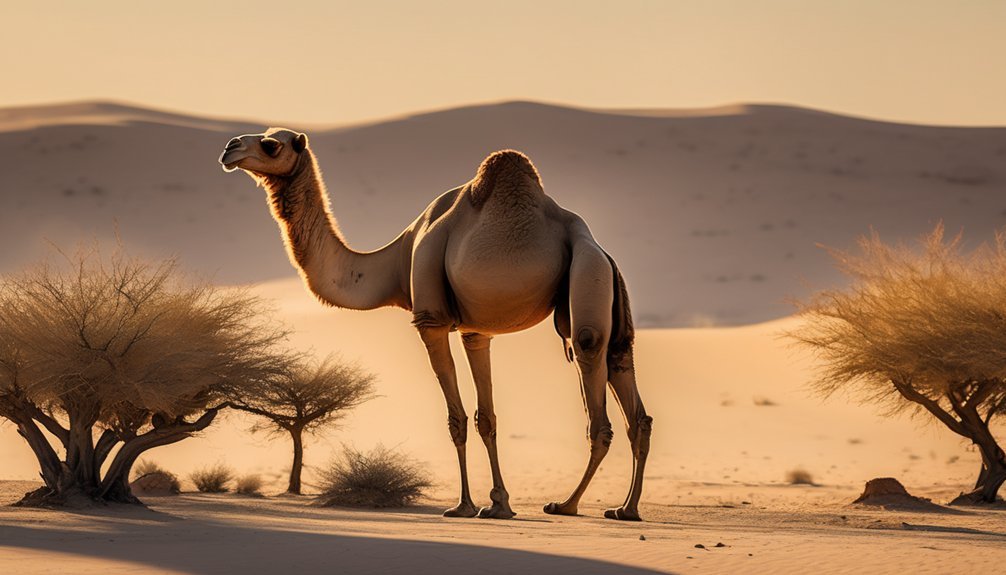
Some animals can go long periods without drinking because their bodies conserve water with remarkable efficiency.
If you watch them closely, you’ll see desert adaptations that limit sweat, reduce breathing losses, and recycle moisture from every meal. Their kidneys often make highly concentrated urine, and their intestines reclaim extra fluid before it leaves the body.
You can think of these hydration strategies as a tight internal budget: every drop matters, and nothing is wasted. Fat stores may also help, since metabolizing fat produces water.

A tight internal budget: every drop matters, nothing is wasted, and even fat can yield water.
When heat rises, many species rest in shade or burrows, lowering demand. These precise, compassionate adjustments let them endure dry conditions without strain, preserving strength while meeting basic needs with calm, disciplined restraint.
Animals That Rarely Drink Water
Beyond water-saving physiology, a few animals rarely drink at all because their food and body chemistry supply most of what they need. You can think of these desert dwellers as efficient systems, not thirsty ones.
| Animal | Note |
|---|---|
| Kangaroo rat | Conserves fluid tightly |
| Thorny devil | Uses skin channels |
| Camel | Recycles body water |
| Addax | Limits loss carefully |
| Gila monster | Stores water well |
You’ll notice their hydration strategies are clinical and elegant: they reduce loss, tolerate dryness, and remain alert with minimal intake. When you watch them, you see restraint, not deprivation. That matters, because rare drinking isn’t weakness; it’s adaptation shaped by harsh landscapes. Their bodies keep balance with quiet precision, and you can respect that intimacy with survival.
Animals That Get Moisture From Food
For animals that get moisture from food, hydration is built into the meal itself: leaves, insects, fruit, and fresh prey can supply enough water to reduce or even replace direct drinking.
When you study these animals, you see that their moisture sources are often rich, consistent, and closely matched to their needs. A kangaroo rat may eat seeds with residual water, while a camel, bird, or carnivore can extract fluid from plant tissue or flesh.
These food adaptations let you remain functional in dry habitats without constant access to a pool or stream. You’re witnessing a quiet efficiency: each bite supports circulation, digestion, and temperature control.
Food-based moisture keeps you functional in dry habitats, where each bite quietly supports circulation, digestion, and temperature control.
In this way, nutrition and hydration work together, sparing you from risky, unnecessary searches for water.
How Animals Store and Save Water
When water is scarce, animals rely on storage and conservation to keep their tissues functioning. You can think of the body as a careful reservoir: fat stores can yield metabolic water, and blood chemistry can hold fluid where it’s needed.
Your cells reduce loss by tightening water retention, so vital organs stay supplied longer. Many animals also slow urine output and extract extra moisture from waste before it leaves the body. This moisture conservation protects delicate tissues and preserves balance in the bloodstream.
You may notice that these processes aren’t dramatic; they’re quiet, steady, and deeply protective. In harsh moments, that restraint helps an animal remain alert, mobile, and alive without drinking, even when thirst presses hard.

Adaptations for Dry Climates
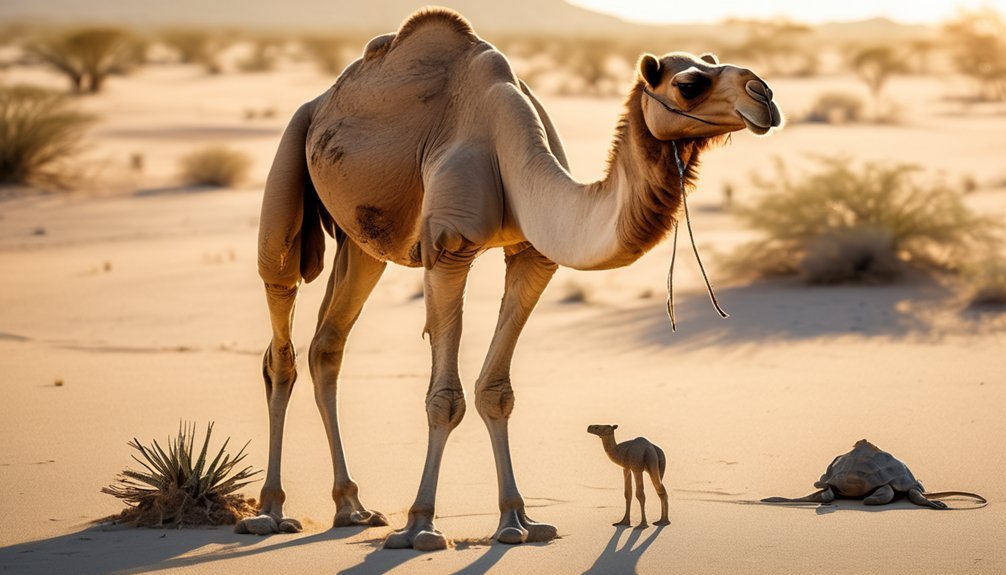
Dry habitats demand more than water-saving physiology; they also shape how animals behave, move, and build their bodies. You see desert adaptations in every stride, burrow, and resting posture. These animals often stay still at midday, then travel at night, when heat eases and strain drops. Their bodies use physiological mechanisms that limit overheating, including light coats, long limbs, and compact forms.
| Adaptation | Effect |
|---|---|
| Burrowing | Reduces heat exposure |
| Night activity | Lowers water loss |
| Pale coloration | Reflects sunlight |
| Efficient breathing | Conserves moisture |
When you watch them closely, you notice how dry climates reward restraint. Every movement becomes deliberate, and every shape serves survival with quiet efficiency, almost tenderly.
Water-Saving Lessons From Nature
Nature offers a clear model for conserving water: reduce exposure, slow loss, and make every drop count.
Nature teaches conservation: reduce exposure, slow loss, and make every drop count.
You can learn from animals in desert ecosystems that seal moisture in, rest during heat, and move only when necessary. Their evolutionary strategies include thick skin, concentrated urine, nocturnal activity, and efficient kidneys.
When you conserve water, you mirror these precise defenses. Limit unnecessary heat, shade your body, and pause before you spend energy or fluids.
You don’t need abundance to stay steady; you need timing, restraint, and awareness. Nature teaches that survival often depends on small, disciplined choices.
If you respect scarcity, you protect yourself with quiet effectiveness, and your body responds with less strain and more resilience.
Frequently Asked Questions
Which Animal Survives the Longest Without Any Water?
Camels usually survive the longest without water because you can rely on their camels’ adaptations, including water storage and efficient kidneys. You’d see them endure weeks, though exact survival depends on heat and food availability.
Do Baby Animals Need More Water Than Adults?
Yes—baby animals usually need more water than adults, like thirsty seeds in spring. You’ll see higher hydration needs during growth stages, because their bodies’re developing fast and they can dehydrate more quickly, so monitor them gently.
How Does Temperature Affect Water Loss in Animals?
Higher temperatures increase your animal’s water loss by boosting evaporation and respiration, while cooler conditions reduce it. Temperature regulation and metabolic adaptations help you conserve fluids, but heat still challenges you, especially during activity or stress.
Can Animals Drink Saltwater to Survive Longer?
No, you shouldn’t assume animals can drink saltwater to survive longer; most can’t. Their saltwater adaptation and hydration strategies usually conserve water or excrete salt. If you’re concerned, seek species-specific guidance quickly.
Are Desert Animals Active at Night to Conserve Water?
Yes, desert animals often are active at night—because apparently the sun’s a cruel prankster. You’ll see nocturnal behavior reduce heat stress, and water conservation improve as they limit sweating, breathing, and exposed-surface loss.
Conclusion
You can see that survival in dry country is a careful balancing act, not a miracle. Animals like kangaroo rats, camels, and thorny devils show you how nature can turn scarcity into strategy, using every drop like gold. Their bodies are living reservoirs, built to sip from food, store moisture, and waste nothing. When water fades, these creatures don’t simply endure—they adapt, quietly proving that life can bloom even in the desert’s cracked hands.