Setting up a safe bird cage involves choosing the right size, selecting non-toxic materials, and creating a comfortable environment. You’ll want to ensure your bird has enough space to move freely and explore while avoiding harmful substances. Consider the types of perches and toys you’ll provide to keep your feathered friend engaged. Understanding these essentials is crucial for your bird’s well-being, but there’s more to consider for a truly enriching habitat.
Key Takeaways
- Select an appropriately sized cage based on your bird’s species and size for comfort and exercise.
- Use safe materials like stainless steel or powder-coated metal, avoiding galvanized materials.
- Ensure good ventilation and check for sharp edges or small parts that could pose risks.
- Set up comfortable perches of varying heights and thicknesses using natural materials.
- Maintain hygiene by cleaning daily, including droppings, food/water dishes, and cage surfaces weekly.
Choosing the Right Cage Size for Your Bird
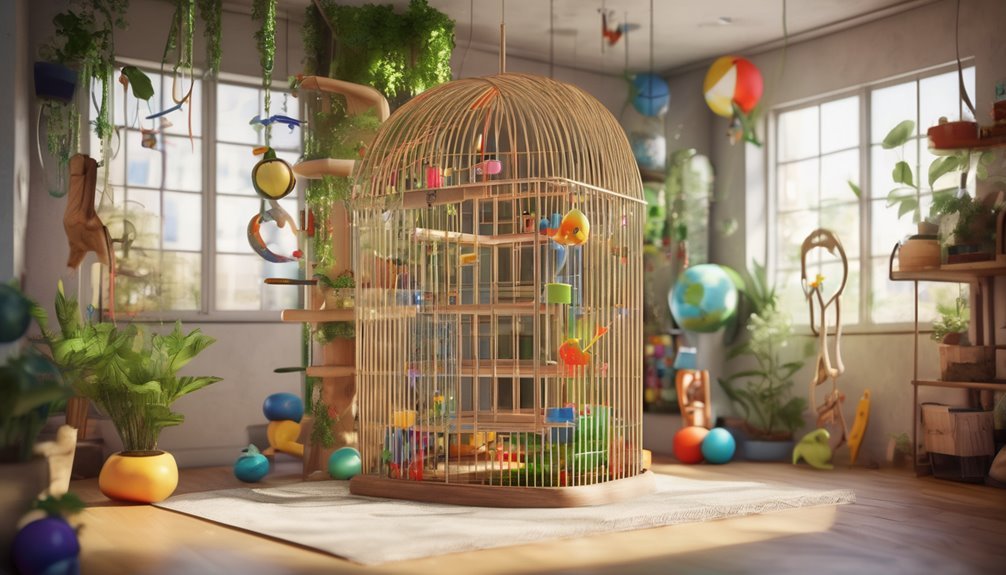
When selecting a cage for your bird, it’s crucial to consider its size and species, as this will greatly impact its well-being.
Different species have unique requirements, and understanding these can help you choose the right cage dimensions. For small birds like finches or budgies, a cage that’s at least 18 inches wide will suffice, while larger species, such as parrots, need more space—often a minimum of 24 inches.
Ensure the height allows for perching and flying, as this promotes exercise and mental stimulation. The cage should feel spacious enough to accommodate toys and perches, fostering a happy environment.

Choosing Safe Materials and Key Features for Your Bird Cage
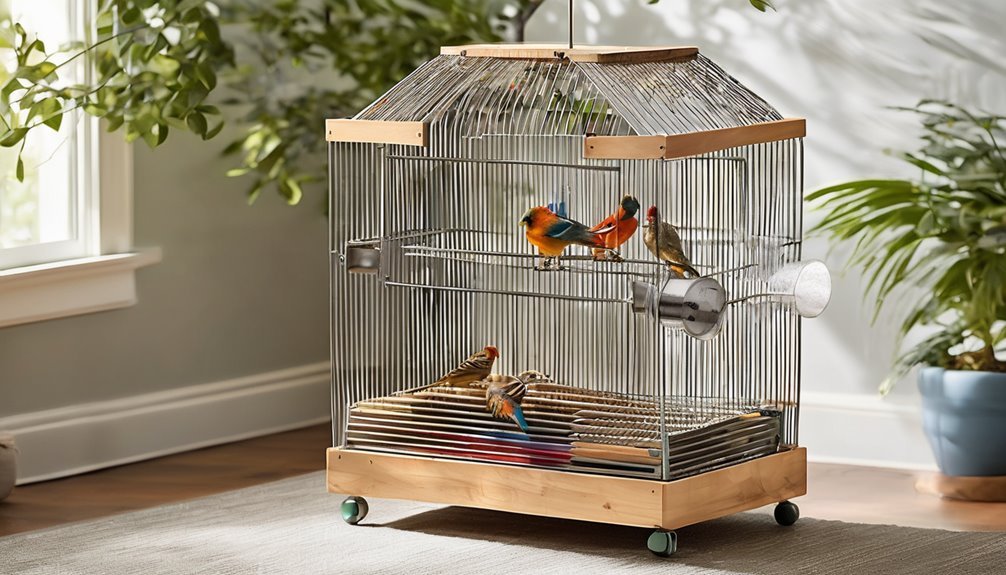
Selecting the right cage size is just the first step in ensuring a safe and comfortable environment for your bird.
Next, focus on materials. Opt for stainless steel or powder-coated metal, as these are less likely to harbor harmful toxins. Avoid cages made from galvanized metal, which can pose risks due to material toxicity.
Choose stainless steel or powder-coated metal cages to ensure safety and avoid harmful toxins from galvanized metal.
Good cage ventilation is also crucial; it helps maintain air quality and keeps your bird healthy. Ensure your cage has enough openings to allow for proper airflow.
Lastly, check for any sharp edges or small parts that could pose a danger. By choosing safe materials and essential features, you’re creating a nurturing space where your feathered friend can thrive.
Setting Up Comfortable Perches in Your Bird Cage
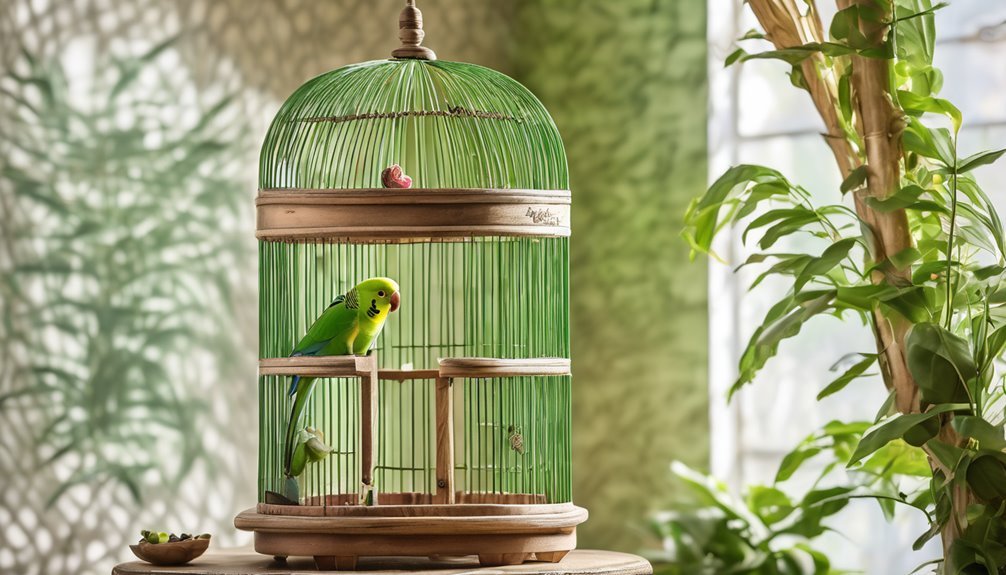
To create a cozy environment for your bird, it’s essential to set up comfortable perches that cater to their natural behaviors. Proper perch heights and materials can significantly enhance your bird’s well-being.
Consider these tips:
- Vary Perch Heights: Place perches at different levels to encourage climbing and exploration. This mimics their natural habitat and keeps them active.
- Choose Natural Materials: Opt for perches made from safe, natural materials like wood or branches. Avoid plastic, as it can be uncomfortable.
- Mix Thickness: Use perches of varying thicknesses. This helps to exercise your bird’s feet and prevents boredom.
Choosing Safe and Engaging Toys for Your Bird?
Finding the right toys for your bird can make a world of difference in their happiness and well-being. Engaging toys provide mental stimulation and prevent boredom. Opt for interactive toys that encourage play and exploration. Chew toys made from natural materials are essential for your bird’s beak health and can reduce anxiety.
Here’s a quick guide to help you choose the best toys:
| Type | Benefits | Examples |
|---|---|---|
| Interactive Toys | Encourage play and bonding | Puzzle feeders |
| Chew Toys | Promote beak health | Wooden blocks |
| Natural Materials | Safe and non-toxic | Coconut shells |
Cage Placement Tips for Your Bird
Once you’ve chosen the right toys for your bird, the next step is to think about where to place their cage. Proper placement can enhance your bird’s well-being and happiness.
Here are three tips to consider:

- Natural Light: Position the cage near a window to provide natural light, but avoid direct sunlight that could overheat your bird.
- Noise Control: Keep the cage away from loud appliances or high-traffic areas to minimize stress from noise.
- Social Interaction: Place the cage in a room where your family spends time, allowing your bird to feel included and engaged.
Maintaining Hygiene and Safety Standards in Your Bird Cage
Maintaining hygiene in your bird’s cage is crucial for their health and happiness. Establish regular cleaning routines to keep their environment fresh and safe.
Start by removing droppings daily and changing the bedding weekly. Clean food and water dishes every day to prevent bacteria buildup. You should also wipe down the cage weekly with bird-safe disinfectants to ensure thorough sanitation.
Regularly inspect toys and perches for dirt or wear, replacing or cleaning them as needed.
These practices aren’t just about cleanliness; they’re essential for disease prevention. A healthy, clean space helps your feathered friend thrive, reducing the risk of illness and ensuring they feel secure and comfortable in their home.
Your bird deserves nothing less!
Monitor Your Bird’s Well-Being and Behavior
Keeping your bird’s cage clean is just the first step in ensuring their overall well-being. To truly monitor your bird’s health and happiness, pay close attention to their behavioral cues and health indicators.
Keeping your bird’s cage clean is essential, but true well-being comes from observing their behavior and health indicators.
Here are three ways you can enhance their quality of life:
- Observe Daily Behavior: Look for changes in activity levels or vocalizations, which can signal stress or illness.
- Encourage Social Interaction: Spend time talking or playing with your bird to foster a strong bond and reduce loneliness.
- Provide Environmental Enrichment: Rotate toys, introduce new perches, and offer varied foods to stimulate their mind and keep them engaged.
Frequently Asked Questions
Can Birds Share a Cage With Other Species?
Birds can share a cage, but species interaction varies. Ensure cage compatibility by researching their temperaments and sizes. Some species thrive together, while others may stress or harm each other. Your birds’ safety comes first.
How Often Should I Change the Cage Layout?
To nurture your feathered friend’s spirit, change the cage layout every few weeks. This layout variety provides essential cage enrichment, stimulating their curiosity and ensuring a lively, engaging environment that fosters their well-being.
Are Certain Cage Shapes Better for Specific Birds?
Yes, certain cage shapes suit specific birds better. Larger, flight-oriented birds thrive in spacious, taller cages, while smaller, active birds enjoy wider designs. Always consider cage size to accommodate your bird’s activity needs and well-being.
What Should I Do if My Bird Escapes?
If your bird escapes, stay calm and search nearby. Call its name gently, using familiar sounds. Observe its behavior; it might return. For future prevention, secure cages and avoid open windows or doors.
Can I Use Natural Branches as Perches?
Yes, you can use natural branches as perches. Just ensure the branch materials are safe and free from pesticides. Smooth, sturdy branches offer a comfortable grip, promoting your bird’s health and happiness in their home.
Conclusion
By following these guidelines, you can create a safe and comfortable environment for your bird. Remember, the right cage size, materials, and setup are crucial for your bird’s well-being. Regular maintenance and mindful observation of your bird’s behavior will help you ensure it thrives in its habitat. A happy bird means a joyful home, so take the time to invest in its safety and comfort. Your feathered friend will thank you with chirps of joy!