
When you bring home a pet rabbit, like a lively little bun named Thumper, you quickly realize the importance of providing a nurturing environment. It’s essential to create a comfortable home, ensure proper nutrition, and foster social interaction. Each aspect plays a crucial role in your rabbit’s well-being. Are you prepared to learn how to meet these needs effectively? Understanding the fundamentals can make all the difference in your rabbit’s happiness and health.
Key Takeaways
- Provide a spacious, safe shelter with soft bedding and hiding spots for comfort and stimulation.
- Maintain a balanced diet of hay, fresh vegetables, and limited treats with constant access to clean water.
- Engage in gentle socialization through petting, interactive play, and observing body language for comfort cues.
- Regularly monitor your rabbit for any signs of health issues, such as changes in appetite or droppings.
- Keep the living environment clean, hazard-free, and suitable for exercise while maintaining comfortable temperature and humidity levels.
Creating a Comfortable Home for Your Rabbit
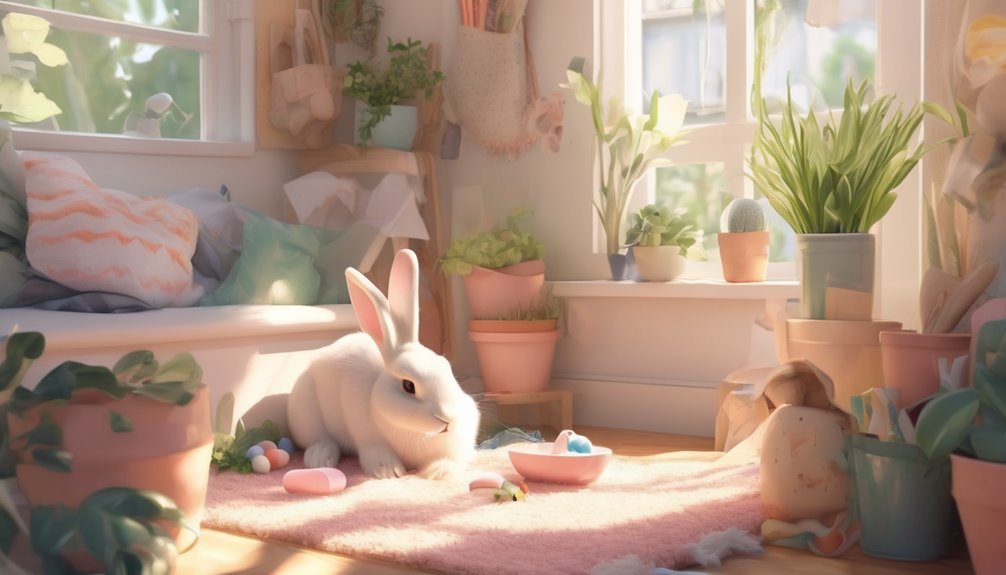
Creating a comfortable home for your rabbit is essential for its well-being and happiness. Start by choosing a suitable shelter setup that provides enough space for your bunny to move freely.
Ensure the area is safe, with no sharp edges or hazards. Use soft bunny bedding to create a cozy environment; options like hay or fleece are both warm and inviting.

Creating a safe space free of sharp edges, with soft bedding like hay or fleece, ensures your rabbit feels cozy and secure.
Make sure to clean the bedding regularly to maintain hygiene. Additionally, include hiding spots and chew toys to stimulate your rabbit’s natural instincts.
A well-organized space will help your rabbit feel secure, reducing stress and promoting a happier life. With the right setup, your bunny will thrive and enjoy its time with you.
Effective Socialization Techniques for Your Rabbit

A comfortable home sets the stage for effective socialization with your rabbit.
Begin by engaging in bonding activities that build trust, like gentle petting or allowing your rabbit to explore your lap. Create a routine that incorporates playtime tips, such as using toys that encourage interaction, like tunnels or balls.
Always approach your rabbit calmly, speaking softly to create a reassuring environment. Gradually introduce new experiences, whether it’s a different room or a new toy, allowing your rabbit to adjust at their own pace.
Remember to observe their body language; signs of comfort include relaxed ears and a willingness to approach you.
With patience and consistency, you’ll foster a strong, loving bond with your furry friend.
Rabbit Care: Essential Foods for a Healthy Diet

While you may think that any food is suitable for your rabbit, providing a balanced diet is crucial for their health and well-being.

A nutritious diet helps prevent obesity, dental issues, and digestive problems. Here’s what you should include:
- Hay Varieties: Timothy, orchard grass, and meadow hay are excellent choices.
- Fresh Vegetables: Leafy greens like romaine lettuce and cilantro are great.
- Pellet Types: Choose high-fiber, low-calcium pellets specifically formulated for rabbits.
- Limited Treats: Offer small amounts of fruits like apples or berries occasionally.
- Fresh Water: Always ensure your rabbit has access to clean water.
Identifying Rabbit Health Issues and Symptoms?
Maintaining a balanced diet is just one aspect of ensuring your rabbit’s overall health. Effective health monitoring is crucial, as recognizing symptoms early can make a significant difference in treatment. Watch for changes in behavior, appetite, or litter box habits.
| Symptom | Possible Issue | Action Needed |
|---|---|---|
| Loss of appetite | Dental problems | Consult a vet immediately |
| Lethargy | Illness or pain | Schedule a vet visit |
| Abnormal droppings | Digestive issues | Monitor and report to vet |
Maintaining a Clean and Safe Environment for Your Rabbit
Creating a clean and safe environment for your rabbit is essential for their well-being and happiness. A tidy space helps prevent health issues and promotes a stress-free life.
Here are some key steps to maintain that environment:
- Regularly clean the litter box and practice litter training for easy maintenance.
- Use safe toys to keep your rabbit entertained and mentally stimulated.
- Ensure the living area is free of hazards, like electrical cords and toxic plants.
- Provide a designated space for them to exercise and explore.
- Monitor the temperature and humidity levels to keep your rabbit comfortable.
Frequently Asked Questions
How Much Space Does a Rabbit Need to Thrive?
A rabbit needs at least 12 square feet of space to thrive, ideally in a secure rabbit habitat. Ensure it has room to hop, play, and explore, promoting mental stimulation and physical health for your pet.
Can Rabbits Be Litter Trained Successfully?
Yes, rabbits can be successfully litter trained using various training methods. Place a litter box in their favorite spots, use safe materials, and consistently encourage them to use it. With patience, they’ll learn quickly.
What Toys Are Safe for Rabbits to Play With?
Safe toys for rabbits include hay-based toys, chewable blocks, and natural wood items. Cardboard tunnels, digging boxes, climbing structures, and interactive puzzles made from safe plastics also provide engaging play options to keep your rabbit happy.
How Do I Introduce a New Rabbit to My Existing Pet?
Start by creating a neutral space for their first meeting. Use bonding techniques like parallel play, gradually increasing interaction over a few weeks. Monitor their progress closely, adjusting the introduction timeline to ensure harmony.
What Are the Signs of Stress in Rabbits?
You’ll notice stress behaviors in your rabbit, like hiding, excessive grooming, or aggression. Rabbit anxiety can also manifest through thumping or loss of appetite. Observing these signs helps you support your furry friend effectively.
Conclusion
Caring for a pet rabbit might seem overwhelming at first, but with the right approach, it can be a rewarding experience. You don’t need to be a rabbit expert—simply follow the guidelines we’ve discussed, and you’ll build a loving bond with your furry friend. By creating a comfortable environment and providing proper nutrition and care, you can ensure a happy, healthy life for your rabbit. Start today; your new companion is worth every effort!