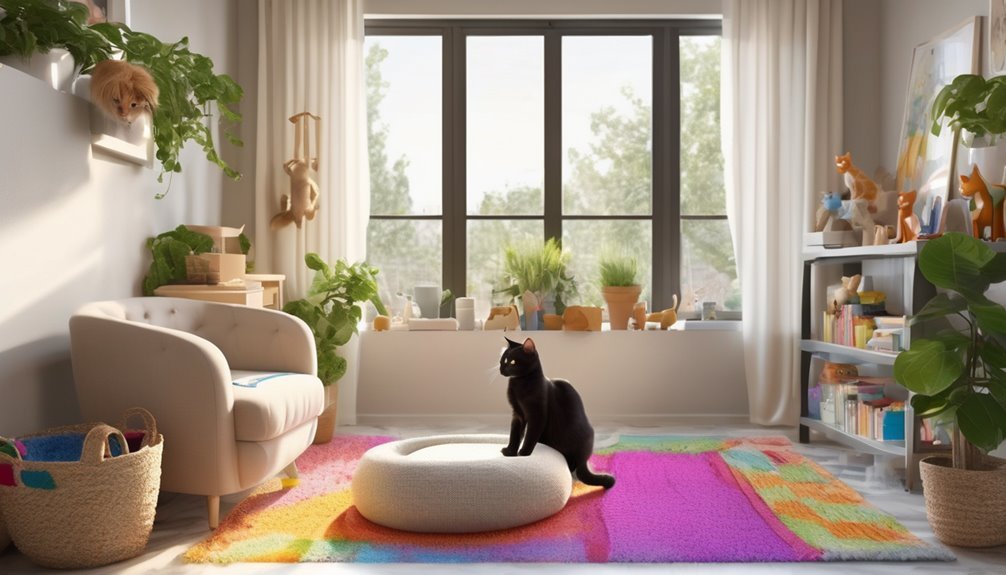
Creating a cat-friendly home is more than just a trend; it’s essential for your feline’s happiness and health. You can start by selecting furniture that’s both durable and scratch-resistant while ensuring there are cozy spots for your cat to relax. Understanding their needs will help you foster a nurturing environment. Curious about how to incorporate fun activities and safe spaces for your cat? Let’s explore the key elements that will make your home a sanctuary for your pet.
Key Takeaways
- Choose durable, scratch-resistant furniture and include scratching surfaces to meet your cat’s needs.
- Create cozy nooks and safe spaces with soft bedding in quiet areas for relaxation.
- Incorporate interactive toys and activities to stimulate mental engagement and promote physical exercise.
- Maintain a clean litter area in low-traffic locations to ensure hygiene and comfort.
- Remove toxic items and secure cords to create a safe environment for your cat.
Why a Cat-Friendly Home Matters
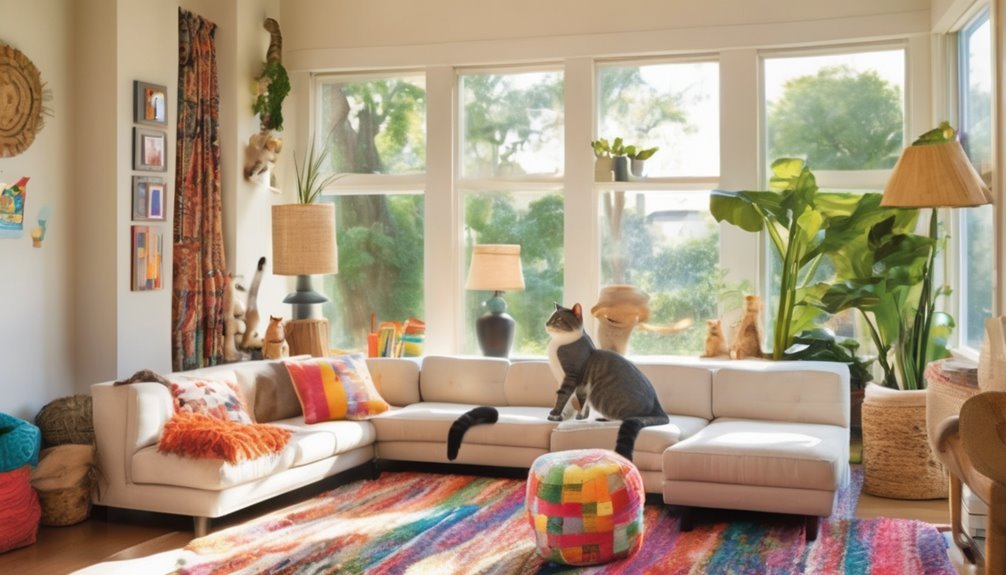
Creating a cat-friendly home matters because it directly impacts your feline friend’s well-being and happiness. When you provide an environment that caters to their natural instincts, you’ll notice positive changes in their cat behavior.
Think about incorporating vertical spaces, cozy hiding spots, and interactive toys. These elements offer essential environmental enrichment, reducing stress and boredom.
As you create this space, you’ll foster your cat’s curiosity and playfulness, allowing them to express their unique personality. A well-designed home isn’t just about aesthetics; it’s about nurturing your bond and ensuring your cat thrives.

How to Choose Cat-Friendly Furniture

When selecting furniture for your home, it’s essential to consider how well it accommodates your cat’s needs.
Choosing the right furniture materials can help create a safe and enjoyable environment for your feline friend. Here are three tips to keep in mind:
- Durable Fabrics: Opt for materials like microfiber or denim that resist scratches and are easy to clean.
- Incorporate Scratching Surfaces: Look for pieces with built-in scratching options, such as sofas with sisal trim or cat-friendly chairs.
- Stable Designs: Choose low, sturdy furniture to prevent tipping, allowing your cat to explore safely.
Create Cozy Nooks and Safe Spaces
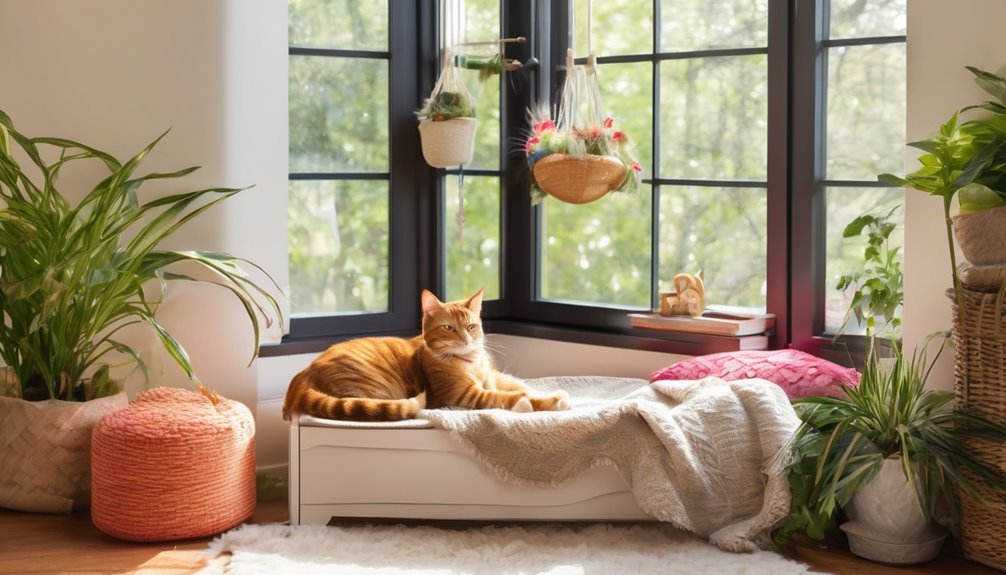
To ensure your cat feels secure and content, it’s crucial to carve out cozy nooks and safe spaces around your home.
Start by choosing spots that are quiet and away from foot traffic. Consider adding cozy bedding—like soft blankets or cushy cushions—where your cat can curl up and relax.
Cats love hidden retreats, so think about placing a small cat bed inside a box or under a table. This gives them a sense of safety while they observe their surroundings.
You might also create vertical spaces, such as shelves or cat trees, for climbing and exploring.
Incorporate Interactive Toys and Activities
Interactive toys and activities can transform your cat’s playtime into a stimulating adventure. Engaging your feline friend not only keeps them active but also promotes mental wellness.
Here are three great ways to incorporate fun into their routine:
- Puzzle Toys: These toys challenge your cat to think and problem-solve, keeping their minds sharp and focused.
- Interactive Feeding: Use toys that dispense food while your cat plays, turning mealtime into a playful challenge that encourages natural hunting instincts.
- Laser Pointers: A classic choice, these toys inspire your cat to chase and pounce, providing both exercise and excitement.
Design Vertical Spaces for Climbing and Exploration
Cats are natural climbers and explorers, so creating vertical spaces in your home can greatly enhance their environment.
Consider shelves designed specifically for your feline friend; these can provide perfect perches for lounging or surveying their territory. You can also incorporate climbing structures like cat trees or wall-mounted pathways, giving your kitty a playground that sparks their curiosity.
Position these features near windows to offer a view of the outside world, making it even more enticing.
Ensure these structures are sturdy and safe, allowing your cat to climb confidently.
Keep the Litter Area Clean and Accessible
While you might think keeping a litter area clean is just a chore, it’s essential for your cat’s health and happiness. A tidy litter box promotes good hygiene and prevents unpleasant odors.
Here are three tips to ensure your cat’s litter area stays clean and accessible:

- Litter Box Placement: Choose a quiet, low-traffic area where your cat feels safe. Avoid placing it near food and water.
- Regular Cleaning: Scoop the litter daily and change it weekly. This helps with odor control and encourages your cat to use it.
- Right Supplies: Invest in a high-quality litter that clumps well and controls odors, making cleanup easier.
Best Cat-Friendly Plants for Your Home
Creating a cat-friendly home goes beyond just maintaining a clean litter area; it also involves bringing in the right greenery.
Consider incorporating cat-safe herbs like catnip and parsley, which aren’t only safe but can also engage your feline’s senses. They love to explore these plants, making them perfect additions.
For a touch of color, opt for non-toxic flowers like orchids and gerbera daisies. These blooms brighten your space without posing a risk to your furry friend.
When choosing plants, always double-check their safety, as some can be harmful.
Ensure Safety With Hazard-Free Zones
To ensure your home is a safe haven for your feline friend, it’s essential to establish hazard-free zones throughout your space.
Creating these spaces not only protects your cat but also enhances their comfort and happiness. Here are some pet proofing essentials to consider:
- Remove Toxic Items: Keep cleaning supplies, medications, and small objects out of reach to prevent accidents.
- Secure Cords and Wires: Use cord organizers to avoid entanglement or chewing hazards.
- Create a Safe Retreat: Designate a quiet room with cozy spots where your cat can relax away from potential dangers.
How to Create Harmony When Living With Multiple Cats?
Living with multiple cats can be a joyful experience, but it also comes with its challenges. To create harmony, start by understanding cat communication; each cat has its own way of expressing feelings. Pay attention to body language and vocalizations to gauge their moods.
Establish separate feline territories by providing individual feeding areas, litter boxes, and cozy spots for each cat. This helps minimize conflicts and gives them a sense of security.
Rotate toys and engage in interactive play sessions to encourage bonding while respecting their space. If you notice any signs of aggression, intervene gently and redirect their focus.
Transitioning Your Home for a New Cat
As you welcome a new cat into your home, preparing your space can make all the difference in ensuring a smooth transition.
Introducing new feline personalities takes time, so consider these steps to help your new friend adjust:
- Create a Safe Space: Designate a quiet area with essentials like food, water, and a litter box, where your cat can feel secure.
- Adjust Your Routines: Gradually incorporate your new cat into daily activities. This helps them feel part of the family while maintaining some familiarity.
- Provide Enrichment: Offer toys, scratching posts, and perches to stimulate their natural instincts and keep them engaged.
Frequently Asked Questions
How Can I Tell if My Cat Is Happy at Home?
You can tell your cat’s happy by observing its purring behavior and playful antics. If it seeks your company, relaxes around you, and engages with toys, it’s a good sign your feline feels content.
What Are the Signs of Stress in Cats?
Signs of stress in your cat include flattened ears, tucked tails, and dilated pupils. Watch for changes in behavior or body language; these feline stressors signal that your furry friend needs a little extra love and care.
How Do I Introduce My Cat to New Furniture?
Start by placing the new furniture in a quiet area. Allow your cat to explore at their own pace, using familiar scents. Create safe spaces nearby where they can retreat if they feel overwhelmed.
Can I Train My Cat to Avoid Certain Areas?
Yes, you can train your cat to avoid certain areas. Use lure techniques to redirect them and practice boundary training, rewarding them for staying within designated spots. Patience and consistency will help reinforce their understanding.
How Often Should I Rotate My Cat’s Toys?
Rotate your cat’s toys every week to keep playtime exciting and fresh. You might worry about your cat getting bored, but this toy rotation adds variety, stimulating their mind and encouraging active play.
Conclusion
Creating a cat-friendly home is all about nurturing your furry friend’s happiness and well-being. Remember, “a happy cat makes a happy home.” By choosing durable furniture, providing cozy nooks, and ensuring safety, you foster a loving environment for exploration and play. Whether you have one cat or several, these thoughtful adjustments can strengthen your bond and enrich their lives. So, take these steps and watch your feline thrive in their new, welcoming haven!